Source Commercial Electric Pressure Fryer for Fast Food
Find and compare 30 Commercial Electric Pressure Fryer models from China. Options include 220V and 380V units with stainless steel construction, timing devices, and oil filtration systems for restaurants and snack bars; compare the available evidence and request quotations based on your requirements.
Key considerations
Products List


$1390.00 - $1500.00
MOQ: 1 Pieces


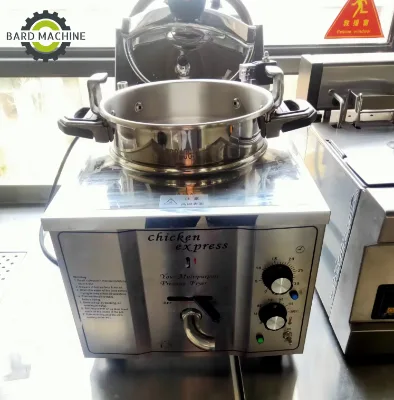

Commercial Multi Function Industrial Food Fryer Electric Deep Pressure Fryer
$400.00 - $486.00
MOQ: 1 Pieces

Factory Hot Selling Commercial Electricchicken Electric Pressure Fryer
$1900.00 - $2114.00
MOQ: 1 Pieces


Comprehensive Sourcing Guide
Commercial Electric Pressure Fryer Sourcing Guide
Procuring commercial electric pressure fryers requires a nuanced understanding of industrial kitchen dynamics, where speed and consistency directly impact profitability. These specialized units combine high-temperature frying with pressurized environments to cook food faster than traditional open fryers, making them ideal for high-volume establishments. Buyers must distinguish between electric and gas-powered variants, as the supplied data indicates a mix of power sources in the market, including models operating on 220V and 380V systems. Understanding these electrical requirements is critical for facility planning, ensuring that the chosen equipment aligns with the existing infrastructure of the restaurant or food processing facility.
The decision to source from China, a primary origin for these units, offers access to a wide range of models with varying capacities and features. Listings show a diverse product count, suggesting a robust supply chain with options for customization. Buyers should evaluate whether the specific model meets their throughput needs, considering attributes like basket configuration and oil filtration systems. The presence of smart panels and timing devices in some listings indicates a shift toward automated, user-friendly interfaces that reduce operator error. This technological integration is a key differentiator for modern kitchens seeking to streamline operations and maintain consistent product quality across all service periods.
Product Scope and Observed Listing Signals
The current market landscape for commercial fryers reveals a broad spectrum of capabilities, ranging from basic units to advanced, computer-controlled systems. Observed listings highlight models such as the HC-16 and YXD-30, which feature capacities between 24 and 30 liters, catering to small to medium-sized operations. In contrast, larger industrial units like the PFE-800 and Pfg-600 offer higher power outputs, such as 13.5kw/H, designed for heavy-duty environments. The variation in dimensions, from compact 565x435x565mm units to large 1060x690x1140mm machines, underscores the importance of matching physical footprint constraints with operational volume requirements. Buyers must carefully assess these physical and capacity metrics to ensure seamless integration into their kitchen layout.
Customization is a prevalent feature, with many suppliers offering tailored solutions to meet specific brand or operational needs. Attributes such as "Customized" and "Customization: Available" suggest that buyers can request modifications to color, panel design, or functional parameters. The use of food-grade stainless steel, particularly 304 grade, is a standard material choice, ensuring durability and hygiene compliance. Additionally, the inclusion of built-in oil filtration systems and automatic pumps in several models highlights a focus on maintenance efficiency and oil longevity. These features reduce operational costs and labor intensity, making them valuable considerations for buyers prioritizing long-term efficiency and ease of use in a fast-paced commercial kitchen environment.
Technical Specifications to Verify
When evaluating technical specifications, voltage compatibility is a primary concern, as units are listed with both 220V and 380V options. Buyers must verify the electrical infrastructure of their facility to avoid costly retrofitting or operational failures. Power source diversity is also evident, with some models supporting LPG or natural gas alongside electric options, although the core keyword focuses on electric variants. It is essential to confirm the exact power rating and current requirements for the selected model to ensure stable operation. Additionally, the presence of timing devices and computer control panels in listings like the OFE-H321L indicates advanced automation capabilities that should be validated for ease of programming and reliability under continuous use.
Material quality and construction standards are critical for longevity and safety in high-heat environments. The consistent mention of 304 stainless steel for raw materials and standards suggests a baseline for corrosion resistance and hygiene. Buyers should verify the thickness of the steel and the quality of welds, especially in high-stress areas like the fry pot and basket mechanisms. Dimensions provided in listings, such as 1030x510x1300mm for certain models, must be cross-referenced with actual space availability, including clearance for ventilation and maintenance access. Furthermore, the net weight of units, such as 155kg for larger models, impacts floor loading requirements and installation logistics, necessitating careful planning during the procurement phase.
Compliance and Safety Documentation
Safety certifications are non-negotiable for commercial kitchen equipment, with CE marking appearing frequently in the observed data. This certification indicates compliance with European health, safety, and environmental protection standards, which is often a baseline for international trade. Buyers should request valid CE certificates and verify their authenticity through the issuing body. Additionally, ISO certification is mentioned for some suppliers, suggesting adherence to quality management systems. While these certifications provide a layer of assurance, buyers must ensure that the specific model purchased meets the local regulatory requirements of their operating region, as standards can vary significantly between countries and jurisdictions.
Documentation regarding electrical safety and pressure vessel integrity is equally important for electric pressure fryers. Buyers should inquire about test reports for electrical components, including insulation resistance and grounding continuity. Since these units operate under pressure, verification of pressure relief valves and safety interlocks is crucial to prevent accidents. The "1 Year Guaranty" mentioned in some listings provides a baseline warranty, but buyers should clarify the scope of coverage, including parts and labor. Understanding the warranty terms helps in assessing the supplier's confidence in their product's durability and their commitment to post-sale support, which is vital for minimizing downtime in a commercial setting.
Cost Drivers and Commercial Terms
Pricing in the commercial fryer market varies widely, with observed ranges from $26 to $2500, reflecting differences in capacity, automation, and build quality. Lower-priced units may lack advanced features like computer control panels or robust oil filtration systems, while higher-end models offer greater efficiency and durability. Buyers should analyze the total cost of ownership, including energy consumption, oil usage, and maintenance costs, rather than focusing solely on the initial purchase price. The power rating, such as 13.5kw/H for larger units, directly impacts electricity bills, making energy efficiency a key cost driver over the equipment's lifespan.
Minimum Order Quantities (MOQ) and lead times are significant commercial factors, with observed MOQs ranging from 1 to 5 pieces. This flexibility allows small businesses to procure single units without excessive inventory commitment. However, buyers should confirm the loading period, which is stated as within 3 days for some suppliers, to ensure timely delivery. Packaging methods, such as wooden cases or wooden packages, add to the shipping cost and weight, so buyers should factor these into their logistics planning. Negotiating terms for bulk purchases or long-term supply agreements can also yield better pricing and priority service, enhancing the overall value proposition of the procurement.
Supplier Qualification and Quality Control
Supplier qualification begins with verifying their manufacturing capabilities and quality control processes. The mention of "Henny Penny Style" in some listings suggests that certain manufacturers produce units that mimic established industry standards, which can be a positive indicator of design maturity. Buyers should request evidence of production capacity and past performance, particularly for large orders. The "Loading Period: Within 3 Days" claim implies a ready-stock or efficient production model, but buyers must validate this through direct communication or site audits if possible. Ensuring that the supplier has a robust quality assurance system in place helps mitigate the risk of receiving defective or non-compliant equipment.
Quality control checks should include visual inspections of the stainless steel finish, functional tests of the control panel, and verification of safety mechanisms. Buyers should ask for pre-shipment inspection reports or arrange for third-party inspections for high-value orders. The "1 Year Guaranty" is a standard offering, but buyers should clarify the process for claiming warranty support, including the availability of spare parts and technical assistance. A supplier's responsiveness and willingness to provide detailed documentation are strong indicators of their reliability. Establishing a clear communication channel with the supplier before purchase ensures that any issues can be resolved promptly, protecting the buyer's investment and operational continuity.
Long-Term Procurement Checks
Long-term success with commercial fryers depends on the availability of spare parts and ongoing technical support. Buyers should verify the supplier's inventory of critical components, such as heating elements, thermostats, and basket mechanisms, to minimize downtime during repairs. The "Ong Service Life" advantage mentioned in listings suggests durability, but regular maintenance is still required to sustain performance. Establishing a maintenance schedule and training kitchen staff on proper operation and cleaning procedures can extend the equipment's lifespan and maintain food quality. Buyers should also consider the supplier's reputation for after-sales service, as responsive support is crucial for resolving technical issues quickly.
Future-proofing the procurement involves staying informed about technological advancements and regulatory changes in the commercial kitchen industry. As energy efficiency and automation become more prevalent, upgrading to newer models with smart panels and improved oil filtration systems may offer significant operational benefits. Buyers should periodically review their equipment portfolio to identify opportunities for efficiency gains. Additionally, maintaining a relationship with the supplier can facilitate access to new products and promotional offers. By focusing on long-term value rather than just initial cost, buyers can ensure that their commercial kitchen operations remain competitive, efficient, and compliant with evolving industry standards.
FAQs
What is the standard voltage for commercial electric fryers?
The standard voltage for these commercial electric fryers is 220V or 380V, depending on the specific model and power requirements. Higher voltage options like 380V are often used for larger capacity units to ensure efficient operation. Buyers should verify the electrical specifications against their facility's power supply to ensure compatibility and safe installation.
Can these fryers be customized for specific business needs?
Yes, customization is available for these commercial fryers to meet specific operational requirements. Manufacturers offer tailored solutions including adjusted dimensions, specialized control panels, and custom packaging options. This flexibility allows businesses to integrate the equipment seamlessly into their existing kitchen layouts and workflow processes while maintaining high performance standards.
What material is used for the construction of these fryers?
These fryers are constructed from food-grade stainless steel, specifically 304 stainless steel, ensuring durability and hygiene. This material resists corrosion and withstands high temperatures, making it ideal for commercial kitchens. The robust construction supports long service life and easy cleaning, which are critical for maintaining food safety standards in high-volume frying operations.
What certifications do these commercial fryers typically hold?
These commercial fryers typically hold CE and ISO certifications, indicating compliance with international safety and quality standards. These certifications assure buyers that the equipment meets rigorous manufacturing and operational requirements. Verifying these credentials is essential for ensuring regulatory compliance and safety in various global markets where these appliances will be deployed.
What is the typical MOQ for ordering these fryers?
The typical minimum order quantity for these fryers is two pieces, though some suppliers may accept orders as low as one unit. This low MOQ allows smaller businesses to test the equipment before committing to larger purchases. Buyers should confirm the exact MOQ with suppliers, as it can vary based on customization needs and stock availability.
How are these fryers packaged for shipping?
These fryers are packaged in wooden cases or wooden packages to ensure safe transit. This robust packaging protects the equipment from damage during international shipping and handling. The sturdy construction of the packaging helps maintain the integrity of the stainless steel body and internal components, ensuring the fryer arrives in optimal condition for immediate installation.