Source Compact SO2 Gas Scrubber Tower for Manufacturing, Mining, Chemical
Compare 30 Compact SO2 Gas Scrubber Tower options from verified Chinese suppliers. These units feature automatic or semi-automatic control, stainless steel or fiberglass construction, and offer 99.9% purification efficiency for industrial waste gas treatment.
Key considerations
Products List

Corrosion Resistance Waste Gas Scrubber Spray Tower for So2 Absorption
$2000.00 - $12000.00
MOQ: 1 Pieces

So2 Absorption Wet Scrubber Dust Removal Spray Tower for Chemical Industry
$2000.00 - $12000.00
MOQ: 1 Pieces

So2 Absorption Spray Tower Wet Scrubber Purification Tower for Chemical Industry
$2000.00 - $12000.00
MOQ: 1 Pieces

Acid Gas Wet Scrubber Dust Removal Spray Tower for Chemical Industry
$2000.00 - $12000.00
MOQ: 1 Pieces

Industrial Waste Gas Treatment Wet Scrubber Purification Spray Tower
$2000.00 - $12000.00
MOQ: 1 Pieces


So2 Absorption Wet Scrubber Dust Removal Spray Tower for Chemical Industry
$1500.00 - $8000.00
MOQ: 1 Pieces

So2 Absorption Spray Tower Wet Scrubber Purification Tower for Chemical Industry
$1500.00 - $8000.00
MOQ: 1 Pieces

FRP Chemical Acid Fume Scrubber Tower Acid Mist Gas Absorption Purification Tower
$1500.00 - $8000.00
MOQ: 1 Pieces


Wet Scrubbers Purification Waste Gas From Chemical Processing Facilities Packed Scrubber Towers
$699.00 - $2999.00
MOQ: 1 Pieces

Purification Waste Gas From Chemical Processing Facilities Packed Wet Scrubber Towers
$699.00 - $2999.00
MOQ: 1 Pieces


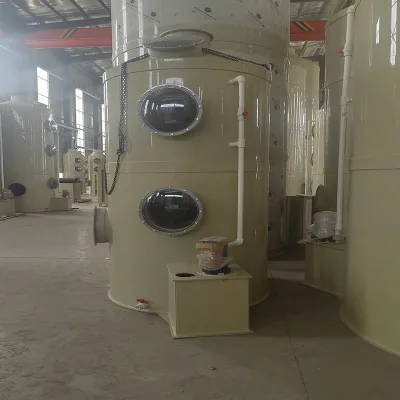
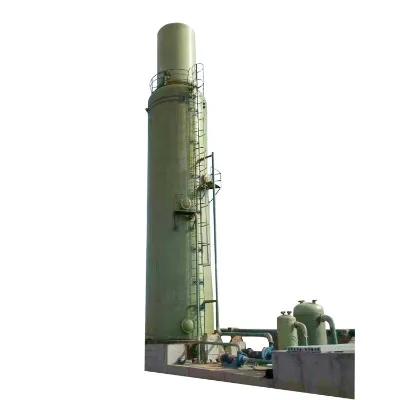
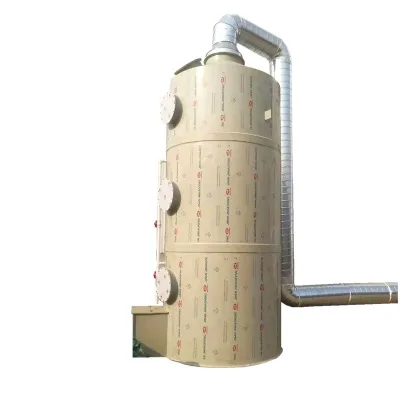


Advanced Industrial Gas Scrubber Tower for Effective Emission Control
$3000.00 - $7000.00
MOQ: 1 Pieces
Comprehensive Sourcing Guide
Sourcing Guide for Compact SO2 Gas Scrubber Towers
Understanding Technical Specifications and Core Design
When sourcing a Compact SO2 Gas Scrubber Tower, buyers must first distinguish between the various design configurations available in the current market. The product landscape includes units described as Wet Scrubbers, Spraying Towers, and FRP (Fiberglass Reinforced Plastic) or GRP Waste Gas Purification Towers. A critical observation from current listings indicates that the core material for these units often varies between Stainless Steel and Fiberglass, with specific attributes noting "Corrosion Resistant" properties essential for handling sulfur dioxide. The structural integrity of the tower is frequently supported by a Steel Shelf or Steel Frame, while the internal processing relies on Multi-Screw mechanisms and specific pump configurations.
The physical dimensions of these units are rarely standardized, with "Customized" appearing as a primary specification for both Size and Airflow. This flexibility allows the equipment to be tailored to specific facility constraints. However, buyers must verify the exact pump pipe diameter, as observed data points to specific ranges such as 500mm and 650mm, alongside pump power ratings like 4kw and fan power ratings around 13kw. The treatment process is consistently identified as Chemical Treatment, utilizing a spraying mechanism to maximize the contact between the gas stream and the scrubbing liquid. The efficiency of this process is a key performance metric, with observed data suggesting a Purify Efficiency of 99.9% for acid gas purification. It is imperative for buyers to treat these figures as observations of specific listings rather than universal guarantees for every unit in the category.
Compliance and Certification Verification
Navigating the certification landscape is a fundamental step in the procurement of industrial gas scrubbers. The market data reveals a diverse array of certifications, including ISO, GMA, CE, QS, and ISOCE. These designations indicate adherence to various international and regional standards, though the specific scope of each certification must be verified against the intended application. For instance, while some listings cite "ISOCE" and "GS" alongside CE, others may only reference "CE" or "QS." Buyers should not assume that a single certification covers all regulatory requirements for their specific jurisdiction or industry sector.
The standardization of the equipment is another critical area of verification. Observed standards include references to "Diameter 15000" and model ranges such as "1-2500m³." These figures suggest that while some units are built to specific dimensional standards, many are offered with "customized size" or "custromized" standards to fit unique operational needs. The "prod_standard" field often aligns with the model capacity, indicating that the certification and standard compliance are tied to the specific configuration of the unit. Buyers must request documentation proving that the specific model ordered holds the necessary certifications for the intended industry, whether it be Manufacturing Plant, Energy & Mining, or Chemical PLA applications. Relying on general certification claims without verifying the specific model's compliance can lead to regulatory non-compliance and operational delays.
Cost Drivers and Pricing Structures
The pricing for compact SO2 gas scrubber towers exhibits a significant variance, with observed ranges spanning from 699 USD to 1,000,000 USD. This wide disparity is driven by several factors, including the choice of material, the level of customization, and the specific power requirements of the pumps and fans. Units constructed from Stainless Steel may command different price points compared to those made from Fiberglass, depending on the corrosion resistance requirements and the longevity expectations of the buyer. Furthermore, the "Customization" attribute is a major cost driver; while some units are available with standard specifications, others require bespoke engineering for size, airflow, and internal components, which naturally increases the unit cost.
The Minimum Order Quantity (MOQ) for these products is observed to be 1, suggesting that buyers can procure single units without needing to commit to large bulk orders. However, the "prod_packing" method, which varies from "Steel Shelf" and "Steel Frame" to "Seaworthy" and "Bare Packing," can also influence the final landed cost. Logistics and packaging requirements must be factored into the total cost of ownership. Additionally, the automation level, ranging from "Automatic" to "Semi-Automatic," and the inclusion of features like "Remote Control" can impact the price. Buyers should analyze the total cost of ownership, including installation, maintenance, and energy consumption, rather than focusing solely on the initial purchase price. The "Warranty" period, typically listed as 1 Year, is another factor that may correlate with the price point, offering a baseline for after-sales support expectations.
Typical Applications and Industry Suitability
The versatility of compact SO2 gas scrubber towers makes them suitable for a broad spectrum of industrial applications. The primary usage is identified as "Acid Gas Purification," with specific mentions of "Waste Gas Treatment" and "Industrial Waste Gas Purification." The "Applicable Industry" field highlights sectors such as Manufacturing Plant, Energy & Mining, and Chemical PLA, indicating that these units are designed to handle the rigorous demands of heavy industry. Beyond acid gas, the observed usage data also includes functions like "Sterilization," "Adding Oxygen," "Formaldehyde" removal, "Humidification," and "Smoke Removal," suggesting that some units may be multi-functional or adaptable to different gas streams.
The "Main Function" of these towers often encompasses "Acid Gas, Waste Gas Purification, Gas Desulfurati," confirming their primary role in mitigating sulfur dioxide emissions. The "Fuction" is explicitly listed as "Waste Gas Treatment," and the "Use" is categorized under "Industry Waste Gas Treatment." This broad applicability means that buyers from various sectors can find a suitable configuration, provided they match the specific gas composition and flow rates to the unit's capabilities. The "Condition" of the products is consistently "New," ensuring that buyers receive fully operational equipment. However, the "Usage" attributes also include "Waste Gas Absorption Tower," reinforcing the core mechanism of the device. Buyers should carefully assess whether the specific gas mixture they need to treat aligns with the scrubber's design, particularly regarding the chemical treatment process and the efficiency of the purification.
Supplier Evaluation and Product Attributes
Evaluating potential suppliers requires a deep dive into the specific attributes listed for each product. The "prod_origin" is consistently noted as "China," which provides context for the supply chain and manufacturing base. When assessing suppliers, buyers should look for those who offer "Customization" as a standard service, allowing for tailored solutions to specific site requirements. The "Automation" level, whether "Automatic" or "Semi-Automatic," is a key differentiator that impacts operational efficiency and labor requirements. Suppliers offering "Remote Control" capabilities provide an added layer of convenience and safety, allowing for centralized management of the scrubbing process.
The "Material" choice is another critical evaluation point. The presence of both "Stainless Steel" and "Fiberglass" options suggests that suppliers offer materials based on the corrosiveness of the gas stream and the budget constraints of the buyer. The "Feature" of being "Corrosion Resistant" is a common attribute, but the specific material composition determines the longevity and maintenance schedule. Buyers should also examine the "prod_packing" options, ranging from "Steel Shelf" to "Seaworthy" and "Bare Packing," to ensure that the supplier can handle the logistics of delivery safely. The "Warranty" of 1 Year is a standard offering, but buyers should inquire about the scope of coverage and the availability of spare parts. Finally, the "Condition" being "New" is a baseline expectation, but buyers should verify the manufacturing date and any potential storage time to ensure the equipment is in optimal condition upon arrival.
Quality Control and Long-Term Procurement Considerations
Ensuring the quality of a Compact SO2 Gas Scrubber Tower involves rigorous checks on the manufacturing process and the final product specifications. The "Treatment" method is identified as "Chemical Treatment," which must be validated to ensure it effectively removes the target pollutants. The "Purify Efficiency" of 99.9% is a high benchmark, but buyers should request test results or third-party verification to confirm that this efficiency is achievable under their specific operating conditions. The "Standard" of the product, whether it is "Diameter 15000" or "customized size," must be strictly adhered to during the manufacturing process to ensure proper fit and function.
Long-term procurement considerations include the availability of spare parts and the ease of maintenance. The "Screw" type, noted as "Multi-Screw," and the "Pump" specifications, including pipe diameter and power, are critical components that may require replacement over time. Buyers should verify the supplier's ability to provide these components and the lead time for delivery. The "Automation" level and "Control Mode" also play a role in long-term operations, as more advanced systems may require specialized training for operators. The "Warranty" period of 1 Year provides a safety net for initial defects, but buyers should consider the total cost of ownership, including energy consumption and potential downtime. By carefully evaluating these factors, buyers can make informed decisions that ensure the reliable and efficient operation of their SO2 gas scrubber towers for years to come.
FAQs
What material is used for compact so2 gas scrubber towers?
These towers are constructed from stainless steel or fiberglass to ensure corrosion resistance. The specific material depends on the buyer's customization requirements and the corrosive nature of the acid gas being treated.
Can I customize the size and airflow of the scrubber tower?
Yes, customization is available for both size and airflow to fit specific facility constraints. Buyers can request tailored dimensions ranging from 1 to 2500 cubic meters based on their operational needs.
Which certifications are typically included with these units?
Common certifications include ISO, CE, GMA, QS, and ISOCE to verify compliance with international standards. Buyers must verify that the specific model ordered holds the necessary certifications for their intended industry sector.
How is the purification efficiency measured for acid gas removal?
The observed purification efficiency for acid gas purification reaches up to 99.9 percent. This high efficiency is achieved through a chemical treatment process utilizing a spraying mechanism within the tower.
What is the warranty period for new industrial scrubber towers?
The standard warranty period provided for these new units is one year. This coverage typically addresses initial defects, though buyers should inquire about the specific scope and spare parts availability.
How do I find suppliers with specific pump power ratings?
You can identify suppliers offering units with specific pump power ratings like 4kw or fan power of 13kw. These power specifications are key attributes to filter when sourcing equipment for your application.