Source Compact Retractable Measuring Tape for Construction, DIY, and Tailoring
Find 30 compact retractable measuring tape options from Chinese manufacturers. Compare specifications like blade material, resolution, and packaging to select the right tool for precision measuring tasks in industrial and consumer applications; compare the available evidence and request quotations based on your requirements.
Key considerations
Products List


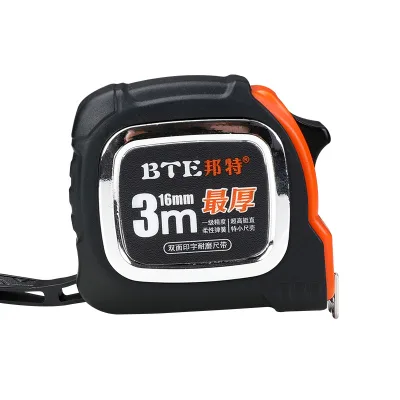


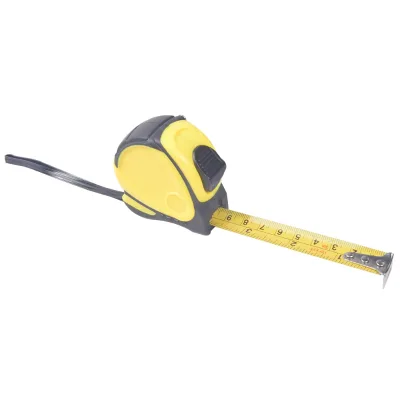


Comprehensive Sourcing Guide
Compact Retractable Measuring Tape Sourcing Guide
Procuring compact retractable measuring tapes requires balancing portability with measurement reliability for industrial and field applications. Buyers must distinguish between general-purpose tools and precision instruments, as the supplied data indicates a mix of standard plastic and iron-based devices with varying accuracy levels. Understanding whether the specific unit is a precision measuring device or a manual tool is the first critical step in defining the procurement scope.
The market offers diverse configurations, including models with assisted blade return and specific blade thicknesses ranging from 0.12 mm to 0.16 mm. Sourcing strategies should account for these physical variations, as they directly impact durability and the suitability for different measurement objects like length. Buyers should verify if the product meets the specific range requirements, such as the 50~75mm span observed in precision micrometers, or if a standard steel tape is more appropriate for general tasks.
Product Scope and Observed Listing Signals
The observed product listings reveal a wide spectrum of specifications, from basic plastic tools to high-precision iron micrometers with 0.01mm resolution. This variance suggests that a single supplier may offer multiple tiers of quality, necessitating careful filtering to ensure the selected item matches the intended application. Buyers should scrutinize the listed material, noting that some units are constructed from ABS or polyester shells while others utilize carbon steel blades for enhanced strength.
Listing signals also highlight significant differences in packaging and branding, with options ranging from standard brown boxes to custom requirements. Some suppliers offer laser logo printing or customized logo printing, which is essential for corporate branding but may affect the minimum order quantity. The presence of specific model numbers like EB-A0458 or size designations such as 1.30cm and 2.00cm indicates that buyers must explicitly request the exact model to avoid receiving a generic or mismatched product.
Technical Specifications to Verify
Technical verification must begin with the precision class and measurement method, as the data distinguishes between precision measuring devices and manual tools. For applications requiring high accuracy, buyers should confirm the resolution is 0.01mm and the precision is within 0.015mm, whereas general tasks may only require a standard accuracy class A. It is vital to ensure the device is not mislabeled, as some listings describe non-precision devices that lack the necessary calibration for critical engineering work.
Blade specifications are equally critical, particularly the material composition and thickness, which determine the tape's resistance to bending and wear. The observed carbon steel blades with thicknesses of 0.12 mm, 0.14 mm, or 0.16 mm offer different trade-offs between flexibility and rigidity. Buyers should also verify the blade return type, as assisted return mechanisms significantly improve usability in one-handed operations compared to manual retraction systems.
Compliance and Safety Documentation
Compliance verification should focus on the specific standards cited in the product documentation, such as GB and JIS, which are explicitly mentioned in the supply data. These standards indicate adherence to regional manufacturing norms, but buyers must confirm that the specific batch of products meets the current version of these regulations. Relying solely on the "Normal" standard designation is insufficient for regulated industries, as it does not guarantee compliance with international safety or performance benchmarks.
Safety documentation must also address the material safety of the components, particularly the plastic and metal parts used in the construction. While the data lists materials like iron and ABS, it does not provide specific toxicity or flammability test results. Procurement teams should request material safety data sheets (MSDS) to ensure the products do not contain hazardous substances, especially when the tools are intended for use in environments with strict occupational health and safety requirements.
Cost Drivers and Commercial Terms
Cost drivers in this category are heavily influenced by the level of customization and the complexity of the manufacturing process. Products featuring laser logos or custom packaging often command higher prices and require larger minimum order quantities, such as the 1000 PCS or 6000 Pcs thresholds observed in the listings. Buyers should anticipate that precision instruments with iron components and high-resolution scales will carry a premium over standard plastic models due to the cost of raw materials and tighter quality control.
Commercial terms vary significantly regarding lead times and sample availability, with delivery windows ranging from 15 to 60 days after order confirmation. While some suppliers offer free samples, the sample time of 10-15 days must be factored into the overall project timeline. Buyers should negotiate clear terms for the loading port, such as Guangzhou, and ensure that the delivery detail of 45-60 days is realistic for their specific logistics chain to avoid production delays.
Supplier Qualification and Quality Control
Supplier qualification should prioritize those who explicitly state their export standards, such as the "100% Exporter Standard" noted in the product attributes. This claim suggests a baseline of quality control, but buyers must verify the actual production processes to ensure consistency across batches. It is essential to confirm that the supplier has the capacity to maintain the specified precision and material quality, especially when dealing with high-volume orders that require strict adherence to the 0.01mm resolution.
Quality control protocols must include a rigorous inspection of the measuring accuracy and the mechanical function of the retractable mechanism. Buyers should request pre-shipment inspection reports that validate the precision of the micrometers and the durability of the steel tapes. Given the variation in origins from Fujian, Zhejiang, and Henan, it is crucial to audit the specific factory to ensure that the quality control measures are consistent regardless of the production location.
Long-Term Procurement Checks
Long-term procurement success depends on establishing a reliable supply chain that can consistently meet the evolving needs of the business. Buyers should monitor the supplier's ability to maintain the specified lead times and delivery details over multiple order cycles. The variability in delivery times, ranging from 15 to 60 days, indicates a need for robust inventory planning to mitigate potential delays in receiving critical measuring tools.
Continuous performance monitoring is necessary to ensure that the products continue to meet the required standards and specifications over time. Buyers should track the rate of returns or defects related to blade breakage or inaccurate measurements to identify any degradation in product quality. Establishing a feedback loop with the supplier allows for early detection of issues and ensures that the long-term partnership remains aligned with the company's quality and operational goals.
FAQs
How do I choose the right blade length for a compact retractable measuring tape?
The right blade length depends on your typical measurement tasks, with common compact options around 3 m and 5 m. Shorter tapes suit tailoring, crafts, and small interiors, while 5 m covers construction and room layouts. Check blade thickness too, since listed options include 0.12 mm, 0.14 mm, and 0.16 mm, which affect stiffness and reach.
What materials are commonly used for compact retractable measuring tape blades and shells?
Blades are typically carbon steel, while shells may use ABS plastic or polyester. Carbon steel blades resist stretching and keep markings readable, and ABS shells absorb everyday drops and handling. Confirm the exact combination with the supplier before ordering, because material choices affect durability, weight, cost, and how the tape performs in humid or abrasive working environments.
Can I order compact retractable measuring tapes with a custom logo?
Yes, logo customization is available, with options including laser engraving or custom logo printing depending on the listing. Provide artwork early, since sample time is typically 10 to 15 days and delivery runs 45 to 60 days after order confirmation. Some suppliers also offer logo printing, so confirm which method suits your design and shell material before confirming production.
Which packaging options are available for bulk measuring tape orders?
Packaging varies by listing, with brown box packing and configured cartons such as 12 pieces per box across 120 boxes per carton appearing in the listings. Many suppliers also offer normal packing or customer-specified packaging. Confirm carton dimensions, unit counts, and any extra packaging cost before production, since bulk carton choices affect freight volume and retail readiness.
What is the typical minimum order quantity for compact retractable measuring tapes?
Minimum order quantities vary widely by supplier and model, with listed values ranging from 2 pieces to 6000 pieces. One Guangzhou listing states an MOQ of 1000 pieces, while another lists 6000 pieces. Low-MOQ listings suit sampling or trial orders, but unit pricing usually improves significantly at higher volumes, so balance budget against test-market needs.
How long does production and delivery take after an order is confirmed?
Lead times differ by listing: one states 45 to 60 days after the order is confirmed, while another states 15 to 25 days. Sample production typically takes 10 to 15 days before mass production begins. Factor in shipping time from ports such as Guangzhou, and always confirm the current schedule in writing, since seasonal demand can extend these windows.
What accuracy and resolution can I expect from these measuring tapes?
These are general-purpose manual measuring tools rather than precision measuring devices, so treat them as suitable for everyday length measurement. Some related listings specify resolution of 0.01 mm and precision of 0.015 mm for micrometer-type tools, but tape measures serve coarser tasks. For calibration-sensitive work, request accuracy documentation from the supplier before ordering.
Can I get samples of compact retractable measuring tapes before bulk production?
Yes, at least one listing offers free samples, and sample production time is typically 10 to 15 days. Use the sample stage to verify blade quality, lock strength, retract function, and logo printing results. Expect to pay shipping costs unless otherwise agreed, and approve the physical sample before mass production to avoid costly rework on large orders.