Source Competition Plastic Swimming Lane Lines for pools, gyms, and beaches
Find 30 Competition Plastic Swimming Lane Lines from verified Chinese manufacturers. Buyers can compare specifications like diameter and length, material options including PVC and stainless steel, and customization services for color and packaging.
Key considerations
Products List


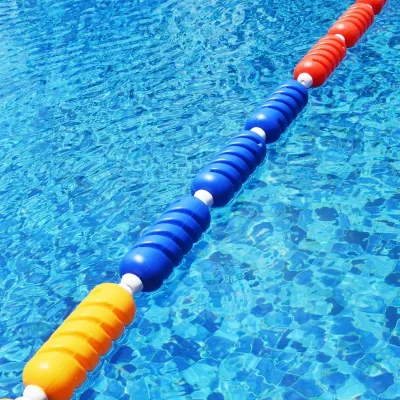
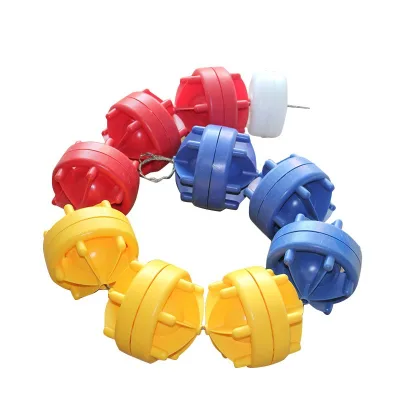
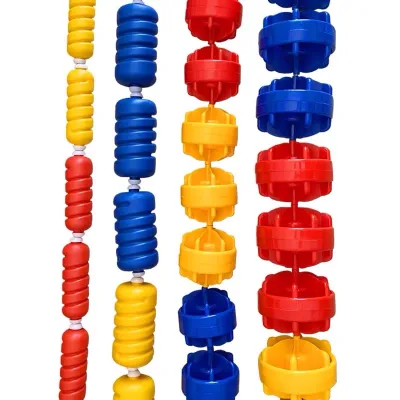
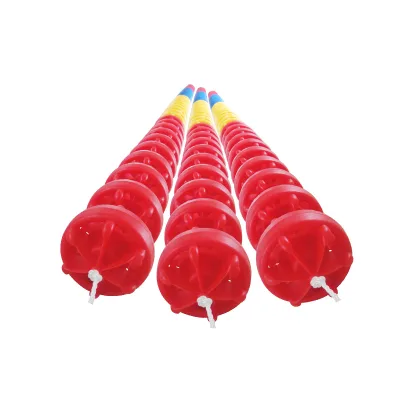
Comprehensive Sourcing Guide
Strategic Sourcing Guide for Competition Plastic Swimming Lane Lines
Understanding Technical Specifications and Material Composition
When sourcing competition-grade plastic swimming lane lines, buyers must first establish a clear understanding of the technical parameters that define product suitability for high-performance environments. The core material composition is a primary determinant of durability and buoyancy. Available data indicates that these products are predominantly constructed from high-quality plastic, with some variations incorporating stainless steel lines to ensure structural integrity under tension. The specific material selection often includes PVC (Polyvinyl Chloride) formulations, which are chosen for their resistance to chlorine degradation and UV exposure, critical factors for both indoor and outdoor aquatic facilities.
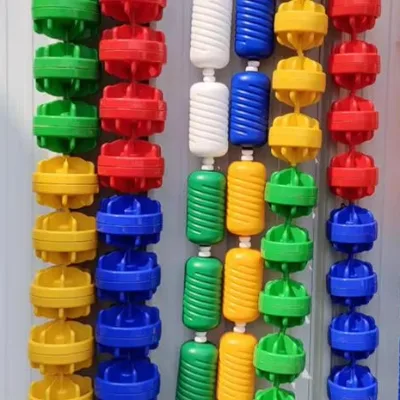
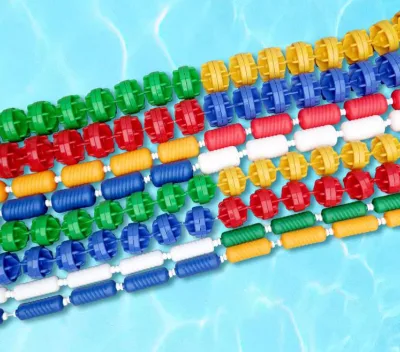
The physical dimensions of the lane lines are equally critical for regulatory compliance in competitive swimming. The diameter of the floating segments varies significantly across different models, with observed specifications ranging from 6cm to 15cm. Specific model configurations highlight distinct diameter options, such as 120mm (12cm) and 150mm (15cm) for certain standard models, while other variants offer 6cm, 9cm, 11cm, and 12cm diameters. The length of the lane lines is standardized to accommodate pool dimensions, with common offerings including 25-meter and 50-meter lengths. These lengths correspond to the standard pool sizes used in international competitions. Buyers should verify that the selected product matches the specific pool length requirements of their facility, as the standard specifications often list 25m and 50m as the primary production standards.
The color coding of the lane lines is not merely aesthetic but serves a functional role in race management. The observed color palette includes Red, White, Blue, Yellow, and Green. These colors are often customizable, allowing facilities to align with branding or specific competition protocols. The customization services extend beyond color, supporting tailored specifications for unique pool layouts. The packaging for these items is typically provided in cartons, ensuring protection during transit, though some listings may refer to general "package" terminology. Understanding these baseline specifications is the first step in narrowing down the supplier pool to those capable of meeting precise engineering requirements.
Compliance Standards and Certification Verification
In the realm of competitive swimming equipment, compliance with international and regional standards is non-negotiable. Buyers must rigorously verify that suppliers adhere to recognized quality management and safety certifications. The supplied data highlights several key certifications that are relevant to this product category, including CE, SGS, and ISO. The presence of CE marking indicates conformity with health, safety, and environmental protection standards for products sold within the European Economic Area. SGS certification suggests that the product has undergone third-party testing for quality and safety, while ISO certification points to adherence to international quality management systems.
However, it is crucial to treat these certifications as observations of specific product listings rather than universal guarantees for every item in the market. Buyers should not assume that all listed products automatically possess these certifications. Instead, the procurement strategy must involve direct verification with the supplier. Requesting valid, up-to-date certification documents is a mandatory step before finalizing any purchase order. The absence of specific certification data in a general product description should trigger a deeper inquiry into the supplier's quality assurance processes.
Furthermore, the product origin plays a significant role in the supply chain's reliability. The majority of the observed data points to China as the primary manufacturing location, with specific mentions of Guangzhou as a production hub. While this indicates a robust manufacturing base, buyers must ensure that the specific factory or supplier they engage with maintains consistent quality control standards regardless of their geographic location. The standard specifications also mention a "25m/50m" standard, which aligns with global swimming federation requirements, but buyers must confirm that the specific product they select meets the exact dimensional tolerances required by their local governing bodies.
Cost Drivers and Pricing Dynamics
The pricing structure for Competition Plastic Swimming Lane Lines is influenced by a complex interplay of factors, including material costs, customization requirements, and order volume. The observed price range for these products spans from $1 to $430 USD. This wide variance suggests that the final cost is heavily dependent on the specific configuration of the order. A single lane rope or a small component will naturally fall at the lower end of the spectrum, while a complete set for a 50-meter pool, potentially including custom colors and specialized fittings, will approach the higher price points.
Minimum Order Quantity (MOQ) is another significant driver of cost efficiency. The data indicates an MOQ range of 1 to 25 units. For smaller facilities or those testing a new supplier, an MOQ of 1 allows for low-risk procurement. However, for large-scale projects or bulk purchasing, negotiating an MOQ closer to the upper limit of 25 units may yield better unit economics. Buyers should analyze their total project requirements to determine the optimal order size that balances inventory costs with per-unit pricing.
Customization is a major factor that can elevate the price. While standard colors like Red, Blue, Yellow, White, and Green are likely available at base prices, requests for specific color combinations or unique branding can incur additional charges. The "Support Color Customization" feature mentioned in the data confirms that this is a standard service, but the cost implications must be clarified during the negotiation phase. Additionally, the inclusion of stainless steel lines alongside plastic components may increase the material cost compared to all-plastic variants. Buyers should request a detailed breakdown of costs to understand the premium associated with specific features like UV protection, extended warranties, or specialized packaging.
Typical Applications and Operational Requirements
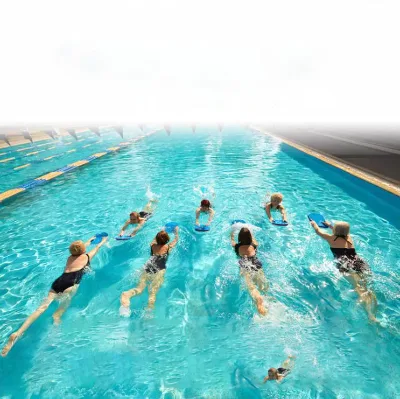
Competition Plastic Swimming Lane Lines are designed for a variety of aquatic environments, with the primary application being competitive swimming pools. The data explicitly identifies "Competition Pool" and "Swimming Competition" as the primary usage scenarios. These products are engineered to withstand the rigors of high-intensity racing, providing clear visual separation for swimmers and minimizing wave interference. The "Easy Install" feature is a critical operational advantage, allowing facility managers to set up or reconfigure lanes quickly without specialized tools or extensive labor.
Beyond competitive venues, these lane lines find application in other settings such as playgrounds, gardens, gyms, and bathrooms. The versatility of the product allows for use in training pools, recreational centers, and even spa pools, as indicated by the "Spa Pool" attribute. The "Pool Shape" attribute noting "All" suggests that the lane lines are adaptable to various pool geometries, including rectangular and potentially non-standard shapes. The "Control Way" being listed as "Hand" implies manual adjustment mechanisms, which are standard for most competitive setups where precise lane positioning is required.
The durability of the product is further enhanced by features such as UV protection, which is essential for outdoor pools exposed to direct sunlight. This feature prevents the plastic from becoming brittle or fading over time, ensuring a longer service life. The warranty period, observed as 1 Year in the data, provides a baseline for product reliability, though buyers should verify if extended warranties are available for commercial-grade installations. The "Age Group" specification of "Adults" indicates that these products are designed for the physical demands of competitive swimmers, though they are generally suitable for all ages in a recreational context.
Supplier Evaluation and Quality Control Protocols
Selecting the right supplier requires a systematic evaluation of their capabilities, reliability, and quality control measures. Given that the product origin is primarily China, buyers should prioritize suppliers with a proven track record in exporting aquatic equipment. The presence of certifications like CE, SGS, and ISO is a strong indicator of a supplier's commitment to quality, but these should be verified through direct communication. Buyers should request copies of these certificates and check their validity dates to ensure they are current.
Quality control should be a central component of the procurement process. Buyers must inquire about the supplier's internal testing procedures, particularly regarding the tensile strength of the stainless steel lines and the buoyancy of the plastic floats. The specification of diameters ranging from 6cm to 15cm suggests that different models serve different purposes, and the supplier must demonstrate consistency in manufacturing these variations. The "Customization" attribute implies that the supplier has the flexibility to adjust production lines, but this flexibility must not come at the expense of quality.
When evaluating suppliers, buyers should also consider the packaging standards. The data mentions "Carton" and "Carton Packing" as standard methods, which is crucial for preventing damage during international shipping. A supplier that uses substandard packaging may lead to damaged goods upon arrival, resulting in additional costs and delays. Additionally, the "Seating Capacity" attribute mentioning ">10 People" might be relevant for related equipment or accessories, but for lane lines, the focus should remain on the structural integrity of the line itself. Buyers should ask for references from other clients who have purchased similar products for competitive facilities to gauge the supplier's reliability in real-world scenarios.
Long-Term Procurement and Maintenance Considerations
Sourcing Competition Plastic Swimming Lane Lines is not a one-time transaction but part of a long-term operational strategy. Buyers should consider the lifecycle of the product, including maintenance requirements and replacement cycles. The "1 Year Warranty" provides a safety net, but for facilities with high usage rates, the actual lifespan of the lane lines may extend beyond this period if properly maintained. The UV protection feature is a key long-term asset, reducing the frequency of replacements due to sun damage.
Procurement planning should also account for the potential need for future customization or expansion. As facilities evolve, they may require additional lane lines or different color schemes to accommodate new events or branding changes. Suppliers that offer robust customization services and have a flexible production capacity are better positioned to support these long-term needs. The ability to source additional units with the same specifications is crucial for maintaining consistency across the facility.
Furthermore, buyers should establish a relationship with the supplier that facilitates ongoing support. This includes access to technical assistance for installation issues, availability of spare parts, and clear communication channels for warranty claims. The "Easy Install" feature simplifies initial setup, but having a reliable supplier for troubleshooting or replacement parts ensures minimal downtime. By focusing on suppliers who demonstrate a commitment to long-term partnership rather than just a single sale, buyers can secure a stable supply chain for their aquatic infrastructure needs.
Comparative Analysis of Product Variants
To assist buyers in making informed decisions, the following table summarizes the key variations observed in the product specifications. This comparison highlights the differences in diameter, length, and material composition that influence the selection process.
| Feature | Variant A (Standard) | Variant B (Heavy Duty) | Variant C (Custom) |
|---|---|---|---|
| Diameter | 120mm, 150mm | 6cm, 9cm, 11cm | Customizable |
| Length | 25m, 50m | 25m, 50m | Customizable |
| Material | Plastic | Plastic + Stainless Steel | PVC / Plastic |
| Color | Red, White, Blue, Yellow, Green | Red, Blue, Yellow, White | Custom Color |
| Standard | CE, SGS, ISO | CE | Custom |
| Origin | China (Guangzhou) | China | China |
| Packing | Carton | Carton | Carton |
This table illustrates that while standard variants offer fixed specifications suitable for most pools, heavy-duty and custom options provide the flexibility needed for specialized applications. Buyers should match their specific pool dimensions and usage requirements to the appropriate variant to ensure optimal performance and compliance.
FAQs
What materials are used for Competition Plastic Swimming Lane Lines?
These lane lines are primarily constructed from high-quality plastic, with some variants incorporating stainless steel lines for structural integrity. PVC formulations are common due to their resistance to chlorine and UV exposure, ensuring durability in both indoor and outdoor competitive environments.
Which diameter sizes are available for swimming pool lane ropes?
Available diameters range from 6cm to 15cm, with specific models offering 120mm and 150mm options. Buyers should verify the exact diameter required, as specifications include 6cm, 9cm, 11cm, 12cm, and 15cm to match different pool standards and competition regulations.
Can buyers customize the color of the swimming lane lines?
Yes, support for color customization is available for these products. Standard colors include red, white, blue, yellow, and green, but facilities can request specific color combinations to align with branding or specific competition protocols without altering the core product functionality.
What certifications do these swimming lane lines typically hold?
Many listings indicate compliance with CE, SGS, and ISO standards. Buyers must verify these certifications directly with the supplier as they are not universal guarantees, ensuring the product meets health, safety, and quality management requirements for international markets.
How are these lane lines packaged for international shipping?
Products are typically packed in cartons to ensure protection during transit. Some listings may refer to general packaging, but carton packing is the standard method observed to prevent damage while transporting the 25-meter or 50-meter lengths to various global destinations.
What is the standard length for competition swimming pool lane ropes?
The standard lengths are 25 meters and 50 meters, corresponding to international competition pool sizes. These dimensions are designed to accommodate the specific requirements of competitive swimming facilities, ensuring proper lane separation and wave management during races.
Where are these competition swimming lane lines manufactured?
The majority of these products originate from China, with specific production hubs mentioned in Guangzhou. Buyers should confirm the specific factory location to ensure consistent quality control standards, as the manufacturing base supports a robust supply chain for aquatic equipment.