Source Competition Bumper Weight Plates for Gyms, Home, and Parks
Explore 30 listings for Competition Bumper Weight Plates designed for strength and fitness training. Buyers can compare specifications, certifications, and customization options from verified manufacturers in China.
Key considerations
Products List


Comprehensive Sourcing Guide
Strategic Sourcing Guide for Competition Bumper Weight Plates
Technical Specifications and Product Architecture
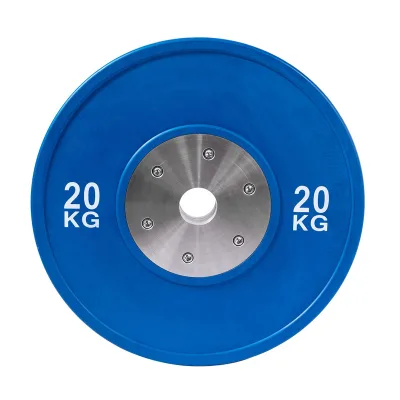
When sourcing Competition Bumper Weight Plates, the primary objective is to identify equipment that meets rigorous dimensional and material standards required for high-level athletic performance. The core product category involves rubber plates designed for strength training and fitness applications, specifically tailored for use in gymnasiums, home setups, parks, and community centers. A critical technical observation for buyers is the consistency of the central hole diameter, which is a pivotal factor for compatibility with Olympic-style barbells. The supplied data indicates a specific ring diameter option of 51mm, a standard dimension that ensures the plates slide smoothly onto the barbell sleeve without excessive play or friction.
Material composition is another non-negotiable specification. The product is constructed from rubber, a material chosen for its ability to absorb impact when dropped, thereby protecting both the flooring and the barbell. The durability of the rubber compound is a key performance indicator, with product attributes explicitly noting features such as "Anti-Fall and Durable." This suggests a formulation capable of withstanding repeated drops from overhead positions, a common occurrence in competitive lifting scenarios. The standard weight increments observed in the market data include 5kg, 10kg, 15kg, 20kg, and 25kg, with some listings covering a broader range from 2.5kg to 25kg. Buyers must verify that the specific models they procure adhere to these standard weight classes to ensure compatibility with competition sets.
The structural integrity of the plate is often defined by its model number and production standard. Variations such as "Dy-H-2007" and "DY-H2009b" suggest different manufacturing iterations or design specifications. While the exact physical differences between these models are not detailed in the provided facts, the presence of multiple model numbers indicates that buyers should request detailed technical drawings or physical samples to confirm that the specific model aligns with their required specifications. Furthermore, the product is designed for unisex use and targets the adult age group, implying a robust build quality suitable for heavy loads. The power source is manual, confirming that these are non-motorized resistance tools, and the application is universal, suitable for both professional and recreational environments.
Compliance, Certification, and Regulatory Standards
Navigating the regulatory landscape is essential for B2B procurement, particularly when importing fitness equipment. The supplied product facts highlight specific certifications that serve as indicators of compliance and safety. The data explicitly lists CE and RoHS certifications, with some entries noting a combined "CE, ISORoHS" status. The CE mark indicates conformity with health, safety, and environmental protection standards for products sold within the European Economic Area. RoHS (Restriction of Hazardous Substances) compliance ensures that the rubber and any metal components do not contain specific hazardous materials, which is a critical requirement for international trade and consumer safety.
However, buyers must exercise caution regarding the interpretation of these certifications. The presence of "ISORoHS" in the text may be a typographical variation of ISO standards combined with RoHS, but the exact ISO standard number is not specified in the provided context. Therefore, procurement teams should not assume a specific ISO certification (such as ISO 9001 for quality management) without direct verification from the supplier. Instead, the buyer should request valid certification documents that clearly state the issuing body and the specific standard number. The absence of a specific ISO number in the raw data means that asserting a specific standard would be an invention of facts not present in the source material.
Additionally, the product is described as having a "Standard" type, which implies adherence to general industry norms for weight plates. For competition-grade equipment, the tolerance levels for weight accuracy are typically stricter than for general fitness equipment. While the provided text mentions weight standards like 5kg or 25kg, it does not specify the allowable tolerance (e.g., +/- 1%). Buyers must verify that the supplier can meet the strict weight tolerance requirements of international federations if the plates are intended for official competition use. The "Competition" attribute linked to "Summer Games" in the product description suggests a design intent for high-level events, but this should be treated as a product feature claim rather than a guarantee of official federation approval without further documentation.
Cost Drivers and Pricing Dynamics
Understanding the cost structure of competition bumper plates is vital for budgeting and negotiation. The observed price range in the market data spans from 0.7 to 4.02 USD. This wide variance suggests that the unit price is heavily influenced by factors such as the specific weight of the plate, the quality of the rubber compound, the complexity of the molding process, and the volume of the order. A plate priced at 0.7 USD likely represents a bulk purchase of a lighter weight or a lower-tier material grade, whereas the 4.02 USD figure may reflect a premium product with stricter tolerances, custom branding, or a smaller order volume.
The Minimum Order Quantity (MOQ) is a significant driver of the effective unit cost. The data indicates an MOQ range of 300 to 5000 units, with a specific high-confidence fact noting an MOQ of 1000kg. This weight-based MOQ requirement means that the total cost is not just a function of the number of plates but the total mass ordered. For example, ordering 1000kg of 25kg plates requires only 40 units, whereas ordering 1000kg of 5kg plates requires 200 units. Buyers must calculate the total cost based on the weight requirement rather than just the unit count to avoid underestimating the financial commitment.
Customization is another major cost factor. The product attributes confirm that customization is available, including "Free Logo Cost" and "Customized Logo Available." While some suppliers may offer logo customization at no additional charge, this often comes with a higher base MOQ or a longer lead time. The ability to accept OEM (Original Equipment Manufacturer) orders is also noted, which allows buyers to rebrand the product. However, the implementation of custom molds or specific color schemes for competition plates can increase the initial tooling costs and the per-unit price. Buyers should request a detailed breakdown of costs to distinguish between the base product price and any surcharges for customization, packaging, or logistics.
Typical Applications and Usage Scenarios
Competition Bumper Weight Plates are designed for a diverse range of applications, from professional training facilities to community centers. The product attributes explicitly list applications including "Home," "Gymnasium," "Park," and "Community." This versatility indicates that the plates are robust enough to withstand the rigors of commercial gym use while being safe and aesthetically suitable for public spaces. The "Universal" application tag suggests that these plates are not limited to a single type of workout but are suitable for a wide array of strength training exercises, including squats, deadlifts, and overhead presses.
The "Exercise Part" is listed as "Arm," which is a specific observation that may seem narrow for a weight plate. In the context of procurement, this likely refers to the engagement of the arm muscles during lifting movements or a specific categorization within the supplier's database. However, the primary function is clearly identified as "Strength Training" and "Fitness Training." The plates are designed to be dropped, making them ideal for Olympic weightlifting and CrossFit-style workouts where the equipment is frequently subjected to impact. The "Folded" attribute is listed as "Unfolded," which is a standard state for solid weight plates, distinguishing them from collapsible or adjustable equipment.
For buyers targeting the "Summer Games" market, the application extends to high-performance training environments. The plates must maintain their shape and weight accuracy even after repeated impacts. The "Anti-Fall" feature mentioned in the product attributes reinforces their suitability for environments where dropping weights is a standard practice. Whether the end-user is a professional athlete training for competition or a community center serving the general public, the durability and safety features of the rubber bumper plates are the primary value propositions. The "Standard" type designation further supports their use in formal training settings where equipment consistency is paramount.
Supplier Evaluation and Origin Verification
Evaluating suppliers requires a careful analysis of their geographical origin and logistical capabilities. The supplied data presents conflicting or varied origin information, listing "Shandong, China," "Anhui, China," and a general "China" origin. This variation highlights the importance of verifying the specific manufacturing location for each order. Different provinces in China may have different industrial clusters, supply chains, and labor costs, which can influence the final product quality and price. Buyers should explicitly confirm the factory location in the contract to ensure transparency and to assess the logistical implications of shipping from that specific port.
The loading ports mentioned include Nantong, Shanghai, and Ningbo. These are major shipping hubs on the east coast of China, offering excellent connectivity for international freight. The availability of multiple ports suggests that the supplier has flexibility in logistics, which can be advantageous for buyers looking to optimize shipping costs or delivery times. However, the specific port used for a given order should be confirmed during the negotiation phase, as shipping costs can vary significantly between ports.
Supplier reliability is further assessed through their lead time and production capacity. The data indicates a lead time of 20-30 days. This timeframe is typical for custom manufacturing but requires careful planning on the part of the buyer to ensure inventory levels are maintained. The ability to accept OEM orders and provide customized logos indicates a supplier capable of adapting to specific buyer requirements. However, the presence of "Free Logo Cost" alongside "Customized Logo Available" suggests that there may be different tiers of service or conditions attached to these offers. Buyers should clarify the terms of customization, including any minimum order thresholds or design limitations, to avoid unexpected costs or delays.
Quality Control and Long-Term Procurement Considerations
Quality control is the cornerstone of successful procurement for competition equipment. The product attributes emphasize features like "Durable" and "Anti-Fall," which are qualitative claims that must be validated through rigorous testing. Buyers should request third-party test reports or certification documents that verify the impact resistance and weight accuracy of the plates. The "Polybag + Box + Carton" and "Polybag+Carton+Wooden Case" packing options indicate different levels of protection. For international shipping, the wooden case option is often preferred for heavy or high-value items to prevent damage during transit. Buyers should specify the packaging requirements based on the fragility of the goods and the shipping distance.
Long-term procurement considerations involve the sustainability and maintenance of the equipment. The rubber material used in these plates is generally durable and resistant to wear, but exposure to direct sunlight or extreme temperatures can degrade the material over time. Buyers should advise their end-users on proper storage conditions to extend the lifespan of the plates. Additionally, the "Unisex" and "Adult" target demographics suggest that the equipment is designed for long-term use by a wide range of users. Ensuring that the plates meet the weight standards (5kg to 25kg) consistently is crucial for maintaining trust in the equipment.
The "Model Number" variations (e.g., Dy-H-2007, DY-H2009b) suggest that buyers should establish a clear specification sheet for future orders to ensure consistency. If a buyer initially orders a specific model and later needs to reorder, they must ensure that the new batch matches the original in terms of dimensions, weight, and material. The "Standard" classification implies a baseline quality, but for competition use, buyers should verify that the supplier can maintain this standard across all production runs. Finally, the "OEM" capability allows for brand building, but buyers must ensure that the customization process does not compromise the structural integrity or safety of the plates. By focusing on these quality and consistency factors, buyers can secure a reliable supply of Competition Bumper Weight Plates that meet the demands of the fitness and athletic markets.
FAQs
What certifications do these competition bumper plates have?
These plates carry CE and RoHS certifications to ensure safety and environmental compliance. Some listings also mention combined CE and ISO standards, but buyers should request specific document numbers to verify the exact ISO standard applied to the manufacturing process.
Can I customize the logo on these weight plates?
Yes, customized logos are available with some suppliers offering free logo costs. Buyers must confirm the specific terms, as customization often requires meeting a minimum order quantity or accepting a longer lead time of 20 to 30 days for production.
What is the minimum order quantity for these plates?
The minimum order quantity typically ranges from 300 to 5000 units, with a specific requirement of 1000kg for some suppliers. This weight-based MOQ means the total cost depends on the plate weight, requiring buyers to calculate the total mass needed for their order.
Which ring diameter options are available for these plates?
A standard ring diameter option of 51mm is available to ensure compatibility with Olympic-style barbells. This dimension allows the plates to slide smoothly onto the barbell sleeve without excessive play, which is critical for safe and effective strength training.
How long is the lead time for manufacturing these plates?
The standard lead time for manufacturing these plates is 20 to 30 days. This timeframe accounts for production and customization, so buyers should plan their inventory orders well in advance to avoid delays in receiving the equipment for their gym or facility.
What materials are used to make these competition plates?
The plates are constructed from durable rubber designed to absorb impact when dropped. This material protects flooring and barbells while ensuring the plates remain intact during repeated use in gymnasiums, parks, and home training environments.
Which standard weight increments are offered for these plates?
Standard weight increments include 5kg, 10kg, 15kg, 20kg, and 25kg, with some models covering a range from 2.5kg to 25kg. These standard classes ensure compatibility with competition sets and allow for progressive loading in various strength training routines.