Source Computer Case Sheet Metal Enclosure for Industry, Medical, and Surveillance
Find 30 verified options for Computer Case Sheet Metal Enclosure tailored to industrial, medical, and surveillance needs. Buyers can compare customization levels, materials like carbon or stainless steel, and lead times directly from suppliers in China.
Key considerations
Products List


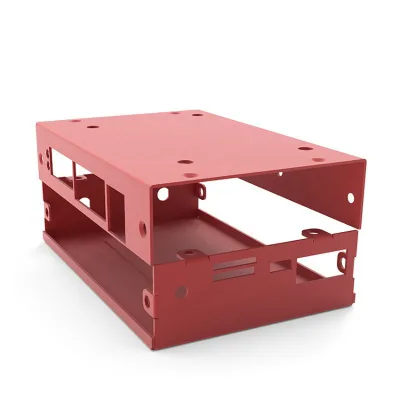
Customized Sheet Metal Computer Case Metal Case PC Case Metal Fabrication
$100.00 - $300.00
MOQ: 100 Pieces


Custom Sheet Metal Fabrication Service Aluminum Computer Enclosure Case
$5.00 - $30.00
MOQ: 100 Pieces




Comprehensive Sourcing Guide
Strategic Sourcing Guide for Computer Case Sheet Metal Enclosures
Understanding Technical Specifications and Material Variability
When sourcing computer case sheet metal enclosures, buyers must first navigate a landscape of diverse technical specifications that directly impact the functionality and longevity of the final product. The core material selection is a primary decision point, with the supply data indicating a prevalence of both Carbon Steel and Stainless Steel options. Carbon steel is often selected for its structural integrity and cost-effectiveness in general industrial applications, while Stainless Steel is preferred for environments requiring corrosion resistance or specific hygiene standards. The specific application dictates the material choice, with observed use cases ranging from industry and commercial settings to electric, medical, and surveillance systems.
Dimensional precision is equally critical. The market offers OEM customized models where the size is tailored to specific requirements, often with tolerances ranging from 0.01mm to +/-0.10mm depending on the supplier's capability. For network cabinets specifically, capacity is a key metric, with observed configurations spanning from 10U to 20U. These enclosures are frequently designed for wall-mounted installations, serving as housings for video surveillance systems, network integration systems, remote monitoring, and closed-circuit monitoring. The "Fine Blanking" process is noted as an available option, suggesting high-precision cutting capabilities for specific components, while the "Mould" section indicates the use of simple single-process dies for certain manufacturing runs. Buyers should verify if the specific vendor can meet the tight tolerance requirements of 0.01mm for high-precision electronic housings or if the standard +/-0.10mm tolerance suffices for general utility enclosures.
Compliance, Certification, and Industrial Standards
Navigating the compliance landscape for sheet metal enclosures requires a rigorous verification of industrial standards and certifications. The observed supply chain data highlights adherence to a robust set of international and national standards, including GB (China), EN (European), API650, JIS Code, and Tema. These standards ensure that the manufacturing processes meet specific structural and safety benchmarks. For buyers operating in regulated industries, confirming that the supplier adheres to these specific codes is non-negotiable. The "Industrial Standard" field explicitly lists these diverse codes, indicating that a capable supplier should be able to produce units compliant with multiple regional requirements.
Certification status is another pillar of compliance. The provided facts list ISO9001 and Ts16949 as available certifications, alongside general ISO certification. These certifications validate the supplier's quality management systems and their ability to maintain consistent production standards. While some background information mentions ISO 2768 or CE, these should be treated as potential attributes rather than guaranteed facts for every listed product. Buyers must explicitly request proof of current ISO9001 and Ts16949 certification for any specific order, as these are the high-confidence credentials observed in the supply data. The "Standard" field also notes that production can be "according to requirement" or "as required," meaning that custom compliance protocols can be negotiated, but the baseline expectation should be the established industrial codes.
Cost Drivers and Pricing Dynamics
The pricing structure for computer case sheet metal enclosures is highly variable, influenced by material costs, customization levels, and order volume. The observed listed price range in the market spans from 0.1 to 500 USD, reflecting the vast difference between simple, mass-produced components and complex, fully customized network cabinets. This wide range underscores the importance of defining the scope of work before requesting quotes. A basic carbon steel enclosure will sit at the lower end of this spectrum, whereas a stainless steel, wall-mounted network cabinet with specific mounting capacities and custom finishes will command a higher price point.
Minimum Order Quantity (MOQ) is a significant cost driver. The data presents a dichotomy in MOQ requirements, with some suppliers offering as low as 5 pieces, while others require 100 or even up to 10,000 pieces. This variance suggests that buyers can access small-batch prototyping services with lower MOQs, but achieving the most competitive unit price often requires meeting higher volume thresholds. The "Bulb Lead Time" is noted as negotiable, which may imply flexibility in production scheduling that could impact costs. Additionally, the "Surface Treatment" options, such as powder coating, galvanization, passivation, and polishing, add layers of cost. Buyers should understand that each additional surface treatment process increases the final unit price and must be factored into the total cost of ownership.
Typical Applications and Functional Requirements
The versatility of sheet metal enclosures is evident in their wide array of applications. The supply data identifies usage in Industry, Commercial, Electric, and Medical sectors. Specifically, for the "Network Cabinet" category, the enclosures are designed for Video Surveillance Systems, Network Integration Systems, Remote Monitoring Systems, and Wireless Monitoring Systems. These applications demand specific features, such as wall-mounted installation capabilities and precise internal capacities (10U-20U). The "Product Type" is frequently listed as "OEM Metal," indicating that these enclosures are often custom-engineered to fit specific electronic assemblies rather than being off-the-shelf generic boxes.
The "Condition" of the products is consistently noted as "New," ensuring that buyers receive fresh manufacturing runs without refurbished components. The "Installation" method is a critical functional requirement, with "Wall-Mounted Cabinet" being a specific attribute observed. This implies that the structural design includes reinforced mounting points and specific dimensional constraints to ensure stability when attached to vertical surfaces. For medical or electric applications, the surface processing options like passivation and polishing become crucial for hygiene and safety. Buyers must match the application's environmental demands with the appropriate material and surface treatment, ensuring the enclosure can withstand the specific operational conditions of the intended site.
Supplier Evaluation and Manufacturing Capabilities
Evaluating a supplier for sheet metal enclosures requires a deep dive into their manufacturing processes and logistical capabilities. The observed "Process" attributes include Laser Cutting, Punching, Bending, Welding, and Forming Processes. These indicate a comprehensive in-house manufacturing capability that can handle complex geometries. The "Surface Processing" capabilities, such as Polishing, Powder Coating, and Galvanization, further demonstrate the supplier's ability to deliver finished products ready for installation. Buyers should verify that the supplier possesses the specific machinery required for their desired tolerances, particularly if the 0.01mm precision is required.
Logistics and origin are also key evaluation factors. The "prod_origin" is listed as China, with specific locations including Shanghai and Jiangsu. This concentration suggests a mature manufacturing hub with established supply chains. However, buyers must verify the specific factory location to assess shipping logistics and potential tariffs. The "Mould" attribute mentions "Simple Single Process Dies," which may indicate that for highly complex custom shapes, the supplier might rely on external tooling or different manufacturing strategies. A thorough supplier evaluation should include a request for a process flow diagram to understand how raw materials are transformed into the final enclosure, ensuring that the "Forming Process" and "Welding" steps meet the buyer's quality expectations.
Quality Control and Long-Term Procurement Considerations
Quality control in sheet metal enclosure procurement hinges on the verification of tolerances and surface treatments. The observed tolerance ranges of 0.01mm and +/-0.10mm serve as benchmarks for quality. Buyers must establish clear acceptance criteria based on these tolerances, as deviations can lead to fitment issues with internal electronic components. The "Quality" attribute is noted as "as Your Require," which is a flexible but potentially risky statement. It implies that quality standards are negotiated per order, so buyers must explicitly define their quality requirements in the purchase order, referencing specific ISO standards or internal specifications.
Long-term procurement considerations involve packaging and delivery reliability. The "prod_packing" options include Carton, Wood Pallet, Wood Case, and Wooden Box, with some suppliers offering OEM packaging. Proper packaging is essential to prevent damage during transit, especially for wall-mounted cabinets that may have protruding features. The "Delivery Time" is observed to be 20-35 days, with sample lead times available within 7 days. This timeline should be factored into the procurement schedule, particularly for time-sensitive projects. The "Bulb Lead Time" being negotiable suggests that production schedules can be adjusted, but this flexibility should be confirmed in writing. Finally, buyers should consider the "Standard" of "Customized" or "OEM" as a long-term strategy, ensuring that the supplier can maintain consistency in custom specifications over multiple production runs, thereby securing a stable supply chain for their specific enclosure needs.
Comparative Analysis of Supplier Attributes
To facilitate decision-making, the following table summarizes the key attributes observed in the supply data, highlighting the variability buyers must navigate.
| Attribute Category | Observed Options | Implication for Buyer |
|---|---|---|
| Material | Carbon Steel, Stainless Steel | Select based on corrosion needs and budget. |
| Tolerance | 0.01mm, +/-0.10mm | Define precision needs; 0.01mm is high precision. |
| MOQ | 5, 100, 10,000 Pieces | Lower MOQ for prototyping; higher for cost efficiency. |
| Surface Treatment | Powder Coating, Galvanization, Passivation, Polishing | Choose based on environmental exposure and aesthetics. |
| Certifications | ISO9001, Ts16949, ISO | Verify current status; these are high-confidence claims. |
| Origin | China (Shanghai, Jiangsu) | Factor in shipping and potential trade regulations. |
| Lead Time | 7 Days (Sample), 20-35 Days (Bulk) | Plan production schedules accordingly. |
| Standard | GB, EN, API650, JIS, Tema | Ensure compliance with regional regulatory requirements. |
This comparative view underscores that there is no single "best" supplier; rather, the optimal choice depends on the specific alignment of these attributes with the buyer's project requirements. By rigorously matching these observed facts to their internal needs, buyers can mitigate risk and secure high-quality sheet metal enclosures for their computer case applications.
FAQs
What materials are used for computer case sheet metal enclosures?
Suppliers typically use Carbon Steel or Stainless Steel for these enclosures. Carbon steel offers structural integrity for general industrial use, while Stainless Steel is selected for environments requiring corrosion resistance or specific hygiene standards.
Can I get custom sizes for network cabinets?
Yes, the product model is OEM Customized with sizes tailored to specific requirements. Buyers can specify dimensions for wall-mounted cabinets with capacities ranging from 10U to 20U for video surveillance or network integration systems.
Which certifications do these manufacturers hold?
High-confidence facts indicate suppliers hold ISO9001 and Ts16949 certifications. These credentials validate the quality management systems required for producing compliant industrial enclosures that meet diverse regional standards like GB, EN, and JIS.
How long does delivery take for bulk orders?
The standard delivery time for bulk orders is typically 20 to 35 days. Sample lead times are faster, often available within 7 days, while specific bulb lead times may be negotiable depending on production schedules.
What is the minimum order quantity for these parts?
Minimum order quantities vary significantly, ranging from 5 pieces to 10,000 pieces depending on the supplier. Lower MOQs are available for prototyping, while higher volumes are often required to achieve competitive unit pricing.
Which surface treatments are available for these enclosures?
Available surface treatments include Powder Coating, Galvanization, Passivation, and Polishing. These processes are selected based on the application environment, such as medical or electric sectors, to ensure durability and safety.
Where are these metal enclosures manufactured?
Products originate from China, with specific manufacturing hubs located in Shanghai and Jiangsu. Buyers should verify the exact factory location to assess shipping logistics and potential trade regulations for their specific procurement needs.