Find Continuous Rotary Alfalfa Dryer for Mining, Wood Chips, and Dung
Source 30 verified units of the Continuous Rotary Alfalfa Dryer designed for diverse industrial applications. Buyers can compare specifications such as capacity, temperature ranges, and drying mediums to select the optimal model for mining, wood chips, or animal dung waste processing.
Key considerations
Products List


Three Layers Rotary Drum Type Alfalfa Grass Dryer with Factory Price
$22000.00 - $58000.00
MOQ: 1 Sets

Three Layers Rotary Drum Type Alfalfa Grass Dryer, Triple Pass Rotary Drum Dryer
$22000.00 - $58000.00
MOQ: 1 Sets

Three Layers Rotary Drum Alfalfa Grass Dryer, Industrial Rotary Drying Machine
$22000.00 - $58000.00
MOQ: 1 Sets

High Efficiency Alfalfa Grass Rotary Dryer, Alfalfa Biomass Rotary Dryer
$22000.00 - $58000.00
MOQ: 1 Sets


Wet Grass Hay Drying Machine, Alfalfa Hay Rotary Drum Dryer for Animal Feeds
$20000.00 - $55000.00
MOQ: 1 Pieces

Professional Manufacturer Alfalfa Grass Rotary Dryer Hay Drying Machinery for Sale
$20000.00 - $55000.00
MOQ: 1 Pieces


Pasture Alfalfa Drying and Granulating Production Line with Baler Device
$20000.00 - $55000.00
MOQ: 1 Pieces


Bay Leaf Drying Machine Alfalfa Drying Machine Alfalfa Dryer Machine
$34000.00 - $35800.00
MOQ: 1 Pieces


High-Effective Forage Grass Wheat-Straw Alfalfa Straw Rotary Dryer Price
$5000.00 - $10000.00
MOQ: 1 set


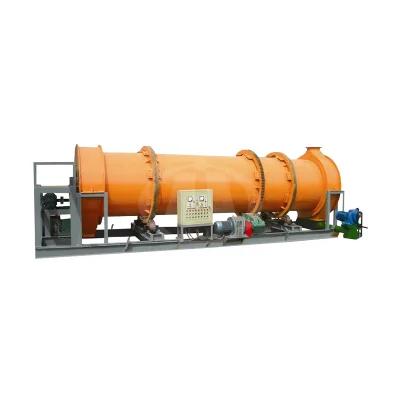
Comprehensive Sourcing Guide
Strategic Sourcing Guide for Continuous Rotary Alfalfa Dryers
Understanding Technical Specifications and Operational Parameters
When sourcing a Continuous Rotary Alfalfa Dryer, buyers must first establish a clear understanding of the technical specifications that define the equipment's capability. The core mechanism for these units typically involves a rotating drum where material moves through a controlled thermal environment. Based on observed industry data, the drum diameter for such heavy-duty units often ranges around Φ2800mm, though specific dimensions vary by model. The operational capacity is a critical metric, with observed ranges spanning from 0.5 to 50 tons per hour (t/H) for general applications, while more specialized configurations may list capacities between 63.5 and 268 tons per day (T/D).
The drying process relies heavily on the movement of the material within the drum. Buyers should verify whether the unit utilizes an agitation movement or a combined movement way, as this affects the uniformity of the drying process. The flow pattern is equally significant; observed configurations include cross-flow and parallel flow systems. The choice between these depends on the specific moisture content of the raw alfalfa and the desired final product quality. For instance, parallel flow is often preferred for high-temperature applications to prevent surface hardening, while cross-flow may be utilized for different thermal dynamics.
Temperature control is a primary driver of efficiency. The internal operating temperature for these rotary dryers is frequently observed in the range of 100-800 degrees Celsius, with specific models targeting a drying temperature of approximately 270°C ±3°C. The heating mode is typically transmission-based, utilizing various drying mediums such as air, effluent gas, superheated steam, or inactive gas. The raw material moisture content is a variable that the machine must accommodate; observed specifications indicate the equipment is designed to handle raw material moisture ranging from 20% to 80%, with some models capable of processing materials with moisture levels up to 60%. The target final moisture content is generally adjustable, often cited between 12% and 15%.
Power requirements are substantial for continuous rotary systems. The total motor power for these units is observed to range from 78 to 135 kilowatts (kw), reflecting the energy intensity of rotating large drums and managing airflow. The total weight of the machinery is equally significant for logistics planning, with observed weights ranging from 25 to 43.5 tons. Buyers must ensure their facility infrastructure can support this load. Additionally, the vaporization capacity, which indicates how much water the machine can remove per hour, is observed to range between 1.85 and 3.432 tons per hour. Understanding these parameters is essential for matching the dryer to the specific throughput and moisture reduction needs of an alfalfa processing operation.
Compliance, Certification, and Regulatory Standards
Navigating the regulatory landscape is a critical step in the procurement of industrial drying equipment. Buyers must verify that the supplier provides documentation for relevant certifications. Observed data indicates that many rotary dryer models are supplied with CE and ISO9001 certifications, and some listings also mention CCC (China Compulsory Certification). While CE marking suggests conformity with health, safety, and environmental protection standards for products sold within the European Economic Area, and ISO9001 indicates adherence to quality management systems, buyers should treat these as observations of the supplier's current documentation rather than universal guarantees for every unit.
It is vital to distinguish between the certification of the manufacturer and the certification of the specific batch or model being purchased. The supplied context lists "CE/ISO" as a common certification attribute, but the exact scope of these certifications can vary. For example, some models may be certified for specific voltage standards, such as 380V, which is a common industrial voltage in many regions but requires verification for local grid compatibility. The "many models" standard mentioned in the data suggests that compliance is often model-specific rather than a blanket attribute for the entire product line.
Buyers should also consider the "Standard Exporting Packing" or "Standard Package" attributes. These packaging standards are designed to protect the equipment during international transit, which is relevant for units originating from China. However, the physical condition of the equipment upon arrival depends on the integrity of this packing. The warranty terms observed in the market vary, with some listings offering a 2-year warranty and others offering a 1-year warranty or spare parts coverage for one year. This discrepancy highlights the need for buyers to explicitly negotiate warranty terms in the purchase agreement rather than relying on general market observations.
When evaluating compliance, buyers must also look for specific standards related to the drying medium and safety. The use of effluent gas or superheated steam as a drying medium introduces specific safety protocols. The equipment must be designed to handle these mediums safely, often requiring specific pressure ratings. Although the observed operation pressure is listed as "Atmospheric Pressure," the internal thermal dynamics can create significant stress on the drum and seals. Buyers should request detailed technical drawings and safety manuals to verify that the design meets local safety regulations regarding pressure vessels and thermal systems.
Cost Drivers and Financial Considerations
The financial landscape of sourcing a Continuous Rotary Alfalfa Dryer is influenced by several distinct cost drivers. The primary factor is the capacity and scale of the unit. As observed, capacities range widely from 0.5 t/H to 50 t/H, or even up to 268 T/D. Larger units with higher capacities naturally command higher prices, with observed listed price ranges in the market spanning from $1,009 to $60,000 USD. This wide range reflects the diversity in model specifications, motor power, and material quality.
Material construction is another significant cost driver. The drum diameter of Φ2800mm and the total weight of 25-43.5 tons indicate a substantial amount of steel and other structural materials. The quality of the steel, the thickness of the drum walls, and the type of refractory materials used for insulation all impact the final cost. Units designed for higher temperatures, such as those operating at 600-800°C, may require more expensive heat-resistant alloys or specialized linings, increasing the base price.
Energy efficiency is a long-term cost factor that should be weighed against the initial purchase price. The "Energy Saving" attribute is frequently listed, but the actual efficiency depends on the specific design of the heating mode and the recovery of heat from the effluent gas. Units with advanced heat recovery systems or those optimized for parallel flow to minimize energy loss may have a higher upfront cost but offer lower operational expenses. The total motor power, ranging from 78 to 135 kw, directly correlates with electricity consumption. Buyers should calculate the total cost of ownership (TCO) by estimating energy costs over the expected lifespan of the machine, which is often supported by a warranty of one to two years.
Customization is a key variable that affects pricing. The "Customization: Available" and "Customized" attributes suggest that buyers can tailor the dryer to specific needs, such as adjusting the drum length or modifying the atomization system. While this flexibility is valuable, it often incurs additional costs and may extend lead times. The minimum order quantity (MOQ) observed is typically 1 unit, which allows for flexibility in procurement but may limit the ability to negotiate bulk discounts. Buyers should be aware that the price range of $1,009 to $60,000 likely represents a spectrum from small, basic models to large, fully customized industrial units.
Typical Applications and Material Compatibility
Continuous rotary dryers are versatile machines designed for a wide array of applications beyond just alfalfa. The observed "Application" attributes include mining, animal dung waste drying, and general bulk material processing. This versatility stems from the ability to handle various material statuses, including bulk, powder, strap, and cream. For alfalfa specifically, the dryer must be capable of handling fibrous, leafy materials without causing excessive degradation or burning.
The raw material moisture content is a critical compatibility factor. The equipment is observed to handle raw material moisture ranging from 20% to 80%, making it suitable for fresh alfalfa which typically has high moisture content. The drying process reduces this to a final moisture content of 12-15%, which is ideal for storage and feed quality. The "Atomization" method, specifically rotary atomization, is often used in conjunction with the drying process to ensure uniform heat distribution, although this is more common in spray drying; in rotary dryers, it may refer to the distribution of the drying medium or the feeding mechanism.
The "Movement Way" of the material is crucial for different applications. For alfalfa, a combined movement way or agitation movement ensures that the material is continuously turned, preventing clumping and ensuring even drying. The flow pattern, whether parallel or cross-flow, also dictates the suitability for different materials. Parallel flow is generally better for materials that are sensitive to high initial temperatures, while cross-flow might be used for materials that require a more gradual drying process.
The "Drying Medium" options, including air, effluent gas, superheated steam, and inactive gas, provide flexibility in how the heat is applied. For alfalfa, using air or effluent gas is common, but the choice depends on the availability of heat sources and the need to control the atmosphere to prevent oxidation or combustion. The "Condition" of the equipment is typically "New," ensuring that the buyer receives a machine with full operational life. The "Color" being "Multi Color" is an aesthetic attribute but may also indicate different sections or coatings for different functional areas of the machine.
Supplier Evaluation and Selection Criteria
Selecting the right supplier is as important as selecting the right machine. Buyers should prioritize suppliers who demonstrate transparency in their product attributes and specifications. The "prod_origin" being China is a common observation, but this does not preclude high-quality manufacturing. Buyers should evaluate the supplier's ability to provide detailed technical documentation, including the "prod_model" specifications which can range from specific codes like "DDSG" to generic descriptions like "Various Models."
The "Warranty" and "Spare Parts" availability are critical indicators of supplier reliability. Observed warranty periods vary between one and two years, and spare parts coverage is often listed as one year. A supplier that offers a longer warranty or a comprehensive spare parts program demonstrates confidence in their product's durability. The "prod_packing" standard, described as "Standard Exporting Packing," should be verified to ensure it meets the requirements for international shipping and protection against damage.
Buyers should also assess the supplier's customization capabilities. The "Customization: Available" attribute suggests that suppliers are willing to adapt the machine to specific needs. This is particularly important for alfalfa drying, where the specific characteristics of the crop (e.g., leaf size, initial moisture) may require adjustments to the drum speed, temperature, or airflow. A supplier that offers a "Customized" solution is more likely to provide a machine that performs optimally for the buyer's specific application.
The "Certification" status, such as CE and ISO9001, should be verified through official documentation. While these are observed attributes, buyers must ensure that the specific model they are purchasing is covered by these certifications. The "prod_standard" being listed as "many models" indicates a diverse product line, but buyers should focus on the specific standards applicable to their chosen model. Finally, the "Operation Pressure" being atmospheric is a standard feature, but buyers should confirm that the supplier has experience with similar pressure systems to ensure safe operation.
Quality Control and Long-Term Procurement Considerations
Ensuring the quality of the Continuous Rotary Alfalfa Dryer requires a robust quality control (QC) process. Buyers should request a detailed QC plan from the supplier, covering the manufacturing stages from raw material inspection to final assembly. The "Condition" of the machine being "New" implies that it should be free from defects, but this must be verified through pre-shipment inspections. The "Total Weight" and "Total Motor Power" specifications should be checked against the actual delivered unit to ensure that the machine meets the promised performance capabilities.
Long-term procurement considerations include the availability of technical support and maintenance services. The "Warranty" period is a starting point, but buyers should negotiate extended service agreements to cover the machine's operational life. The "Spare Parts" availability is crucial for minimizing downtime. A supplier that maintains a stock of critical spare parts, such as drum liners, bearings, and motor components, is preferable. The "Operational Method" being continuous means that the machine is designed for high availability, and any downtime can be costly.
Energy efficiency is a long-term consideration that affects the total cost of ownership. The "Energy Saving" attribute should be backed by data or performance guarantees. Buyers should request energy consumption reports or calculations based on the specific drying conditions of their facility. The "Drying Temperature" and "Final Moisture" settings should be adjustable to allow for optimization over time as the alfalfa crop characteristics change.
The "Movement Way" and "Flow" patterns should be evaluated for their long-term impact on material quality. A well-designed movement system ensures that the alfalfa is dried evenly without burning or under-drying, which can affect the nutritional value of the final product. The "Heating Mode" should be efficient and reliable, with the ability to switch between different drying mediums if necessary.
Finally, buyers should consider the "prod_model" and "prod_standard" for future scalability. If the operation expands, the ability to upgrade or add additional units should be considered. The "Customization" options should be documented to ensure that future modifications can be made easily. By focusing on these quality control and long-term factors, buyers can ensure that their investment in a Continuous Rotary Alfalfa Dryer delivers value over its entire lifecycle.
FAQs
What is the typical capacity range for continuous rotary alfalfa dryers?
Capacity ranges from 0.5 to 50 tons per hour or 63.5 to 268 tons per day depending on the model. Specific throughput depends on the raw material moisture and the selected operational configuration.
Which certifications are commonly available for these rotary dryers?
Common certifications include CE, ISO9001, and CCC for various models. Buyers should verify specific certification documents for the chosen unit as compliance varies by model and batch.
How is the raw material moisture content handled by the dryer?
The equipment processes raw materials with moisture levels between 20% and 80%. The system reduces this to a final moisture content of 12% to 15% which is adjustable.
Can the dryer be customized for specific industrial applications?
Customization is available to tailor the unit to specific needs like mining or animal dung waste drying. Buyers can request adjustments to specifications such as drum dimensions or movement ways.
What is the warranty period for the continuous rotary dryer?
Warranty terms vary between one year and two years depending on the supplier and model. Some listings also offer spare parts coverage for one year specifically.
Which drying mediums can be used with this rotary dryer?
The dryer supports multiple mediums including air, effluent gas, superheated steam, and inactive gas. The choice depends on the heating mode and specific operational requirements of the facility.