Source Continuous Small Nut Roasting Machine for Soybean, Almond, and Cashew
Find 30 listings for the Continuous Small Nut Roasting Machine to compare specifications like capacity, power, and dimensions. Buyers can evaluate options for roasting soybeans, almonds, and cashews with varying voltage and motor requirements.
Key considerations
Products List

Small Nuts Peanut Roaster Machine Small Continuous Peanut Roasting Machine
$350.00 - $37000.00
MOQ: 1 Pieces


Electric Gas Nuts Processing Machines Roaster Machine Roasting Machine for Nuts
$2000.00 - $2200.00
MOQ: 1 Pieces

Electric Nut Peanut Roasting Machine Small Gas Nut Peanut Roaster Machine
$3000.00 - $10000.00
MOQ: 1 Pieces


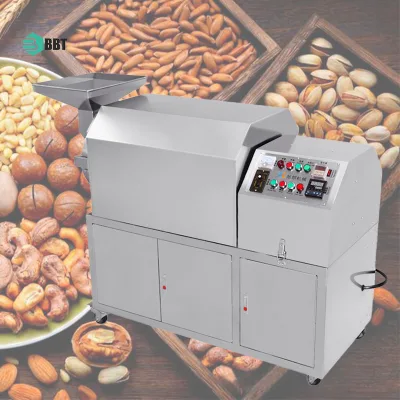


Continuous Automatic Ground Nut Roasting Machine Peanut Roasting Machine
$13900.00 - $14600.00
MOQ: 1 Pieces

Stainless Steel Continuous Peanut Drying Roasting Machine Nut Roaster
$42000.00 - $800000.00
MOQ: 1 Pieces

Peanut Roaster Continuous Combined Peanut Drying Roasting Machine Nut Roaster
$42000.00 - $800000.00
MOQ: 1 Pieces


Grain Roasting Machine Peanut with Barkcontinuous Nuts Roasting Machine
$42000.00 - $800000.00
MOQ: 1 Pieces


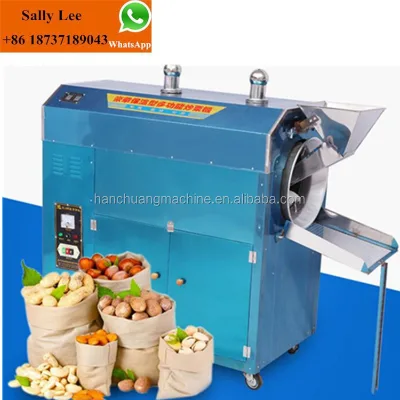
High Quality Nut Roasting Machine/peanut Roasting Machine/peanut Roaster
$611.51 - $815.34
MOQ: 1 sets


Comprehensive Sourcing Guide
Continuous Small Nut Roasting Machine Sourcing Guide
Procuring a Continuous Small Nut Roasting Machine requires a careful balance between throughput capacity and footprint constraints. Buyers often seek these units for pilot production lines, boutique roasteries, or facilities with limited floor space that still demand consistent, automated output. The term "small" in this context typically refers to machines with hourly capacities ranging from approximately 12.5 kg to 100 kg, though some listings may extend to higher volumes depending on the specific model configuration. Understanding the distinction between batch and continuous processing is critical, as continuous roasters offer uniform heat distribution and reduced labor intensity, which are essential for maintaining product quality in high-volume operations.
The market for these machines is diverse, with suppliers offering variations in heating methods, automation levels, and material construction. While electric heating is a common standard for smaller units due to cleaner operation and precise temperature control, gas-fired options are also available for facilities with existing infrastructure or specific energy cost advantages. Buyers must carefully evaluate the power requirements, voltage compatibility, and physical dimensions to ensure the equipment integrates seamlessly into their existing production workflow. This guide provides a structured approach to evaluating these machines based on observed market data and technical best practices.
Product Scope and Observed Listing Signals
The current market landscape for continuous small nut roasting machines reveals a wide variance in specifications and pricing. Observed listings indicate a price range from approximately $199 to $800,000 USD, reflecting the disparity between basic, low-capacity units and highly automated, stainless-steel-lined industrial systems. The minimum order quantity (MOQ) is frequently listed as one unit, suggesting that most suppliers operate on a made-to-order or direct-sales model rather than holding large inventory. This structure allows for customization but requires buyers to account for longer lead times and potential variability in initial production runs.
Key attributes observed in listings include power ratings ranging from 0.09 kW for very small units to 5.5 kW for more robust electric models, with motor specifications often listed at 0.75 kW. Capacity is a primary differentiator, with observed outputs ranging from 12.5 kg/h to 100 kg/h, and some larger pressing machines reaching up to 1500 kg/h. Buyers should note that while many units are described as "customized" or "available" for customization, the standard dimensions often hover around 1400x800x1000 mm or 910x480x1070 mm. Weight also varies significantly, from 57 kg for compact units to 170 kg or more for heavier, industrial-grade machines, impacting shipping costs and floor load requirements.
Technical Specifications to Verify
When evaluating technical specifications, the heating method and power source are paramount. Electric heating is prevalent in smaller roasters, with voltages typically listed as 220V or 380V, depending on the region and power infrastructure. Buyers must verify the exact electric heating power, which can range from 0.09 kW to 5.5 kW, to ensure their facility can support the electrical load. Additionally, the presence or absence of a timing device is a critical feature; some units include automated timing controls for consistent roasting cycles, while others may require manual intervention, affecting labor costs and operational efficiency.
Material construction and automation level are equally important for long-term durability and product quality. Stainless Steel 304 (SS304) is a common material for food-contact surfaces, offering corrosion resistance and ease of cleaning, which is essential for maintaining hygiene standards in nut processing. Buyers should verify if the machine is fully automatic, as this impacts the need for skilled operators and the consistency of the roast. Furthermore, the raw material compatibility should be confirmed; while many machines are marketed for nuts like peanuts, almonds, and cashews, some may also handle soybeans, wheat, or cocoa, so the specific application must align with the machine's design parameters.
Compliance and Safety Documentation
Compliance with regional safety and electrical standards is non-negotiable for industrial machinery. Buyers should request certification documents, such as CE marking, which indicates conformity with health, safety, and environmental protection standards for products sold within the European Economic Area. While CE is a common certification observed in listings, buyers must verify if additional certifications are required for their specific market, such as UL or CSA for North America. The absence of specific certification documentation can lead to customs delays or operational liabilities, so it is crucial to confirm the validity and scope of any provided certificates.
Safety features and operational safeguards should be clearly documented in the machine's manual and technical specifications. This includes emergency stop mechanisms, thermal overload protection, and proper grounding requirements. Buyers should also inquire about the machine's pressure ratings and structural integrity, especially if the roasting process involves high temperatures or pressurized environments. Ensuring that the supplier provides comprehensive safety documentation and training materials is essential for minimizing workplace accidents and ensuring compliant operation from day one.
Cost Drivers and Commercial Terms
Several factors influence the total cost of ownership for a Continuous Small Nut Roasting Machine. The primary cost drivers include the heating power, material quality (such as SS304 vs. carbon steel), and the level of automation. Machines with higher capacities, such as those processing 100 kg/h or more, typically command higher prices due to the increased complexity of their mechanical and electrical systems. Additionally, customization options, such as specific dimensions or tailored control interfaces, can add to the initial purchase price.
Commercial terms, including payment methods, shipping, and warranty, significantly impact the overall procurement cost. Buyers should clarify whether the quoted price includes packaging, such as wooden cases or fumigation wooden boxes, which are common for protecting machinery during transit. Incoterms like FOB or CIF should be explicitly defined to understand who bears the risk and cost of shipping. Warranty terms and the availability of spare parts are also critical; a longer warranty period and local support can reduce long-term maintenance costs and downtime, making a slightly higher initial investment more attractive.
Supplier Qualification and Quality Control
Supplier qualification is a critical step in mitigating procurement risk. Buyers should verify the supplier's manufacturing capabilities, including their production facilities and quality control processes. Many suppliers are located in regions like Henan or Zhengzhou in China, which are known for machinery manufacturing, but this does not guarantee uniform quality. Buyers should request factory audits or third-party inspection reports to assess the supplier's adherence to quality standards, such as ISO 9001, if claimed.
Quality control should extend to the pre-shipment inspection of the machine itself. Buyers should insist on a detailed inspection report that covers dimensional accuracy, electrical safety tests, and functional performance under load. Verifying the machine's condition as "New" and ensuring that all components, including motors and heating elements, are from reputable manufacturers can prevent early failures. Establishing a clear communication channel with the supplier for post-delivery support is also essential for addressing any technical issues that may arise during installation or initial operation.
Long-Term Procurement Checks
Long-term procurement success depends on the availability of after-sales service and spare parts. Buyers should confirm the supplier's commitment to providing technical support, including remote troubleshooting, video tutorials, or on-site service visits. The availability of critical spare parts, such as heating elements, motors, and control board components, should be guaranteed for a minimum period, typically five to ten years, to ensure the machine remains operational throughout its lifecycle.
Energy efficiency and maintenance requirements are also key considerations for long-term cost management. Buyers should inquire about the machine's energy consumption per kilogram of roasted nuts and the frequency of required maintenance, such as cleaning, lubrication, and part replacement. Machines with easy-to-clean designs and accessible components can reduce downtime and labor costs. Regularly reviewing the machine's performance against initial specifications and maintaining a log of maintenance activities can help identify potential issues early and extend the equipment's useful life.
FAQs
What is the capacity of the Continuous Small Nut Roasting Machine?
The machine offers varying capacities depending on the model, ranging from 12.5 kg per hour up to 1500 kg per hour. Specific units like the CH model handle 12.5 kg, while others reach 300 to 1500 kg for high-volume production needs.
Can the machine be customized for specific nut types?
Yes, customization is available for various raw materials including peanuts, soybeans, cocoa, and almonds. The equipment is designed to process multiple nut types, ensuring flexibility for different production lines and specific roasting requirements.
Which voltage options are supported by the roasting machine?
The machine supports multiple voltage options, including 220V and 380V configurations. This flexibility allows the equipment to be adapted for different electrical standards in various regions without requiring additional conversion hardware.
How is the machine packed for international shipping?
The unit is typically packed in a wooden case or fumigation wooden box to ensure safe transport. Standard export packaging is used to protect the machinery during transit, meeting common international shipping requirements for heavy industrial equipment.
What is the weight of the standard roasting machine unit?
Weights vary by model, with some units weighing 57 kg and others reaching up to 170 kg. Heavier models like the 150 kg version are designed for robust industrial applications requiring higher stability and capacity.
Does the machine include a timing device for roasting control?
Some models come equipped with a timing device for precise control, while others operate without one. Buyers should verify specific model features, as availability of timing devices depends on the selected configuration and production requirements.
What certifications does the roasting machine hold?
The equipment holds CE certification, indicating compliance with relevant safety and quality standards. This certification ensures the machine meets specific regulatory requirements for operation in various markets, particularly within regions requiring CE marking.