Source Cordless Battery Powered Bamboo Feller for Wood Saw, Grass Trimmer, and Edger
Find 30 verified listings for Cordless Battery Powered Bamboo Feller tools suitable for wood sawing, grass trimming, and edging. Compare specifications like voltage, weight, and battery capacity from multiple suppliers to select the right equipment for your needs; compare the available evidence and request quotations based on your requirements.
Key considerations
Products List


Portable Cordless Lithium Battery Leaf Blower Rechargeable and Eco-Friendly
$11.70 - $12.70
MOQ: 50 Pieces


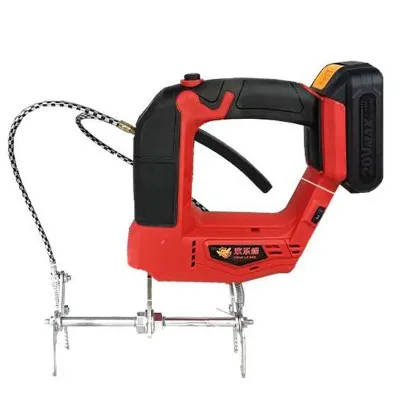


Cheap Bamboo Cordless Curtains Made in China Top Quality Roller up Curtains
$2.00 - $5.00
MOQ: 500 Pieces


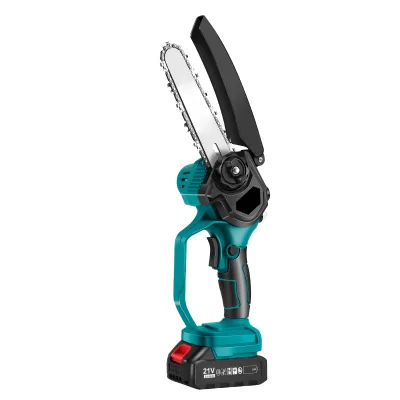


Comprehensive Sourcing Guide
Cordless Battery Powered Bamboo Feller Sourcing Guide
Cordless Battery Powered Bamboo Feller units sit at the intersection of chainsaw and garden-tool procurement, and buyers who treat them as either one alone tend to miss key verification steps. The category covers battery-operated chain saws designed for portable wood-cutting work, and the listings you encounter will often blend attributes from adjacent products such as grass trimmers and leaf blowers. That blending is normal on B2B marketplaces, where a supplier's catalog page may carry multiple models under one listing, so your first task is to isolate which attributes belong to the feller itself rather than to sibling SKUs.
This guide walks through the decisions that matter when sourcing these tools: scoping what the listings actually signal, verifying technical specifications against your use case, checking compliance documentation before shipment, understanding what drives unit cost, qualifying suppliers with structured quality control, and building long-term procurement checks that survive repeat orders. Throughout, treat every listed attribute as an observation reported by the seller, not a verified claim, and plan your diligence accordingly.
Product Scope and Observed Listing Signals
The listings in this category describe portable, electric-powered chain saw tools intended for wood cutting, typically supplied new with customization available. Observed signals include models such as YW9252 and YW9021, with guide bar sizes down to 8 inch, weights around 2.3 kg, and battery capacities in the 4.0 Ah range, alongside voltage listings of 21V and 18-21V. One listing also reports a 24V 2Ah standard, which illustrates how battery configurations vary across a single supplier's range. Packing is reported as sea packing or carton, and origin is listed as China. Note that a separate model, ZGT777-1, appears to be a cordless grass trimmer rather than a feller, which reinforces the need to separate SKUs carefully.
Buyers should also note commercial signals embedded in listings: MOQ values range from 1 to 500 units across the category, listed prices span from roughly 1 to 3999 USD, and one listing reports an MOQ of 50 sets with delivery 15 to 35 days after order confirmation. These are observations, not guarantees, so confirm current pricing, MOQ, and lead times directly with each supplier before comparing offers.
Technical Specifications to Verify
Build a specification sheet before you contact suppliers, because cordless feller performance depends on the interplay of battery, motor, and cutting hardware. For battery-powered units, confirm voltage and capacity together: a 21V 3Ah pack and a 24V 2Ah pack deliver different run-time and power profiles, and neither is inherently better without knowing your duty cycle. Verify chain speed and no-load speed against the intended material; one listing reports 11 m/s chain speed and 4000 rpm no-load speed, which is a useful benchmark for comparing quotes. Ask how the seller measured these figures and at what battery charge level.
Cutting geometry matters equally. Confirm guide bar length (8 inch is listed on one model), chain pitch compatibility with spare parts, and overall tool weight, since a listed 2.3 kg body plus battery changes the effective handling load. If any listing mixes attributes from other products, such as trimmer cutting capacities of 280 mm or blower air volumes, flag it and request a clean datasheet for the exact model number. Finally, verify whether brushless motor variants exist, since one garden listing in the range reports brushless motor construction and a 1-year warranty, and motor type affects service life.
Compliance and Safety Documentation
Certification claims on listings should be treated as a starting point, not proof. Observed listings report CE/EU and GS certification on the chain saw range, and one garden tool lists CE/ROHS/GS/ETL. Ask each supplier for the actual certificate documents covering your specific model number, check that the certificate holder and product photos match what will be shipped, and confirm the certificates remain within their validity period. If you sell into the EU, clarify who holds the declaration of conformity and whether the battery pack and charger are covered by the same certifications as the bare tool.
Battery safety deserves separate attention. Lithium-ion packs require transport compliance for sea and air freight, so request UN38.3 test documentation and correct packaging declarations from the supplier, and confirm how batteries are packed for sea packing versus carton shipping. Ask for a user manual in your target market language, safety markings on the tool body, and details on chain brake or kickback protection features if fitted. Do not accept photos of certificates as final evidence; request verifiable copies before placing a deposit, and record the certification status of every model in your comparison sheet.
Cost Drivers and Commercial Terms
Unit cost in this category is driven primarily by battery configuration, motor type, and kit composition. A bare tool priced against a listing noted as "bare metal" will differ sharply from a kit with one or two batteries, a charger, and a case, so normalize quotes to the same package contents before comparing. Battery capacity and voltage tier (for example, 21V 3Ah versus 24V 2Ah) shift cost, and brushless motor variants typically command a premium over brushed equivalents. Guide bar size, chain quality, and packaging choice, such as sea packing versus retail color box, also move the landed price.
On commercial terms, observed listings show customization available on some SKUs, with OEM cooperation explicitly welcomed, which is leverage for branding, color, packaging, and manual localization but usually affects MOQ and lead time. One listing reports 50 sets MOQ and 15-35 day delivery after order confirmation; treat these as references and negotiate current terms in writing. Clarify Incoterms, payment schedule against inspection milestones, spare chain and battery pricing, and warranty support for a 1-year coverage claim. Get the full kit list, packing details, and customization costs itemized in the proforma invoice before committing.
Supplier Qualification and Quality Control
Qualify suppliers with evidence tied to the exact model number you intend to buy. Request the product datasheet, certification copies, factory photos or an audit report, and references for prior export orders of the same product family. Because category listings mix chainsaws with trimmers and blowers, ask directly how long the supplier has produced the feller model and whether production is in-house or traded. A supplier that cannot produce a consistent datasheet for YW9252, YW9021, or your chosen model across two conversations is a risk signal worth acting on early.
For quality control, define an inspection protocol before the deposit: sample approval covering weight, chain speed, run-time on a fully charged pack, and safety features, followed by AQL-based in-line and pre-shipment inspections. Test battery packs for capacity consistency and charger function, verify serial number traceability, and check packing integrity against the agreed sea packing or carton specification. Keep golden samples sealed and dated, record inspection results per shipment, and agree in advance how failures are handled, including rework, re-inspection costs, and chargebacks. Written QC standards agreed at the outset protect both parties far better than verbal assurances.
Long-Term Procurement Checks
Sustained sourcing depends on parts availability and after-sales structure, not just the first shipment. Before scaling orders, confirm long-term supply of consumables and wear parts: chains, guide bars, batteries, and chargers, with agreed prices and lead times separate from finished-tool orders. Ask how model changes are communicated, since suppliers in this category may revise battery standards, motor types, or packaging without notice, and lock the specification for each purchase order with a version-controlled datasheet. If OEM arrangements are part of your plan, document tooling ownership and the conditions under which branded packaging and markings are maintained.
Operationally, review supplier performance on delivery window adherence, using the reported 15-35 day range as the baseline against actual shipment dates, and track defect rates from your inspection reports and any customer returns. Re-verify certifications periodically, especially if regulations in your destination market evolve for lithium battery products. Diversify gradually once a supplier has proven consistency, but avoid splitting volumes so thinly that neither supplier prioritizes your orders. Schedule an annual supplier review covering pricing, warranty claims experience, and capacity for peak-season orders to keep the relationship and your risk position healthy.
Product Roadmap and Procurement Alignment
Aligning your buying plan with where the category is heading protects both margin and inventory. Cordless outdoor power equipment continues to move toward higher-voltage platforms and brushless motor construction, and listings in this range already reflect voltage spread from 18-21V to 24V, with battery capacities from 2Ah to 4.0 Ah. Ask suppliers which platform they are investing in and whether future models will remain battery-compatible with what you stock, since a fragmented battery ecosystem across your assortment raises spare-parts and warranty costs. Eco-product positioning, reported on at least one listing, is increasingly part of retail messaging, so confirm any environmental claims with documentation.
Internally, feed these signals into your assortment decisions: choose one or two battery platforms, standardize kit contents across models, and keep the specification library current as suppliers update models. Review the roadmap conversation with each key supplier annually, tying their development plans to your volume commitments where appropriate. Buyers who treat specification management as an ongoing process, rather than a one-time sourcing exercise, consistently get better pricing, fewer compliance surprises, and a product line that ages gracefully in the market.
FAQs
What is the no-load speed of the Cordless Battery Powered Bamboo Feller?
The no-load speed is 4000rpm. This high rotational speed ensures efficient cutting performance for various vegetation types. The tool operates on electricity via a battery pack, providing consistent power delivery without the constraints of a power cord. This speed rating is typical for portable garden trimmers designed for heavy-duty trimming tasks.
Can the Cordless Battery Powered Bamboo Feller be customized for branding?
Yes, customization is available for this product. Buyers can request specific branding or packaging modifications to suit their market needs. The supplier welcomes OEM requests, allowing for tailored product identities. This flexibility supports businesses looking to establish unique brand presence in the garden tool sector while maintaining standard product functionality.
Which certifications does the Cordless Battery Powered Bamboo Feller hold?
The product holds CE/EU, GS, ROHS, and ETL certifications. These standards ensure compliance with safety and environmental regulations in major markets. The GS and ETL marks indicate rigorous testing for electrical safety. Buyers targeting Europe or North America can rely on these documented certifications for regulatory clearance and consumer trust in the product's safety profile.
How much does the Cordless Battery Powered Bamboo Feller weigh?
The weight is listed as 2.3kg for one model and 469g for another variant. This lightweight design enhances portability and reduces user fatigue during extended use. The reduced mass allows for easier maneuverability in tight garden spaces. Buyers should verify the specific model weight when selecting equipment for ergonomic handling requirements.
What is the lead time for the Cordless Battery Powered Bamboo Feller?
The delivery detail specifies a lead time of 15 to 35 days after order confirmation. This timeframe allows for production and quality assurance processes. Buyers should plan their inventory accordingly to avoid stockouts. The variable duration depends on order volume and production scheduling, ensuring timely fulfillment for bulk procurement needs.
What is the minimum order quantity for the Cordless Battery Powered Bamboo Feller?
The MOQ is 50 sets for the specified model. This threshold supports small to medium-sized bulk purchases. Buyers must meet this quantity to proceed with the order. The MOQ ensures efficient production runs while remaining accessible for smaller enterprises entering the garden tool market with manageable initial inventory commitments.