Source Cordless Brushless Rotary Hammer for Construction, Drilling, and Demolition
Find and compare 30 Cordless Brushless Rotary Hammer options from Chinese manufacturers. Evaluate key specifications such as impact energy, no-load speed, and battery type to select the right tool for industrial drilling and masonry applications.
Key considerations
Products List


Cordless Hammer Hammer Drill Chi 20V Cordless Brushless Hammer Drill 26mm
$32.00 - $35.00
MOQ: 1 Pieces

Gaide Power Hammer Customization Electric Cordless Rotary Hammer Experts
$26.50 - $27.00
MOQ: 50 Pieces


Jsperfect Customized Brushless Cordless Hammer Drill Machine 20V Battery Hammer
$26.00 - $28.00
MOQ: 100 Pieces

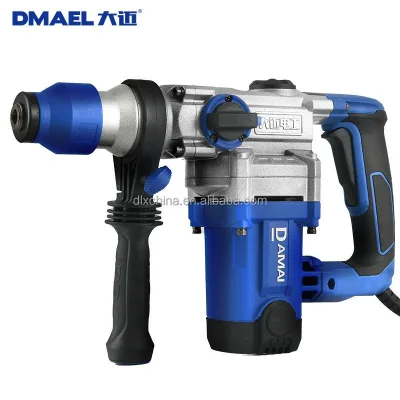


Power Action 20V Cordless Tools 13mm Cordless Rotary Hammer with Drill Bits
$26.00 - $35.00
MOQ: 5 Pieces


Comprehensive Sourcing Guide
Cordless Brushless Rotary Hammer Sourcing Guide
Sourcing cordless brushless rotary hammers requires a careful balance between portability, power output, and operational durability. These tools are essential for construction, masonry, and industrial drilling tasks where traditional corded equipment is impractical due to limited access to power outlets or the need for mobility across large job sites. The transition from brushed to brushless motors represents a significant upgrade in efficiency, offering longer runtime, reduced maintenance, and higher torque density. Buyers must navigate a market where specifications vary widely, ensuring that the selected tool meets the specific mechanical demands of their projects while adhering to strict safety and quality standards.
This guide provides a structured approach to evaluating suppliers and products in this category. It focuses on interpreting observed market signals, verifying critical technical specifications, and establishing robust commercial terms. By understanding the interplay between motor technology, battery systems, and mechanical design, procurement professionals can make informed decisions that minimize risk and maximize operational efficiency. The following sections detail the key considerations for sourcing these high-performance power tools effectively.
Product Scope and Observed Listing Signals
The current market for cordless rotary hammers exhibits a diverse range of product configurations, with observed price points ranging from $18 to $96 USD. This wide variance often reflects differences in build quality, motor technology, and included accessories rather than just brand prestige. Buyers should note that lower price points may correspond to entry-level models or basic configurations, while higher prices typically indicate advanced features such as brushless motors, higher impact energy, and superior battery systems. Understanding this spectrum helps in setting realistic budget expectations and identifying value propositions that align with specific project requirements.
Observed minimum order quantities (MOQs) range from 1 to 500 units, indicating flexibility for both small-scale procurement and large-volume industrial contracts. Many suppliers offer customization options, including logo printing and packaging adjustments, which are crucial for private labeling and brand differentiation. The presence of "Factory Direct Supply" as a common attribute suggests that many manufacturers are willing to engage directly with buyers, potentially reducing intermediary costs. However, buyers must verify these claims through due diligence, ensuring that the supplier has the capacity to maintain consistent quality and delivery schedules across varying order sizes.
Technical Specifications to Verify
Motor technology is a primary differentiator in this category, with brushless motors offering significant advantages in efficiency and longevity. Observed data indicates power ratings ranging from 650W to 750W, which directly correlates with the tool's ability to handle demanding drilling tasks in hard materials like concrete and stone. Buyers should verify the actual power output under load, as rated power can sometimes differ from peak performance. Additionally, the absence of brushes reduces friction and heat generation, leading to longer motor life and reduced maintenance costs, making brushless models a preferred choice for high-frequency use.
Impact energy and speed are critical performance metrics that determine the tool's effectiveness in various applications. Observed impact energies range from 1.7J to 3.5J, with no-load speeds varying between 980 RPM and 1400 RPM. Higher impact energy is essential for breaking through dense masonry, while adjustable speed controls allow for precision work in softer materials. Buyers must ensure that the selected model offers the appropriate balance of impact force and speed for their specific tasks. Furthermore, the chuck type and borehole diameter capabilities, such as 26mm, 28mm, or 30mm, should be matched to the drilling requirements of the project to ensure optimal performance and tool longevity.
Compliance and Safety Documentation
Safety certifications are non-negotiable for power tools, particularly those operating with high voltage and impact forces. Buyers must verify that products comply with relevant regional safety standards, such as CE for Europe or UL for North America, depending on the target market. Although specific certification statuses are not universally listed in all product data, suppliers should be able to provide documentation proving compliance with electrical safety, electromagnetic compatibility, and mechanical safety requirements. This documentation is essential for legal market entry and ensures that the tools meet rigorous safety benchmarks.
Electrical safety is particularly important for cordless tools, which rely on lithium-ion batteries. Buyers should confirm that the battery systems include built-in protection mechanisms against overcharging, short circuits, and overheating. The charger type, whether British, American, or European standard, must match the local electrical infrastructure to prevent safety hazards. Additionally, the rated voltage of the tools, observed at 21V, should be consistent with the battery specifications to ensure safe and efficient operation. Proper insulation and grounding mechanisms, even in cordless designs, should be verified to protect users from electrical shocks.
Cost Drivers and Commercial Terms
The cost of cordless brushless rotary hammers is influenced by several factors, including motor technology, battery capacity, and build materials. Brushless motors and high-capacity lithium batteries contribute significantly to the final price, offering better performance and runtime but at a higher initial investment. Buyers should evaluate the total cost of ownership, considering factors such as battery replacement costs, maintenance requirements, and expected tool lifespan. While higher upfront costs may be associated with premium models, the long-term savings in efficiency and durability can justify the investment for professional users.
Commercial terms, including delivery times and payment conditions, play a crucial role in the procurement process. Observed delivery dates range from 5 to 30 days, depending on order volume and supplier capacity. Buyers should negotiate clear delivery schedules and penalties for delays to mitigate supply chain risks. Payment terms, such as letters of credit or advance payments, should be structured to protect both parties and ensure financial security. Additionally, warranty terms, typically observed at 12 months, should be clearly defined, including coverage for parts and labor, to provide assurance against manufacturing defects.
Supplier Qualification and Quality Control
Supplier qualification is a critical step in ensuring the reliability and consistency of the sourced products. Buyers should conduct thorough due diligence, including factory audits and assessments of production capabilities. Suppliers with "Industrial" grade products and "Customization" options demonstrate a level of sophistication and flexibility that is desirable for long-term partnerships. Verifying the supplier's history, financial stability, and reputation in the market can provide additional confidence in their ability to deliver high-quality products consistently.
Quality control measures should be integrated into the procurement process to minimize defects and ensure product reliability. Buyers should request samples for testing before placing large orders, evaluating factors such as impact energy, speed consistency, and battery performance. Implementing incoming quality inspections and periodic audits can help maintain high standards throughout the supply chain. Additionally, establishing clear communication channels with suppliers for feedback and issue resolution is essential for continuous improvement and maintaining strong business relationships.
Long-Term Procurement Checks
Long-term procurement success depends on continuous monitoring of supplier performance and product quality. Buyers should establish key performance indicators (KPIs) to track metrics such as delivery times, defect rates, and customer satisfaction. Regular reviews of these metrics can help identify potential issues early and facilitate proactive problem-solving. Maintaining a diverse supplier base can also mitigate risks associated with single-source dependencies, ensuring continuity of supply even in the event of disruptions.
Technological advancements in cordless power tools are rapid, and buyers should stay informed about emerging trends and innovations. Regularly updating product specifications and requirements can help ensure that the sourced tools remain competitive and meet evolving market demands. Building strong relationships with suppliers based on mutual trust and collaboration can lead to better pricing, priority access to new products, and enhanced support services. By focusing on long-term partnerships and continuous improvement, buyers can secure a reliable supply of high-quality cordless brushless rotary hammers for their operations.
FAQs
What is the power rating of the Cordless Brushless Rotary Hammer?
The power rating is 650W or 750W depending on the specific model configuration. These units utilize a brushless motor for enhanced efficiency and durability during industrial-grade drilling tasks.
Can the product be customized with a specific logo?
Yes, customization is available for this rotary hammer driller. Buyers can request a customized logo to be applied to the tool, allowing for brand alignment on the final product.
Which battery type powers the Cordless Brushless Rotary Hammer?
The device operates using a Lithium Battery as its power source. This charging power system ensures portability and sustained performance for various drilling applications without needing a constant AC connection.
What is the unloaded speed of the rotary hammer drill?
The unloaded speed ranges from 0-1100 RPM or reaches up to 1400 RPM depending on the model. This variable speed capability allows for precise control during different drilling operations.
How long is the warranty period for the electric hammer?
The warranty period is 12 months for the product. This coverage ensures reliability and support for the industrial-grade rotary hammer driller purchased by B2B clients.
What is the impact energy of the Cordless Brushless Rotary Hammer?
The impact energy is either 1.7J or 3.5J based on the specific unit selected. This metric indicates the force delivered per impact, suitable for various masonry and concrete drilling requirements.
Which packing type is used for the rotary hammer driller?
The product is packed in a Carton or Carton Box for safe transport. Some listings also mention Carbon packaging, ensuring the tool arrives securely at the destination.