Source Corrosion Resistant Slotted Spring Pin for Machinery, Automotive, and Furniture
Compare 30 listings for Corrosion Resistant Slotted Spring Pin options featuring stainless steel or carbon steel materials with zinc plating finishes. Buyers can evaluate customization services, delivery times ranging from 10 to 30 days, and standard sizes from M1 to M11.
Key considerations
Products List




Comprehensive Sourcing Guide
Strategic Sourcing Guide for Corrosion Resistant Slotted Spring Pins
Understanding Technical Specifications and Material Variability
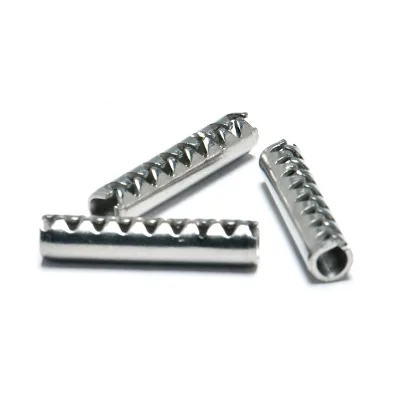
When sourcing corrosion-resistant slotted spring pins, buyers must first navigate the complex landscape of technical specifications that define product performance. The core keyword implies a fastener designed to withstand environmental degradation while maintaining mechanical integrity under dynamic loads. Based on available market data, the product category encompasses items described as "Toothed Slotted Spring Pins" and "Spring Pins" generally, with specific model numbers such as "Fasto-Pin" and "14A-10" appearing in supplier listings. A critical observation is the variance in standard definitions; while some listings reference "DIN1481" as a specification, others cite "GB 879" or generic "M4.5-M11" sizing ranges.
Buyers must verify that the specific pin diameter aligns with their engineering requirements. The observed market data indicates a wide range of available diameters, from "1.5mm to 16mm" and "M1-M10," with some suppliers offering custom sizing "according to your drawing." This variability necessitates a rigorous review of the technical drawing before ordering. The shape is consistently identified as "Cylinder," and the design often features a "Cross" or "Toothed" profile, which is essential for the pin's retention mechanism. The material composition is a primary driver of corrosion resistance. The supply chain data highlights "Stainless Steel" as a prevalent material, though "Carbon Steel" and "Other" options are also listed. For applications demanding high corrosion resistance, the selection of stainless steel is paramount, but the specific grade (e.g., 304 vs. 316) must be confirmed with the supplier, as the provided data does not explicitly grade the stainless steel beyond the general category.
Compliance, Certification, and Regulatory Standards
In the B2B procurement of industrial fasteners, compliance with international standards and certifications is non-negotiable for ensuring safety and interoperability. The market data presents a robust set of certifications that buyers should expect to see verified on product documentation. High-confidence facts indicate that suppliers often hold "ISO" certification, with many listing a broader portfolio including "GS," "RoHS," and "CE." These certifications suggest adherence to quality management systems and restrictions on hazardous substances, which are critical for export markets in Europe and North America.
However, buyers must exercise caution regarding the specific standards applied to the product. While "DIN 1481" is a recognized standard for slotted spring pins, the provided data also lists "GB 879" and generic references to "DIN, ASTM/ANSI JIS En ISO, as, GB." This mixture of standards implies that different suppliers may be manufacturing to different national or international specifications. A buyer sourcing for a project requiring strict adherence to a specific standard, such as DIN 1481, must explicitly request a Certificate of Conformance (CoC) that validates the product against that specific standard, rather than accepting a generic "ISO" certification as proof of dimensional compliance.
Furthermore, the "RoHS" and "CE" markings are vital for electronic and automotive applications where environmental regulations are strict. The presence of "GS" certification indicates a focus on safety, which is particularly relevant for pins used in load-bearing or safety-critical assemblies. When evaluating a supplier, the procurement team should verify that the certification documents are current and issued by accredited bodies, ensuring that the "ISO" status is not merely a marketing claim but a verified operational standard.
Cost Drivers and Pricing Dynamics
The pricing structure for slotted spring pins is influenced by several interconnected factors, including material costs, customization levels, and order volume. The observed market data shows a listed price range of "0-2" USD, which likely represents unit costs for small quantities or specific configurations, but this range should be treated as a baseline rather than a fixed rate. The actual cost per unit will fluctuate significantly based on the material chosen. "Stainless Steel" generally commands a higher price point than "Carbon Steel" due to raw material costs and the additional processing required for corrosion resistance.
Customization is a major cost driver in this sector. The data confirms that "Customization" is "Available" and that products can be "Customized" to specific client needs, including "Color: as Client Need" and "Shape: Cylinder" variations. Custom molds, unique surface finishes, and non-standard dimensions will invariably increase the unit cost and may introduce setup fees. The "MOQ" (Minimum Order Quantity) also plays a pivotal role in pricing. The observed MOQ range is vast, spanning from "1" to "20,000" units. Suppliers often offer tiered pricing where the unit cost decreases as the order volume increases, particularly when the order meets the "MOQ: 1000PCS" threshold mentioned in specific listings.
Additionally, the "Payment Term" structure affects the overall financial planning. Common terms observed include "Fob," "30%Tt in Advance and 70% Tt Before Shipment," and simple "T/T." Buyers should negotiate terms that align with their cash flow, understanding that suppliers may offer discounts for full upfront payments or stricter terms for custom orders. The "Package" configuration, ranging from "Bulk" to "Small Box + Outer Carton + Pallets," also impacts the final landed cost, as specialized packaging for high-value or precision items adds to the overall expense.
Typical Applications and Performance Requirements
Slotted spring pins are ubiquitous in machinery and equipment where a secure, removable fastening solution is required. The "Toothed Slotted" design allows the pin to expand slightly upon insertion, creating a tight fit within the hole that resists vibration and shock. This makes them ideal for applications in automotive assemblies, agricultural machinery, and general industrial equipment. The "Spring Pin" category is frequently associated with "Clevis Pin" applications, as noted in the product listings, suggesting their use in hinge mechanisms, linkages, and pivot points.
The corrosion resistance aspect is critical for applications exposed to moisture, chemicals, or outdoor environments. The "Zinc Plated" and "Phosphating" surface finishes listed in the data provide a barrier against rust, making them suitable for outdoor machinery or humid industrial settings. However, for highly corrosive environments, the "Stainless Steel" material option is the preferred choice. The "Plain" or "Bright (Uncoated)" finishes are typically reserved for indoor applications or where the pin will be painted over, as they offer less inherent corrosion protection.
The "Style: Folk" and "Design: Cross" attributes mentioned in the data may refer to specific aesthetic or functional designs for niche applications, but the primary performance requirement remains the mechanical retention. The "Delivery Time" of "7-30 Working Days" or "10-25 days" suggests that these pins are often produced to order or kept in stock for rapid deployment. The "Sample Time" of "3-7 days" indicates that prototyping and validation are relatively quick processes, allowing buyers to test the pin's fit and performance in their specific assembly before committing to a large production run.
Supplier Evaluation and Geographic Considerations
Evaluating suppliers for slotted spring pins requires a focus on their manufacturing capabilities, geographic location, and logistical reliability. The data identifies "Ruian," "Tianjin," and "Jiangsu" in China as key places of origin. These regions are known for their robust manufacturing ecosystems, particularly in the fastener industry. A supplier located in "Jiangsu, China" might offer different logistical advantages compared to one in "Tianjin," depending on the buyer's proximity to major ports or the specific supply chain routes involved.
When assessing a supplier, buyers should verify the "Service: OEM/ODM" capabilities. This indicates whether the supplier can manufacture to the buyer's specific drawings or if they only offer standard catalog items. The "Customization: Available" flag suggests that most suppliers are flexible, but the extent of this flexibility varies. A supplier capable of "Customized Packing" and "Box / Bulk Packing / Pallet or Customized Packing" demonstrates a higher level of operational maturity.
The "Lead Time" is another critical evaluation metric. With delivery dates ranging from "15 Days" to "30 Working Days," buyers must align their production schedules accordingly. Suppliers offering a "Sample Time" of "3-7 days" are generally more responsive and agile. It is also essential to verify the "Place of Origin" consistency; discrepancies between the claimed origin and the actual manufacturing location can lead to compliance issues, especially regarding trade tariffs or origin-specific certifications.
Quality Control and Long-Term Procurement Strategy
Ensuring consistent quality in slotted spring pin procurement requires a proactive approach to quality control (QC) and long-term relationship management. The "Standard" of "M4.5-M11" or "2"-6"" must be strictly enforced during the inspection phase. Buyers should implement a QC protocol that includes dimensional checks, surface finish verification, and material composition analysis. The presence of "ISO" certification is a positive indicator, but it should be supplemented with specific inspection reports for each batch, particularly for "Stainless Steel" grades where chemical composition is critical for corrosion resistance.
Long-term procurement considerations involve establishing a reliable supply chain that can adapt to changing market conditions. The "Payment Term" flexibility, such as "30%Tt in Advance," allows for a balanced risk profile, but buyers should aim to build relationships with suppliers who offer consistent lead times and quality. The "Product Name" consistency, such as "Spring Pin" or "Toothed Slotted Spring Pin," should be maintained across all orders to avoid confusion.
Furthermore, the "Package" integrity is vital for preventing damage during transit. The "Small Box + Outer Carton + Pallets" configuration is standard, but for high-volume orders, custom palletization might be necessary to optimize shipping costs. Buyers should also consider the "Surface Finishing" consistency; variations between "Zinc Plated," "Phosphating," and "Plain" can affect the performance of the final assembly. Regular audits of the supplier's manufacturing process and adherence to the agreed-upon "Standard" will ensure that the long-term procurement strategy remains robust and cost-effective.
Comparative Analysis of Product Attributes
To facilitate decision-making, the following table summarizes the key attributes observed in the market data for slotted spring pins. This comparison highlights the variability in specifications that buyers must navigate.
| Attribute | Observed Options | Critical Verification Point |
|---|---|---|
| Material | Stainless Steel, Carbon Steel, Other | Confirm specific grade for corrosion resistance |
| Surface Finish | Zinc Plated, Plain, Phosphating, Bright | Verify coating thickness and adhesion |
| Standard | DIN1481, GB 879, M4.5-M11, ISO | Ensure alignment with project engineering specs |
| Diameter Range | 1.5mm-16mm, M1-M10, 2"-6" | Match exact drawing requirements |
| Certification | ISO, GS, RoHS, CE | Check validity and scope of certificates |
| MOQ | 1, 1000PCS, up to 20,000 | Negotiate based on volume and customization |
| Lead Time | 7-30 Working Days, 15 Days | Align with production schedule |
| Origin | Ruian, Tianjin, Jiangsu, China | Verify logistics and tariff implications |
This table underscores the importance of detailed specification review. The wide range of options, while offering flexibility, requires precise communication with the supplier to ensure the final product meets the exact technical and regulatory requirements of the application. By adhering to these verification steps, buyers can mitigate risks and secure a reliable supply of high-quality, corrosion-resistant slotted spring pins.
FAQs
How long is the delivery time for these pins?
Delivery typically takes 7 to 30 working days depending on order volume. Some suppliers offer a faster 15-day lead time for standard sizes, while custom orders may require up to 25 days for production and packaging.
What certifications do these spring pins usually have?
Most products carry ISO certification, with many also holding GS, RoHS, and CE marks. These certifications indicate compliance with quality management systems and safety standards required for export markets in Europe and North America.
Which materials are used for corrosion resistance?
Stainless steel is the primary material used for high corrosion resistance. Carbon steel and other options are available, but stainless steel is essential for applications exposed to moisture or harsh chemical environments.
Can I get custom sizes for these spring pins?
Yes, customization is available for specific client needs including diameter and design. Suppliers can produce pins according to your drawing with sizes ranging from 1.5mm to 16mm or specific metric standards like M1 to M10.
What is the minimum order quantity for these pins?
The minimum order quantity varies significantly, ranging from 1 unit to 20,000 units depending on the supplier. Some listings specify a standard MOQ of 1000 pieces, while others offer flexible terms based on the specific size ordered.
Where are these spring pins manufactured?
These products originate from key manufacturing hubs in China, specifically Ruian, Tianjin, and Jiangsu. The location impacts logistics and lead times, so buyers should verify the specific place of origin for their supplier.
How are these pins packaged for shipment?
Pins are typically shipped in bulk, small boxes, or on pallets within outer cartons. Suppliers offer customized packing options to ensure safety during transit, ranging from simple bulk bags to detailed box and pallet configurations.