Source Cube Type Soft Travel Organizer for Travel, Gym, Home
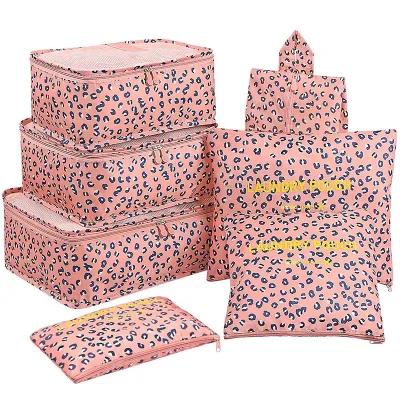
Find 30 Cube Type Soft Travel Organizer options from verified suppliers. Compare features like waterproof nylon and polyester materials, zipper closures, and customizable logos for travel, home storage, and gym use with MOQs starting at 20 pieces; compare the available evidence and request quotations based on your requirements.
Key considerations
Products List


Seven Color Compression Packing Cubes for Travel, Organizer for Suitcase
$5.19 - $6.60
MOQ: 300 Pieces


Set of 8 Compression Packing Cubes for Luggage Travel Storage Bags Organizer
$7.50 - $11.00
MOQ: 300 Pieces


Portable Zippered Travel Packing Cubes Organizer for Easy Luggage Storage Bag
$3.44 - $4.13
MOQ: 20 Pieces


Scalable 3 Set Packing Cubes Travel Organizers Compression Packing Cubes
$6.40 - $8.80
MOQ: 500 Pieces

Custom Packing Cubes Travel Organizer Cubes Compressible Packing Cubes for Suitcases
$13.50 - $15.80
MOQ: 500 Pieces


Customized Travel Cubes Set Foldable Suitcase Organizer Packing Cube Sets
$5.59 - $12.59
MOQ: 500 Pieces

Multi-Functional Durable Packing Travel Organizer Portable Lightweight Cubes Set
$5.59 - $12.59
MOQ: 500 Pieces




Comprehensive Sourcing Guide
Cube Type Soft Travel Organizer Sourcing Guide
Buyers seeking cube type soft travel organizers must first distinguish between general packing cubes and specialized cooler bags, as the supplied data indicates distinct product lines with different material compositions. While the primary focus is on nylon or polyester cubes designed for travel and gym use, some listings also feature fabric-based storage holders with rectangular shapes and foldable properties. Understanding this distinction is critical before initiating contact, as the intended application—whether for clothing organization or temperature-sensitive food transport—dictates the required material durability and insulation features.
Procurement teams should verify that the specific model selected aligns with the observed customization capabilities, such as logo printing or embroidery, which are explicitly available for these items. The market data shows a wide range of minimum order quantities, from as low as twenty pieces for certain storage sets to three hundred for standard packing cubes. This variance requires buyers to carefully align their initial order volume with supplier thresholds to avoid unnecessary costs or the need to consolidate orders across different product SKUs to meet production requirements.
Product Scope and Observed Listing Signals
The observed product scope encompasses a variety of soft storage solutions, including travel packing cubes, cooler bags, and general storage boxes, all sharing a common soft, cube-like or rectangular form factor. Listings confirm that these items are available in multiple configurations, such as sets ranging from one to three pieces or larger six-piece collections, with features like waterproofing, breathability, and dust-proofing being common selling points. Buyers must scrutinize individual product descriptions to ensure the specific item matches their functional needs, as the term "cube type" may apply to both rigid-structure organizers and flexible fabric bags depending on the manufacturer's design.
Signal analysis reveals that customization is a dominant feature across the supply base, with options for custom logos, colors, and even product dimensions available for many models. The presence of specific model numbers like AM26082601 and NC250929 suggests a highly segmented catalog where each SKU may have unique attributes regarding closure types, such as zippers, or specific applications like office storage versus outdoor use. Procurement professionals should use these model identifiers to request precise technical drawings and material samples, ensuring that the "soft" designation does not compromise the structural integrity required for heavy-duty travel scenarios.
Technical Specifications to Verify
Technical verification must begin with the material composition, as the data indicates a split between nylon and polyester options, each offering different balances of weight, strength, and water resistance. Buyers should explicitly request material test reports to confirm the claimed waterproof and washable properties, ensuring the fabric can withstand repeated use in humid travel environments without degrading. Additionally, the hardness rating of "soft" implies flexibility, but this must be balanced against the need for the cubes to maintain their shape when packed, requiring a verification of the internal structure or lining thickness.
Closure mechanisms and dimensional accuracy are equally critical, with zipper quality being a primary point of failure for soft organizers. The supplied facts list "zipper" as the standard closure type, yet the durability of the teeth and the smoothness of the slider vary significantly between suppliers. Buyers should also verify the "travel size" specifications against their own luggage dimensions, noting that while some models offer customized sizes, others are fixed to standard travel dimensions, which could impact the efficiency of space utilization within a suitcase or duffel bag.
Compliance and Safety Documentation
While the supplied facts do not explicitly list specific safety certifications, buyers must assume that any product intended for travel or food storage requires compliance with relevant regional safety standards. For items marketed as cooler bags or food containers, verifying that the materials are food-grade and free from harmful chemicals is essential, even if the primary listing emphasizes general storage applications. Procurement teams should request a Declaration of Conformity or specific test reports regarding chemical safety, particularly for products that may come into direct contact with skin or consumables during transit.
Documentation regarding the origin of materials and the manufacturing process should also be scrutinized to ensure ethical sourcing and environmental compliance. The data confirms the products originate from China, a major manufacturing hub, but this does not guarantee adherence to international labor or environmental standards without explicit verification. Buyers should require suppliers to provide evidence of compliance with local regulations and any voluntary standards they claim to meet, ensuring that the supply chain does not introduce reputational risks or regulatory hurdles in the destination market.
Cost Drivers and Commercial Terms
Cost structures for cube type soft travel organizers are heavily influenced by the level of customization required, particularly regarding logo application methods such as printing, embroidery, or rubber patches. The observed minimum order quantities range from twenty to three hundred pieces, creating a significant price variance between small-batch orders and bulk production runs. Buyers must calculate the total landed cost by factoring in these MOQ thresholds, as ordering below the standard threshold may incur premium unit prices or require a consolidation of multiple product lines to achieve a viable order volume.
Lead times and delivery schedules are another critical commercial factor, with observed delivery windows ranging from thirty-five to forty-five days for production and sample dates of seven to ten days. These timelines must be integrated into the overall supply chain planning, especially for seasonal travel goods where market timing is crucial. Procurement teams should negotiate clear penalties for delays and confirm the exact production start date upon order confirmation, ensuring that the thirty-five to forty-five-day window is strictly adhered to for the final delivery date.
Supplier Qualification and Quality Control
Supplier qualification should focus on their ability to manage the diverse customization options observed in the market, including the ability to handle different materials like nylon and polyester with equal proficiency. Buyers must assess the supplier's quality control protocols for critical failure points such as zipper integrity and seam strength, which are common issues in soft storage products. Requesting a pre-production sample is mandatory to verify that the "soft" and "cube type" attributes translate into a functional product that meets the expected durability standards for travel and gym use.
Quality control processes must also extend to the packaging stage, as the data indicates options for customary packing or specific OPP bag packaging. Ensuring that the packaging protects the product during transit without damaging the soft structure is vital, especially for items that may be compressed or stacked. Buyers should implement a rigorous inspection plan that includes checking for defects in the logo application, verifying the waterproof claims through simple water exposure tests, and confirming that the final product matches the approved sample in terms of color, size, and overall finish.
Long-Term Procurement Checks
Long-term procurement success depends on establishing a consistent supply chain that can scale with demand while maintaining the high customization standards observed in the initial listings. Buyers should monitor the supplier's ability to maintain material consistency, particularly when switching between nylon and polyester or adjusting the hardness and shape of the cubes. Regular audits of the production line and periodic re-testing of samples are necessary to ensure that the product continues to meet the waterproof, washable, and portable requirements over time.
Strategic planning must also account for the evolving nature of travel and storage trends, requiring suppliers to remain agile in adapting product designs and features. The ability to offer new model numbers or variations, such as different sets or pattern types, indicates a supplier capable of supporting long-term growth. Buyers should maintain open communication channels to discuss future design iterations and ensure that the supplier can continue to meet the specific application needs of travel, home storage, and outdoor activities without compromising on quality or delivery timelines.
FAQs
What materials are used for cube type soft travel organizers?
Cube type soft travel organizers are typically crafted from durable Nylon or Polyester fabrics. These materials provide a soft yet resilient structure suitable for repeated use. The fabric choice ensures the items remain lightweight while offering sufficient strength to hold clothing and accessories securely during transit without adding bulk to luggage.
Can I customize the logo on these travel organizers?
Yes, logo customization is available for these products. Buyers can choose from printing, embroidery, rubber patches, or metal plates to brand the organizers. This feature allows businesses to add their corporate identity to the soft storage cubes, making them ideal for promotional gifts or private label travel accessory lines.
What is the typical delivery time for these items?
The standard delivery time for these travel organizers ranges from 35 to 45 days. This lead time accounts for production and quality checks. Buyers should plan their inventory accordingly, as this duration ensures the soft storage cubes are manufactured to specification and packed securely for international shipping to various global destinations.
Are these organizers waterproof and washable?
Yes, these cube type soft travel organizers are designed to be both waterproof and washable. The fabric construction protects contents from moisture and spills. Additionally, the washable nature allows for easy maintenance and hygiene, ensuring the storage cubes remain clean and fresh after repeated use in travel, gym, or home storage environments.
What is the minimum order quantity for these products?
The minimum order quantity varies by product model, typically ranging from 20 to 300 pieces. Some specific models require a MOQ of 300 PCS, while others may start at 20 PCS. Buyers should verify the exact MOQ for their chosen model to ensure the order meets the supplier's production requirements.
Which features make these organizers suitable for travel?
These organizers feature waterproof, portable, and hangable designs that enhance travel convenience. The soft cube type shape fits efficiently into suitcases, while the zipper closure keeps items secure. Additional benefits include being washable and dust-proof, making them practical for organizing clothes, toiletries, and accessories during trips or outdoor activities.