Source Cubic Boron Nitride Inserts for steel turning, casting, and sintering
Find 30 verified listings for Cubic Boron Nitride Inserts suitable for machining hardened steel, cast iron, and sintered iron. Buyers can compare specifications, prices, and customization options from suppliers in Hunan, China.
Key considerations
Products List




Comprehensive Sourcing Guide
Strategic Sourcing Guide for Cubic Boron Nitride Inserts
Navigating the global market for cubic boron nitride (CBN) inserts requires a disciplined approach that balances technical precision with rigorous supplier validation. These superhard cutting tools are essential for machining hardened steels, cast irons, and sintered materials where traditional carbide tools fail. The following guide synthesizes observed market data and technical attributes to assist procurement professionals in evaluating potential suppliers and defining precise requirements for their operations.
Technical Specifications and Material Composition
The core of any CBN insert evaluation lies in understanding its material composition and geometric specifications. Based on available product data, the primary material is Cubic Boron Nitride, synthesized via the Static High Pressure Catalytic Method. This specific synthesis route is critical as it determines the crystal structure and, consequently, the thermal stability and hardness of the final insert. Buyers must verify that the supplier explicitly states this synthesis method, as it distinguishes high-performance synthetic CBN from lower-grade alternatives.
The hardness of these inserts is consistently described as "Super Hard" or "High Hardness," making them ideal for applications involving hardened steel, cast iron, and sintered iron. Unlike tungsten carbide, which is often used for softer materials, CBN inserts are specifically engineered for extreme wear resistance. The product attributes indicate that these tools are typically uncoated, relying on the intrinsic properties of the CBN grain rather than a surface coating for performance. This uncoated structure is a key differentiator for specific high-speed finishing operations.
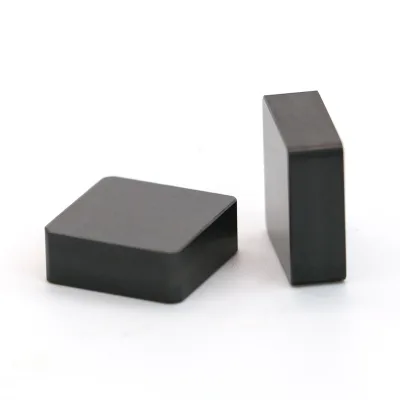
Geometric customization is a standard offering in this sector. Suppliers frequently list "Shape" and "Size" as customizable parameters, with model numbers often tailored to customer needs rather than fixed standard catalog items. While some listings mention specific dimensions such as a diameter of 3/8 inch, the prevailing trend is toward bespoke configurations. The inserts are generally silver or black in color, depending on the specific manufacturing batch or coating application, though the base material remains consistent. The physical structure is defined as an indexable turning tool, designed for high-efficiency external turning operations.
Compliance, Certification, and Origin Verification
When sourcing industrial cutting tools, verifying the manufacturer's compliance with international standards is non-negotiable. The most prominent certification observed in the current market data is ISO9001:2015. This certification indicates that the supplier maintains a quality management system that meets global benchmarks for consistency and process control. Buyers should request current certification documents directly from the supplier to ensure validity, as this is a primary indicator of manufacturing reliability.
The geographical origin of the product is another critical compliance factor. The majority of high-volume CBN insert production is concentrated in specific industrial hubs in China, particularly Hunan Province and Zhuzhou City. These regions are known for their established supply chains in superhard materials. When evaluating suppliers, procurement teams should confirm the specific place of origin, as logistics, tariffs, and lead times vary significantly based on the exact location within the region.
Furthermore, suppliers often offer OEM and ODM support, indicating their capacity to adapt products to specific brand or technical requirements. This level of customization support suggests a mature manufacturing infrastructure capable of handling complex engineering requests. However, buyers must ensure that any custom specifications are backed by the supplier's ability to maintain the ISO9001:2015 standards throughout the custom production process.
Cost Drivers and Pricing Structures
Understanding the cost structure of CBN inserts is essential for budgeting and total cost of ownership analysis. The observed market price range for these products spans from $0.50 to $300 USD per unit. This wide variance is not indicative of quality differences alone but is heavily influenced by the degree of customization, the specific geometry, and the volume of the order. The "Low Cost & High Quality" advantage often cited by suppliers suggests a competitive pricing strategy, but buyers must scrutinize this claim against the actual material costs of synthetic CBN.
The Minimum Order Quantity (MOQ) is a significant factor in the initial procurement cost. Data indicates an MOQ range of 1 to 100 units, with a specific observation of 10 pieces as a common threshold. For buyers requiring trial runs or small-batch production, a lower MOQ is advantageous. However, larger orders typically unlock better unit economics. The selling unit is often listed as a single item, but the packaging standard is usually 10 pieces per box or carton. This packaging density affects shipping costs and handling efficiency.
Additional cost drivers include the "Wear-Resistant, Long Life, High Efficiency" attributes. While the upfront cost of a CBN insert may be higher than standard carbide, the extended tool life and reduced downtime often result in a lower cost per part. Buyers should calculate the total cost based on the number of parts machined per insert rather than the purchase price alone. The "Environmentally" friendly aspect mentioned in some product attributes may also influence long-term compliance costs, particularly in regions with strict environmental regulations regarding industrial waste.
Typical Applications and Performance Expectations
CBN inserts are primarily deployed in the machinery and electronics sectors, where precision and surface finish are paramount. The specific application data highlights their suitability for machining hardened steel, cast iron, and sintered iron. These materials are notoriously difficult to machine due to their abrasive nature and high hardness, which quickly degrade standard cutting tools. The "External Turning Tool" classification confirms their primary use in turning operations, where the tool moves parallel to the workpiece axis.
The performance advantages of these inserts are well-documented. The "High Hardness" and "Wear-Resistant" characteristics allow for sustained cutting speeds that would be impossible with other materials. This leads to "High Efficiency" in production cycles. The "Long Life" attribute suggests that these inserts can maintain their cutting edge for extended periods, reducing the frequency of tool changes and machine stoppages. This is particularly valuable in continuous production environments where downtime costs are high.
It is important to note that while the inserts are designed for "Machinery and Electronics," they are also noted for applications in the "Refractory" sector. This suggests versatility in handling high-temperature or chemically resistant materials. However, buyers should verify that the specific insert geometry and material grade match the exact refractory material being machined, as variations in composition can affect performance. The "Compressive Strength" characteristic of the diamond classification, often referenced in related superhard material contexts, underscores the robustness of the material under high load conditions.
Supplier Evaluation and Customization Capabilities
Evaluating a supplier for CBN inserts requires looking beyond the basic product listing. The ability to provide "Customized Support" in the form of OEM and ODM services is a strong indicator of a supplier's technical depth. Buyers should assess whether the supplier can accommodate specific model numbers, shapes, and sizes that align with their existing tooling systems. The observation that "Model Number" is "According to Customer Needs" implies a high degree of flexibility, but it also requires clear communication of technical drawings and specifications.
The "After-Sales Service" attribute is another critical evaluation point. In the context of high-value cutting tools, the availability of technical support, warranty claims, and replacement policies is essential. Suppliers that explicitly state they "Provide" after-sales service are more likely to stand behind their product performance. Buyers should inquire about the specific nature of this service, including response times and the availability of replacement parts or inserts.
Quality control during the manufacturing process is paramount. The "New" condition of the products and the "High Hardness" claims must be backed by consistent quality assurance protocols. Buyers should request evidence of the supplier's internal testing procedures, particularly regarding the synthesis of the Cubic Boron Nitride. The "Static High Pressure Catalytic Method" is a complex process, and deviations can lead to inconsistent hardness or premature failure. Verifying that the supplier adheres to the "Standards and Customized" production standards is crucial for ensuring that every batch meets the required specifications.
Quality Control and Long-Term Procurement Considerations
Ensuring consistent quality in CBN insert procurement involves a multi-layered approach to quality control. The "Single Package Size" of 20x10x10 cm and a "Single Gross Weight" of 0.500 kg provide baseline data for logistics planning, but the internal quality of the packaging is equally important. The standard packaging of "10PCS/Box" or "10PCS/Plastix Box" must protect the inserts from damage during transit, as chipping or micro-fractures can render the tool unusable. Buyers should verify that the packaging materials are robust enough to withstand international shipping conditions.
Long-term procurement considerations extend beyond the initial purchase. The "Wear-Resistant" and "Long Life" attributes suggest that these inserts are a long-term investment. However, buyers must establish a system for monitoring tool performance and wear rates. Regular inspection of the inserts after use can help identify any deviations from expected performance, which may indicate issues with the supplier's quality control or the need for a different grade of CBN.
The "Environmentally" friendly aspect of the production process should also be considered in the context of corporate sustainability goals. While the specific environmental standards are not detailed in the product data, buyers should inquire about the supplier's waste management practices and energy consumption during the synthesis process. This information can be valuable for companies aiming to reduce their carbon footprint or meet specific sustainability certifications.
Finally, the "Customized" nature of the product means that any changes in production requirements must be managed carefully. Buyers should maintain a clear record of all custom specifications and ensure that the supplier has the capacity to replicate these specifications in future orders. The "Shape: Offer" and "Size: Offer" attributes highlight the need for precise documentation to avoid errors in subsequent procurement cycles. By maintaining a rigorous documentation process and fostering a collaborative relationship with the supplier, buyers can ensure a steady supply of high-performance CBN inserts that meet their exacting standards.
FAQs
What synthesis method is used for these CBN inserts?
The inserts are synthesized using the Static High Pressure Catalytic Method. This specific process ensures the crystal structure provides the necessary thermal stability and super hard characteristics required for machining hardened materials.
Which certifications do the manufacturers typically hold?
Manufacturers typically hold ISO9001:2015 certification. This indicates a quality management system that meets global benchmarks for consistency and process control, which is essential for reliable industrial cutting tool production.
Can I order customized shapes and sizes for these tools?
Yes, customized shapes and sizes are available as standard support. Suppliers offer OEM and ODM services where model numbers and dimensions are tailored to specific customer needs rather than fixed catalog items.
What is the minimum order quantity for these inserts?
The minimum order quantity is often 10 pieces per box. While the general range spans from 1 to 100 units, the specific observation of 10 pieces serves as a common threshold for initial procurement.
Where are these CBN inserts manufactured?
These inserts are manufactured in Hunan Province, China, specifically in Zhuzhou City. This region is a known industrial hub for superhard materials with established supply chains for such cutting tools.
How are the inserts packaged for shipment?
The inserts are packaged in cartons containing 10 pieces per box. The single package size is typically 20x10x10 cm with a gross weight of 0.500 kg to ensure protection during transit.