Source Cushioning Honeycomb Paper Machine for cosmetics, fabric, and paper
Find 30 cushioning honeycomb paper machines with automatic grades and varying speeds. Compare specifications like slitting width, tension settings, and motor power to select the right equipment for your production needs.
Key considerations
Products List


Kraft Honeycomb Paper Cushion Paper Honeycomb Wrapping Paper Machine
$5000.00 - $16000.00
MOQ: 1 Pieces

Kraft Honeycomb Paper Cushion Paper Honeycomb Wrapping Paper Machine
$5000.00 - $16000.00
MOQ: 1 Pieces


Kraft Honeycomb Paper Cutting Honeycomb Paper Cushion Making Honeycomb Paper Machine
$3000.00 - $20000.00
MOQ: 1 Pieces


Honeycomb Cutting Machine for Packaging Honeycomb Cushion Packaging Paper Die Cutting Machine
$3000.00 - $20000.00
MOQ: 1 Pieces


Kraft Honeycomb Paper Making Paper Honeycomb Cushion Honeycomb Paper Cutting Machine on Sale
$3000.00 - $20000.00
MOQ: 1 Pieces

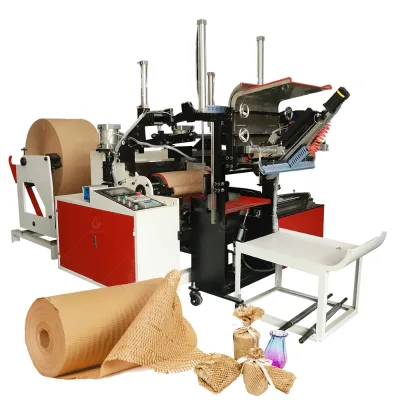


Honeycomb Wrapping Paper Protective Cushion Cushion Packaging Paper Making Machine
$28000.00 - $38000.00
MOQ: 1 Sets


Recyclable Honeycomb Paper Kraft Wrapping Cushioning Paper Forming Machine
$28000.00 - $38000.00
MOQ: 1 Sets


Honeycomb Kraft Paper Cushion Paper Honeycomb Paper Roll Making Cutting Machine
$28000.00 - $38000.00
MOQ: 1 Sets

Comprehensive Sourcing Guide
Strategic Sourcing Guide for Cushioning Honeycomb Paper Machines
Understanding Core Technical Specifications and Operational Capabilities
When evaluating cushioning honeycomb paper machines for industrial procurement, buyers must first establish a clear understanding of the fundamental technical specifications that define machine performance. The market presents a variety of models, each tailored to specific production volumes and material requirements. A critical observation in the current supply landscape is the variation in maximum slitting roll widths, which can range significantly depending on the model. For instance, specific high-capacity units are engineered with a maximum slitting roll width of 650mm, allowing for the processing of wider rolls of raw material to increase throughput efficiency. Conversely, other configurations may feature a finished product width of 500mm, which is often suitable for standard packaging applications where precision is prioritized over width.
The mechanical drive systems and automation levels are equally vital considerations. Most modern units in this category operate with an automatic grade, ensuring consistent output with minimal manual intervention. The drive mechanism typically utilizes a sync-belt drive system, which offers smooth operation and reduced maintenance compared to gear-driven alternatives. Power transmission is electric, driven by main motors sourced from specific regional manufacturers, such as those originating from China. The electrical components are often standardized, with brands like Chnt being a common selection for control reliability. Furthermore, the tension setting range is a crucial parameter for maintaining the structural integrity of the honeycomb structure during production. Buyers should verify that the machine offers a tension setting range that matches their material thickness, with observed ranges extending from 0-40n.M to 0-80n.M depending on the specific configuration.
Speed is another defining characteristic that directly impacts production capacity. Operational speeds vary widely across the product spectrum, with some models capable of reaching a maximum speed of 120m/Min, while others are optimized for lower speeds, such as a maximum of 50m/Min, to ensure quality control on delicate substrates. The maximum unwind diameter is also a limiting factor for continuous operation; observed specifications indicate a maximum unwind diameter of 1200mm for certain models, which allows for longer run times before reloading. The loading way is standardized in many units to a 3.1.5-Inch Air Shaft (2 Bars), facilitating quick changeovers between different roll sizes. Understanding these numerical constraints is essential for matching the machine to the facility's existing infrastructure and production targets.
Compliance, Certification, and Safety Standards Verification
In the realm of industrial machinery, compliance with international safety and quality standards is non-negotiable. When sourcing a Cushioning Honeycomb Paper Machine, the primary certification to verify is the CE mark, which indicates conformity with health, safety, and environmental protection standards for products sold within the European Economic Area. The presence of a CE certification is a baseline requirement for many international buyers and serves as a strong indicator that the manufacturer adheres to specific safety protocols. Beyond the CE mark, buyers should be aware of other potential certifications like FSC or REACH, though these should be treated as background information rather than guaranteed attributes of every listed unit. It is imperative to request current certification documentation directly from the supplier to confirm that the specific model being purchased holds valid certification status.
Quality assurance processes are further evidenced by the availability of machinery test reports. A high-confidence fact in the current market is that many suppliers provide a Machinery Test Report, which documents the performance of the machine prior to shipment. This report should include data on the machine's operational stability, power consumption, and safety feature functionality. Buyers must ensure that these reports are not generic templates but are specific to the serial number of the unit they intend to purchase. Additionally, the condition of the machine is typically listed as "New," but this should be verified against the physical inspection of the equipment. The weight of the machine is also a significant factor for logistics and installation; observed weights range from 1100kg to 3000kg, with a common specification being 1200kg or 3000kg depending on the model's size and complexity.
Standardization of the machine's physical dimensions is another area requiring careful verification. While some models adhere to a standard dimension of 290019001500mm, others may have dimensions listed as "According to product," indicating custom fabrication. This variability impacts the space requirements within the factory floor. The origin of the machine is predominantly China, which influences the supply chain dynamics, including lead times and shipping logistics. Buyers should confirm the exact origin and ensure that the manufacturer has a track record of exporting to their specific region. The absence of specific certification claims for certain models should not be assumed to be a negative attribute but rather a signal to request explicit verification from the supplier before finalizing the procurement.
Cost Drivers and Financial Considerations in Procurement
The financial landscape of sourcing cushioning honeycomb paper machines is influenced by a complex interplay of factors, including technical specifications, material composition, and automation levels. The observed price range for these machines is substantial, spanning from 900 USD to 58,000 USD. This wide disparity is not arbitrary but reflects the differences in machine capacity, component quality, and level of automation. Lower-priced units typically feature basic automation, lower maximum speeds, and standard electrical components. In contrast, higher-priced models often incorporate advanced computerized control systems, higher power ratings, and premium components such as touch screens from recognized manufacturers like Weview or Huichuan from Taiwan.
The total power consumption of the machine is a direct cost driver, with observed specifications indicating a total power of 6.5kw for certain models. Higher power ratings generally correlate with higher speeds and the ability to process thicker or denser materials, which justifies a higher price point. The weight of the machine also impacts shipping and installation costs; heavier units, such as those weighing 3000kg, will incur higher freight charges and may require specialized lifting equipment for installation. The packing method, typically wooden or wooden box packing, adds to the overall cost but is essential for protecting the machine during international transit. Buyers should consider the total cost of ownership, which includes not only the purchase price but also the energy consumption, maintenance requirements, and potential downtime costs.
Minimum Order Quantity (MOQ) is another critical financial consideration. In the current market, the observed MOQ range is consistently 1 unit, indicating that suppliers are generally willing to sell single units, which is favorable for small to medium-sized enterprises. However, buyers should be aware that while the MOQ is low, the lead time and shipping costs may vary significantly based on the order volume and destination. The material used for the machine's construction, such as the use of Kraft Paper for the finished product, does not directly affect the machine's price but influences the operational efficiency and the quality of the output. Understanding these cost drivers allows buyers to make informed decisions that balance budget constraints with performance requirements.
Typical Applications and Material Compatibility
Cushioning honeycomb paper machines are designed to produce versatile packaging solutions suitable for a wide array of industries. The primary application of these machines is the production of buffer packaging paper pads, which are extensively used in the cosmetics industry to protect fragile items during transit. However, the versatility of these machines extends far beyond cosmetics. The observed applications include processing fabric, non-woven materials, coating materials, paper, and aluminum. This broad material compatibility makes the machinery a valuable asset for manufacturers who require flexible production capabilities to serve multiple market segments.
The specific material requirements for the finished product are also a key consideration. The machines are capable of handling normal specification paper with a grammage ranging from 80g to 160g. This range allows for the production of honeycomb paper pads with varying densities and cushioning properties, catering to different packaging needs. The material roller paper core diameter is another specification that buyers must verify, with observed values of 76mm and 38mm. These core diameters determine the size of the rolls that can be wound onto the machine, influencing the final product dimensions and the efficiency of the winding process. The maximum winding material diameter of 240mm is a critical limit that defines the maximum size of the finished roll.
The suitability of the machine for specific materials is often highlighted in the product specifications. For instance, certain models are explicitly noted as suitable for paper, while others are designed for a broader range of materials. The finished product width, observed at 500mm in some models, dictates the size of the packaging pads that can be produced. This dimension is crucial for buyers who need to match the machine's output to their existing packaging lines or customer requirements. The ability to produce honeycomb paper with a cross C structure is another specialized feature that enhances the cushioning properties of the final product. Understanding these application details ensures that the selected machine aligns with the buyer's specific production goals and market demands.
Supplier Evaluation and Quality Control Protocols
Selecting the right supplier is as critical as selecting the right machine. Buyers should prioritize suppliers who provide comprehensive documentation, including machinery test reports and certification proofs. The presence of a Machinery Test Report is a strong indicator of a supplier's commitment to quality and transparency. When evaluating potential suppliers, buyers should verify the origin of the machine, which is predominantly China, and assess the supplier's experience in exporting to their region. The condition of the machine, typically listed as "New," should be confirmed through detailed product descriptions and, if possible, video inspections or third-party verification.
Quality control protocols should be a central part of the supplier evaluation process. Buyers should inquire about the manufacturing standards followed by the supplier, such as the adherence to specific dimensions and weight specifications. The use of high-quality components, such as PLCs for control systems and Chnt for electrical components, is a positive sign of a supplier's attention to detail. The automation level of the machine, whether it is fully automatic or computerized, should be verified to ensure it meets the buyer's production efficiency requirements. The supplier's ability to provide customization options is also a valuable attribute, allowing buyers to tailor the machine to their specific needs.
When comparing suppliers, buyers should look for consistency in the specifications provided. For example, the standard dimensions of 290019001500mm should be consistent across similar models, and any deviations should be clearly explained. The weight of the machine, ranging from 1100kg to 3000kg, should be accurately reported to avoid logistical surprises. The supplier's responsiveness to inquiries and their willingness to provide detailed technical information are also important indicators of their reliability. By conducting a thorough evaluation of suppliers, buyers can mitigate risks and ensure a successful procurement experience.
Long-Term Procurement and Operational Sustainability
Sourcing a Cushioning Honeycomb Paper Machine is a long-term investment that requires careful consideration of operational sustainability and future scalability. The automation level of the machine, whether automatic or computerized, plays a significant role in long-term operational efficiency. Machines with advanced computerized controls, such as those featuring touch screens from Weview or Huichuan, offer greater flexibility and ease of use, which can reduce training costs and minimize operator errors over time. The drive system, typically a sync-belt drive, is known for its durability and low maintenance requirements, contributing to the machine's longevity.
Energy efficiency is another critical factor for long-term sustainability. The total power of the machine, observed at 6.5kw for some models, should be evaluated in the context of the buyer's energy costs and environmental goals. Machines with higher power ratings may offer greater speed and throughput but could also incur higher energy costs. Buyers should assess the trade-off between speed and energy consumption to find the optimal balance for their operations. The maintenance requirements of the machine, including the availability of spare parts and the ease of access to critical components, should also be considered. A machine with a robust design and high-quality components will likely require less frequent maintenance and have a longer service life.
Scalability is also an important consideration for buyers planning to expand their production capabilities. The maximum slitting roll width and maximum unwind diameter are key specifications that determine the machine's capacity to handle larger orders. Buyers should ensure that the selected machine has the flexibility to accommodate future growth, whether through increased production volumes or the introduction of new product lines. The ability to customize the machine, such as adjusting the tension setting range or the finished product width, adds to its long-term value. By focusing on these long-term factors, buyers can make a procurement decision that supports their business growth and operational efficiency for years to come.
FAQs
What certifications does the Cushioning Honeycomb Paper Machine have?
The machine holds CE certification, indicating compliance with European safety standards. Buyers should verify the specific certification documents for the unit before purchase to ensure validity.
How fast can the Cushioning Honeycomb Paper Machine operate?
Operational speeds vary by model, reaching up to 120 meters per minute for high-capacity units. Some configurations are optimized for slower speeds, such as 50 meters per minute, to ensure quality on delicate substrates.
Can the machine handle different paper thicknesses?
Yes, the machine processes normal specification paper with a grammage ranging from 80g to 160g. This range allows for producing honeycomb pads with varying densities to meet specific packaging needs.
What is the maximum slitting roll width available?
Specific high-capacity models support a maximum slitting roll width of 650mm. Other configurations may feature a finished product width of 500mm, suitable for standard packaging applications requiring precision.
Which electrical components are used in the machine?
The machine typically utilizes Chnt electrical components for control reliability. It also features a sync-belt drive system and main motors sourced from China to ensure stable electric operation.
What is the minimum order quantity for this machine?
The minimum order quantity is one unit, making it accessible for small to medium enterprises. Buyers should note that while the MOQ is low, shipping costs and lead times may vary by destination.
How is the machine packed for international shipping?
The machine is packed in wooden boxes or wooden packing to ensure protection during transit. This packaging method adds to the overall cost but is essential for safeguarding the equipment during international shipping.