Source Seasoning Jars for Kitchen, Soy Sauce, and Vinegar
Compare 30 listings of Seasoning Jars with options for glass construction, square or round shapes, and custom capacities. Buyers can evaluate specifications like 6oz volume, printing techniques, and lid types for kitchen and food industry applications.
Key considerations
Products List




Comprehensive Sourcing Guide
Strategic Sourcing Guide for Seasoning Jars
Understanding Product Variants and Technical Specifications
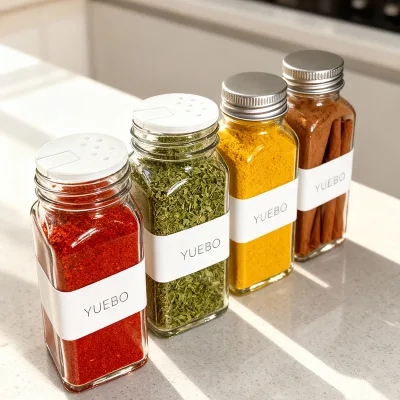
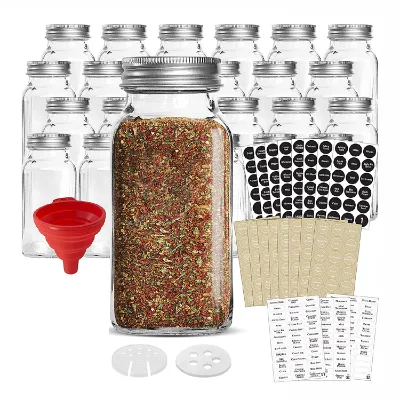
The global market for Seasoning Jars presents a diverse array of options, ranging from simple glass containers to complex multi-material systems designed for specific culinary applications. When sourcing these items, buyers must first distinguish between the primary material compositions observed in current listings. The dominant material specification is glass, often paired with various lid configurations to ensure freshness and usability. Specific product data indicates a "Glass+Cap" construction, while other entries highlight a "Glass" body with a "Plastic Insert and Aluminum Cap" assembly. This distinction is critical for procurement decisions, as the lid material directly influences the seal integrity and the chemical compatibility with different condiments.
The physical geometry of the jar is another primary differentiator. Listings reveal a bifurcation in design philosophy, with "Square Shape" and "Round Shape" being the two most prevalent forms. The square variant is often associated with an "American Style" or "Simple" aesthetic, maximizing shelf space efficiency in commercial kitchens. Conversely, the round variant is frequently linked to "European" styling, offering a more traditional appearance. Dimensions vary significantly based on the intended volume. One specific model, identified as "jars for spices-225," offers a capacity of 6oz (180ml), while other specifications suggest "Large" sizes with custom capacities. The wall thickness is a crucial technical parameter for durability; documented specifications note a thickness of 3mm, which provides a baseline for structural integrity against thermal shock and mechanical impact during transport.
| Feature Category | Observation A | Observation B | Observation C |
|---|---|---|---|
| Primary Material | Glass | Glass + Cap | Glass |
| Lid Composition | Lids (General) | Plastic Insert + Aluminum Cap | Plastic Insert |
| Shape Profile | Square | Square Shape | Round |
| Style Origin | American Style | Simple | European |
| Capacity | Custom | 6oz / 180ml | Custom |
| Wall Thickness | 3mm | 3mm | N/A |
| Color Options | Clear, White | Clear | Clear |
Buyers must verify that the specific model number, such as "KHL6329" or "jars for spices-225," aligns with their logistical requirements. The single package size for these items can be substantial, with one observed configuration measuring 40x35x30 cm per package, which directly impacts freight cost calculations. Furthermore, the gross weight per single package is recorded at 15.0 kg, a figure that must be accounted for in warehouse handling and shipping weight limits.
Compliance, Certification, and Material Safety
In the food packaging sector, the distinction between marketing claims and verified compliance is paramount. While product attributes list "Food grade" as a feature, buyers cannot assume this status is universally certified across all suppliers without independent verification. The industrial use is explicitly categorized as "Food," which necessitates adherence to strict regulatory standards regarding chemical migration and heavy metal content. However, specific certification names, such as FDA, LFGB, or ISO 22000, are not explicitly confirmed in the provided product data. Therefore, procurement teams must treat the "Food grade" label as a claim that requires validation through third-party laboratory testing for the specific batch being ordered.
The manufacturing location is a significant factor in compliance. The supply chain originates from Guangxi, China, and generally from China as a broader region. While this location is a major hub for glass manufacturing, buyers should verify that the specific factory holds relevant local and international certifications. The product standard is noted as "4.34.310.4," which appears to be a dimensional specification rather than a regulatory standard code. Consequently, buyers should not interpret this as a safety certification. Instead, the procurement strategy must include a request for the supplier to provide certificates of analysis (CoA) or specific food contact safety reports that align with the regulations of the destination market.
Additionally, the "technics" employed, such as "Printing," introduce potential contamination risks if not managed correctly. The application of logos and labels via printing must use inks that are food-safe and resistant to the specific usage environment, whether it involves high humidity in a kitchen or exposure to oils in Seasoning Jars. The "Customized logo printing welcomed" attribute suggests a high degree of personalization, but this customization must not compromise the food-grade integrity of the container. Buyers should explicitly require that any printed materials comply with the food safety standards of their target region before production begins.
Cost Drivers and Pricing Dynamics
The pricing structure for Seasoning Jars is influenced by a complex interplay of material costs, customization levels, and order volume. The observed listed price range spans from $0.02 to $14.00 USD. This wide variance indicates that the unit price is not static but is highly dependent on the specific configuration, order quantity, and the extent of customization. The lower end of the spectrum likely corresponds to basic, unbranded, standard-sized units with minimal packaging, while the higher end reflects custom shapes, specialized lids, or smaller production runs.
A critical cost driver is the Minimum Order Quantity (MOQ). The data presents conflicting MOQ requirements, with some listings stating 2000 pieces and others indicating 3000 pieces. This discrepancy highlights the importance of clarifying the MOQ with the specific supplier before finalizing a contract. For buyers with lower volume needs, the unit cost may be significantly higher due to the fixed costs of setup and production line preparation. Conversely, buyers capable of meeting the 3000-piece threshold may negotiate more favorable pricing tiers. The "Selling Units" are listed as "Single item," which implies that pricing is calculated per unit, but bulk discounts are likely available for orders exceeding the MOQ.
Customization is another major factor affecting the final cost. The "Specification" is listed as "CUSTOM," and "Customization" is marked as "Available." This includes options for custom shapes, sizes, and logo printing. Each customization step adds to the production complexity and cost. For instance, the "Square Clear Glass Jars" with a specific 3mm thickness and aluminum cap assembly will inherently cost more than a generic round bottle. Furthermore, the "Packing" method, described as "Carton Box," adds to the overall cost, especially if the packaging needs to be reinforced to handle the 15.0 kg gross weight. Buyers should request a detailed breakdown of costs to understand how much of the price is attributed to the glass, the lid assembly, the printing, and the packaging.
Typical Applications and Usage Scenarios
Seasoning Jars serve a vital role in both commercial and residential food storage, with applications ranging from dry spices to liquid condiments. The "Usage" attributes in the product data are diverse, including "Seasoning," "Soy Sauce," "Vinegar Bottle," and "Spice." This versatility allows these jars to be utilized in various settings, from professional kitchens to home pantries. The "applicable space" is explicitly defined as "Kitchen," confirming their primary function in culinary environments.
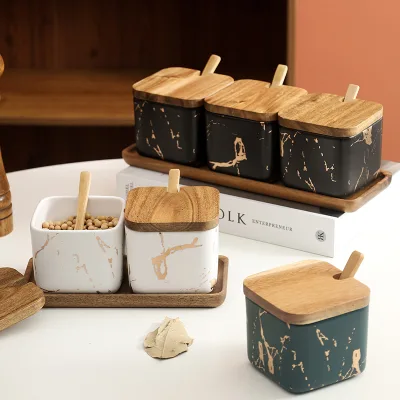
The specific design features of the jars dictate their suitability for different substances. The "Square Shape" jars, often associated with "American Style," are ideal for storing dry spices, salt, pepper, and herbs where space efficiency is key. The "Round" jars, linked to "European" styles, may be better suited for liquid condiments like soy sauce or vinegar, where the shape facilitates pouring and handling. The inclusion of a "Seasoning Jar with Spoon" suggests that some models are designed for immediate dispensing, enhancing convenience in high-traffic kitchen environments.
The "Industrial Use" is categorized as "Food," which encompasses a broad spectrum of applications. However, buyers must ensure that the specific jar design matches the viscosity and chemical nature of the product being stored. For example, a jar designed for dry spices may not have the same seal integrity as one designed for liquid vinegar. The "Lids" and "Plastic Insert and Aluminum Cap" configurations are critical for maintaining freshness and preventing leakage. The "Feature" of "High Quality" and "Food grade" implies that these containers are intended for direct food contact, but the specific compatibility with acidic or oily substances should be verified with the supplier.
Supplier Evaluation and Operational Capabilities
Selecting the right supplier requires a thorough evaluation of their operational capabilities and business practices. The "Advantage" listed as "Factory+professional" suggests that the suppliers are direct manufacturers rather than trading companies, which can offer benefits in terms of pricing and quality control. However, buyers should verify this claim by requesting facility audits or virtual tours. The "OEM/ODM" attribute is marked as "Accptable" (Acceptable), indicating that suppliers are willing to engage in original equipment and design manufacturing. This is a crucial capability for buyers looking to create a unique brand identity.
The "Sample" availability is noted as "Free," which is a significant advantage for buyers in the evaluation phase. Free samples allow for rigorous testing of the product's physical properties, including the seal quality, lid fit, and print durability. Buyers should utilize these samples to conduct stress tests, such as dropping the jars or subjecting them to temperature changes, to ensure they meet the required durability standards. The "Logo" customization is welcomed, but the process for artwork submission and proofing should be clearly defined to avoid delays.
Lead time is another critical operational metric. The "Delivery time" is specified as 15-30 Days. This range provides a window for production planning, but buyers should confirm the exact timeline based on their order size and customization requirements. The "Place of Origin" is Guangxi, China, which is a known manufacturing hub, but logistics from this region can vary. Buyers should establish clear communication channels regarding shipping methods and potential delays. The "Single gross weight" of 15.0 kg per package is a heavy load that requires careful handling and appropriate shipping arrangements to prevent damage.
Quality Control and Long-Term Procurement Strategy
Ensuring consistent quality is essential for maintaining brand reputation and customer satisfaction. The "Feature" of "High Quality" is a general claim that must be backed by a robust quality control (QC) process. Buyers should implement a multi-stage QC strategy that includes pre-production sample approval, in-process inspections, and final random inspections before shipment. Given the "Thickness" of 3mm, visual and dimensional inspections are necessary to ensure uniformity across the batch. Any deviations in wall thickness can lead to breakage during transport or use.
The "Packing" method, described as "Carton Box," must be evaluated for its protective capabilities. The 15.0 kg gross weight indicates that the packaging must be strong enough to withstand stacking and handling. Buyers should request details on the carton material and internal cushioning to ensure that the glass jars are adequately protected. The "Single package size" of 40x35x30 cm suggests that palletization strategies must be optimized to maximize container space and minimize shipping costs.
For long-term procurement, establishing a strategic partnership with the supplier is beneficial. The "Customization" availability allows for ongoing product development and adaptation to market trends. Buyers should consider negotiating long-term contracts that lock in pricing and ensure supply stability. The "MOQ" of 2000 or 3000 pieces may require buyers to plan their inventory carefully to avoid stockouts or overstocking. Additionally, the "Sample" policy of free samples can be leveraged for continuous product testing and improvement.
Finally, buyers should maintain a clear record of all product specifications, including the "prod_model," "prod_standard," and "prod_packing." This documentation is essential for resolving any disputes regarding product quality or delivery. By adhering to a disciplined sourcing approach that prioritizes verification of claims and rigorous quality control, buyers can secure a reliable supply of high-quality Seasoning Jars that meet their specific operational needs.
FAQs
What is the minimum order quantity for these glass jars?
The minimum order quantity is typically 2000 pieces or 3000 pieces depending on the specific supplier configuration. Buyers must verify the exact MOQ with the chosen vendor before placing an order to ensure compliance with production requirements.
Can I request a free sample before placing a bulk order?
Yes, free samples are available for potential buyers to evaluate product quality. This allows you to inspect the glass thickness, lid fit, and printing quality before committing to a larger purchase order.
Which shapes are available for the Seasoning Jars?
The jars come in both square and round shapes to suit different storage needs. Square jars often feature an American or simple style, while round options may align with European aesthetics.
How long does it take to deliver the order?
The standard delivery time ranges from 15 to 30 days after order confirmation. This lead time covers production, quality checks, and packaging into carton boxes for shipment.
What material is used to construct these spice containers?
The primary material is glass, often paired with a cap assembly. Specific configurations include a plastic insert and aluminum cap to ensure a secure seal for food-grade storage.
Is custom logo printing available for these jars?
Customized logo printing is welcomed and available for most orders. This service allows you to brand the jars with your specific design using approved printing techniques.
What is the typical capacity or volume of the jars?
Common capacities include 6oz or 180ml, though custom sizes are also available. Buyers should specify their required volume to ensure the jar fits their specific storage needs.