Source Custom Color Cast PU Rod for Industrial, Automotive, Engineering
Compare 30 listings for Custom Color Cast PU Rod with varying hardness, dimensions, and processing methods. Buyers can evaluate tensile strength, abrasion resistance, and working temperature ranges to select the right polyurethane elastomer for their specific needs; compare the available evidence and request quotations based on your requirements.
Key considerations
Products List









Comprehensive Sourcing Guide
Custom Color Cast PU Rod Sourcing Guide
Procuring custom color cast polyurethane (PU) rods requires a disciplined approach to material verification and supplier alignment. These components are integral to industrial, engineering, and automotive applications where durability and aesthetic customization intersect. Buyers must prioritize suppliers who demonstrate capability in integral casting and curing processes, ensuring a compact structure without internal voids. The ability to match specific color requirements, such as yellow, black, red, or translucent finishes, adds value but demands strict quality control to prevent batch-to-batch variation.
The sourcing landscape for these elastomeric rods is characterized by significant variability in technical specifications and commercial terms. Observed listings indicate a wide price range and flexible minimum order quantities, reflecting the diverse needs of small-batch prototyping versus large-scale production runs. Successful procurement hinges on verifying the exact material composition, such as cast solid polyurethane, and confirming that the supplier can deliver the required hardness range, typically spanning from Shore A30 to Shore D80. This guide outlines the critical verification steps to mitigate risk and ensure product performance.
Product Scope and Observed Listing Signals
The market for custom color cast PU rods presents a broad spectrum of product configurations, primarily categorized as solid or hollow rods with varying diameters and lengths. Listings frequently highlight conventional lengths of 500mm, 1000mm, and 2000mm, alongside customizable cut options to meet precise engineering tolerances. Diameter ranges often extend from 10mm to 300mm, accommodating both standard mechanical components and specialized industrial parts. Buyers should note that while many suppliers offer standard sizes, the core value proposition lies in the ability to produce non-standard dimensions tailored to specific machinery or assembly requirements.
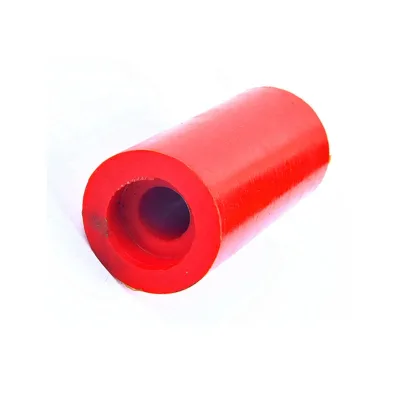
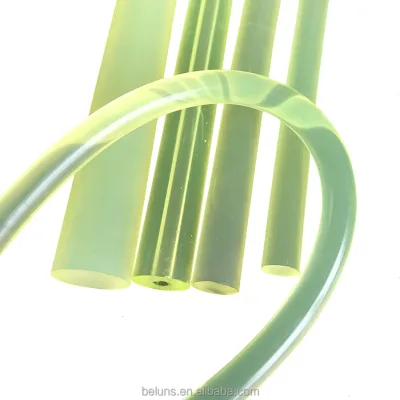
Color customization is a prominent feature, with suppliers offering transparent yellow-green, red, orange, and black options, often with custom color matching services. This aesthetic flexibility is crucial for applications requiring visual identification of components or brand alignment. However, the presence of multiple product models, such as HS-PU-N1 and HS-PU-L132, suggests that not all listings represent identical material properties. Procurement teams must carefully cross-reference the specific model number with the technical data sheet to ensure the selected rod meets the necessary mechanical and chemical resistance standards for the intended application environment.
Technical Specifications to Verify
Hardness is a primary technical parameter, with observed ranges spanning from Shore A10 to Shore D75 or even up to Shore D95 depending on the specific formulation. Buyers must verify the exact durometer rating required for their application, as this directly impacts the rod’s load-bearing capacity and flexibility. Additionally, tensile strength typically falls between 81 and 130 MPa, while elongation at break can range from 300% to 800%, indicating significant elasticity. These mechanical properties must be validated against the supplier’s test reports to ensure the material can withstand the operational stresses without permanent deformation or failure.
Thermal and chemical resistance are equally critical for long-term performance. The working temperature range is generally cited as -40°C to 80°C, which suits many industrial environments but may require special formulations for extreme conditions. Water absorption rates vary, with some specifications indicating less than 0.01% while others suggest 1.5% to 3.5%, a discrepancy that could affect dimensional stability in humid environments. Buyers should also confirm abrasion resistance, which is often claimed to be three to five times better than ordinary rubber, and verify compression set values to ensure the rod maintains its shape under continuous pressure.
Compliance and Safety Documentation
While specific certification statuses are not universally disclosed in general listings, buyers must request documentation confirming compliance with relevant industry standards for polyurethane elastomers. This includes verifying that the material meets safety requirements for contact with food or water if applicable, although standard industrial grades may not hold such certifications. Suppliers should provide Material Safety Data Sheets (MSDS) that detail the chemical composition, handling precautions, and disposal guidelines, ensuring that procurement teams can manage workplace safety and regulatory compliance effectively.
Packaging standards also play a role in compliance and product integrity. Observed packaging methods include fumigated wooden pallets, export wooden boxes, and bubble film wrapping, which protect the rods from moisture and physical damage during transit. Buyers should verify that the packaging meets international shipping regulations, particularly for fumigation requirements, to avoid customs delays. Additionally, confirming that the supplier conducts 100% inspection before shipment helps ensure that every rod meets the specified dimensional and aesthetic criteria, reducing the risk of receiving non-conforming goods.
Cost Drivers and Commercial Terms
The cost of custom color cast PU rods is influenced by several factors, including material density, hardness, and the complexity of color matching. Observed price ranges are broad, reflecting differences in material quality, production volume, and customization levels. Buyers should anticipate higher costs for non-standard diameters, lengths, or specific hardness grades that require specialized casting molds or curing cycles. Understanding these cost drivers allows procurement teams to negotiate more effectively and allocate budget appropriately for high-performance versus standard-grade components.
Minimum order quantities (MOQ) and lead times are significant commercial considerations, with observed MOQs ranging from 1 to 1000 units and delivery times typically spanning 7 to 15 days. Low MOQs facilitate prototyping and small-batch production, while larger orders may offer economies of scale. Buyers should clarify whether the quoted price includes packaging, shipping, and any tooling fees for custom colors or sizes. Establishing clear commercial terms upfront prevents unexpected costs and ensures that the supply chain aligns with production schedules, particularly for time-sensitive engineering projects.
Supplier Qualification and Quality Control
Supplier qualification should focus on manufacturing capabilities, particularly the use of integral casting and curing processes that ensure a compact structure without internal defects. Buyers should verify the supplier’s experience in producing polyurethane rods for industrial, engineering, and automotive applications, as this indicates a proven track record in meeting rigorous performance standards. Requesting samples is a critical step, allowing procurement teams to physically inspect the surface finish, color consistency, and dimensional accuracy before committing to a larger order.
Quality control processes must be transparent and robust. Suppliers should provide evidence of their inspection protocols, including checks for hardness, tensile strength, and visual defects. The availability of sample units, as noted in some listings, is a positive indicator of a supplier’s confidence in their product quality. Buyers should also inquire about the supplier’s ability to handle custom requests, such as specific surface textures like matte, glossy, or anti-slip finishes, and ensure that these customizations do not compromise the material’s inherent mechanical properties.
Long-Term Procurement Checks
Long-term success in sourcing custom color cast PU rods depends on establishing a reliable supply chain that can adapt to changing production needs. Buyers should monitor supplier performance over multiple orders, tracking metrics such as on-time delivery, consistency in color matching, and adherence to technical specifications. Building a relationship with a supplier who offers flexible customization options and responsive customer service can mitigate risks associated with supply chain disruptions or sudden design changes.
Regular re-evaluation of material performance in actual applications is essential to ensure that the selected PU rods continue to meet operational requirements. Buyers should collect feedback from engineering and maintenance teams regarding the rods’ durability, abrasion resistance, and thermal stability under real-world conditions. This feedback loop allows for continuous improvement in material selection and supplier collaboration, ensuring that the procurement strategy remains aligned with the company’s long-term manufacturing and quality goals.
FAQs
What customization options exist for hardness and color?
Hardness is customizable from Shore A30 to Shore D80, and standard colors include yellow, black, red, and translucent. Buyers can also request custom color matching to meet specific project requirements or branding needs for industrial applications.
How is the product packed for international shipping?
Products are packed using fumigated wooden pallets with wrapping film or export wooden pallets and boxes. Some items are wrapped with bubble film and packed in cartons or IPP to ensure safe transport during global logistics operations.
What are the standard dimensions and length options?
Conventional lengths include 500mm, 1000mm, and 2000mm, which are cuttable and customizable. Diameters range from 10mm to 300mm, allowing for non-standard sizes to be tailored specifically to unique engineering or industrial component designs.
Can I order samples before placing a bulk order?
Yes, samples are available for evaluation before committing to a larger purchase. This allows buyers to verify material quality, dimensions, and performance characteristics like abrasion resistance or working temperature ranges prior to finalizing their procurement strategy.
What is the typical delivery time for orders?
The standard delivery time ranges from 7 to 15 days after order confirmation. This lead time applies to most orders, though specific timelines may vary based on customization requirements, order volume, and current production capacity at the facility.
Which industries commonly use these polyurethane rods?
These rods are widely used in industrial, engineering, and automotive sectors. Their properties like high tensile strength and low water absorption make them suitable for demanding applications requiring durable, flexible, and wear-resistant plastic components.
What is the minimum order quantity for this product?
The minimum order quantity starts at 10 units for standard configurations. However, some listings indicate an MOQ range of 1 to 1000 units, allowing flexibility for small prototype runs or large-scale industrial procurement needs.