Source Custom Color Dog Medal for Awards, Events, and Gifts
Find and compare 30 Custom Color Dog Medal options from verified suppliers. Buyers can evaluate specifications like die casting, plating, and custom shapes for sports awards, ceremonies, and souvenir collections.
Key considerations
Products List







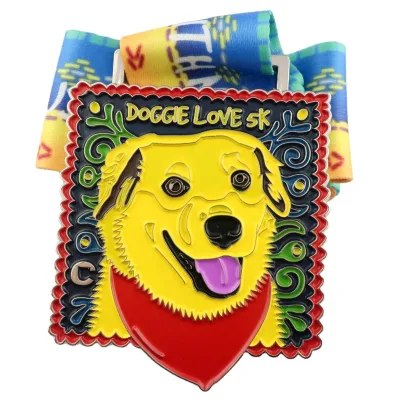
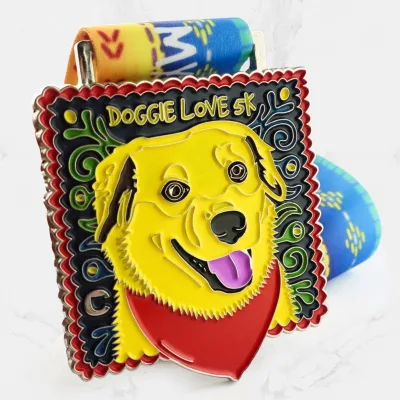
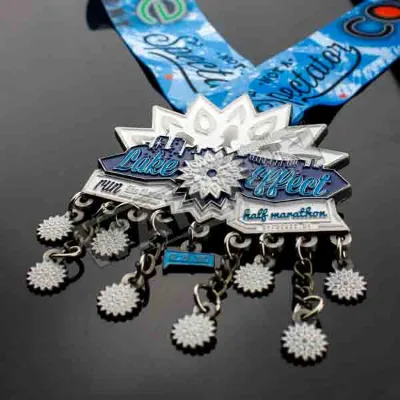
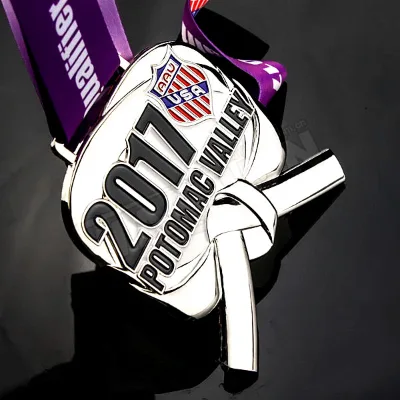
Comprehensive Sourcing Guide
Strategic Sourcing Guide for Custom Color Dog Medals
Understanding Product Specifications and Technical Attributes
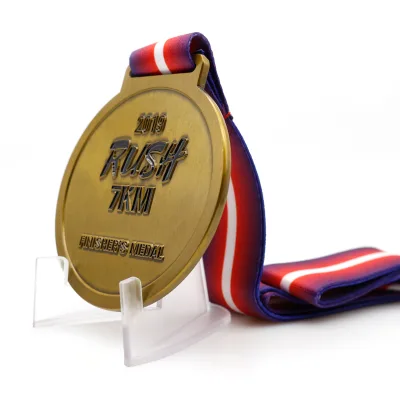
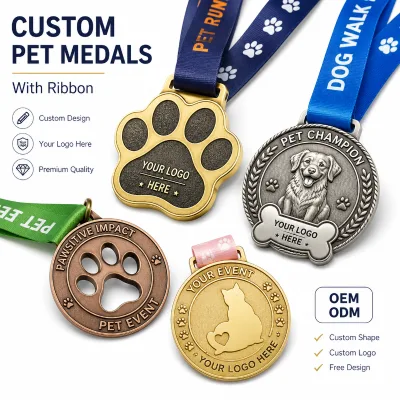
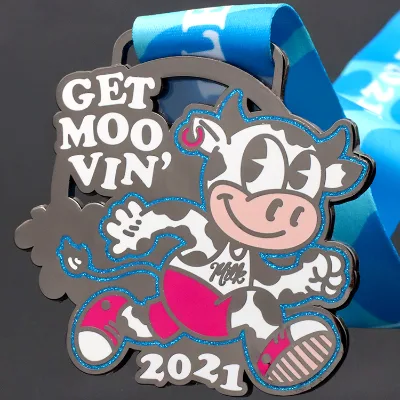
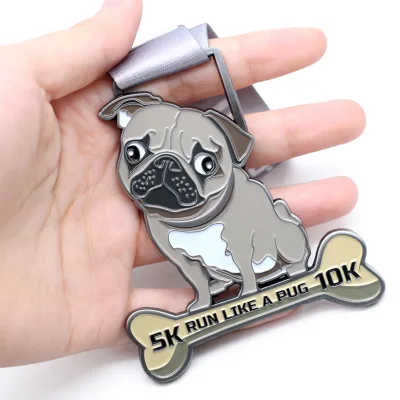
When sourcing custom color dog medals, buyers must first establish a clear understanding of the technical baseline provided by the market. The core product is defined as a metal medal, typically constructed from alloy or zinc alloy materials, which allows for durability and a premium feel suitable for awards and souvenirs. The manufacturing process is a critical differentiator; observed market data indicates a reliance on die casting and die-struck techniques, often combined with soft enamel coloring to achieve vibrant, multi-color designs. This specific combination of die casting and soft enamel ensures that the custom color requirements for dog-themed designs—such as specific breed markings or event logos—are rendered with high fidelity and texture.
The physical dimensions of these medals are highly flexible, with specifications ranging from standard sizes to fully customized dimensions. Buyers should expect thickness variations between 2mm and 7mm, allowing for a substantial weight that conveys value. The shape is predominantly round, though custom shapes are available to match specific dog silhouettes or event themes. Plating is a standard finishing step, with options including nickel plating, gold, silver, and bronze finishes to enhance the visual appeal. The production method often involves a semi-manual process, which can introduce slight variations in finish but allows for intricate detailing that fully automated lines might miss.
| Attribute Category | Observed Market Standard | Buyer Verification Point |
|---|---|---|
| Material | Metal, Zinc Alloy, Alloy | Verify specific alloy composition for weight and corrosion resistance. |
| Process | Die Casting, Die Struck | Confirm if soft enamel or hard enamel is used for color retention. |
| Thickness | 2-7mm (Customized) | Request physical samples to ensure the thickness meets perceived value. |
| Plating | Nickel, Gold, Silver, Bronze | Check for plating thickness to prevent tarnishing over time. |
| Shape | Round, Custom Shape | Ensure the mold cost for custom shapes aligns with the order volume. |
| Printing | Digital, Offset, Die Cutting | Verify color separation capabilities for complex dog illustrations. |
Compliance, Certification, and Safety Standards
For products intended for pets, dog owners, or general public use as souvenirs, compliance with safety standards is paramount. While the provided data does not list specific certification numbers, buyers must verify that the metal alloys used are free from harmful substances such as lead, cadmium, or nickel, particularly if the medals are intended for close contact or if there is a risk of ingestion by pets. The "Selling Units" are typically single items in single packs, often utilizing self-sealing bags, foam bags, or poly bags. This packaging must be non-toxic and secure.
Buyers should explicitly request documentation regarding material safety, such as RoHS (Restriction of Hazardous Substances) or REACH compliance, which are standard for metal goods exported from major manufacturing hubs like Guangdong and Zhejiang in China. Although the observed data mentions "Regional Feature: Europe," this suggests that many suppliers are accustomed to meeting European safety and environmental standards. However, this should not be assumed without verification. The "prod_standard" field in the source data lists dimensions (5.16×5.16×0...33cm), but this is a dimensional specification, not a safety standard. Therefore, procurement teams must treat all safety claims as assertions requiring third-party lab testing results before finalizing a contract.
Cost Drivers and Pricing Dynamics
The pricing for custom color dog medals is influenced by several distinct variables. The observed market price range is broad, spanning from $0.08 to $2.57 USD per unit. This variance is primarily driven by the complexity of the design, the quantity ordered, and the specific finishing techniques employed. The Minimum Order Quantity (MOQ) is a significant cost driver; while some suppliers may accept orders as low as 1 unit for prototyping, the standard commercial MOQ often sits around 100 pieces. Orders below this threshold typically incur a premium per unit due to the setup costs of die casting molds and the manual labor involved in the semi-manual processing.
Material costs fluctuate based on the type of alloy used and the weight of the medal. Thicker medals (approaching 7mm) will naturally cost more than thinner ones (2mm) due to higher material consumption. The plating process also adds cost; gold and silver plating are generally more expensive than standard nickel or bronze finishes. Furthermore, the color complexity is a major factor. Medals requiring 4, 5, or 6 colors, as noted in the "Print Method" specifications, require more intricate masking and enamel filling processes compared to single-color designs. Buyers should anticipate that the "Customized" nature of the product, including custom logos and specific dog breed shapes, will incur mold fees that are amortized over the order quantity.
Typical Applications and Usage Scenarios
Custom color dog medals serve a diverse range of applications, extending far beyond simple pet awards. The primary usage categories identified in the market data include personal decorations, souvenirs, and collections. Specifically, these medals are frequently utilized in the context of sports and ceremonies, such as dog agility competitions, obedience trials, and breed-specific shows. The "Style" is often categorized as "Sports" or "Fashion," indicating their dual role as functional awards and wearable accessories.
In the business and promotional sector, these medals function as high-value business gifts, holiday decorations, and promotional items. The "Application" field highlights their suitability for art and collectible markets, suggesting that limited edition dog medals can be marketed to enthusiasts as collectible items. The "Suitable for: Universal" attribute indicates that these products are not restricted to a specific demographic, making them versatile for corporate events, wedding favors, or tourism souvenirs. The ability to customize the logo and shape allows brands to create unique merchandise that resonates with dog lovers, enhancing brand loyalty and engagement.
Supplier Evaluation and Selection Criteria
Selecting the right supplier requires a rigorous evaluation of their technical capabilities and operational transparency. Given that the "Place of Origin" varies between Guangdong, China, and Guangxi, China, buyers should assess the specific manufacturing cluster's strengths. Guangdong is often associated with advanced die-casting infrastructure, while Guangxi may offer competitive labor costs. The "Processing" method is noted as "Semi-Manual," which implies a need for suppliers with skilled artisans capable of handling the delicate enamel work and plating processes.
Buyers should verify the supplier's ability to handle the full spectrum of customization, from the "Customized Logo" to the "Custom Shape" and "Customer Size" requirements. The "Brand Name" SG Craft appears in the data, but buyers should not rely on a single brand; instead, they should evaluate multiple suppliers based on their portfolio of similar metal medals. Key evaluation metrics include the supplier's response time to design inquiries, their willingness to provide physical samples, and their transparency regarding the "Single Gross Weight" of 0.05 Kg, which affects shipping costs. Additionally, the "Accessory" options, such as lanyard packing, should be evaluated for quality, as the presentation of the medal is often as important as the medal itself.
Quality Control and Inspection Protocols
Quality control for custom color dog medals must address both aesthetic and structural integrity. The "Die Casting with Soft Enamel Color" process requires strict inspection of the enamel filling to ensure there are no air bubbles, cracks, or overflow onto the metal edges. The "Plating" must be uniform, with no visible pitting or discoloration, especially for gold and silver finishes. Buyers should implement a multi-stage inspection protocol: first, checking the mold accuracy against the approved 2D or 3D design files; second, inspecting the casting for structural defects; and third, verifying the color accuracy and plating thickness.
Given the "Semi-Manual" nature of the production, human error is a potential risk. Therefore, a random sampling inspection based on AQL (Acceptable Quality Limit) standards is recommended before shipment. The "Product Packing" options, such as self-sealing bags or bubble bags, must be tested for durability to prevent damage during transit. Buyers should also verify the "Print Method" consistency, ensuring that digital or offset printing does not result in color fading or misalignment. For large orders, a pre-shipment inspection by a third-party agency is advisable to ensure that the final product matches the approved sample in terms of weight, dimensions, and color vibrancy.
Long-Term Procurement and Relationship Management
Establishing a long-term procurement strategy for custom color dog medals involves more than just securing a single order. It requires building a relationship with a supplier who can scale with demand and maintain consistency over time. The "Customization" availability suggests that buyers may need to update designs frequently for different events or seasons. A reliable supplier should have the agility to adjust molds and production lines without significant delays.
Buyers should also consider the environmental impact and sustainability of the materials used. As the market moves towards more eco-conscious practices, suppliers who can provide recycled alloys or eco-friendly plating processes will offer a competitive advantage. The "Lead Time" and "MOQ" flexibility are critical for managing inventory; a supplier who can accommodate smaller, frequent orders allows buyers to test new designs without committing to large stock levels. Finally, maintaining clear communication regarding the "Regional Feature" and origin of the goods ensures that logistics and customs duties are managed efficiently, particularly when shipping to European or North American markets. By focusing on these long-term factors, buyers can secure a stable supply chain for their custom dog medal needs.
FAQs
What materials are used for custom color dog medals?
Custom color dog medals are typically made from metal, zinc alloy, or alloy materials. These metals provide durability and a premium feel suitable for awards and souvenirs, with thickness options ranging from 2mm to 7mm for substantial weight.
How are custom color dog medals manufactured?
Manufacturing involves die casting and die-struck techniques often combined with soft enamel coloring. This semi-manual process allows for intricate detailing and vibrant multi-color designs while ensuring high fidelity for custom dog-themed illustrations.
Which plating options are available for these medals?
Available plating options include nickel, gold, silver, and bronze finishes to enhance visual appeal. Buyers should verify plating thickness to prevent tarnishing, as these finishes are standard for custom metal medals intended for sports and ceremonies.
Can buyers customize the size and shape of medals?
Yes, buyers can request customer sizes and custom shapes, including round or specific dog silhouettes. The standard thickness ranges from 2mm to 7mm, allowing for flexible dimensions that align with specific event themes or brand requirements.
What is the typical minimum order quantity for these medals?
The standard commercial minimum order quantity is often 100 pieces, though some suppliers accept orders as low as 1 unit for prototyping. Orders below the standard threshold may incur higher per-unit costs due to mold setup and manual labor.
How are custom color dog medals packaged for shipment?
Medals are typically packaged in self-sealing bags, foam bags, poly bags, or bubble bags. This single-item packaging ensures security during transit and prevents damage, with some options including lanyard accessories for presentation.