Source Tea Fiber Straw for bubble tea, parties, and catering
Compare 30 Tea Fiber Straw options from verified Chinese manufacturers. Buyers can evaluate biodegradable bamboo and bagasse models with customizable logos, varying dimensions, and eco-friendly certifications for diverse beverage and event needs.
Key considerations
Products List


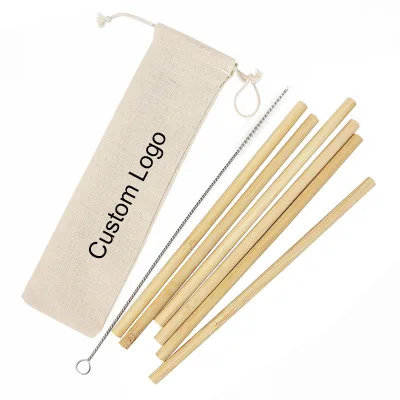


Natural Bamboo Drinking Straw Reusable Bamboo Straw Organic Bamboo Straws
$0.13 - $0.15
MOQ: 5000 Pieces
Comprehensive Sourcing Guide
Strategic Sourcing Guide for Tea Fiber Straws in the B2B Market
The global shift toward sustainable beverage solutions has elevated the demand for plant-based alternatives to single-use plastics. Among these, straws derived from agricultural byproducts such as bamboo, reed, and bagasse (sugarcane fiber) have emerged as primary candidates for eco-conscious brands. For procurement professionals, sourcing "tea fiber straws" requires a nuanced understanding of material composition, supply chain logistics, and regulatory compliance. While the term "tea fiber" is often used colloquially to describe plant-based straws, the specific market data indicates a robust supply of bamboo reed, bamboo fiber, and sugarcane bagasse products. This guide provides a structured approach to evaluating suppliers and specifications for these eco-friendly drinking accessories, ensuring that procurement decisions are grounded in verifiable facts and industry standards.
Understanding Material Composition and Product Specifications
The foundation of a successful procurement strategy lies in distinguishing between the various plant-based materials available. The market data reveals distinct product models categorized by their raw material source. For instance, suppliers offer "Bamboo Reed Straw" and "Bamboo Fiber Sugarcane Bagasse Straw" as specific model types. These materials are characterized by their biodegradability and compostability, often highlighted as key advantages in product descriptions. When evaluating specifications, buyers must look at the physical dimensions and weight, which vary significantly by model.
Specific model numbers such as GH093001, GH093002, and GH093003 illustrate the variability in dimensions. The standard lengths range from 200mm to 230mm, with diameters varying between 8mm and 12mm. Weight is another critical specification, with observed values ranging from 1.2g to 2.4g per unit. These variations directly impact the perceived quality and suitability for different beverage types. For example, a straw with a 12mm diameter and 230mm length may be better suited for thick bubble tea or smoothies, whereas a 200mm by 8mm variant is ideal for standard hot or cold drinks. Procurement teams must align these physical attributes with the specific viscosity and temperature requirements of their end products.
| Product Model | Material Type | Standard Dimensions | Weight | Packaging Density |
|---|---|---|---|---|
| GH093001 | Bamboo Fiber/Bagasse | 200mm x 8mm | 1.2g | 100*100PCS/CTN |
| GH093002 | Bamboo Fiber/Bagasse | 200mm x 10mm | 2.4g | 5000PCS/CTN |
| GH093003 | Bamboo Fiber/Bagasse | 230mm x 12mm | 1.3g | 3500PCS/CTN |
| Hb16003 | Bamboo Reed | Customizable | 1.65g | Carton |
Compliance, Certification, and Regulatory Standards
Navigating the regulatory landscape is essential for international trade, particularly when exporting to markets with strict environmental and food safety laws. The observed data indicates that suppliers provide straws with certifications including CE, EU, LFGB, and CIQ. These certifications are critical markers of compliance. LFGB (Lebensmittel- und Futtermittelgesetzbuch) is a German food safety standard that is often recognized globally for its rigor regarding food contact materials. CIQ (China Inspection and Quarantine) ensures that the products meet the export requirements of the destination country.
When sourcing, buyers must verify that the specific batch of straws carries the relevant certification for their target market. While some data points mention EN 13432, which relates to compostability, this should be treated as a background reference rather than a guaranteed attribute for every listed product. Buyers should explicitly request current certification documents for the specific model number they intend to purchase. Furthermore, the "Customizable" standard noted in the data suggests that dimensions and potentially material blends can be tailored, but this customization must still adhere to the food safety standards required by the importing region. Ensuring that the supplier can provide valid, up-to-date certificates for the specific order is a non-negotiable step in the compliance verification process.
Cost Drivers and Minimum Order Quantity Analysis
The economics of sourcing plant-based straws are influenced by several factors, including material costs, packaging requirements, and order volume. The observed Minimum Order Quantity (MOQ) ranges widely, from 1 unit for samples to 500,000 units for bulk production. A specific data point highlights an MOQ of 5,000 pieces for certain bamboo fiber and bagasse straws, while other models specify MOQs in cartons, such as 10 cartons or 20 cartons. This variation suggests that cost structures differ based on the specific model and the supplier's production capacity.
Packaging plays a significant role in cost. The data indicates options for "Individually Paper Wrapped" or bulk "Carton" packing. Individually wrapped straws typically command a higher price point due to the additional labor and material costs involved in the packaging process. In contrast, bulk packing in cartons, such as 5,000 pieces per carton, is more cost-effective for high-volume buyers. Buyers should also consider the sample policy; while some suppliers offer free samples, others may require freight collection. Understanding these cost drivers allows procurement teams to balance the need for product verification (samples) with the financial efficiency of bulk ordering. The price range observed in the market spans from 0 to 25,000 USD, reflecting the vast difference between small trial orders and massive industrial procurement contracts.
Typical Applications and Usage Scenarios
The versatility of bamboo and bagasse straws makes them suitable for a wide array of beverage applications. The product attributes explicitly list usage for "Boba Bubble Milk Tea," "Hot Cold Drinks," "Juice," and "Cola." This indicates that the straws are engineered to withstand various temperatures and viscosities. The "Disposable" nature of the product aligns with the fast-paced nature of the hospitality industry, where hygiene and convenience are paramount.
Beyond the beverage itself, the application extends to various occasions and venues. The data highlights suitability for "Camping," "Parties," "Weddings," "Bars," "Catering," and "Coffee Shops." This broad applicability suggests that these straws are not limited to a single niche but are a general-purpose solution for the food and beverage sector. The "Eco-Friendly" and "Biodegradable" attributes are particularly valuable for businesses aiming to reduce their environmental footprint. For instance, a coffee shop chain looking to replace plastic straws would find the "Bamboo Reed Straw" or "Bagasse Straw" ideal for their hot and cold coffee offerings. Similarly, the "Individually Packaged" option is highly relevant for catering services and events where hygiene and presentation are critical.
Supplier Evaluation and Operational Capabilities
Selecting the right supplier requires a deep dive into their operational capabilities and logistical reliability. The data points to a clear origin in China, with specific mentions of Qingdao as a place of origin. This regional concentration can be advantageous for logistics, as Qingdao is a major port city with established export infrastructure. However, buyers must evaluate the supplier's ability to meet delivery timelines. The observed delivery times range from 10-15 working days to within 35 days. This variance suggests that lead times are dependent on order volume, customization requirements, and current production capacity.
Customization is a key differentiator in the supplier evaluation process. The data confirms that "Logo Customized" and "Customized Logo Acceptable" are available, allowing brands to imprint their identity on the straws. Additionally, the "Standard" is listed as customizable, meaning dimensions can be tailored. Buyers should assess the supplier's flexibility in handling these custom requests without compromising on quality or lead time. The availability of "Free Samples" or "Freight Collect" samples is another indicator of supplier confidence and willingness to engage in a trial phase. A robust supplier should be able to provide a clear timeline for sample delivery and bulk production, ensuring that the procurement process remains on schedule.
Quality Control and Long-Term Procurement Considerations
Ensuring consistent quality is paramount when dealing with food-contact products. The "Disposable" and "Stocked" attributes indicate that these products are ready for immediate use, but buyers must establish quality control protocols. The weight variations observed (1.2g to 2.4g) highlight the need for strict quality assurance to ensure that every unit meets the specified standards. Buyers should implement a sampling plan to test for structural integrity, ensuring the straws do not disintegrate in hot or cold liquids.
Long-term procurement considerations involve building a sustainable supply chain. The "Environment Bio Biodegradable Compostable" advantage is a strong selling point, but it must be backed by reliable supply. Buyers should consider the environmental impact of the packaging itself, noting that options like "Individually Paper Wrapped" or "Carton" packing are available. The "Carton" packing density varies, with some models packing 5,000 pieces per carton and others 3,500, which affects shipping efficiency and storage space.
Furthermore, the "Customizable" nature of the product standard and logo allows for brand differentiation over time. However, this flexibility requires clear communication and documentation to avoid errors in production. Buyers should maintain open lines of communication with suppliers to ensure that any changes in material sourcing or production methods do not affect the final product's compliance or performance. By focusing on these long-term factors, procurement teams can secure a reliable supply of high-quality, eco-friendly straws that align with their brand values and operational needs.
FAQs
Can I get free samples of tea fiber straws?
Yes, free samples are available for certain bamboo fiber and bagasse straw models. However, some specific product lines require the buyer to pay freight collection costs for the sample shipment.
What certifications do these eco-friendly straws hold?
The products carry CE, EU, LFGB, and CIQ certifications to ensure food safety and compliance. These standards verify that the straws are safe for contact with hot and cold beverages like bubble tea.
How long is the delivery time for bulk orders?
Standard delivery times range from 10 to 15 working days for regular orders. Some larger or customized batches may require up to 35 days to complete production and packaging.
Which dimensions are available for bamboo reed straws?
Available specifications include lengths of 200mm and 230mm with diameters ranging from 8mm to 12mm. Customizable dimensions are also offered to meet specific beverage requirements.
What is the minimum order quantity for these straws?
The minimum order quantity varies by model, typically starting at 5,000 pieces or specific carton counts like 10 or 20 cartons. Some suppliers may accept lower quantities for sample testing purposes.
Can I customize the logo on the packaging?
Yes, customized logos are acceptable and can be printed on the straws or their packaging. Buyers can request individual paper wrapping or bulk carton packing based on their event or brand needs.
Where are these tea fiber straws manufactured?
The products originate from Qingdao, China, a major port city with established export infrastructure. This location supports efficient logistics for international buyers seeking bulk eco-friendly beverage accessories.