Source Custom Logo Glossy Horizontal Notebook for school, gift, and promotion
Compare 30 listings for Custom Logo Glossy Horizontal Notebook options featuring offset printing, spiral or glue binding, and paper covers. Buyers can evaluate specifications like sheet count, surface finishes, and customization availability for school, gift, and promotional use.
Key considerations
Products List


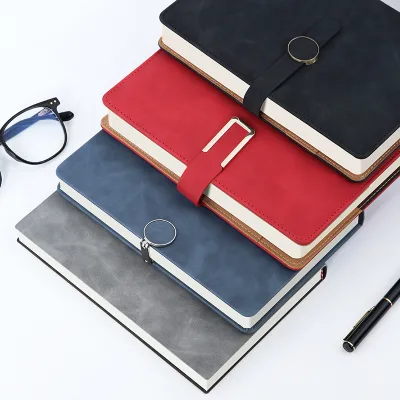


A5 Executive Planner Notepad Jounal Notebook with Custom Logo for Office
$3.00 - $3.36
MOQ: 1000 Pieces


Spiral Notebook Custom Hardcover Daily Planner Notebook with Customized Logo
$1.18 - $1.68
MOQ: 100 Pieces
Comprehensive Sourcing Guide
Strategic Sourcing Guide for Custom Logo Glossy Horizontal Notebooks
Sourcing custom logo glossy horizontal notebooks requires a disciplined approach to aligning product specifications with brand objectives while navigating the complexities of global manufacturing. The market for promotional and corporate stationery is vast, yet the specific combination of a horizontal orientation, glossy finish, and custom branding introduces distinct technical and logistical variables. Buyers must move beyond generic product listings to understand the underlying production processes, material constraints, and quality assurance protocols that define a successful procurement outcome. This guide outlines the critical factors for evaluating suppliers and ensuring the final product meets rigorous commercial standards.
Technical Specifications and Material Composition
The foundation of a high-quality custom notebook lies in its physical construction. When sourcing a horizontal notebook, the orientation dictates the binding method and the structural integrity of the spine. The supplied data indicates a variety of binding types available in the market, including spiral binding, glue binding, and hardcover constructions. For a glossy finish, the cover material is paramount. The observed product attributes list "Hard Paper" and "Soft Paper" as common cover materials, with specific mentions of "Paper" as a general category. A glossy appearance is typically achieved through surface finishes such as film lamination or embossing, rather than the raw paper itself.
The internal page composition is equally critical for functionality. The data reveals sheet counts ranging from 40 to 100 sheets, with specific models offering 80 or 100 sheets. The paper type is frequently identified as "Offset Paper," which is standard for printing due to its smooth surface and ink absorption properties. Buyers must verify if the "Anti-Curl" feature is present, as this is a specific attribute observed in the dataset that ensures the pages remain flat during use. The horizontal format often requires a binding that allows the book to lay flat; spiral binding is a strong candidate for this, though glue-bound hardcovers are also available. The single package size observed is approximately 20x25x10 cm, which serves as a baseline for logistics planning, though custom dimensions are explicitly noted as available.
Surface Finishes and Printing Capabilities
The "glossy" requirement in the core keyword points directly to specific post-production processes. The available data highlights "Film Lamination" and "Embossing" as surface finish options. Film lamination is the primary method for achieving a high-gloss, durable finish on the cover, protecting the printed logo and design from wear and tear. The printing type observed is "Offset Printing," a technique suitable for high-volume runs that ensures color consistency and sharp detail for custom logos.
When customizing the logo or slogan, suppliers must support "Customized" inputs. The data confirms that logo acceptance is a standard feature, with options for "Accept Customized Logo" and "Customized" slogans. However, the minimum order quantity (MOQ) for these customizations varies significantly. While some listings accept small quantities, others specify an MOQ of 500 pieces. This discrepancy is a critical cost driver; achieving a glossy finish with a custom offset print often requires a higher volume to amortize the setup costs of the printing plates and lamination machinery. Buyers should verify if the glossy finish is applied to the entire cover or only specific areas, as this impacts the visual impact and cost structure.
Cost Drivers and Minimum Order Quantities
The pricing structure for custom notebooks is influenced by material selection, finishing techniques, and order volume. The observed price range in the market spans from 0.3 to 4 USD per unit. This wide variance reflects differences in cover hardness, page count, and the complexity of the custom branding. The "Other" material category suggests that non-standard materials may be available, potentially at a premium. The "Custom" packing requirement, ranging from individual OPP bags to corrugated boxes, also adds to the unit cost.
MOQ is a decisive factor in the total cost of ownership. The data shows an observed MOQ range from 1 to 3000 units, with a specific high-confidence fact noting an MOQ of 500 PCS for certain models. For a custom logo glossy notebook, the 500-piece threshold is common to ensure the efficiency of the offset printing and lamination lines. Orders below this threshold may incur higher per-unit costs or require alternative printing methods like digital printing, which might not achieve the same glossy depth or color vibrancy. Buyers must balance the desire for a lower initial investment against the long-term value of a higher-quality, durable product. The "Small Quantity Accepted" attribute indicates that some suppliers are flexible, but this flexibility often comes with a price premium.
Compliance, Certification, and Origin Verification
In the context of B2B procurement, verifying the origin and compliance status of the product is essential for risk management. The supplied data lists multiple production origins, including "Guangdong, China," "Zhe," "Fujian," and a general "China" designation. Guangdong and Fujian are major manufacturing hubs for stationery, known for their supply chain efficiency. However, the lack of specific certification data in the provided facts means buyers cannot assume any specific environmental or safety standards are met without direct verification.
Buyers must explicitly request documentation regarding material safety, particularly for the paper and inks used in the glossy finish. While the data mentions "custom" standards, it does not confirm adherence to international norms like ISO or specific chemical restrictions. The "prod_standard" is listed as "custom," which implies that the product may not come with a pre-existing industry certification. Therefore, the procurement strategy must include a requirement for the supplier to provide test reports or compliance certificates for the specific batch being ordered. This is crucial for brands with strict corporate social responsibility (CSR) policies or those exporting to markets with rigorous chemical regulations.
Supplier Evaluation and Quality Control Protocols
Evaluating a supplier for custom glossy notebooks requires a multi-faceted approach. The "Single Item" selling unit and "Custom" packing options suggest a supplier capable of handling bespoke orders, but this capability must be validated. A robust quality control (QC) process should be in place to ensure the "Anti-Curl" feature is consistent and that the lamination does not peel or bubble. The "Surface Finish" of embossing or lamination must be inspected for uniformity across the entire cover.
Buyers should request pre-production samples to verify the color accuracy of the custom logo and the texture of the glossy finish. The "Spiral Binding" and "Glue Bound" options observed in the data require different QC checks; spiral bindings must be tested for durability and ease of rotation, while glue-bound books must be checked for spine integrity. The "Inner Pages" count should be verified to ensure it matches the ordered specification (e.g., 40-60 sheets vs. 80/100 sheets). Additionally, the "Single Gross Weight" of 2.000 Kg for a single package (likely a bulk carton) indicates that weight verification is a viable method for checking packing consistency. Suppliers should be asked to provide a detailed QC checklist that covers binding strength, print alignment, and surface finish quality before shipment.
Typical Applications and Long-Term Procurement Strategy
The versatility of custom logo glossy horizontal notebooks makes them suitable for a wide range of applications. The observed usage categories include "Pocket," "Gift," "Promotion," "School," and "Business." The "Function" attribute explicitly lists "Gift Promotional," "Business," "Trade," and "School," confirming their utility in corporate gifting, trade shows, and educational settings. The horizontal format is particularly effective for business use, as it aligns well with landscape-oriented note-taking and sketching.
For long-term procurement, consistency is key. Buyers should aim to establish a relationship with a supplier who can maintain the same quality across multiple batches. The "Custom" nature of the product means that slight variations in paper texture or gloss intensity can occur between runs. To mitigate this, buyers should request a "golden sample" that serves as the reference standard for all future orders. Furthermore, the "Custom" packing requirement allows for branding opportunities on the outer packaging, which can enhance the unboxing experience for recipients. As the product is often used for promotion, the durability of the glossy finish and the reliability of the binding are critical for maintaining the brand's reputation. Buyers should consider the lifecycle of the notebook; a high-quality, glossy finish may encourage longer use, thereby increasing the brand's visibility over time.
Comparative Analysis of Notebook Configurations
To aid in decision-making, the following table summarizes the key configuration options observed in the market data, highlighting the trade-offs between different specifications.
| Feature | Option A: Spiral Binding | Option B: Glue Bound | Option C: Hard Cover |
|---|---|---|---|
| Orientation | Horizontal (Common) | Horizontal/Vertical | Horizontal (Common) |
| Surface Finish | Film Lamination, Embossing | Film Lamination | Film Lamination, Embossing |
| Cover Material | Hard Paper, Soft Paper | Hard Paper | Hard Paper |
| Page Count | 40-100 Sheets | 40-100 Sheets | 80/100 Sheets |
| Lay Flat | Excellent | Moderate | Moderate |
| Durability | High (Binding) | High (Cover) | Very High |
| Typical MOQ | Variable (often 500+) | Variable | Variable |
This comparison illustrates that while all options can support a glossy finish and custom logo, the choice of binding significantly impacts the user experience. Spiral binding offers the best functionality for horizontal notebooks that need to lay flat, whereas hard cover options provide superior protection and a premium feel suitable for high-end corporate gifts. The "Custom" nature of the product allows for hybrid configurations, but buyers must ensure that the chosen combination meets their specific functional requirements before committing to a large order.
FAQs
How can I get a custom logo on a glossy horizontal notebook?
Suppliers accept customized logos and slogans for these notebooks. You must verify the minimum order quantity, as some models require 500 pieces to cover offset printing and lamination setup costs effectively.
What binding types are available for horizontal notebook designs?
The market offers spiral binding, glue binding, and hardcover constructions. Spiral binding is ideal for laying flat, while glue-bound options provide a more traditional book feel suitable for promotional use.
Which surface finishes create a glossy appearance on the cover?
Film lamination is the primary method used to achieve a high-gloss, durable finish. Embossing is also available as an alternative surface finish option to enhance the visual texture of the cover.
Can I order small quantities for custom promotional notebooks?
Some suppliers accept small quantities, but many require a minimum of 500 pieces for custom printing. Orders below this threshold may incur higher per-unit costs or require different printing methods.
What materials are used for the cover and inner pages?
Cover materials include hard paper, soft paper, or other unspecified options. Inner pages typically use offset paper with sheet counts ranging from 40 to 100 sheets depending on the specific model.
Where are these custom notebooks typically manufactured?
Production origins include Guangdong, Fujian, and Zhejiang provinces in China. These regions are major manufacturing hubs known for efficient supply chains and competitive pricing for stationery products.
How is the product packaged for shipment?
Packaging options range from individual OPP bags to corrugated boxes. The single package size is approximately 20 by 25 by 10 centimeters, though custom packing is available upon request.