Source Custom Logo Greeting Card for Business, Parties, and Events
Find 30 options for Custom Logo Greeting Card solutions tailored for business promotions, parties, and commercial activities. Compare specifications such as material, size, and printing techniques to identify the best fit for your needs; compare the available evidence and request quotations based on your requirements.
Key considerations
Products List


Cheap Custom for Businesses Greeting Card with Logo Thankyou Card Printing
$0.01 - $0.15
MOQ: 1000 pieces


Custom Luxury Business Card Printing/ New Design Business Card/Thank You Card
$0.03 - $0.10
MOQ: 1000 pieces


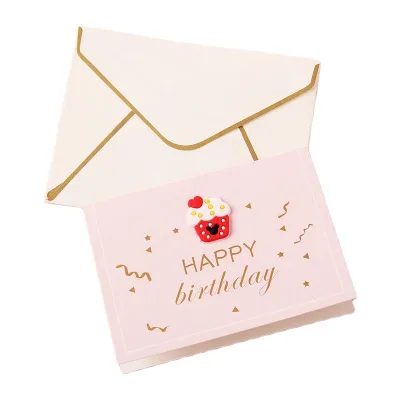

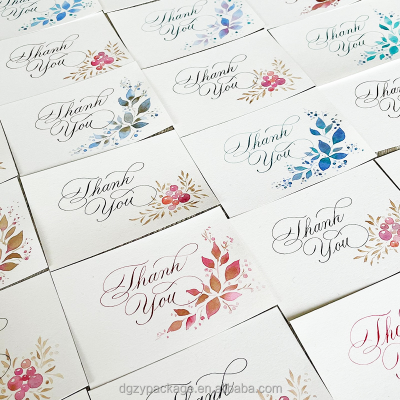


Custom Greeting Gift Cards High Quality Custom Thank You Paper Gift Cards
$0.10 - $0.20
MOQ: 500 Pieces


Comprehensive Sourcing Guide
Custom Logo Greeting Card Sourcing Guide
Procuring custom logo greeting cards requires balancing aesthetic customization with functional durability, as observed in listings offering mixed color options and various paper types like art paper, coated paper, and kraft paper. Buyers must distinguish between products designed for simple paper card applications and those utilizing PVC materials for identification or payment functions, ensuring the selected material aligns with the intended usage of business promotion or party events.
The sourcing landscape reveals significant variation in minimum order quantities, ranging from 100 pieces for standard greeting cards to 1000 pieces for specialized PVC identification cards. This disparity necessitates a clear definition of project scale before engaging suppliers, as the chosen volume directly influences unit pricing and the feasibility of specific surface finishing techniques such as gold foil stamping or embossing.
Product Scope and Observed Listing Signals
Market listings indicate a diverse product scope where paper cards are often paired with envelopes for thank you notes, while PVC cards serve as contact memory cards for electronic games or credit systems. Buyers should verify whether the supplier offers square shapes or standard rectangular formats, as the observed data includes both square greeting cards and standard credit card dimensions, each requiring different printing setups and packaging solutions.
Observations show that customization extends beyond the logo to include specific surface finishes like UV printing and regular printing, alongside structural choices between memory cards and passive cards. It is critical to confirm if the supplier provides mixed color options or single-color runs, as the availability of these attributes varies significantly between vendors specializing in paperboard products versus those focusing on PVC identification solutions.
Technical Specifications to Verify
Technical verification must begin with the physical dimensions, as observed specifications include regular sizes like 10x15cm alongside fully customizable dimensions for both paper and PVC materials. Buyers should explicitly confirm the thickness and structural integrity, noting that some listings specify a standard thickness of 0.85mm for PVC cards while paper options rely on the density of the cardboard or art paper selected for the project.
Data transmission and functional capabilities differ markedly between product types, with some cards supporting serial data transmission for identification and encryption purposes while others are purely passive paper items. Procurement teams must validate the carrier frequency for electronic cards and ensure the memory structure matches the intended application, distinguishing between contact-based systems and those requiring specific frequency ranges for high-frequency operations.
Compliance and Safety Documentation
While specific certification statuses like FSC are noted in background data, buyers must actively request current compliance documentation to verify that paper materials meet international safety standards for food contact or general consumer use. It is essential to confirm that the inks and coatings used for gold foil or UV printing processes adhere to relevant environmental and safety regulations, particularly when the cards are intended for children or commercial distribution.
Documentation requirements should also address the origin of materials, as observed listings indicate production in regions like Jiangsu and Guangzhou, which may have varying local regulatory frameworks. Buyers need to ensure that the supplier can provide material safety data sheets and proof of origin to satisfy import requirements, especially when the final product involves complex multi-material constructions combining paperboard with PVC components.
Cost Drivers and Commercial Terms
Unit costs are heavily influenced by the complexity of the customization, with advanced processes like embossing and gold foil stamping commanding higher prices than standard printing methods. The choice of material also plays a pivotal role, as PVC cards generally incur different material costs compared to art paper or kraft paper, and the selected surface finishing options will directly impact the final landed cost per unit.
Commercial terms must account for the wide range of minimum order quantities observed, from 100 pieces for greeting cards to 5000 pieces for bulk industrial orders. Lead times typically range from 5 to 10 working days for standard customizations, but buyers should negotiate specific delivery schedules based on the complexity of the logo craft and the volume of the order to avoid production bottlenecks.
Supplier Qualification and Quality Control
Supplier qualification should prioritize vendors with a proven business history, as observed data highlights companies with 16 years of experience and numerous overseas clients. This track record suggests a capacity to handle complex customization requests and maintain consistent quality across large batches, which is crucial for maintaining brand integrity when applying custom logos to greeting cards or identification media.
Quality control protocols must be established to verify the consistency of surface finishes and the accuracy of the custom logo application. Buyers should request pre-production samples to validate the color matching and structural integrity, ensuring that the final product meets the specified standards for both paper and PVC variants before authorizing full-scale production runs.
Long-Term Procurement Checks
Establishing a long-term partnership requires regular audits of the supplier's ability to maintain consistent quality and adhere to agreed-upon lead times over multiple production cycles. Buyers should monitor the supplier's responsiveness to changes in design or material requirements, as the ability to adapt to evolving market needs is a key indicator of a reliable long-term partner.
Continuous evaluation of the supplier's foreign trade experience and logistical capabilities is essential for managing international shipments effectively. Procurement teams should track performance metrics such as defect rates and on-time delivery percentages to ensure that the supplier continues to meet the high standards required for custom logo greeting cards and related identification products.
FAQs
Can I customize the logo on these greeting cards?
Yes, customized logos are available for these paper cards. You can choose from regular printing, gold foil, embossed, or UV printing techniques. The product supports OEM customization, allowing you to tailor the visual identity to your brand requirements effectively.
What is the minimum order quantity for custom cards?
The minimum order quantity varies by product type. For PVC identification cards, the MOQ is 1000 pieces. For paper greeting cards, the MOQ is lower at 100 pieces. This flexibility allows buyers to order small batches for testing or large volumes for distribution.
What materials are used for these custom cards?
The cards are made from various materials including PVC and paper. Options for paper include art paper, cardboard, coated paper, and kraft paper. PVC cards are used for identification and payment functions, while paper cards are suitable for greeting and business promotion purposes.
How long does production take for custom orders?
The lead time for custom orders is typically 5-10 working days. This timeframe applies to the production of custom greeting cards and other paper products. Buyers should plan their procurement schedules accordingly to ensure timely delivery for events or business activities.
What sizes are available for these greeting cards?
Custom sizes are accepted for these greeting cards. Standard regular sizes include 10*15cm, but buyers can request specific dimensions. The product specifications also mention customizable sizes, allowing for unique shapes and dimensions to meet specific design or packaging requirements for your brand.
Are these cards suitable for business promotion?
Yes, these cards are suitable for business promotion, parties, and commercial activities. They can be customized with your logo and used as thank you cards or greeting cards. The durable paper and cardboard options ensure they remain effective for diverse marketing and networking purposes.