Source Custom Logo Kitchen Workbench for Restaurants, Hotels, and Catering
Compare 30 stainless steel work tables with customizable logos for food preparation areas, restaurant kitchens, and workshop environments. Buyers can review specifications like thickness, material grades, and dimensions to find the right equipment; compare the available evidence and request quotations based on your requirements.
Key considerations
Products List

Working Work Bench Kitchen Equipment Table
$59.00 - $149.00
MOQ: 1 Pieces
Shangdong Boxing Changtai Environmental Protection Technology Co., Ltd.


Business Restaurant Hotel Stainless Steel Kitchen Workbench with Shelf
$120.00 - $210.00
MOQ: 1 Pieces

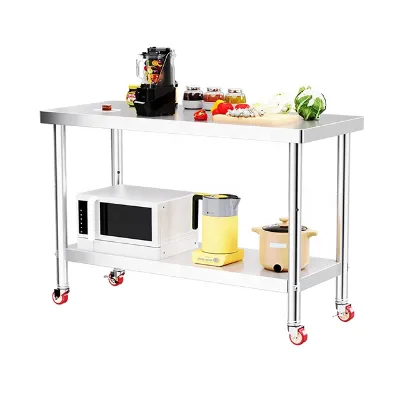


Customized Steel Metal Commercial Kitchen Stainless Steel Storage Workbench
$190.00 - $233.00
MOQ: 10 Sets


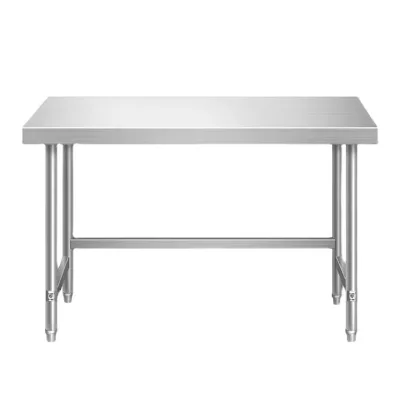
Stainless Steel 304 with Splash Back Panel Kitchen Prep Workbench
$50.00 - $200.00
MOQ: 10 Square Meters




Comprehensive Sourcing Guide
Custom Logo Kitchen Workbench Sourcing Guide
Sourcing custom logo kitchen workbenches requires balancing aesthetic branding with rigorous functional performance standards. Buyers must recognize that these units serve as critical infrastructure in commercial food preparation areas, where durability and hygiene are non-negotiable. The market offers significant customization options, including OEM and ODM support, allowing businesses to imprint their brand identity directly onto stainless steel surfaces. However, customization should never compromise the structural integrity or sanitary design of the table. Procurement teams need to evaluate how logo placement affects the cleaning process and whether the branding method withstands frequent exposure to water, heat, and harsh cleaning chemicals.
The procurement landscape for these workbenches is diverse, with suppliers offering various configurations to meet specific operational needs. Observed listings indicate a wide range of product models, from fixed stainless steel tables to easily assembled units designed for rapid deployment. Buyers should note that while many suppliers offer customization, the extent of this service varies. Some providers focus on standard dimensions with minor branding adjustments, while others support full ODM solutions. Understanding the supplier’s capability to handle custom requests is essential, as is verifying that the customization process does not introduce new failure points or increase the risk of corrosion at the branded sites.
Product Scope and Observed Listing Signals
The current market for custom logo kitchen workbenches presents a broad spectrum of product attributes that buyers must navigate carefully. Listings frequently highlight materials such as Stainless Steel 201 or 304, with thicknesses ranging from 0.8mm to 1.5mm. These variations directly impact the table’s load-bearing capacity and resistance to denting. Buyers should observe that while many products claim to be stainless steel, the specific grade significantly influences longevity and cost. The observed price range of 20 to 233 USD suggests a wide disparity in quality and material thickness, requiring diligent verification of specifications before making purchasing decisions.
Shape and configuration are also key differentiators in this product category. Suppliers offer both square and rectangular designs, with some units being fixed and others unfixed or foldable. The standard dimensions often cited include 120x80x80cm and 150x80x80cm, catering to various kitchen layouts. Buyers must verify if the listed dimensions match their spatial requirements precisely. Additionally, the presence of "easily assembled" features suggests modular designs that facilitate transport and installation. However, buyers should confirm that the assembly process does not compromise the stability of the work surface, especially when heavy equipment is placed on top during food preparation tasks.
Technical Specifications to Verify
Material grade is the most critical technical specification to verify when sourcing custom logo kitchen workbenches. Stainless Steel 304 is generally preferred for food contact surfaces due to its superior corrosion resistance compared to Stainless Steel 201. Buyers must explicitly request material certificates or conduct spot tests to ensure the specified grade is used. The thickness of the steel, often listed as 0.8mm, 1.0mm, 1.2mm, or 1.5mm, also dictates durability. Thinner gauges may warp under heat or heavy loads, so verifying the actual thickness against the listed specification is essential for long-term reliability in high-traffic kitchen environments.
Structural design and assembly methods are equally important technical factors. Many listings describe products as "easily assembled" or "fixed," indicating different installation requirements. Buyers should assess whether the welding quality is consistent and if the legs are securely attached to prevent wobbling. The presence of CE certification in some listings suggests adherence to certain safety and quality standards, but buyers should verify the scope of this certification. Additionally, the customization process for logos must be evaluated for its impact on the surface finish. Methods like laser engraving or embossing should be confirmed to ensure they do not create crevices that harbor bacteria, maintaining the hygienic integrity of the work surface.
Compliance and Safety Documentation
Compliance with food safety standards is paramount when procuring kitchen workbenches. Buyers must ensure that all materials in contact with food are certified as food-grade stainless steel. While specific food safety certifications were not explicitly listed in the observed data, the presence of CE certification indicates compliance with European health, safety, and environmental protection standards. Buyers should request documentation proving that the steel alloy does not leach harmful substances into food. This is particularly important when custom logos are applied, as the adhesive or material used for branding must also be food-safe and non-toxic.
Safety documentation should also cover the structural stability of the workbenches. Buyers need to verify that the tables meet load-bearing requirements for commercial kitchen equipment. The listed thicknesses and material grades should correspond to the expected weight loads. Additionally, buyers should check for any warnings or limitations regarding the use of the custom logo. For instance, if the logo is applied via a coating, it must be resistant to peeling or chipping under high heat and humidity. Ensuring that all components, including legs and supports, are securely fastened and do not pose a tipping hazard is crucial for maintaining a safe working environment for kitchen staff.
Cost Drivers and Commercial Terms
The cost of custom logo kitchen workbenches is influenced by several key factors, including material grade, thickness, and the complexity of the customization. Stainless Steel 304 is more expensive than 201, and thicker gauges like 1.5mm cost more than 0.8mm. The customization process itself, whether it involves laser engraving, embossing, or adhesive branding, adds to the unit price. Buyers should also consider the MOQ, which ranges from 1 to 100 units in observed listings. Higher volumes may offer better per-unit pricing, but buyers must balance this with their inventory capacity and immediate operational needs.
Commercial terms such as packing and shipping also impact the total cost of ownership. Listings indicate various packing methods, including carton, wooden case, and wooden frame, which affect protection during transit and associated shipping costs. Buyers should verify if the packing is sufficient to prevent damage, especially for custom-branded items where surface scratches are unacceptable. Additionally, warranty terms, such as the 3-year warranty mentioned in some listings, provide value by reducing long-term risk. Buyers should clarify what the warranty covers, particularly regarding the durability of the custom logo and the structural integrity of the table under normal commercial use.
Supplier Qualification and Quality Control
Supplier qualification is a critical step in ensuring the reliability of custom logo kitchen workbenches. Buyers should prioritize suppliers with a proven track record in manufacturing stainless steel kitchen equipment. The observed origin of many products is China, with specific mentions of Jilin as a place of origin. Buyers should verify the supplier’s manufacturing capabilities, including their ability to handle custom orders without compromising quality. Requesting samples or visiting the factory can provide insights into their production processes and quality control measures. This is especially important for verifying the consistency of material grades and the precision of custom logo application.
Quality control procedures should be clearly defined and agreed upon before placing orders. Buyers should establish acceptance criteria for material thickness, surface finish, and structural stability. Inspections should include checks for weld quality, leg alignment, and the adhesion of custom logos. Suppliers should provide pre-shipment inspection reports or allow third-party inspections to ensure compliance with agreed specifications. Additionally, buyers should verify the supplier’s ability to handle defects or damages during transit. A robust quality control process minimizes the risk of receiving substandard products and ensures that the custom logo kitchen workbenches meet the operational requirements of the commercial kitchen.
Long-Term Procurement Checks
Long-term procurement success depends on establishing a reliable supply chain for custom logo kitchen workbenches. Buyers should conduct periodic performance reviews of the supplied units to assess durability and hygiene compliance. Monitoring the condition of the custom logos over time is essential, as fading or peeling can affect brand image and hygiene. Buyers should also stay informed about changes in material standards and regulations that may impact the suitability of the workbenches. Maintaining open communication with suppliers allows for timely updates on product improvements or new customization options that may benefit the business.
Building a relationship with qualified suppliers can lead to better pricing and priority service. Buyers should consider consolidating orders with trusted suppliers to leverage volume discounts and ensure consistency across multiple kitchen locations. Regular audits of the supply chain can help identify potential risks, such as material shortages or quality inconsistencies. Additionally, buyers should evaluate the supplier’s responsiveness to after-sales support, including warranty claims and technical assistance. A proactive approach to supplier management ensures that the custom logo kitchen workbenches continue to meet the evolving needs of the commercial kitchen, supporting both operational efficiency and brand integrity.
FAQs
What certifications do the stainless steel worktables have?
The stainless steel worktables carry CE certification to ensure safety compliance. Some listings also mention ISO standards for quality assurance. Buyers should verify specific certification documents with the supplier before finalizing orders to meet local regulatory requirements.
Can I customize the logo on these kitchen workbenches?
Yes, customization is available for these stainless steel worktables including custom logo options. The product supports OEM and ODM services to meet specific branding needs. Buyers can request tailored designs while maintaining the standard stainless steel 201 or 304 material quality.
Which thickness options are available for the worktable surface?
Available thickness options range from 0.8mm to 1.5mm depending on the specific model selected. Some products list specific gauges like 0.8, 1.0, 1.2, or 1.5mm for durability. Buyers should choose the thickness based on their intended usage intensity and load requirements.
How is the product packed for international shipping?
Packaging options include cartons, wooden cases, wooden frames, or wooden strip packing for safety. Some listings specify wood safety packing to prevent damage during transit. The exact packing method depends on the supplier and the specific model ordered to ensure secure delivery.
What is the minimum order quantity for these worktables?
The minimum order quantity starts at 1 unit for many suppliers offering these worktables. Some listings indicate an MOQ range up to 100 units depending on customization levels. Buyers can often negotiate lower quantities for standard models while custom orders may require higher volumes.
Where are these stainless steel worktables manufactured?
These worktables are manufactured in China, with specific origins noted in Jilin. The products are exported globally from these production facilities. Buyers should confirm the exact factory location with the supplier to understand logistics and lead time implications for their specific order.
What warranty is provided for the kitchen workbench?
A warranty period of 3 years is offered for the stainless steel worktables. This coverage typically applies to manufacturing defects and structural integrity issues. Buyers should review the specific warranty terms provided by the supplier to understand what is covered and what is excluded.