Source Custom Printed Paper Straw Sleeve for Drinks, Gifts, and Cosmetics
Source Custom Printed Paper Straw Sleeve options from 30 verified listings. Compare specifications like offset printing, film lamination, and OEM/ODM capabilities for wine, cosmetic, and food packaging applications; compare the available evidence and request quotations based on your requirements.
Key considerations
Products List


Custom Printed Paper Sleeve for Product Packaging Box and Kraft Cardboard Sleeve
$0.01 - $0.11
MOQ: 1000 Pieces


Custom Design Paper Sleeve with Logo Printing for Gift and Retail Products
$0.01 - $0.11
MOQ: 1000 Pieces


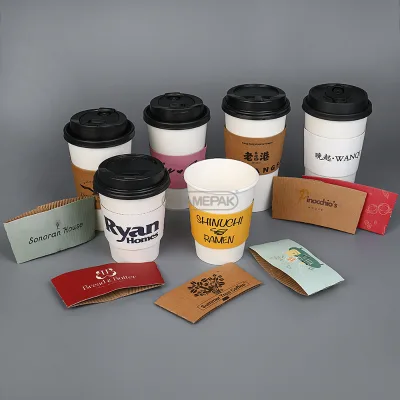


Customized Holder Disposable Sleeves Hot Coffee Paper Sleeve Cup Sleeve
$0.02 - $0.15
MOQ: 3000 Pieces

Hot Paper Cup Sleeve Custom Paper Coffee Cup Sleeve with Logo Coffee Paper Cups
$0.03 - $0.05
MOQ: 50000 Pieces


Rectangle Printed Box Sleeves Paper Package Cardboard Custom Sleeve Pack
$0.12 - $0.68
MOQ: 1000 Pieces
Comprehensive Sourcing Guide
Custom Printed Paper Straw Sleeve Sourcing Guide
Buyers must first distinguish between rigid paper sleeves designed for beverage containers and flexible packaging for other goods, as the supplied data indicates a mix of product types including paper sleeves, disposable bowls, and general cartons. The observed listings show a specific focus on paper-based packaging with customization options for logos and dimensions, yet the "Type" attribute also lists disposable bowls, requiring careful filtering to isolate true straw sleeve manufacturers. Procurement teams should verify that the supplier's "prod_model" specifically references sleeves rather than generic cartons or bowls to ensure the product matches the intended application for straws.
The observed price range of 0.01 to 0.68 USD suggests significant variation based on material thickness, printing complexity, and order volume, with MOQs ranging from 500 to 50,000 units. Buyers should note that while some listings offer "Freely" samples, others specify a 3-5 day sample time, which impacts the speed of the qualification process. It is critical to confirm whether the "Custom Size" and "Customer Logo Supported" attributes apply to the specific straw sleeve configuration, as some suppliers may only offer these customizations for their broader range of cosmetic or food boxes.
Product Scope and Observed Listing Signals
The product scope for custom printed paper straw sleeves includes rigid or semi-rigid paper structures designed to hold and protect straws, often featuring offset or flexographic printing for branding. The supplied facts confirm that "Coated Paper" and "Art Paper" are common materials, with surface finishes like "Film Lamination" and "Gloss/Matt Lamination" available to enhance durability and visual appeal. Buyers should expect the product to support "Cmyk 4-Color Printing" and "Pantone Spot Colors," allowing for precise brand color matching on the sleeve exterior.
Listing signals indicate that suppliers often bundle these sleeves with other packaging types like "Gift Boxes" or "Cosmetic Boxes," which can lead to confusion regarding the specific utility of the item. The "Shape" is typically "Rectangle," and the "Kind" is described as a "Case," suggesting a structural design that may vary from simple slip-covers to more complex rigid boxes. Procurement teams must verify if the "Surface Handling" includes "Hot Stamping" or "Foil Stamping" as premium options, as these processes add cost and require specific tooling setup times.
Technical Specifications to Verify
Buyers must verify the exact paper grade and coating specifications, as the data lists both "Coated Paper" and "Art Paper" without defining the grammage or tensile strength required for straw protection. The "Standard" dimensions vary, with some listings citing specific measurements like 115mm*36mm while others offer "Custom Size," necessitating a clear definition of the straw diameter and length to ensure a proper fit. It is essential to confirm the "Surface Finish" details, specifically whether the "Film Lamination" is applied to both sides and if the finish is "Gloss" or "Matt," as this affects the tactile experience and print clarity.
The printing technology used is a critical technical variable, with listings supporting both "Offset Printing" and "Flexo & Offset Printing" depending on the order volume and design complexity. Buyers should inquire about the "Printing Handling" capabilities, such as "Embossing" or "Foil Stamping," which require additional die-cutting and tooling that may extend the lead time. Additionally, the "Lid" attribute suggests some products may include a separate closure mechanism, which must be compatible with the sleeve design to prevent accidental opening during transport or storage.
Compliance and Safety Documentation
While the supplied facts mention "FSC" as a background certification, buyers must explicitly request current FSC chain-of-custody certificates to verify that the paper source is sustainably managed, as this is a common requirement for international food and beverage brands. The "Industrial Use" category includes "Food" and "Pharmaceutical Packaging," implying that the paper material must meet specific food-contact safety standards, though specific regulatory compliance numbers are not provided in the listing data. Procurement teams should demand test reports confirming the absence of harmful substances in the inks and coatings used for "Hot Stamping" or "Lamination."
Safety documentation must also address the structural integrity of the packaging, ensuring it can withstand the "Shipping" methods listed, such as "Express, Air and Ocean," without degrading. Buyers should verify that the "Customized Logo" printing does not compromise the barrier properties of the paper, especially if the sleeves are intended for humid environments or cold beverages. It is prudent to ask for a declaration of compliance with relevant local and international food safety regulations, as the "Usage" field lists diverse applications from "Wine & Drinks" to "Health Care Products."
Cost Drivers and Commercial Terms
The cost of custom printed paper straw sleeves is heavily influenced by the "MOQ" requirements, which range widely from 500 to 50,000 units, directly impacting the unit price and the feasibility of small-batch testing. The observed price range of 0.01 to 0.68 USD reflects these volume tiers, with higher customization levels like "Pantone Spot Colors" or "Foil Stamping" pushing costs toward the upper end of the spectrum. Buyers should calculate the total landed cost by factoring in the "Sample Time" of 3-5 days and the potential for expedited shipping fees if the "Lead Time" is not explicitly defined in the initial quote.
Commercial terms must clarify the "Packaging" details, as listings mention "Carton Packing" and "Cartons Packaging" without specifying the inner packing quantity or the outer carton dimensions. This ambiguity can lead to unexpected freight costs if the supplier packs the sleeves inefficiently, reducing the number of units per container. Buyers should negotiate clear terms regarding the "Custom Order" process, ensuring that the "ODM/OEM" capabilities include a defined timeline for design approval and production start, as the "Sample" availability may vary between "Freely" and paid options.
Supplier Qualification and Quality Control
Supplier qualification should begin with verifying the "prod_origin" location, as the data points to specific manufacturing hubs like "Feicheng, Taian, Shandong" and "Guangdong, China," which may have different labor costs and logistical advantages. Buyers must assess the supplier's ability to handle "Customization" requests, specifically their experience with "Logo Printing" and "Custom Size" adjustments, as these are core requirements for branded straw sleeves. It is advisable to request a portfolio of previous work to confirm the quality of "Offset Printing" and "Flexographic Printing" on similar paper substrates.
Quality control protocols must include a rigorous inspection of the "Surface Finish" and "Printing Handling" to ensure consistency across the production run. Buyers should establish a clear acceptance criteria for defects such as misaligned logos, uneven lamination, or structural weaknesses in the "Rectangle" shape. Given the "Usage" in food and cosmetic sectors, a pre-shipment inspection is recommended to verify that the "Paper Type" and "Material" meet the agreed specifications and that the "Packaging" protects the goods during transit.
Long-Term Procurement Checks
Long-term procurement success depends on establishing a reliable supply chain that can consistently meet the "Custom Order" requirements without compromising on quality or delivery schedules. Buyers should monitor the supplier's ability to maintain the "Standard" dimensions and "Custom Size" flexibility over multiple production cycles, ensuring that the "prod_model" remains consistent. Regular audits of the "Industrial Use" compliance and material sourcing are necessary to maintain brand integrity, especially if the sleeves are used for sensitive products like "Health Care Products" or "Food."
Continuous improvement initiatives should focus on optimizing the "Shipping" methods and "Packing" efficiency to reduce costs and environmental impact over time. Buyers should track the "Sample Time" and "Lead Time" performance to identify any delays that could disrupt their inventory planning. Finally, maintaining open communication regarding "Logo" updates and design changes will ensure that the "Custom Printed Paper Straw Sleeve" remains a dynamic and effective marketing tool for the brand.
FAQs
Can custom printed paper straw sleeves be personalized with a logo?
Yes, custom printed paper straw sleeves support personalized logo printing. Buyers can submit their own designs for ODM or OEM production. The printing process typically uses offset or flexo methods with CMYK or Pantone spot colors. Surface finishes like film lamination or foil stamping are available to enhance brand visibility and product appeal.
What paper types are used for custom printed paper straw sleeves?
Custom printed paper straw sleeves are commonly made from coated paper or art paper. These materials provide a smooth surface ideal for high-quality offset printing. The paper is often uncoated initially but receives surface treatments like film lamination. This ensures durability and a professional finish for various packaging applications.
What is the typical MOQ for custom printed paper straw sleeves?
The typical MOQ for custom printed paper straw sleeves ranges from 500 to 50,000 pieces. Specific minimum order quantities depend on the supplier and customization complexity. Buyers should confirm exact MOQs during the inquiry phase. Lower MOQs may be available for standard sizes, while custom dimensions often require higher volumes.
How long does it take to produce custom printed paper straw sleeves?
Sample production for custom printed paper straw sleeves usually takes 3 to 5 days. Bulk manufacturing lead times vary based on order volume and customization requirements. Buyers should request specific lead times from suppliers. Express, air, or ocean shipping options are available to meet urgent delivery schedules after production is complete.
What printing techniques are available for custom printed paper straw sleeves?
Available printing techniques include offset printing, flexo printing, and foil stamping. Buyers can choose between CMYK 4-color printing or Pantone spot colors for precise branding. Surface handling options like hot stamping, embossing, and gloss or matt lamination enhance the final look. These techniques ensure high-quality visual results for various packaging needs.
Are custom printed paper straw sleeves suitable for food packaging?
Yes, custom printed paper straw sleeves are suitable for food packaging applications. They are often used for wine, drinks, cosmetics, and health care products. The paper material provides a safe and effective barrier. Buyers should verify specific food-grade certifications with suppliers to ensure compliance with local safety standards for direct or indirect food contact.