Source Customized Color Glass Straw for Bars, Cafes, and Homes
Find 30 options for Customized Color Glass Straw from verified manufacturers. Compare specifications like diameter, length, and certifications including CE and LFGB to select the ideal reusable drinking solution for your business needs; compare the available evidence and request quotations based on your requirements.
Key considerations
Products List



Comprehensive Sourcing Guide
Customized Color Glass Straw Sourcing Guide
Procuring customized color glass straws requires a clear understanding of the distinction between reusable glass products and disposable alternatives found in the same market. The observed product data indicates a mix of non-disposable glass straws alongside paper-based options, necessitating precise filtering to ensure you source the correct material. Buyers must verify that the "Non-Disposable" attribute is explicitly linked to the glass specification, as some listings conflate material types under generic "straw" categories. This distinction is critical for defining the product lifecycle and ensuring the item meets the durability expectations of your specific application.
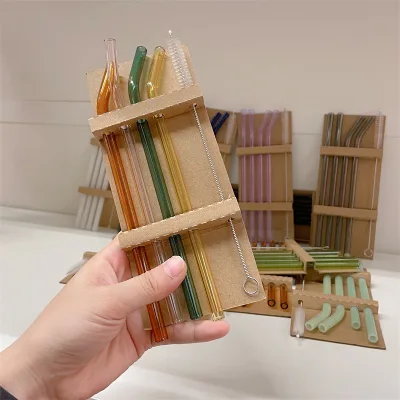
When evaluating suppliers, the availability of customization options for color and branding is a primary differentiator. The market data confirms that OEM services and logo acceptance are standard features, allowing for tailored branding in colors such as blue, green, pink, amber, and yellow. However, buyers should not assume all listed models support full color customization without verification, as some entries specify standard transparent options or limited palettes. Establishing clear communication regarding color consistency and logo placement early in the inquiry process prevents mismatches between the final product and your brand identity requirements.
Product Scope and Observed Listing Signals
The product scope for customized color glass straws encompasses a variety of physical dimensions and styles, ranging from straight to curved designs. Observed specifications list lengths typically between 150mm and 200mm, with diameters commonly available in 8mm, 10mm, and occasionally 12mm increments. These variations allow buyers to select straws suitable for different beverage viscosities and glassware sizes. It is essential to cross-reference the specific model numbers, such as JH-S27 or JN00024, with the requested dimensions, as the market data shows multiple length and diameter combinations that may not be interchangeable across all supplier catalogs.
Listing signals also reveal diverse packaging methods that impact logistics and product protection. Suppliers offer packaging ranging from individual bubble bags and foam inserts to bulk carton and pallet configurations. The choice of packaging often correlates with the order volume and the fragility of the glass product. Buyers must explicitly state their preferred packing method, as some listings default to standard paper cartons while others offer customized packing solutions. Understanding these packaging variables is vital for calculating accurate shipping costs and ensuring the straws arrive without breakage during transit.
Technical Specifications to Verify
Technical verification begins with confirming the exact diameter and length requirements against the supplier's standard offerings. The market data highlights specific diameters of 6mm, 8mm, and 10mm, with lengths varying from 145mm to 200mm depending on the model. Buyers should request a detailed specification sheet for the specific model number to ensure the dimensions align with their intended use, as slight deviations can affect the drinking experience. Additionally, the weight standard, often cited around 10-15g, serves as a proxy for glass thickness and durability, which should be validated before placing a large order.
Color consistency and material composition are equally critical technical parameters that require strict verification. While the product attributes list a wide array of colors including black, yellow, and transparent options, the actual hue can vary based on the glass batch and firing process. Buyers must request physical samples to confirm that the color matches the desired Pantone or brand standard, especially for custom orders. Furthermore, verifying that the glass is lead-free and food-grade is essential, even if certifications like LFGB are listed, to ensure the material is safe for repeated contact with beverages.
Compliance and Safety Documentation
Compliance documentation is a non-negotiable aspect of sourcing glass straws, particularly for markets with strict food safety regulations. The observed product data frequently cites certifications such as CE, EU, LFGB, and CIQ, which indicate adherence to various international safety standards. Buyers should request valid, up-to-date certificates for each batch or production run to ensure the products meet the regulatory requirements of their destination country. Relying solely on the presence of a certification label in a listing is insufficient; physical proof of compliance must be provided to mitigate legal and reputational risks.
Beyond general certifications, specific factory audits provide insight into the supplier's quality management systems and ethical standards. The market data mentions BSCI and BV audits, which are valuable indicators of a supplier's commitment to social responsibility and operational consistency. These audits often cover aspects like labor practices, environmental impact, and production safety, which are increasingly important for global brands. Buyers should verify the scope and date of these audits to ensure they cover the specific manufacturing facilities producing the glass straws, rather than just the corporate entity.
Cost Drivers and Commercial Terms
Cost drivers for customized color glass straws are heavily influenced by order volume, color complexity, and packaging requirements. The observed MOQ ranges from 500 pieces to 1,000,000 pieces, creating a significant variance in unit pricing based on scale. Smaller orders may incur higher per-unit costs due to setup fees for custom colors and logos, while larger volumes benefit from economies of scale. Buyers should negotiate based on their specific volume needs, understanding that the price range of $0.01 to $5 likely reflects the difference between basic transparent straws and complex, multi-colored custom designs.
Commercial terms and delivery timelines are equally critical factors in the total cost of ownership. The market data indicates trade terms such as EXW, FOB, and CIF, each carrying different responsibilities for shipping and insurance. Additionally, lead times for mass production can vary from 15 to 45 days after pre-production approval, with sample lead times typically ranging from 5 to 10 days. Buyers must factor these timelines into their supply chain planning to avoid stockouts, and they should clarify who bears the cost of freight and insurance under the agreed Incoterms to prevent unexpected expenses.
Supplier Qualification and Quality Control
Supplier qualification involves a rigorous assessment of their production capacity and quality control protocols. The data shows that suppliers offer capacity customization and accept OEM orders, but buyers must verify the actual production volume capabilities to ensure the supplier can meet demand spikes. It is advisable to conduct a virtual or on-site audit to inspect the manufacturing line, focusing on the glass blowing or molding processes and the quality control checkpoints for color and dimension accuracy. This due diligence ensures the supplier has the infrastructure to maintain consistent quality at scale.
Quality control measures should be explicitly defined in the purchase agreement to protect against defects. Buyers should establish clear acceptance criteria for breakage rates, color consistency, and dimensional tolerances before production begins. The presence of accessories like clean brushes in some listings suggests a focus on product usability, but this does not replace the need for a formal inspection plan. Implementing a third-party inspection service during pre-shipment is a prudent step to verify that the finished goods meet the agreed-upon specifications and to identify any potential issues before the goods leave the factory.
Long-Term Procurement Checks
Long-term procurement success relies on establishing a robust relationship with suppliers who can adapt to changing market demands. The ability to customize colors and logos is a key advantage, but buyers must ensure this capability remains stable over time. Regular communication regarding design updates, material availability, and production schedules is essential to maintain a seamless supply chain. Suppliers who demonstrate flexibility in their production processes and are responsive to feedback are more likely to be reliable partners for future orders and product iterations.
Continuous monitoring of supplier performance and market trends is necessary to maintain competitive advantage. Buyers should periodically review the supplier's certification status, audit results, and delivery performance to ensure they continue to meet standards. Additionally, staying informed about new glass technologies or color trends can help buyers innovate their product offerings. By maintaining a proactive approach to supplier management and quality assurance, buyers can mitigate risks and ensure a steady supply of high-quality customized color glass straws for their business needs.
FAQs
Can customized color glass straws be produced with specific certifications?
Yes, customized color glass straws can be produced with specific certifications such as CE, EU, LFGB, and CIQ. These certifications ensure the products meet international safety and quality standards for food contact. Buyers can request these documents to verify compliance before placing large orders, ensuring the materials are safe for consumer use.
What are the available diameter specifications for glass straws?
The available diameter specifications for glass straws include 6mm, 8mm, 10mm, and 12mm. These dimensions cater to different beverage types, from standard drinks to thicker smoothies. The 8mm and 10mm options are particularly popular for general use, while wider diameters accommodate ingredients like chia seeds or fruit pieces effectively.
How does the customization process work for glass straw orders?
The customization process for glass straw orders accepts OEM requests and logo printing. Buyers can choose from transparent or colorful options, including blue, green, pink, amber, yellow, and black. The manufacturer supports custom packaging and branding, allowing businesses to tailor the product appearance and presentation to match their specific brand identity and market requirements.
What is the typical lead time for mass production of glass straws?
The typical lead time for mass production of glass straws is 15 to 45 days after pre-production approval. This duration accounts for manufacturing, quality control, and packaging processes. Buyers should plan their inventory accordingly, as the timeline may vary based on order volume and specific customization requirements, ensuring timely delivery for seasonal demands.
What packaging options are available for shipping glass straws?
Packaging options for shipping glass straws include carton, pallet, box, bubble bag, foam, and paper carton. These methods protect the fragile glass items during transit. The manufacturer offers standard or customized packing solutions to meet specific logistical needs, ensuring the products arrive safely and securely at the destination port or warehouse without damage.
Are glass straws considered non-disposable and reusable?
Yes, glass straws are considered non-disposable and reusable. They are designed for long-term use, reducing single-use plastic waste. This attribute makes them an eco-friendly alternative to plastic straws. Buyers can promote sustainability in their branding by offering durable, washable glass straws that maintain quality and appearance over many uses.