Source Customized Golf Putter Head for OEM, Retail, and Gifts
Find and compare 30 Customized Golf Putter Head options from Chinese manufacturers. Evaluate zinc alloy and stainless steel models with CNC milled faces, varying lofts, and custom logo capabilities for OEM production, retail inventory, and promotional gifts.
Key considerations
Products List
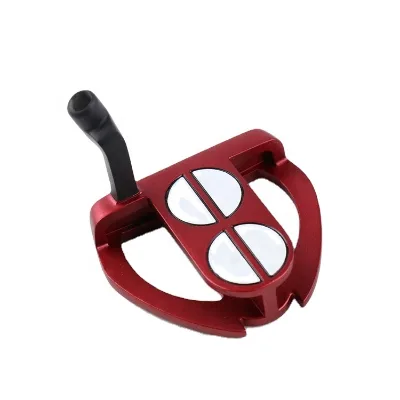


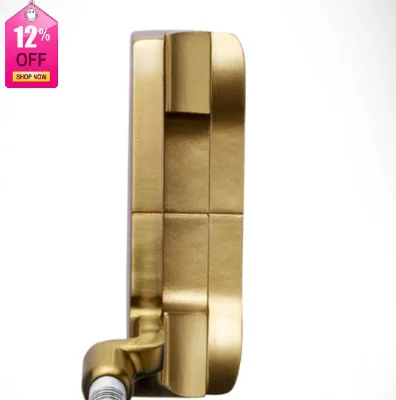
Manufacturer Customized Golf Club Putter Black Golf Putter Head with Screws
$42.00 - $44.00
MOQ: 300 Pieces



Comprehensive Sourcing Guide
Customized Golf Putter Head Sourcing Guide
Sourcing a Customized Golf Putter Head requires a precise understanding of the specific manufacturing capabilities available in the current market, particularly within the Fujian region of China where many suppliers specialize in CNC milling and alloy casting. Buyers must distinguish between suppliers offering standard OEM blanks and those capable of delivering fully custom-milled heads with specific weight distributions and face textures. The observed product landscape includes variations ranging from zinc alloy and stainless steel constructions to specialized models like the P2D-73007 and SP-65039, each presenting different material properties and finishing options that directly impact the final performance and feel of the club.
The procurement process for these components is heavily influenced by the flexibility of the supplier regarding customization, as evidenced by the availability of custom logos, colors, and specific loft and lie angles. While some listings indicate a single item selling unit, the commercial reality often involves bulk orders with minimums starting at 100 pieces, necessitating a clear strategy for inventory management and cost allocation. Buyers should verify whether the supplier accepts assembly requests and offers packaging solutions that align with their brand requirements, as the standard export cartons may need modification to accommodate specific branding or retail presentation needs.
Product Scope and Observed Listing Signals
The product scope for customized golf putter heads spans a variety of material compositions and design philosophies, with the market currently featuring both zinc alloy and stainless steel options such as SUS431. Listings indicate that these components are designed for unisex use and cater to both men and women, with specific models offering adjustable weights and custom milling faces to enhance the putting experience. The observed range includes heads with specific weights like 364g and 350g, suggesting that buyers must carefully select the mass that aligns with their target demographic's preference for stability versus maneuverability.
Listing signals reveal a diverse array of customization capabilities, including custom-made colors, logos, and packaging configurations that range from blister bags to standard export cartons. The data shows that suppliers often offer a "Custom Made" designation for color and logo, allowing brands to create unique visual identities without altering the core structural integrity of the putter head. However, buyers must be vigilant in distinguishing between generic listings and those that explicitly support complex customizations, as some entries may only offer limited color options or standard packaging that does not meet specific retail requirements.
Technical Specifications to Verify
Verifying technical specifications is critical when sourcing putter heads, as the physical attributes such as loft, lie angle, and weight directly influence the ball's trajectory and the golfer's stroke mechanics. Buyers should confirm that the supplier can consistently produce heads with precise loft angles, such as the observed 3.5 degrees, and lie angles like 72 degrees, ensuring that the final product matches the intended design parameters. The material composition, whether zinc alloy or stainless steel, must be validated against the required durability and feel, as these factors determine the longevity and performance consistency of the club head under repeated use.
Dimensional accuracy and finishing quality are equally important, with specific attention required for the single package size and the overall gross weight of the unit. The observed single package size of 12x8x9 cm and a gross weight of 0.400 kg provide a baseline for logistics planning, but buyers must ensure that the actual product dimensions and weight fall within the acceptable tolerance ranges, such as the +/-3g variance noted in some listings. Additionally, the face milling process, which is a key feature for many high-quality putters, must be verified to ensure that the texture and depth are consistent across all units in the order to maintain uniform ball roll characteristics.
Compliance and Safety Documentation
While the supplied facts do not explicitly list specific safety certifications, buyers must request documentation confirming that the materials used, such as SUS431 stainless steel or zinc alloy, comply with international safety standards for sports equipment. It is essential to verify that the manufacturing process adheres to environmental regulations, particularly regarding the finishing and coating processes used to achieve custom colors and logos, as these can involve chemicals that require proper handling and disposal. Buyers should also ensure that the supplier provides proof of compliance with any relevant trade regulations for exporting goods from China, including proper labeling and packaging standards that meet the destination country's requirements.
Safety documentation should also cover the structural integrity of the putter head, ensuring that it can withstand the stresses of normal use without failure or deformation. Although the listings mention "New" condition and "High Quality" milled putters, these are marketing terms rather than verified safety claims, so buyers must request third-party test results or internal quality control reports that demonstrate the product's ability to meet performance and safety benchmarks. This due diligence is necessary to mitigate the risk of product liability and to ensure that the final product is safe for consumers to use in competitive or recreational settings.
Cost Drivers and Commercial Terms
The cost of customized golf putter heads is driven by several factors, including the complexity of the CNC milling process, the choice of material, and the extent of customization required for logos and colors. Suppliers with a supply ability of 10,000 pieces per month may offer competitive pricing for larger orders, but the minimum order quantity (MOQ) of 100 pieces sets a baseline for the initial investment. Buyers should analyze the price range observed in the market, which spans from 2 to 80 USD, to understand the correlation between price and the level of customization, ensuring that the selected supplier offers a cost structure that aligns with their budget and volume expectations.
Commercial terms such as the port of dispatch, packaging details, and assembly acceptance play a significant role in the total landed cost and logistical efficiency of the procurement. The observed port of dispatch is Xiamen, which is a major shipping hub, but buyers should confirm the specific shipping terms and lead times to avoid delays in receiving their goods. Additionally, the packaging details, which can vary from individual blister bags to bulk cartons, must be factored into the cost calculation, as custom packaging solutions often incur additional charges that can impact the overall profitability of the product line.
Supplier Qualification and Quality Control
Qualifying a supplier for customized golf putter heads requires a thorough assessment of their manufacturing capabilities, particularly their ability to maintain consistency in CNC milling and material processing. Buyers should verify the supplier's production capacity, such as the observed 10,000 pieces per month, to ensure they can meet demand without compromising quality or delivery timelines. It is also crucial to evaluate the supplier's experience with custom orders, as the ability to handle specific requests for logos, colors, and dimensions is a key indicator of their flexibility and expertise in the golf equipment sector.
Quality control measures must be robust and transparent, with suppliers expected to provide detailed inspection reports and quality assurance protocols for every batch of putter heads produced. Buyers should inquire about the specific quality control steps taken to ensure that the weight, dimensions, and finish of the putter heads meet the agreed-upon specifications, as even minor deviations can affect the performance of the final product. Establishing a clear communication channel for quality feedback and implementing a system for regular audits or sample inspections can help maintain high standards and prevent costly errors in large-scale production runs.
Long-Term Procurement Checks
Establishing a long-term procurement relationship for customized golf putter heads involves regular performance reviews and continuous quality monitoring to ensure that the supplier remains aligned with the buyer's evolving needs. Buyers should schedule periodic assessments of the supplier's production capacity, lead times, and quality control processes to identify any potential issues before they impact the supply chain. This proactive approach helps to build a resilient partnership that can adapt to changes in market demand, material availability, and regulatory requirements over time.
Continuous improvement should be a central focus of the long-term strategy, with buyers and suppliers collaborating to refine product designs, optimize manufacturing processes, and reduce costs. By maintaining open lines of communication and fostering a culture of mutual trust, buyers can leverage the supplier's expertise to innovate and enhance the value proposition of their customized golf putter heads. This collaborative approach not only strengthens the supply chain but also positions the buyer to respond effectively to market trends and consumer preferences in the competitive golf equipment industry.
FAQs
What materials are used for customized golf putter heads?
Customized golf putter heads are typically manufactured from zinc alloy or stainless steel, including SUS431. These materials provide the necessary durability and weight distribution for precision putting. Buyers can select the specific metal based on their desired feel and performance characteristics, with options for CNC milling to ensure high-quality face finish and consistency.
Can I customize the logo and color of the putter head?
Yes, customization is available for both logos and colors. Buyers can request custom-made logos and specific color finishes, such as red or other custom shades. The supplier accepts OEM branding requests, allowing businesses to tailor the appearance of the putter heads to match their brand identity or specific client requirements effectively.
What is the minimum order quantity for these putter heads?
The minimum order quantity is generally 100 pieces. This MOQ applies to standard customization requests. Buyers should note that supply ability is around 10,000 pieces per month, ensuring that larger orders can be fulfilled within reasonable timeframes. Specific MOQs may vary slightly based on the complexity of the customization requested.
Where are these golf putter heads manufactured?
These golf putter heads are manufactured in Fujian, China. The products originate from this region, which is a known hub for golf equipment manufacturing. The port of dispatch is Xiamen, facilitating efficient shipping logistics for international buyers. This location supports the production of various models, including P2D-73007 and SP-65039.
What specifications are available for the putter heads?
Available specifications include a loft of 3.5 degrees and a lie angle of 72 degrees. The weight is approximately 350g to 364g, depending on the specific model. Sizes range from M to L, and the club type is designed as a golf putter head. These specs cater to standard fitting requirements for most golfers.
How are the putter heads packaged for shipping?
Putter heads are packaged in blister bags or poly bags, with one piece per club head. For bulk orders, eight pieces are packed into a carton with dimensions of 123x27x27 cm. Standard export cartons or custom packaging requirements can be accommodated. This ensures safe transport and protects the CNC milled faces during transit.