Source Golf Balls for Racing, Entertainment, and Gift Use
Explore 30 Golf Balls options for racing, entertainment, and gift applications. Compare materials like urethane and surlyn, check customization features, and review specifications for bulk orders from Chinese manufacturers; compare the available evidence and request quotations based on your requirements.
Key considerations
Products List


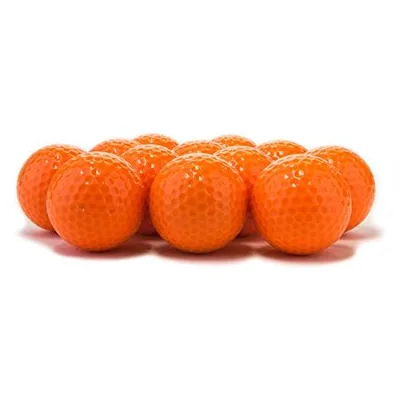


Golf Balls Logo Quality Golfball Golf Practice Ball Prices Printed Golf Balls
$0.41 - $0.49
MOQ: 3000 Pieces


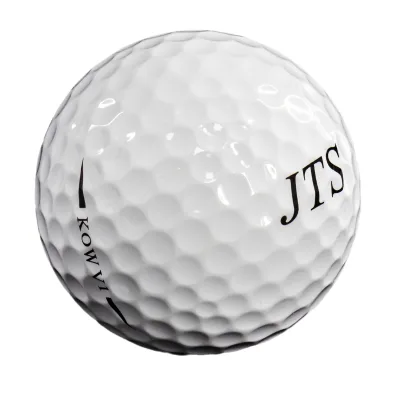


Manufacturer Colorful Plated Golf Ball Present Good Quality Gift Golf Ball
$0.62 - $0.67
MOQ: 1200 Pieces


Comprehensive Sourcing Guide
Golf Balls Sourcing Guide
Buyers must first distinguish between performance-grade balls designed for racing and entertainment and practice variants intended for children or training. The market offers distinct product lines, including three-layer urethane models for serious play and foam-based PU balls for safe practice. Understanding these divergent use cases is critical before engaging suppliers, as the material composition and durability requirements differ significantly between a competition ball and a recreational training tool.
Procurement strategies should also account for the wide variance in customization capabilities observed across listings. While some suppliers offer standard bulk packaging, others provide extensive options for custom logos, colors, and specific piece counts per box ranging from single units to twenty-four. This flexibility allows buyers to tailor products for corporate gifts or branded events, but it requires clear communication of packaging specifications to ensure the final delivery matches the intended promotional or functional purpose.
Product Scope and Observed Listing Signals
The observed product range includes Golf Balls with specific dimple counts, such as 332-dimple models, alongside practice balls with diameters around 60mm or standard 42mm sizes. Buyers should verify that the listed diameter aligns with the intended application, as standard competition balls typically fall within the 42.6-42.8mm range, whereas practice or novelty items may deviate. This distinction ensures that the purchased inventory meets the physical requirements of the target sport or activity without compromising safety or performance standards.
Listing signals also reveal a mix of material compositions, ranging from high-elasticity urethane and Surlyn to rubber and foam blends. The presence of "High Elasticity" features and specific hardness ratings between 80 and 90 indicates a focus on bounce and durability for specific user groups. Buyers must cross-reference these material claims with the stated usage, ensuring that racing or entertainment balls possess the necessary resilience while practice balls for children prioritize safety and softness over distance.
Technical Specifications to Verify
Verification of weight and density is essential, as observed standards vary from lightweight practice balls at 8.7g to standard competition balls near 45.6-45.9g. Some listings cite weights around 90.5g, which may indicate a different product category or a specific bulk standard rather than individual ball weight. Procurement teams must clarify whether the weight specification refers to a single unit or a packaged set to avoid receiving inventory that fails to meet the regulatory or performance expectations of the target market.
Diameter and model number consistency are equally critical for inventory management and compatibility with existing equipment. Models such as GB041, WR-1011-2, and A2101 represent distinct product lines with varying physical attributes, including diameters around 42mm or 60mm. Buyers should confirm that the specific model number corresponds to the exact dimensional tolerance required, ensuring that the balls fit standard launch monitors, clubs, and storage systems without modification or rejection.
Compliance and Safety Documentation
Safety compliance is paramount when sourcing balls intended for children or general entertainment, particularly those made from rubber, foam, or PU materials. While specific certification names are not provided in the listings, buyers must request documentation proving that the materials meet local safety standards for toys and sports equipment. This includes verifying that the foam and rubber components are free from harmful substances and that the construction prevents choking hazards for younger demographics.
For performance-grade balls used in racing or professional entertainment, documentation regarding material integrity and durability standards is required. Buyers should ask for test reports confirming the hardness range of 80-90 and the elasticity rates above 80% to ensure the product performs as advertised. Without these technical validations, there is a risk of receiving substandard goods that may degrade quickly or fail under the stress of competitive play, leading to customer dissatisfaction and potential liability issues.
Cost Drivers and Commercial Terms
Minimum Order Quantities (MOQ) represent a significant cost driver, with observed ranges spanning from 5 units to 10,000 units, though many suppliers list specific thresholds like 1,000 or 3,000 pieces. Buyers must align their order volume with these MOQs to secure the most favorable unit pricing, as smaller orders may incur higher per-unit costs or require special handling fees. Understanding these thresholds helps in planning inventory levels and negotiating better terms for long-term supply agreements.
Packaging and customization options also influence the final landed cost, with variations from bulk packing to custom color boxes and specific piece counts per carton. The ability to customize logos and packaging adds value but may increase production time and unit costs. Buyers should evaluate the trade-off between branding benefits and the additional expense, ensuring that the custom package specifications, such as 12 or 24 pieces per box, are cost-effective for the intended distribution channel.
Supplier Qualification and Quality Control
Supplier qualification should focus on verifying the origin and production capacity, with observed origins including Fujian, Xiamen, and Anhui in China. Buyers must confirm that the supplier has the infrastructure to handle the required customization and volume, particularly for orders with specific model numbers like WR-250704-1. Checking the supplier's ability to maintain consistent quality across different batches is essential to prevent defects in dimple patterns, weight distribution, or material consistency.
Quality control processes must be established to validate the sample time and production lead times, which are noted as 5-7 working days for samples. Buyers should implement a rigorous inspection protocol upon receipt of goods to verify that the hardness, elasticity, and dimensions match the agreed specifications. Regular audits of the production line and random sampling of finished goods will help maintain the high standards required for both recreational and competitive golf ball markets.
Long-Term Procurement Checks
Long-term procurement success depends on maintaining a stable supply chain that can adapt to changing market demands and customization needs. Buyers should establish clear communication channels with suppliers to ensure that updates to product models, such as the transition from standard to custom designs, are managed smoothly. This proactive approach helps in avoiding stockouts and ensures that the inventory remains relevant to current consumer preferences in racing and entertainment sectors.
Continuous monitoring of product performance and customer feedback is necessary to identify any recurring quality issues or material failures. Buyers should track the durability and elasticity of the balls over time to ensure they continue to meet the advertised standards. By maintaining a feedback loop with end-users, procurement teams can make informed decisions about future orders, supplier relationships, and potential product improvements to sustain a competitive edge in the market.
FAQs
What customization options are available for Golf Balls?
Customization is available for Golf Balls, allowing buyers to select specific colors and logos. Options include white or custom colors with personalized branding. Packaging can be customized with various piece counts per box, such as 1, 2, 3, 4, 6, 12, 16, 18, 24, or 27 pieces. This flexibility supports distinct branding needs for racing, entertainment, or gift purposes.
What materials are used to manufacture these Golf Balls?
Manufacturers use various materials including Urethane, Surlyn, Rubber, Foam, and PU. Some balls feature a three-layer construction with Surlyn and foam, while others use pure Urethane or PU. Practice balls may combine rubber and foam for high elasticity. These material choices affect durability, hardness, and performance for different usage scenarios like racing or entertainment.
What is the typical MOQ for ordering Golf Balls?
The typical MOQ ranges from 1000 to 3000 pieces, depending on the specific product model and customization requirements. Some listings indicate an MOQ of 3000, while others accept orders starting at 1000 PCS. Buyers should verify the exact minimum order quantity for their selected model, as packaging and customization levels can influence these thresholds.
Where are these Golf Balls manufactured?
These Golf Balls are manufactured in China, with specific origins including Fujian, Xia Men, and Anhui provinces. Buyers can source products from these regions, which are known for producing various golf ball types. The origin may influence logistics and lead times, so verifying the specific factory location is recommended for accurate shipping estimates and supply chain planning.
What specifications define the standard golf ball size?
Standard Golf Balls typically have a diameter between 42.6mm and 42.8mm, adhering to common industry standards. Some practice or specialized balls may have a diameter around 60mm. Weight standards vary, with some balls weighing approximately 45.6-45.9g, while others are lighter, such as 8.7g for practice balls. Buyers should check specific model specifications for precise dimensions.
How long does it take to receive samples?
Sample time is typically 5-7 working days for most golf ball models. This duration allows for the preparation of customized or standard samples before shipment. Buyers requesting samples for quality verification or design approval should account for this lead time. Expedited shipping options may further reduce delivery time, but production preparation remains the primary factor.