Source Customized Mealworm Screening Machine for Farms
Find a Customized Mealworm Screening Machine from 30 verified listings. Compare stainless steel models with vibrating screens, varying capacities from 150 to 800 kg/h, and automatic operation features for efficient Tenebrio Molitor processing; compare the available evidence and request quotations based on your requirements.
Key considerations
Products List
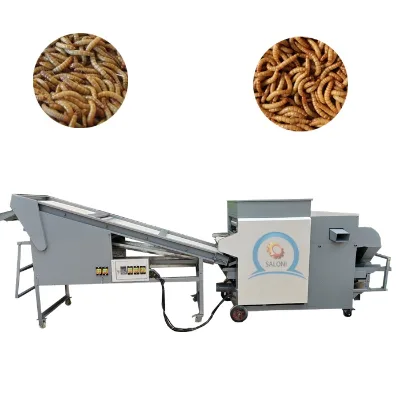

CE Certified Mealworm Screening Machine Unit Mealworm Separating Machine
$7000.00 - $12000.00
MOQ: 1 Sets

Full Stainless Steel Mealworm Separating Machine Mealworm Screening Machine
$3000.00 - $4500.00
MOQ: 1 set

Good Feedback Automatic Mealworm Sorting Machine Mealworm Separator Machine
$3000.00 - $4500.00
MOQ: 1 set

Multi-Functional Mealworm Screening Machine Yellow Mealworm Separator Machine
$2000.00 - $4000.00
MOQ: 1 Sets

Mealworm Separator Yellow Mealworm Sieving Machine Insects Sorter Sorting Machine
$2800.00 - $3800.00
MOQ: 1 set

Fcatory Supply Yellow Mealworm Sieving Machine Mealworm Separating Machine
$2000.00 - $4000.00
MOQ: 1 Sets


Automatic Mealworm Sorting Machine Mealworms Beetles Separator Machine
$3900.00 - $4600.00
MOQ: 1 Pieces


Yellow Mealworm Screening Machine Mealworm Sifting Machine Mealworms Drying Machine Price
$3000.00 - $4600.00
MOQ: 1 Pieces


High-Efficiency Yellow Mealworm Screening Machine Mealworm Sifter Machine
$3600.00 - $3800.00
MOQ: 1 Set


Worm Separating Machine Yellow Mealworm Sieving Machine Mealworm Screening Machine
$2500.00 - $3500.00
MOQ: 1 Pieces


Mealworm Separator Machine Mealworm Sorting Machine Mealworm Separating Machine
$2500.00 - $3500.00
MOQ: 1 Pieces
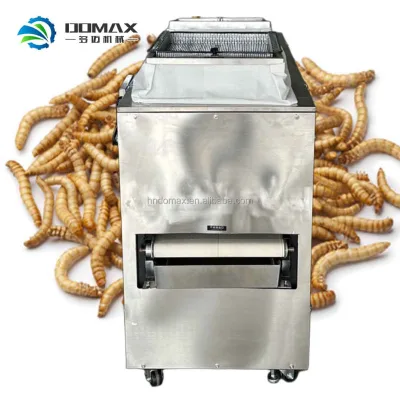
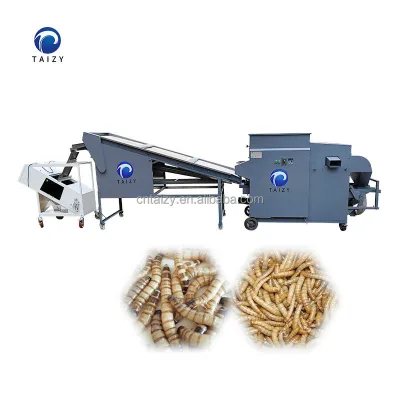

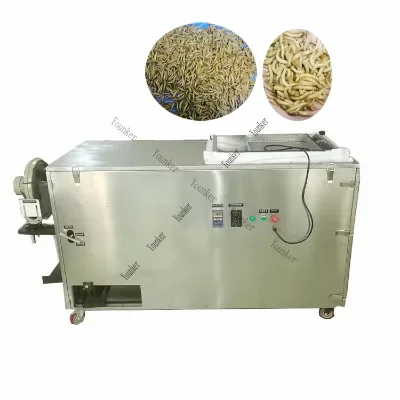

Comprehensive Sourcing Guide
Customized Mealworm Screening Machine Sourcing Guide
Procuring a Customized Mealworm Screening Machine requires careful evaluation of the specific separation needs for Tenebrio Molitor and other insect farming operations. Buyers must prioritize machines designed with automatic vibrating screen structures to ensure high-efficiency processing rates that align with their daily throughput goals. The observed market data indicates that these units typically feature stainless steel construction to maintain hygiene standards while handling organic feed materials in farm environments.
When initiating the search, it is essential to verify that the equipment matches the specific dimensions and weight constraints of your facility. Listings show models with varying capacities, ranging from 200kg/h to 500kg/h, which directly impacts the selection of the appropriate unit for your production scale. Understanding these operational limits helps prevent bottlenecks in the processing line and ensures the machine integrates smoothly with related equipment like washing or peeling machines.
Product Scope and Observed Listing Signals
The product scope for these screening units centers on high-safety level operations tailored for mealworm separation and sieving applications. Buyers should look for listings that explicitly state the machine's use for separating mealworms, as this confirms the design intent matches your specific agricultural needs. The observed data highlights that these machines often come with a cleaning rate of 99% or higher, a critical metric for ensuring the purity of the final insect product before further processing.
Listing signals also reveal significant variation in model specifications, with identifiers such as SA-FLJ5, TZ-6, and TZ-10 appearing across different supplier catalogs. These variations suggest that while the core function remains consistent, the physical footprint and power requirements differ substantially between models. A 3.5kw power rating is common, but the physical dimensions can range from compact 165cm widths to larger 2000mm lengths, necessitating a precise match between the machine's standard size and your available floor space.
Technical Specifications to Verify
Technical verification must begin with the core components, specifically the motor and the vibrating screen transmission structure, which drive the separation efficiency. Buyers should confirm that the voltage requirements match their local grid, as the observed listings frequently specify 220v 50hz compatibility. Ensuring the motor is robust enough to handle the continuous load of 500-800kg/h processing rates is vital for maintaining consistent output without mechanical failure during peak production hours.
Dimensional accuracy is another critical technical parameter that requires strict validation against your facility's layout plans. The observed specifications include dimensions like 5.10.81.28m and 20001150900mm, indicating that space planning must account for both the machine's footprint and the necessary clearance for operation and maintenance. Additionally, the weight of the unit, which can range from 220kg to 460kg, must be considered to ensure the factory floor can support the load without requiring additional structural reinforcement.
Compliance and Safety Documentation
Compliance documentation is a non-negotiable aspect of sourcing industrial machinery, particularly when the equipment is intended for food-adjacent applications like insect farming. Buyers should request the machinery test report, which is noted as provided in several listings, to verify that the unit has undergone rigorous safety and performance testing before shipment. This document serves as proof that the machine meets the necessary operational standards and reduces the risk of acquiring defective or unsafe equipment.
Safety certifications further validate the machine's adherence to international quality benchmarks, with ISOCE certification appearing as a key selling point in the market. While the specific certification status should be verified for each supplier, the presence of such documentation indicates a commitment to safety and quality control. Buyers must ensure that the safety level claims, such as the "High Safety Level" mentioned in listings, are backed by tangible evidence in the provided test reports and certification papers.
Cost Drivers and Commercial Terms
Cost drivers for customized mealworm screening machines are heavily influenced by the level of customization required and the specific capacity needed for the operation. The observed price range of 1500 to 12000 USD reflects the variance in model complexity, material quality, and the extent of the customization options available. Buyers should anticipate that higher capacity models with advanced features like automatic grading and enhanced safety levels will command a premium price within this spectrum.
Commercial terms regarding the minimum order quantity and packaging are also significant factors in the total cost of ownership. Listings indicate a low entry barrier with MOQs ranging from 1 to 3 units, making these machines accessible for small to medium-sized farms. Furthermore, the packaging standard, often described as a wood box for free fumigation or a wooden case, adds to the logistical costs and must be factored into the budget to ensure safe transport without additional fees for special handling.
Supplier Qualification and Quality Control
Supplier qualification should focus on verifying the place of origin and the condition of the machinery to ensure you are receiving a brand-new unit. The observed data points to Henan, China, as a primary origin for these machines, and buyers should confirm that the supplier can provide proof of the machine's new condition rather than refurbished stock. This verification is crucial for ensuring the longevity of the equipment and the validity of the warranty terms offered.
Quality control extends to the after-sales support structure, which is a key differentiator among suppliers in this sector. Buyers must confirm that the supplier offers online support as an after-warranty service, ensuring that technical assistance is available if operational issues arise. Additionally, the availability of customized options allows suppliers to tailor the machine to specific needs, but this requires a clear communication channel to ensure the final product meets the exact specifications agreed upon during the procurement process.
Long-Term Procurement Checks
Long-term procurement checks involve monitoring the warranty coverage and the availability of spare parts to ensure sustained operational efficiency. The standard warranty period observed is one year, which provides a baseline for the supplier's confidence in their product's durability. Buyers should negotiate for extended warranty terms or clear service level agreements that define the response time for any repairs or replacements needed after the initial warranty period expires.
Finally, buyers must establish a protocol for regular maintenance and performance monitoring to maximize the lifespan of the screening machine. The high cleaning rate and efficiency claims are only maintained through consistent upkeep of the vibrating screen and motor components. Establishing a relationship with a supplier who can provide ongoing technical guidance and spare parts will ensure that the machine continues to meet the 99% cleaning rate and capacity requirements over the long term.
FAQs
What capacity range does a Customized Mealworm Screening Machine offer?
Listed models cover capacities from 150-400kg/h up to 300-500kg/h, with some units rated at 500-800kg/h efficiency. The right choice depends on your farm's daily harvest volume and how many screening hours you run. Match the capacity to your upstream rearing output so the machine is not bottlenecked or left underused during peak separation periods.
How is the Customized Mealworm Screening Machine built and protected against wear?
The machine uses stainless steel for food-contact surfaces and a vibrating screen transmission structure. Stainless construction resists corrosion from moisture and insect frass, which supports hygiene and easier cleaning. Ask suppliers to confirm material grade and weld finishing in writing, since custom configurations can vary between production batches and factories.
Can the Customized Mealworm Screening Machine be tailored to my farm layout?
Yes, customization is available on listed models. Suppliers can adjust dimensions such as the 165*77*120cm or 2000*1150*900mm footprints to fit your workspace. Provide your floor plan, available power supply, and desired screening stages before ordering so the manufacturer can confirm feasibility, modify the frame, and quote the revised configuration accurately.
What power and voltage does the Customized Mealworm Screening Machine require?
The machines run on 220v 50hz with motor-driven core components, and one listed model uses 3.5kw. Verify your local grid compatibility before purchase, especially in regions using 60hz or different single-phase standards. Customized voltage configurations may be possible, so state your electrical requirements clearly during the inquiry stage.
Which certifications and warranty terms apply to the Customized Mealworm Screening Machine?
Listed machines carry ISOCE certification and a one-year warranty, with a machinery test report provided. After the warranty period, online support is available for troubleshooting. Always request the current test report and written warranty terms before ordering, because support arrangements and documentation can differ between suppliers offering customized configurations.
How is the Customized Mealworm Screening Machine packed and shipped?
Units are packed in a wood box with free fumigation or a wooden case, suitable for international transport. Packing protects the vibrating screen assembly and motor during long sea freight. Confirm the gross packed weight, around 220kg to 460kg depending on the model, with your forwarder to plan unloading equipment at destination.
What is the minimum order quantity and price range for the Customized Mealworm Screening Machine?
Minimum order quantities range from 1 to 3 units, which suits small and mid-sized insect farms testing new lines. Listed prices span roughly 1500 to 12000 US dollars depending on model, capacity, and customization depth. Request itemized quotes separating base machine cost from custom modifications and spare parts.
Which mealworm screening machine model fits small farms best?
For small operations, compact models with around 200kg/h capacity and footprints near 165*77*120cm are easier to install and operate. Larger farms handling 500-800kg/h should consider the bigger 5.1*0.8*1.28m units despite heavier weight and higher price. Compare cleaning rates, which reach 99% or higher, when choosing between models.