Source Customized Outdoor LED Display Screen for Advertising
Source Customized Outdoor LED Display Screen solutions for advertising, stage performance, and market displays. Compare 30 products featuring IP65 ratings, high brightness, and various pixel pitches to find the right fit for your project needs; compare the available evidence and request quotations based on your requirements.
Key considerations
Products List


Full Color Indoor Outdoor Media Front Service LED Display Screen
$500.00 - $2800.00
MOQ: 1 Square Meters


Outdoor Fixed Installation P4 LED Screen LED Display LED Display
$390.00 - $550.00
MOQ: 1 Square Meters

Full Color Indoor or Outdoor Special Shaped Customized Creative LED Display Screen
$1666.00 - $1999.00
MOQ: 1 Square Meters


High Brightness P3 Outdoor Advertising Digital LED Display Screens
$400.00 - $600.00
MOQ: 1 Square Meters


Outdoor P4.4 High Resolution Advertising LED Display Screen for Event
$356.00 - $867.00
MOQ: 1 Square Meters


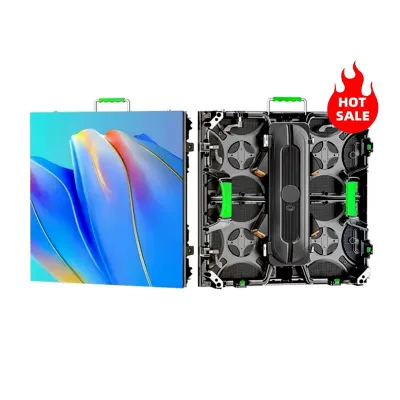


High Brightness Outdoor P2.976 LED Display Screen with IP65 Waterproof
$350.00 - $360.00
MOQ: 10 Pieces

Comprehensive Sourcing Guide
Customized Outdoor LED Display Screen Sourcing Guide
Buyers must first distinguish between the specific pixel pitch requirements for their intended environment, as the market offers distinct configurations ranging from 10mm to 20mm for general advertising. The observed product data indicates that models like the TX-P20 utilize a 20mm pitch, while other listings suggest 10mm or 16mm options, each serving different viewing distances. Selecting the correct pitch is the primary decision point, as it directly dictates the clarity of text and image displays required for outdoor visibility.
Procurement teams should also verify the scanning mode and cabinet construction, which vary significantly between static scan and 1/2 or 1/4 scan technologies. The supply data shows aluminum or steel cabinets are common, with some units featuring 1/16 scan modes suitable for stage performance applications. Understanding these structural differences ensures the selected screen can withstand outdoor elements while delivering the necessary refresh rates and brightness levels for the specific application.
Product Scope and Observed Listing Signals
The current market listings reveal a diverse range of display functions, including video, text, and image capabilities, often tailored for advertising or stage performance. Buyers should note that while some units are specified for general market displays, others are optimized for high-contrast stage environments. This variation means that a single product listing may not cover all use cases, requiring careful cross-referencing of the intended application against the listed display function attributes.
Price observations in the current dataset span a wide range from 30 to 5000 USD, reflecting the variance in pixel density and module size. The minimum order quantities are generally low, ranging from 1 to 10 units, which facilitates sampling for smaller projects. However, the significant price spread suggests that buyers must scrutinize the specific module size and pixel density, such as 10000 dots per square meter versus 6944 dots, to understand the value proposition of each quoted price point.
Technical Specifications to Verify
Brightness is a critical specification for outdoor visibility, with observed data indicating levels exceeding 6000 nits, 6500 nits, and even 7000 nits depending on the model. Buyers must confirm the specific brightness rating for their project, as insufficient luminance will render the display unreadable in direct sunlight. The variation in these figures across different product models necessitates a direct request for the specific brightness certification or test data for the exact unit being purchased.
Refresh rates and driver ICs also require strict verification to ensure smooth video playback without flickering. The available data lists refresh rates exceeding 1920Hz and 3840Hz, paired with driver ICs such as Mbi or constant current types. Additionally, the pixel pitch and density must align with the viewing distance; for instance, a 16mm pitch offers a different visual experience than a 10mm pitch. Confirming these electrical and optical parameters prevents performance gaps in the final installation.
Compliance and Safety Documentation
Safety certifications are mandatory for outdoor installations, and the observed listings frequently cite CCC, CE, ETL, and RoHS compliance. Buyers should explicitly request proof of these certifications for the specific model, as the presence of one does not guarantee the others for every unit. The ETL mark, in particular, is often required for North American markets, while CCC is standard for domestic Chinese sales, making it essential to match the certification to the destination country's regulations.
Electrical safety and power supply specifications must also be validated against local grid standards. The data indicates a standard voltage range of AC110-240V and power supply units rated at 5V 60A or MW types. Procurement teams must verify that the power supply unit (PSU) and the overall system voltage are compatible with the local infrastructure to prevent equipment failure. Ensuring the power consumption, such as the observed 600W per square meter, aligns with the site's electrical capacity is a crucial safety step.
Cost Drivers and Commercial Terms
The cost of these displays is heavily influenced by the LED lamp type, with options ranging from DIP to Epistar and SMD 3 in 1 configurations. SMD lamps generally offer better color consistency and viewing angles but may command a higher price point compared to traditional DIP lamps. Buyers should evaluate the trade-off between initial cost and long-term visual performance, as the choice of lamp technology directly impacts the total cost of ownership and the aesthetic quality of the display.
Packaging and shipping logistics represent another significant cost driver, with plywood cases being the standard for protecting the aluminum or steel cabinets. The weight of the units, observed at 35kg or 50kg per module, affects freight charges and the structural requirements for the installation site. Buyers must factor in the cost of specialized handling equipment and the durability of the packaging to ensure the modules arrive without damage, as the high value of the components makes them susceptible to transit risks.
Supplier Qualification and Quality Control
Supplier verification should focus on their ability to provide customization, as the product data confirms that customization is available for these outdoor screens. Buyers must assess the supplier's capacity to tailor module sizes, such as the 960x960mm or 1000x1000mm standards, to fit specific architectural constraints. A qualified supplier will demonstrate flexibility in adapting the system, including the Nova control system, to meet unique project requirements without compromising the core performance metrics.
Quality control processes must be rigorously defined to ensure consistency in pixel pitch and brightness across the entire screen surface. The observed data shows variations in pixel density and scanning modes, indicating that batch-to-batch consistency is not guaranteed without strict oversight. Buyers should request a detailed quality assurance plan that includes testing for IP65 ratings, which is critical for outdoor durability, and verify the supplier's track record in delivering units that meet the specified contrast rates and refresh rates.
Long-Term Procurement Checks
Maintenance and spare parts availability are essential considerations for the longevity of outdoor LED installations. The specific driver ICs and power supply units used in the display must be readily available from the supplier to facilitate quick repairs. Buyers should negotiate a long-term support agreement that guarantees the supply of replacement modules and electronic components, ensuring that the system remains operational even after the initial warranty period expires.
Environmental durability and warranty terms must be clearly defined to protect the investment against outdoor degradation. The IP65 rating observed in the data suggests a high level of protection against dust and water, but buyers should verify the specific testing conditions under which this rating was achieved. Establishing clear warranty terms that cover brightness degradation and pixel failure over time is crucial, as outdoor screens are subject to continuous exposure to varying weather conditions that can impact performance.
FAQs
Can customized outdoor led display screens be made with specific pixel pitches?
Yes, customized outdoor led display screens are available with various pixel pitches to suit different viewing distances. Options include 10mm, 16mm, and 20mm pitches, allowing buyers to select the optimal resolution for their specific advertising or stage performance applications while ensuring clear visual impact.
What certifications are required for outdoor led display screens?
Outdoor led display screens typically require CCC, CE, ETL, and RoHS certifications to ensure safety and environmental compliance. These standards verify that the electronic components and electrical systems meet international regulations, providing assurance for global buyers regarding product reliability and regulatory adherence in various markets.
How bright are customized outdoor led display screens for daytime visibility?
Customized outdoor led display screens offer high brightness levels exceeding 6000 to 7000 nits for clear daytime visibility. This high luminance ensures that video and text content remain legible under direct sunlight, making them suitable for outdoor advertising applications where ambient light conditions can be challenging for standard displays.
What is the typical IP rating for outdoor led display cabinets?
The typical IP rating for outdoor led display cabinets is IP65, providing complete dust protection and resistance to water jets. This rating ensures the internal electronic components and LED lamps are shielded from environmental elements, guaranteeing long-term durability and stable performance in various outdoor weather conditions for buyers.
Which scanning modes are used in these led display modules?
These led display modules utilize various scanning modes including 1/2 scan, 1/4 scan, 1/16 scan, and static scan. The choice of scanning mode affects brightness and refresh rate, allowing suppliers to tailor the display performance to specific application needs, such as high-refresh stage performances or cost-effective advertising displays.
What are the standard cabinet dimensions for these led displays?
Standard cabinet dimensions for these led displays include 960x960 mm, 1000x1000 mm, and 1280x1280 mm. These modular sizes facilitate easy installation and maintenance, allowing buyers to configure large screens efficiently. The aluminum or steel cabinets provide structural integrity while maintaining a manageable weight for handling and mounting.