Source Customized Shape Printed Fabric Wristbands for Events, Promotions, and Daily Wear
Explore 30 listings of Customized Shape Printed Fabric Wristbands available for wholesale. Buyers can compare features like eco-friendly materials, glow-in-the-dark options, and RFID capabilities across various models and packaging styles.
Key considerations
Products List


Custom Fabric Wristbands Fashionable R Fabric Waved Printing Elastic Wrist Bands
$0.15 - $0.20
MOQ: 1000 Pieces


Promotional Custom Design Printed Sublimation Polyester Festival Satin Fabric Wristbands for Events
$0.18 - $0.30
MOQ: 500 Piece/Pieces


Factory Direct Sales Can Be Customized Various Styles of Rubber Wristbands
$0.04 - $0.10
MOQ: 500 Pieces


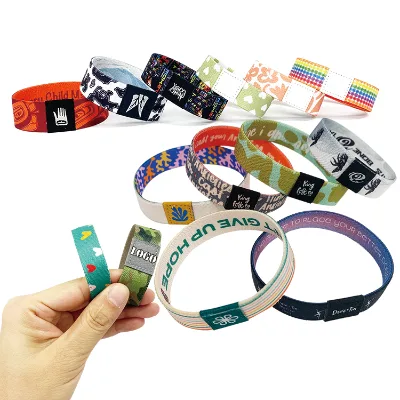


Comprehensive Sourcing Guide
Strategic Sourcing Guide for Customized Shape Printed Fabric Wristbands
Understanding Product Variants and Core Specifications
When sourcing Customized Shape Printed Fabric Wristbands, buyers must first navigate the diverse landscape of product definitions found in the market. The term "fabric wristband" often encompasses a broad spectrum of materials and construction methods, ranging from traditional woven textiles to synthetic polymers like PVC. In the current supply chain, a significant portion of these items are categorized under general hair accessories or RFID-enabled wearables, depending on their intended function. The observed market data indicates that while the core keyword emphasizes fabric, many suppliers offer PVC-based alternatives that mimic fabric textures or serve similar utility functions. These PVC variants are frequently described with specific attributes such as "Eco-Friendly" or "Glow in the Dark," suggesting a functional shift from purely aesthetic fabric to high-performance synthetic materials.
The customization aspect is a primary driver for this product category. Suppliers typically offer "Customerized" logos and shapes, allowing for unique branding opportunities. The standard production models observed in the market include codes such as JMBAMBOO, Y0096, and FZ4743, which often correspond to specific dimensions or material compositions. For instance, one observed specification lists a standard size of 6*9cm, while another notes a dimension of 1.5 x 35.0 CM, highlighting the critical need for buyers to verify exact physical dimensions before placing orders. The "Shape" attribute is often listed as "Rectangle" for standard models, yet the "Customized" standard designation implies that non-rectangular or irregular shapes are available upon request. Buyers should recognize that "fabric" in this context may sometimes refer to the visual appearance of the printed surface rather than the underlying textile composition, which could be PVC or a similar synthetic.
Technical Specifications and Material Composition
A rigorous evaluation of technical specifications is essential when selecting customized shape printed wristbands. The material composition directly influences the durability, print quality, and environmental impact of the final product. The supplied data reveals that PVC is a prevalent material choice for these items, particularly for those requiring features like RFID integration or glow-in-the-dark capabilities. PVC offers a smooth surface ideal for high-resolution printing, including "Four Color Printing" and "Customer Made" logo applications. However, for buyers specifically seeking natural fabric, the distinction between textile and synthetic is paramount. The market data also highlights "Eco-Friendly" as a recurring feature, which may indicate the use of recycled PVC or alternative bio-based materials, though the specific composition must be confirmed with the supplier.
Dimensions and physical properties vary significantly across different product models. While some items are defined by a standard thickness of 0.86-1.00mm, others are characterized by weight, such as a standard of 16kg, which likely refers to the weight of a bulk carton rather than a single unit. The "Clip Type" is another critical technical variable, with suppliers noting that "Many Types Available" exist, ranging from standard plastic clips to more secure locking mechanisms. The "Chip Type" for RFID-enabled wristbands is specified as "Read/Write," allowing for dynamic data updates, which is crucial for event management or access control applications. Furthermore, the "Uid" (Unique Identifier) can be applied via "Embossing, Engraved, Printing Black Number," providing multiple avenues for customization. Buyers must ensure that the chosen material can withstand the intended usage environment, whether it is "Daily Use" or specific high-traffic events, and verify that the printing method adheres to the desired color fidelity and durability standards.
Compliance, Certification, and Safety Standards
Navigating the compliance landscape for customized wristbands requires careful attention to international safety standards and certifications. The supply chain data explicitly lists several key certifications, including CE, ISO, RoHS, and CCC. These certifications indicate that the products meet specific safety, environmental, and quality management requirements. CE marking suggests compliance with European health, safety, and environmental protection standards, while RoHS (Restriction of Hazardous Substances) ensures that the materials used, particularly in PVC variants, do not contain prohibited levels of hazardous chemicals. ISO certification points to a manufacturer's adherence to quality management systems, and CCC (China Compulsory Certification) is relevant for products sold within the Chinese market or exported from it.
For buyers operating in regulated industries, verifying the specific scope of these certifications is vital. The "Eco-Friendly" attribute observed in the product list aligns with RoHS compliance, suggesting an effort to minimize environmental impact. However, the presence of a certification does not automatically guarantee that every unit in a large order meets the standard; buyers should request current test reports or certificates of conformity for the specific batch being purchased. Additionally, the "Power Supply Mode" is noted as "Passive" for RFID variants, meaning the wristbands do not require an internal battery, which simplifies compliance with battery disposal regulations. When sourcing for global markets, buyers must also consider local regulations regarding textile labeling and chemical safety, ensuring that the "Customer Made" aspects of the product do not inadvertently violate local material restrictions.
Cost Drivers and Pricing Dynamics
The pricing structure for Customized Shape Printed Fabric Wristbands is influenced by a complex interplay of factors, including material costs, customization complexity, and order volume. The observed price range in the market spans from 0.03 to 0.8 USD per unit, a wide variance that reflects differences in material quality, printing techniques, and order quantities. The "MOQ" (Minimum Order Quantity) is a significant cost driver, with observed ranges from 1 to 1000 units. Lower MOQs, such as 50PCS, often result in a higher unit price due to the fixed costs of setup and production runs. Conversely, larger orders, such as those involving 5000PCS/CTN, typically benefit from economies of scale, reducing the per-unit cost.
Customization adds another layer of cost complexity. The "Logo Printing" and "Shape" customization require additional tooling and setup time. Suppliers offering "Convex" logo types or specific "Embossing" techniques may charge a premium for these specialized processes. The "Sample Time" of 3-5 days also impacts the overall timeline and potential rush fees. Buyers should note that the "Packing" method, whether it is "1PC/OPP Bag" or "100PCS/Oppbags," affects the final cost, as more intricate packaging requires additional labor and materials. Furthermore, the "Delivery Time," usually around 2 weeks, must be factored into the total cost of ownership, especially if expedited shipping is required. Understanding these variables allows buyers to negotiate more effectively and select a pricing model that aligns with their budget and volume requirements.
Typical Applications and Usage Scenarios
The versatility of customized shape printed wristbands makes them suitable for a wide array of applications, primarily driven by their "Daily Use" and "Fashion" attributes. In the realm of fashion, these items serve as stylish accessories, often featuring "Glow in the Dark" or "Reflective" properties to enhance visibility and aesthetic appeal during evening events or festivals. The "Whole Year" seasonality indicates that these products are not limited to specific holidays but are viable for year-round retail and promotional campaigns. For event management, the "RFID" and "Read/Write" capabilities transform wristbands into functional tools for access control, ticketing, and cashless payments, making them indispensable for concerts, conferences, and theme parks.
Beyond fashion and events, these wristbands find utility in corporate branding and promotional giveaways. The ability to print "Customer Made" logos and unique identifiers allows companies to create cohesive brand experiences. The "Eco-Friendly" feature appeals to organizations with sustainability goals, offering a greener alternative to traditional plastic giveaways. In the context of safety and security, the "Reflective" and "Glow in the Dark" attributes are crucial for workers in low-light environments or for participants in night-time activities. The "Suitable for: Universal" designation suggests that these products can be adapted for various demographics, from children to adults, provided the size and clip type are appropriate. Buyers should align the specific features of the wristband, such as the "Clip Type" and "Material," with the intended usage scenario to ensure optimal performance and user satisfaction.
Supplier Evaluation and Quality Control Protocols
Evaluating suppliers for customized wristbands requires a systematic approach to verifying their capabilities and quality control measures. The "prod_origin" is consistently listed as "China" or "Made in China," indicating a concentrated manufacturing base. Buyers should prioritize suppliers who demonstrate transparency in their production processes and offer clear communication regarding the "Sample Time" and "Delivery Time." The availability of "OEM" (Original Equipment Manufacturer) services is a key indicator of a supplier's flexibility in handling custom orders. To ensure quality, buyers should request samples that match the exact specifications of the final order, paying close attention to the "Logo Printing" quality, the durability of the "Clip Type," and the accuracy of the "Uid" printing.
Quality control should extend beyond the visual inspection of the product. Buyers must verify that the "Certification" documents are valid and cover the specific product models being ordered. Testing for material safety, such as checking for compliance with RoHS standards, is essential for PVC-based wristbands. The "Packaging" process is also a critical quality indicator; improper packaging can lead to damage during transit. Suppliers offering "100PCS/Bag" or "Carton" packaging should demonstrate that their packing methods protect the product integrity. Additionally, the "Feature" list, which includes "Eco-Friendly" and "Reflective," should be validated through independent testing or supplier-provided test reports. Establishing a clear quality agreement that outlines acceptable defect rates and rework procedures is crucial for maintaining consistency in large-scale orders.
Long-Term Procurement and Supply Chain Stability
Securing a long-term supply of Customized Shape Printed Fabric Wristbands involves more than just finding a one-time vendor; it requires building a stable and resilient supply chain. The "Delivery Time" of usually 2 weeks suggests a relatively quick turnaround, but buyers must account for potential delays during peak seasons or global supply chain disruptions. Establishing a relationship with a supplier who can consistently meet the "MOQ" requirements and maintain the "Sample Time" of 3-5 days is vital for maintaining inventory levels. The "Customization" availability ensures that buyers can adapt to changing market trends or branding needs without significant lead time penalties.
Sustainability is another long-term consideration. With the "Eco-Friendly" attribute being a common feature, buyers should explore the supplier's commitment to sustainable practices, such as the use of recycled materials or energy-efficient manufacturing processes. This not only aligns with corporate social responsibility goals but also mitigates future regulatory risks. The "Universal" suitability of the products allows for scalability, meaning that as a business grows, the same supplier can likely accommodate increased volumes without the need for a complete supply chain overhaul. Finally, maintaining open communication channels for feedback and continuous improvement ensures that the procurement process remains efficient and responsive to the evolving needs of the market. By focusing on these long-term factors, buyers can secure a reliable source for their customized wristband needs.
FAQs
Can I customize the logo on these wristbands?
Yes, customers can customize the logo using convex printing or four-color printing methods. The product supports OEM services and allows for unique branding with embossing or engraved black numbers on the UID.
What is the minimum order quantity for these items?
The minimum order quantity ranges from 1 to 1000 units depending on the specific model and supplier. Some listings show a specific MOQ of 50 pieces, while others accept orders as low as a single unit for sampling.
Which certifications do these wristbands hold?
These products hold CE, ISO, RoHS, and CCC certifications to ensure safety and quality compliance. These standards verify that the materials, particularly PVC variants, meet international environmental and health regulations.
How long does it take to receive a sample?
Sample time is typically 3 to 5 days for production and preparation. This short turnaround allows buyers to verify product quality, printing accuracy, and material feel before committing to a larger bulk order.
What materials are used to make these wristbands?
The primary material used is PVC, which supports features like RFID and glow-in-the-dark capabilities. While the core keyword mentions fabric, the actual supply often includes synthetic polymers that mimic fabric textures or offer higher durability.
What are the standard dimensions for these products?
Standard dimensions vary by model, with common sizes including 6 by 9 cm or 1.5 by 35.0 cm. Some specifications also list a thickness of 0.86 to 1.00 mm or a weight standard of 16 kg for bulk cartons.
Can these wristbands be used for RFID access control?
Yes, specific models feature passive RFID chips with read and write capabilities for access control. These units are suitable for events and ticketing, utilizing unique identifiers printed or engraved on the surface.