Source Customized Sesame Roasting Machine for Nuts, Seeds, and Peanuts
Find and compare 30 Customized Sesame Roasting Machine options from Chinese manufacturers. Evaluate electric heating models with capacities ranging from 25kg/h to 500kg/h, featuring stainless steel construction and CE ISO certifications for food processing facilities.
Key considerations
Products List


Automatic Sesame Seeds Roasting Machine Nuts Roasting Peanut Roasting Machine
$2500.00 - $8500.00
MOQ: 1 Pieces


Sesame Seed Washing and Drying Production Line / Sesame Seed Roasting Machine
$10689.00 - $12829.00
MOQ: 1 Sets

Soybean Roasting Machine / Roasting Machine Sesame / Chestnut Drum Roaster
$1429.00 - $1959.00
MOQ: 1 Sets


High Automation Sesame Seed Cleaner Drying Machine / Sesame Roaster Machine
$10689.00 - $12829.00
MOQ: 1 Sets

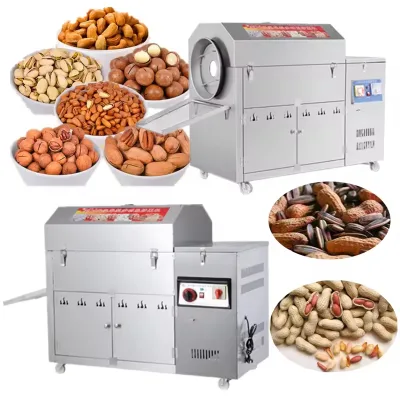


New Automatic Peanut Nuts Sesame Roaster Groundnut Roasting Machine with CE
$800.00 - $3500.00
MOQ: 1 Pieces


Electric Chestnut Roaster / Sesame Roaster Machine / Nut Roasting Machine
$339.00 - $489.00
MOQ: 1 Sets


Stainless Steel Electric Gas Heat 100kg Sesame Roasting Roaster Machine
$2560.00 - $10500.00
MOQ: 1 Sets
Comprehensive Sourcing Guide
Customized Sesame Roasting Machine Sourcing Guide
Sourcing a Customized Sesame Roasting Machine requires a disciplined approach to aligning technical specifications with your specific production volume and quality standards. The market offers a variety of electric roasting solutions designed for nuts, seeds, and sesame, ranging from small-batch units to high-capacity industrial lines. Buyers must navigate a wide spectrum of options, observing that listed prices can vary significantly, often spanning from approximately $339 to over $35,000, depending on the complexity of the customization and the scale of the equipment. This price disparity reflects differences in motor power, heating capacity, automation levels, and material construction, making it essential to define your operational needs clearly before engaging with suppliers.
The decision to opt for a customized unit allows for tailored features such as specific heating ways, automatic grading, and precise timing devices, which are critical for achieving consistent sesame roasting profiles. Observed listings indicate that many suppliers offer customization services, allowing buyers to adjust parameters like voltage, power source, and overall dimensions to fit their facility’s infrastructure. However, the presence of customization does not guarantee that every listed product satisfies every potential requirement. Buyers must treat product attributes as observations rather than universal claims, verifying that the specific model selected can handle the desired throughput, whether it is a small 25kg/h batch or a larger 500kg/h continuous process, while maintaining the integrity of the sesame seeds.
Product Scope and Observed Listing Signals
The product scope for customized sesame roasting machines encompasses a diverse range of industrial equipment designed for thermal processing of food products. Listings frequently highlight applications for roasting peanuts, sesame, nuts, and seeds, indicating a versatile utility for food and beverage factories. The core function of these machines is to provide controlled heating, often utilizing electric power sources with varying heating powers, such as 7.5kw, 15kw, or higher configurations like 18kw plus auxiliary motor power. Buyers should observe that the scope includes both batch roasters, which may have a volume capacity of 25kg per batch, and continuous roasting systems designed for higher throughput, ensuring that the selected machine aligns with your daily production targets.
Observed listing signals reveal significant variation in physical specifications and packaging standards, which directly impact logistics and installation planning. For instance, overall sizes can range from compact units measuring around 1500x2300x1600mm to larger industrial footprints such as 6000mm2400mm2000mm. Similarly, weights vary considerably, with some units weighing approximately 180kg while others may reach 2000kg, necessitating appropriate floor support and handling equipment. Packaging is also a critical signal, with options including wooden cases, nude packing, or fumigation-free wooden boxes, which affects shipping costs and customs clearance procedures. Buyers must carefully review these physical attributes to ensure the machine fits within their available floor space and can be transported and installed without structural modifications.
Technical Specifications to Verify
When evaluating technical specifications, the first priority is verifying the power and heating parameters to ensure they match your facility’s electrical infrastructure and roasting requirements. Listings show a range of power sources, predominantly electric, with heating powers varying from 7.5kw to 15kw or higher, and motor powers such as 2.2kw for agitation or conveyor systems. It is crucial to confirm the voltage compatibility, as observed listings include 380V configurations, which is standard for industrial equipment in many regions but may require transformers if your facility operates on a different voltage. Additionally, verify the temperature control range, with some units offering adjustable settings from 0-220℃, which is essential for achieving the desired roast level for sesame seeds without burning or under-roasting.
Capacity and throughput are equally critical technical factors that must be aligned with your production goals. Observed data indicates capacities ranging from 25kg/h for batch-style roasters to 100 Kg/H or even 500kg/H for larger continuous systems. Buyers should verify the actual effective capacity, distinguishing between the theoretical maximum and the practical output based on the specific sesame variety and desired moisture content. Furthermore, inspect the automation grade, as many units are labeled as automatic, featuring timing devices and advanced control systems that reduce manual labor and improve consistency. Confirming these specifications ensures that the machine can sustain your required production rate while maintaining energy efficiency and operational ease.
Compliance and Safety Documentation
Compliance and safety documentation are non-negotiable aspects of sourcing industrial food processing equipment, particularly when dealing with electrical heating elements and moving mechanical parts. Buyers should verify that the supplier provides relevant certifications, such as CE and ISO marks, which indicate adherence to European safety standards and international quality management systems. Some listings mention specific certification combinations like ISOSAMET and CE, suggesting a focus on standardized manufacturing processes. However, buyers must not assume that all listed products automatically satisfy every regulatory requirement in their destination country. It is essential to request copies of the actual certification documents and verify their validity with the issuing bodies to ensure legal compliance and operational safety.
Safety features and operational safeguards should also be thoroughly documented and reviewed before purchase. Look for evidence of video outgoing inspections provided by suppliers, which can offer transparency into the final quality and functionality of the machine before shipment. Additionally, verify that the machine includes necessary safety interlocks, emergency stop buttons, and proper grounding for electrical components. The material construction, often stainless steel for food contact surfaces, should be verified for food-grade compliance to prevent contamination. Ensuring that all safety and compliance documentation is complete and authentic protects your facility from regulatory penalties and ensures a safe working environment for your operators.
Cost Drivers and Commercial Terms
The cost of a Customized Sesame Roasting Machine is influenced by several key drivers, including the complexity of customization, material quality, and production capacity. Higher power ratings, such as 15kw or 18kw heating elements, and larger capacities like 500kg/H typically command higher prices due to the increased material and engineering requirements. The use of stainless steel for food-contact parts adds to the cost but ensures durability and hygiene. Buyers should also consider the value of customization services, which may include tailored dimensions, specific voltage configurations, or integrated timing devices. Understanding these cost drivers helps in budgeting accurately and avoiding unexpected expenses during the procurement process.
Commercial terms, including minimum order quantities (MOQ), packaging, and origin, play a significant role in the total cost of ownership. Observed listings often show an MOQ of 1, indicating that suppliers are willing to sell single units, which is beneficial for small to medium-sized enterprises. However, buyers must carefully review the packaging terms, as options like wooden cases or fumigation-free wooden boxes can impact shipping costs and customs duties. The origin of the machine, such as Shanghai or Shijiazhuang in China, may also influence logistics costs and lead times. Negotiating clear commercial terms, including payment methods, warranty periods, and after-sales support, is essential to mitigate financial risks and ensure a smooth transaction.
Supplier Qualification and Quality Control
Supplier qualification is a critical step in ensuring the reliability and quality of the Customized Sesame Roasting Machine. Buyers should assess the supplier’s manufacturing capabilities, including their facility size, production lines, and quality control processes. Look for suppliers who provide video outgoing inspections, as this demonstrates a commitment to transparency and quality assurance. Additionally, verify the supplier’s experience in the food processing machinery industry, particularly with roasting equipment for sesame and other nuts. A supplier with a strong track record is more likely to deliver a product that meets your technical specifications and performance expectations.
Quality control measures should be integrated into the procurement process to minimize the risk of receiving defective or non-compliant equipment. Request detailed inspection reports and test results for the specific model you are purchasing, focusing on key performance indicators such as heating uniformity, temperature accuracy, and motor stability. Verify that the supplier adheres to recognized standards for manufacturing and assembly, and inquire about their warranty and after-sales support policies. Establishing a clear communication channel with the supplier for technical support and troubleshooting is also essential for long-term operational success. By rigorously qualifying suppliers and implementing robust quality control measures, buyers can ensure that their investment in a Customized Sesame Roasting Machine yields reliable and efficient performance.
Long-Term Procurement Checks
Long-term procurement checks involve establishing a framework for ongoing supplier performance evaluation and equipment maintenance. Buyers should monitor the machine’s performance over time, tracking metrics such as energy consumption, maintenance frequency, and product quality consistency. Regularly review the supplier’s responsiveness to service requests and the availability of spare parts, as these factors significantly impact operational uptime. Establishing a preventive maintenance schedule based on the manufacturer’s recommendations can extend the lifespan of the machine and prevent costly breakdowns. By proactively managing these long-term aspects, buyers can maximize the return on their investment and ensure continuous production efficiency.
Additionally, buyers should stay informed about industry trends and technological advancements in roasting machinery to identify opportunities for future upgrades or expansions. Engaging with the supplier for periodic reviews of your production needs can help in planning for capacity increases or process improvements. Building a strong, collaborative relationship with the supplier can lead to better pricing, priority service, and access to new product innovations. Regularly updating your procurement strategy based on these long-term checks ensures that your sesame roasting operations remain competitive and adaptable to changing market demands.
FAQs
Can I get a Customized Sesame Roasting Machine with specific voltage?
Yes, customized sesame roasting machines are available with specific voltage options like 380V. Customization is available to meet your electrical requirements, ensuring the machine fits your facility's power infrastructure without needing adapters.
What is the typical capacity of a peanut or sesame roasting machine?
Capacity varies by model, with observed rates ranging from 25kg/h to 500kg/h. Some units offer 100kg/h throughput, allowing you to select a machine that matches your production volume needs for peanuts, sesame, or other seeds.
Which certifications do these roasting machines typically hold?
Many units carry CE and ISO certifications, ensuring compliance with international safety and quality standards. Some models also list ISOSAMET certification, providing assurance that the equipment meets rigorous manufacturing and operational safety requirements.
How is the machine packed for international shipping?
Machines are typically packed in wooden cases or wooden boxes designed for free fumigation. This packaging protects the equipment during transit and ensures it meets import regulations for various countries without requiring additional treatment upon arrival.
What is the power consumption for electric roasting machines?
Power consumption varies by model, with options ranging from 7.5kw to 18kw plus motor power. Heating power can reach 15kw, while motor power is often around 2.2kw, allowing you to calculate energy costs based on your specific model choice.
Can I find a roasting machine with a timing device?
Yes, many models come equipped with a timing device for precise control. This feature allows you to set specific roasting durations, ensuring consistent quality for sesame, peanuts, or nuts without manual monitoring during the thermal processing cycle.
What is the origin of these roasting machines?
These machines originate from manufacturing hubs in China, specifically Shanghai and Shijiazhuang. This location provides access to established supply chains and manufacturing capabilities for producing high-quality electric roasting equipment for global food and beverage factories.