Source Cute Fun Stuffed Animal for Gifts, Toys, and Promotions
Compare 25 listings for Cute Fun Stuffed Animal options featuring custom designs, soft materials, and various certifications. Buyers can evaluate specifications like size, packaging, and lead times to find suitable suppliers for gifts, toys, and promotional events; compare the available evidence and request quotations based on your requirements.
Key considerations
Products List


Custom Stuffed Animal Plush Giraffe Toy Cute Plushie Toys Stuffed Animals
$1.50 - $3.00
MOQ: 100 Pieces



$0.95 - $2.98
MOQ: 500 Pieces


Comprehensive Sourcing Guide
Cute Fun Stuffed Animal Sourcing Guide
Sourcing cute fun stuffed animals requires balancing aesthetic appeal with rigorous safety standards, as these items are primarily designed for children and promotional gifting. Buyers must verify that the "Soft Comfortable" and "Cute" attributes align with the intended demographic, ensuring the plush materials meet the tactile expectations of young users. The observed product range includes custom models like mice and dinosaurs, indicating a market that values unique shapes alongside traditional animal forms.
Procurement decisions should focus on the customization capabilities offered by suppliers, as many listings highlight "Customized Plush Doll" options with customer logos and specific modeling sources. This flexibility allows brands to create unique promotional gifts or holiday items, but it necessitates clear communication regarding the "Hand-Made" production process and the specific "Sewing" techniques used. Understanding these production nuances is essential before committing to large orders.
Product Scope and Observed Listing Signals
The market for these toys spans various applications, including holiday gifts, promotional campaigns, and general children's play, with a specific focus on "Universal" suitability for all genders. Listings indicate a price range of 0.5 to 6.99 USD, suggesting a competitive landscape where volume and customization drive the final unit cost. Buyers should note that while some products are described as "Eco-Friendly," this attribute varies by supplier and requires direct confirmation rather than assumption based on general listing descriptions.
Observed minimum order quantities (MOQs) fluctuate significantly, ranging from single units for samples to 1000 pieces for bulk production, with specific styles often requiring 300 to 500 pieces per order. This variance impacts the initial investment strategy, as buyers must decide whether to prioritize low-risk sampling or immediate bulk acquisition. The "30-40PC/Carton" or "40PCS in a Carton" packing standards also influence logistics planning and storage requirements for the finished goods.
Technical Specifications to Verify
Technical verification must begin with the physical dimensions and weight, which are often listed as "Custom" or specific to the model number like HW000000 or M101112. Buyers should request detailed size charts for each style, as the "Shape" is defined as animals but the specific proportions vary between a soft mouse and a larger dinosaur toy. Confirming the "Weight" is critical for shipping cost calculations and ensuring the product feels substantial enough to justify the price point for the end consumer.
The production process is predominantly "Sewing" and "Hand-Made," which introduces variability that must be managed through strict quality control protocols. Suppliers offer "OEM/ODM" services, allowing for custom modeling sources, but the "Production Time" of about 20 days or 25-35 working days for delivery must be factored into the supply chain timeline. Buyers need to ensure that the "Hand-Made" nature does not compromise consistency, especially when ordering large quantities of "Cute" styles that require uniform stitching and stuffing density.
Compliance and Safety Documentation
Safety compliance is non-negotiable for stuffed animals intended for children, and buyers must verify that products carry recognized certifications such as CE, En71, ASTM, Cpsia, and Reach. The supplied facts explicitly mention "ASTM/En71" testing standards, which are essential for ensuring the toys are free from hazardous materials and physical dangers like choking hazards. It is vital to request the actual test reports for each batch, as the "Certificate" of BSCI and ISO9001 indicates factory management standards but does not replace product-specific safety testing.
Documentation should also confirm that the "Hscode" 9503002100 is correctly applied for customs clearance, ensuring smooth importation into global markets. Buyers must check that the "Test" results align with the specific destination country's regulations, as standards can vary even within the broad categories of ASTM or EN 71. Relying solely on the supplier's claim of compliance without reviewing the specific test data for the "Plush Mouse Toy" or "Soft Dinosaur Toy" models poses a significant risk to brand reputation and legal liability.
Cost Drivers and Commercial Terms
Cost drivers in this category are heavily influenced by the level of customization, including the "Customers Logo" application and the "Label or Hang Tag" design. While the base price range is observed between 0.5 and 6.99 USD, adding custom branding or unique "Customized Plush Doll" features will increase the unit cost. Buyers should analyze the trade-off between the "Sample Time" of 3-7 working days and the "Production Time" of roughly 20 days to determine the most cost-effective order schedule.
Commercial terms must clearly define the "Delivery Time," which ranges from 25-35 working days depending on the order quantity and specific model. The "Loading Port" is typically Shenzhen or Guangzhou, and buyers should calculate the impact of these locations on freight costs and lead times. Additionally, the "MOQ" of 300 to 500 pieces per style affects the total capital outlay, requiring buyers to balance inventory risk with the economies of scale offered by larger orders.
Supplier Qualification and Quality Control
Supplier qualification should prioritize factories that demonstrate "OEM/ODM" capabilities and hold "BSCI&ISO9001" certificates, as these indicate a commitment to ethical labor practices and quality management systems. However, buyers must go beyond certificates and verify the actual "Hand-Made" production environment to ensure that the "Soft Comfortable" finish is consistent across all units. The "Sample Time" of 5-7 working days provides an opportunity to inspect the physical quality before committing to the full production run.
Quality control protocols must address the "Packing" standards, which vary from "Boxed" units to bulk cartons containing 30 to 40 pieces. Inspectors should check for loose threads, uneven stuffing, and secure attachment of any "Logo" or "Hang Tag" components that could pose safety risks. Given the "Global" main market, suppliers must also demonstrate the ability to maintain consistent quality across different "prod_model" numbers, ensuring that the "Cute" aesthetic remains intact regardless of the specific animal shape ordered.
Long-Term Procurement Checks
Long-term procurement success depends on establishing a reliable relationship with suppliers who can consistently meet the "About 20 Days" production timeline and the "30-35days" delivery window. Buyers should monitor the supplier's ability to handle "Custom" orders without compromising the "Eco-Friendly" claims or safety standards over multiple production cycles. Regular audits of the "Sewing" process and material sourcing will help maintain the high standards required for "Kids Toy Gift" products in a competitive market.
Continuous verification of the "Main Market" trends is essential, as the demand for "Holiday, Promotion Gifts" and "Universal" gender toys can shift rapidly. Buyers should maintain open communication regarding the "prod_standard" and "prod_packing" specifications to ensure they remain aligned with evolving logistics and retail requirements. By tracking the "Sample Time" and "Delivery Time" performance over several quarters, buyers can identify potential bottlenecks and adjust their inventory strategies to avoid stockouts or overstock situations.
FAQs
What is the minimum order quantity for Cute Fun Stuffed Animal products?
The minimum order quantity varies by listing, with observed values ranging from 1 piece to 1000 pieces, and some products state 500 pieces per style or 300 pieces per style. Because MOQ depends on the specific product and factory, confirm the requirement for your chosen design before ordering. Smaller trial quantities may be possible for existing molds, while fully custom designs usually need higher volumes.
Can the stuffed animals be customized with my own logo and design?
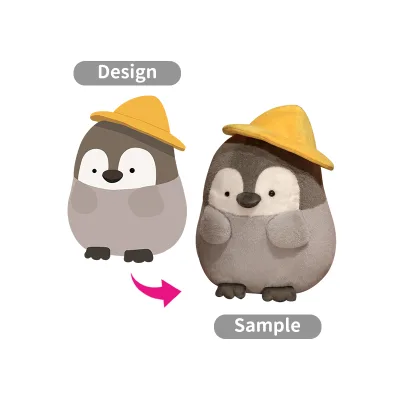
Yes, customization is available. Many of these plush products support custom modeling sources, customer logos on labels or hang tags, and OEM or ODM services. You typically provide a reference image or sample, and the factory produces a pre-production sample for approval before mass production begins. Weight, size, fabric, and packaging can also be specified according to your project requirements.
How long does sampling and production take?
Sample production generally takes 3 to 7 working days, with some listings stating 5-7 or 7-10 working days. After sample approval, mass production takes about 20 days, or around 25 to 35 working days depending on order quantity. Plan your procurement schedule around these ranges, and confirm exact timing with the supplier, since larger or highly customized orders may extend delivery.
Which safety certifications do these plush toys have?
The listings reference CE, EN71, ASTM, CPSIA, and Reach compliance, along with BSCI and ISO9001 certificates for factory quality systems. These certifications indicate the products are tested for children's toy safety and that manufacturing follows audited processes. Always request current, product-specific test reports for your destination market, because certification scope can differ between individual designs and materials used.
How are the stuffed animals packed for shipping?
Packing is typically one piece in a polybag with 40 pieces per carton, and some listings specify 30 to 40 pieces per carton with a carton size of 52x48x62cm. Boxed packing is also available on certain products. If you need retail-ready packaging, hang tags, or custom carton markings, discuss these options with the supplier before production starts.
Where are these Cute Fun Stuffed Animal products shipped from?
These plush products originate from China, with listings pointing to Guangdong province and loading ports at Shenzhen or Guangzhou. Both ports handle international sea and air freight, so freight forwarders can easily arrange shipment worldwide. Main markets are described as global, and the products are suitable for universal use as gifts, promotions, and kids toys.