Source Deep Core Sampling Drilling Rig for exploration, mining, and construction
Find 30 Deep Core Sampling Drilling Rig options from verified Chinese manufacturers. Compare specifications like drilling depth, motor type, and certification to select the right equipment for geological exploration and rock core drilling projects.
Key considerations
Products List


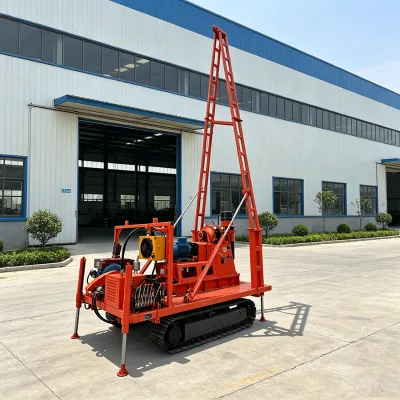

600m 800m Exploration Drilling Rig for Deep Rock and Core Sampling Machine
$40800.00 - $48800.00
MOQ: 1


Best Quality Manufacture 600 Meters Portable Core Sample Drilling Rig
$5000.00 - $9500.00
MOQ: 1 Pieces


Drilling Rig Equipment Soni C Drilling Rig Geological Investigation Core Sample
$351420.00 - $355710.00
MOQ: 5

Full Hydraulic Top Drive Mining Sample Investigation Core Drill Rig (JDL-5)
$28000.00 - $32000.00
MOQ: 1 Pieces

Core Sampling Vertical Drilling Hydraulic Diamond Horizontal Rig Machine
$8999.00 - $13000.00
MOQ: 1 Sets
Comprehensive Sourcing Guide
Deep Core Sampling Drilling Rig Sourcing Guide
Procuring a Deep Core Sampling Drilling Rig requires a precise understanding of the equipment's intended geological application and the specific operational constraints of the site. These machines are engineered primarily for geological exploration and rock core drilling, where the integrity of the retrieved sample is as critical as the depth achieved. Buyers must distinguish between general drilling units and specialized rigs capable of handling expandable drilling angles ranging from 0° to 90°, including vertical, horizontal, and upward orientations. The selection process hinges on matching the rig's mechanical capabilities, such as fully hydraulic top drive force heads, to the specific rock formations and depth requirements of the project.
The market for these rigs presents a wide spectrum of configurations, from compact units suitable for single-item sampling to heavy-duty crawler-mounted systems designed for maximum efficiency. When evaluating listings, buyers should note that observed price points vary significantly, reflecting differences in motor types, drilling depths, and structural specifications. It is essential to verify whether the listed unit is a new condition machine with available customization options or a standard model. The decision to proceed with a specific unit often depends on the compatibility of the drill pipe specifications, such as Pq, Htw, Ntw, and Btw, with the existing infrastructure of the exploration team.
Product Scope and Observed Listing Signals
When analyzing product listings, buyers must scrutinize the specific model identifiers and physical dimensions to ensure the rig fits the logistical constraints of the deployment site. Observed models such as the ROCK-800, ROCK-1300, UMRR-400, and GXY-260 indicate distinct operational profiles, with some units designed for depths up to 500 meters while others are optimized for ranges between 0 and 260 meters. The physical footprint is a critical signal; for instance, certain specifications list standard dimensions around 430018002550mm, while others may be packed in wooden boxes or container bulk carriers. Understanding these physical variances is the first step in determining if the rig can be transported to the target location without requiring specialized heavy-lift logistics.
The listing signals also reveal the intended drilling methodology and the type of core recovery system employed. Buyers should look for explicit mentions of rotary drilling ways and fully hydraulic top drive force head types, which are indicative of high drilling efficiency and stability in hard rock formations. The presence of diamond bits and specific drill hole diameters, such as 150-200mm or 250-300mm, serves as a direct indicator of the rig's capacity to retrieve specific core sizes. Furthermore, the observation of motor types, whether AC or DC, and power supply requirements like 220V 50hz, helps in assessing the energy infrastructure needed to operate the rig on-site.
Technical Specifications to Verify
Verifying the technical specifications of a drilling rig is paramount to ensuring it can withstand the mechanical stresses of deep core sampling. Buyers must confirm the maximum drilling depth capabilities, which can range from 200 meters to over 500 meters depending on the model, and cross-reference this with the applicable drill pipe lengths of 1.5 meters or 3 meters. The drilling angle is another critical parameter; while some units offer a standard range of 45° to 90°, others may be expandable to cover the full 0° to 360° spectrum, allowing for vertical, horizontal, and inclined drilling. Ensuring the rig's angle capability matches the geological survey requirements prevents costly operational delays and equipment damage.
The compatibility of the drilling tool and the core barrel system must also be rigorously checked against the project's sampling needs. Specifications often list applicable drilling tools in lengths of 1.5 or 3 meters, and the drill hole diameter must align with the core recovery goals, typically falling within the 150mm to 300mm range. Buyers should verify the accuracy class, which may be listed as Class 1, to ensure the precision required for geological analysis. Additionally, the weight of the unit, observed at 800kg for certain models, impacts the mobility and foundation requirements, necessitating a clear assessment of whether the site can support the rig's mass or if a crawler type is required for terrain adaptability.
Compliance and Safety Documentation
Compliance with international safety and quality standards is a non-negotiable aspect of sourcing deep core sampling drilling rigs. The presence of certifications such as ISO 9001 and CE marks indicates that the manufacturer adheres to specific quality management systems and safety directives. However, buyers must be vigilant as some listings may display redundant or concatenated certification strings, such as "ISO 9001:ISO 9001:CE," which requires clarification to ensure the validity of the documentation. It is essential to request original certificates and verify their current status with the issuing bodies to confirm that the equipment meets the regulatory requirements of the destination country.
Safety documentation should also cover the operational protocols and the integrity of the core components used in the rig. While specific test results are not always provided in initial listings, buyers should demand detailed manuals that outline the safety procedures for handling the hydraulic systems and the motor components. The warranty period, typically observed as one year, serves as a baseline for the manufacturer's confidence in the product's durability. Procurement teams must ensure that the warranty terms explicitly cover the core components and that the supplier provides clear guidelines for maintenance and emergency shutdown procedures to mitigate on-site risks.
Cost Drivers and Commercial Terms
The cost of a Deep Core Sampling Drilling Rig is influenced by a complex interplay of technical specifications, customization options, and commercial terms. The observed price range of 1550 to 355,710 USD reflects the vast difference between basic models and high-specification units with features like flexible manufacturing and high drilling efficiency. Buyers should analyze whether the higher price points correlate with tangible benefits, such as a fully hydraulic top drive, expandable drilling angles, or specific motor types, rather than paying for unnecessary features. Understanding the value proposition of each price tier helps in allocating the budget effectively to meet the project's technical requirements without overspending.
Commercial terms, including the Minimum Order Quantity (MOQ) and payment conditions, play a significant role in the final procurement decision. While some listings indicate an MOQ of 1, allowing for single-item purchases, others may have different thresholds that affect the unit economics. The selling units are often listed as single items, but buyers must clarify if bulk discounts are available for multiple units. Additionally, the packing method, whether in a wooden box or container bulk carrier, impacts shipping costs and insurance premiums. Buyers should negotiate terms that account for these logistical variables to ensure the total landed cost aligns with the project budget.
Supplier Qualification and Quality Control
Evaluating supplier qualification involves more than just checking for a "Made in China" origin; it requires a deep dive into the manufacturer's production capabilities and quality control processes. The availability of OEM services and customization options suggests that the supplier has the flexibility to adapt the rig to specific client needs, but this must be backed by a robust quality assurance framework. Buyers should verify the supplier's adherence to standard specifications and their ability to maintain consistency across production batches. The presence of a "Flexible Manufacturing" selling point indicates a capacity for rapid adaptation, but this must be validated through site audits or third-party quality reports.
Quality control measures should extend to the inspection of core components and the final assembly of the rig. Buyers must ensure that the supplier has a documented process for testing the motor, hydraulic systems, and structural integrity before shipment. The warranty of one year is a standard offering, but the scope of coverage and the responsiveness of the after-sales support team are critical factors in the supplier's overall reliability. Procurement teams should request references from previous clients who have used similar models, such as the ROCK or GXY series, to gauge the supplier's track record in delivering equipment that meets the rigorous demands of geological exploration.
Long-Term Procurement Checks
Establishing a long-term procurement strategy for deep core sampling drilling rigs requires a focus on sustainability, maintenance support, and parts availability. Buyers should assess the supplier's ability to provide a steady supply of spare parts, such as diamond bits and drill pipes, to minimize downtime during extended exploration projects. The standard specifications and model numbers, like UMRR-400 or GXY-260, should be used as a baseline for future ordering to ensure compatibility and interchangeability of components. A reliable supplier will offer a comprehensive support package that includes technical training and troubleshooting assistance, ensuring that the rig remains operational throughout its lifecycle.
Finally, buyers must plan for the eventual decommissioning or upgrade of the equipment by considering the standard specifications and the adaptability of the rig to new technologies. The ability to customize the rig and the availability of different drilling angles and depths suggest that the equipment can be modified to suit evolving project requirements. However, this flexibility must be balanced with the long-term cost of ownership, including energy consumption and maintenance expenses. By maintaining a clear record of the rig's specifications and performance history, procurement teams can make informed decisions about future upgrades or replacements, ensuring that the investment continues to deliver value over time.
FAQs
What certifications do deep core sampling drilling rigs typically have?
Most deep core sampling drilling rigs carry ISO 9001 and CE certifications. These standards ensure quality management and safety compliance for international buyers. The listed products confirm these certifications are standard for new equipment. Buyers should verify specific documentation for their target market regulations before procurement.
Can these rigs be customized for specific drilling requirements?
Yes, customization is available for many deep core sampling drilling rigs. Manufacturers accept OEM requests to tailor specifications like drill pipe size or motor type. This flexibility allows adaptation to unique geological exploration needs. Buyers should specify their exact requirements during the inquiry phase to ensure the final product matches their operational goals.
What is the typical MOQ for purchasing a hydraulic core drilling rig?
The minimum order quantity is typically one unit for these machines. Buyers can source single items without needing to meet bulk thresholds. This low MOQ supports small-scale geological exploration projects. It allows companies to test equipment performance before committing to larger fleet acquisitions for extensive mining or survey operations.
Which drill hole diameters are supported by these core drilling rigs?
These rigs support various drill hole diameters, including 150-200mm and 250-300mm ranges. Specific models may accommodate standard pipe specifications like Pq, Htw, or Ntw. The applicable drilling tools often range from 1.5 to 3 meters. Buyers must match the rig diameter to their core barrel and sampling requirements for efficient operation.
What is the maximum drilling depth for a standard hydraulic core drilling rig?
Maximum drilling depths vary by model, with some reaching up to 500 meters. Other specific models may offer depths between 0-260 meters. The drilling way is typically rotary, using fully hydraulic top drive force. Buyers should select the model that aligns with their specific depth requirements for geological exploration or rock core sampling tasks.