Source Desktop HEPA Air Purifier with Negative Ion for home, office, and medical
Find 30 verified options for a Desktop HEPA Air Purifier with Negative Ion suitable for home, office, and medical environments. Buyers can compare specifications like CADR, filtration types, and certifications to select the right unit for their needs.
Key considerations
Products List


Personal Desktop Electronic Air Purifier Intelligent Air Purifier with True HEPA and Filter
$180.00 - $200.00
MOQ: 500 Pieces


$260.00 - $350.00
MOQ: 1 Pieces


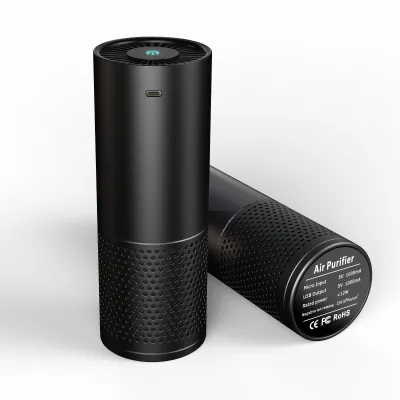
Comprehensive Sanitizing Air Purifier Provides Dead Angle Free Purification
$299.00 - $305.00
MOQ: 3000 Pieces

Comprehensive Sourcing Guide
Strategic Sourcing Guide for Desktop HEPA Air Purifiers with Negative Ion Technology
Understanding Core Technical Specifications and Performance Metrics
When sourcing desktop HEPA air purifiers with negative ion functionality, buyers must first distinguish between the specific technical architectures available in the current market. The product landscape reveals distinct operational principles that directly impact filtration efficiency and user safety. A primary observation in the current supply base is the variation in operating principles, ranging from purely passive systems to active and combined active-passive configurations. Passive systems rely on natural air circulation or simple fan-driven intake, whereas active systems often integrate ionization or UV technologies to enhance particle capture.
The filtration medium is a critical differentiator. While the core keyword specifies HEPA filters, the actual product data indicates that many units utilize a composite filtration approach, such as a Pre-Filter combined with Carbon and HEPA layers. This multi-stage design is essential for addressing both particulate matter and gaseous pollutants. The "Type" attribute confirms the prevalence of HEPA filters, but the "Purifying Technology" field also lists Activated Carbon as a standalone or complementary method. Buyers should verify that the specific unit under consideration includes a true HEPA grade filter capable of capturing fine particulates, rather than relying solely on carbon adsorption.
Negative ion generation is another pivotal specification. The observed data shows a wide variance in anion density, with some units reporting over 4,000,000 pcs/m³, while others operate at 2,500,000 pcs/m³ or 2,000,000 pcs/m³. This metric is not merely a marketing figure but a functional parameter that influences the coagulation of airborne particles. When evaluating desktop units, procurement teams must request specific test reports for anion density to ensure the unit meets the intended air quality goals. Furthermore, the "Other" attributes often include "Release Anion," confirming the active emission of ions, which should be cross-referenced with the "Operating Principle" to understand the synergy between ionization and filtration.
Compliance Framework and Certification Verification
Navigating the regulatory landscape for air purification equipment requires rigorous verification of certifications, as these documents serve as the primary proof of safety and quality. The supplied product data highlights a diverse array of certifications, including ISO, CQC, CE, RoHS, ETL, and UL. The presence of these marks indicates that the manufacturer has undergone specific testing protocols, but buyers must not assume that every listed product satisfies all these standards simultaneously. Instead, the procurement strategy should focus on matching the required certifications to the target market.
For instance, the European market typically mandates CE and RoHS compliance to ensure electromagnetic compatibility and restriction of hazardous substances. The North American market often requires ETL or UL certification, which are critical for electrical safety and fire risk mitigation. The data shows that some models carry the full suite of ISO, CQC, CE, RoHS, and UL, while others may only list CE or CQC. It is imperative for buyers to request the specific certificate documents for the exact model number they intend to purchase, rather than relying on a general supplier claim. The "CQC" mark, for example, is specific to the Chinese market, while "UL" and "ETL" are recognized in North America.
Beyond safety certifications, the structural and material standards must also be scrutinized. The "prod_standard" attribute lists specific dimensions such as 400230610mm or 479269710mm, which are crucial for desktop integration. Buyers must verify that the physical footprint of the unit aligns with their spatial constraints. Additionally, the "Housing Material" is identified as ABS in some records, while others specify Stainless Steel. This distinction affects the durability, aesthetic finish, and resistance to corrosion, which are vital for both home and medical environments. The "Material" attribute also notes "Stainless Steel" for certain units, suggesting a higher durability tier suitable for industrial or medical applications where hygiene and cleanability are paramount.
Cost Drivers and Economic Factors in Procurement
The economic landscape for desktop HEPA air purifiers is influenced by a complex interplay of factors, including certification breadth, material composition, and production volume. The observed price range in the market spans from $22.36 to $350, a significant variance that reflects differences in technology, build quality, and brand positioning. The lower end of this spectrum likely corresponds to units with basic HEPA filtration and minimal additional features, while the upper end may include advanced models with UV light, LCD displays, and higher anion densities.
Minimum Order Quantity (MOQ) is another critical cost driver. The data indicates an MOQ range from 1 to 3000 units. This flexibility allows buyers to scale their procurement strategy based on immediate needs. A single-unit purchase might be suitable for prototyping or small-scale testing, whereas an order of 3000 units suggests a bulk procurement for large-scale distribution or institutional deployment. The "prod_packing" attribute provides insight into logistics costs; some units are packed as "1PC/CTN," while others use "1PCS/Color Box" with carton counts of 165 units per 20-foot container. Understanding these packing configurations is essential for calculating landed costs, including shipping and warehousing expenses.
The "Rated Power" of the units, observed at 85W in some records, also impacts long-term operational costs. Higher power consumption may lead to increased electricity bills, particularly for units intended for 24/7 operation in medical or industrial settings. Buyers should evaluate the energy efficiency of the unit alongside its filtration performance. The "Electric Tension" of 220V is a standard specification, but compatibility with local power grids must be confirmed to avoid the need for additional transformers or adapters. Additionally, the "Timer" function, with a 12-hour setting, offers energy-saving capabilities that can reduce operational costs by allowing the unit to run only when necessary.
Typical Applications and Usage Scenarios
The versatility of desktop HEPA air purifiers with negative ion technology is evident in the diverse "Usage" categories identified in the product data. These units are designed for a wide range of environments, including Home, Medical, and Industry applications. The "Application Area" attribute further refines these use cases, with some units optimized for spaces between 41-60m² and others for areas exceeding 61m². This variation suggests that while the keyword specifies "desktop," the actual performance capabilities of these units can extend to larger rooms or specific zones within a facility.
In home environments, the "Structure" attribute often points to "Portable" or "Floor Standing" designs, offering flexibility in placement. The inclusion of features like "Child Lock" and "Power off Once Cover Open" indicates a focus on safety and user-friendly operation, which are critical for residential use. The "Sensor" attribute, specifically "Pm2.5," highlights the unit's ability to monitor and respond to air quality in real-time, a feature highly valued in domestic settings.
For medical applications, the requirements shift towards higher hygiene standards and reliability. The "Usage" category explicitly lists "Medical," and the "Structure" may vary to accommodate sterile environments. The "Operating Principle" of "Active" or "Active + Passive" systems, combined with "UV Light" and "Anion" release, suggests a robust approach to disinfection and pathogen reduction. The "Type" attribute also mentions "Lightwave Disinfection" for certain models, reinforcing their suitability for medical facilities where air sterilization is a priority.
Industrial applications demand durability and high-volume air cleaning. The "Material" attribute of "Stainless Steel" and the "Structure" of "Floor Standing" align with the rugged requirements of industrial settings. The "Cadr" (Clean Air Delivery Rate) values, observed at 600m³/H and 800m³/H, indicate the unit's capacity to handle larger air volumes, making them suitable for workshops, laboratories, or large office spaces. The "Theory" attribute, "Air Cleaning Equipment," underscores the professional-grade nature of these units in industrial contexts.
Supplier Evaluation and Quality Assurance Protocols
Selecting the right supplier requires a comprehensive evaluation of their capabilities, quality control systems, and track record. The "prod_origin" attribute consistently lists "Made in China" or "China," indicating the primary manufacturing hub for these products. While this provides access to a vast supply chain, it necessitates rigorous due diligence to ensure quality consistency. Buyers should verify the supplier's adherence to international standards, such as ISO 9001:2015, which is a trusted background standard for quality management systems, even if not explicitly listed in the product attributes.
Quality control should extend beyond the final product inspection to include raw material verification and process monitoring. The "Material" and "Housing Material" attributes suggest that the supplier must have strict controls over the sourcing of ABS plastic or stainless steel. Buyers should request material safety data sheets (MSDS) to confirm that the materials are free from harmful substances, aligning with RoHS and CE requirements. Additionally, the "Purifying Technology" and "Filter" attributes require verification of the actual filter grade and carbon quality to ensure they meet the claimed performance levels.
The "prod_packing" details, such as "1 Color Box/Carton" or "165PCS/20gp," offer insights into the supplier's logistics capabilities. A reliable supplier should demonstrate efficient packing and shipping practices to minimize damage during transit. The "Standard" dimensions provided in the data, such as 400400669MM, should be used to validate the supplier's ability to produce units that meet precise specifications. Buyers should also assess the supplier's responsiveness to customization requests, as the "Customization" attribute is marked as "Available," indicating a potential for tailored solutions.
Long-Term Procurement Considerations and Maintenance
Sourcing desktop HEPA air purifiers is not a one-time transaction but a long-term commitment that involves ongoing maintenance and support. The "Filter" composition, typically a combination of Pre-Filter, Carbon, and HEPA, implies a need for regular replacement to maintain optimal performance. Buyers should inquire about the availability and cost of replacement filters, as well as the recommended replacement intervals. The "Timer" and "Sensor" features suggest that the unit may have automated maintenance alerts, which can help streamline the replacement process.
The "Operating Principle" and "Anion Density" also have long-term implications. Over time, the efficiency of the negative ion generator may degrade, and the supplier should provide data on the expected lifespan of these components. The "UV Light" feature, if present, also requires periodic bulb replacement, which adds to the total cost of ownership. Buyers should evaluate the supplier's after-sales support, including warranty terms and technical assistance, to ensure that any issues can be resolved promptly.
Furthermore, the "Application Area" and "Cadr" values should be periodically re-evaluated as the usage environment changes. If the unit is deployed in a medical facility, the air quality requirements may increase over time, necessitating a review of the unit's performance. The "Protection Function" attributes, such as "Child Lock" and "Power off Once Cover Open," should be tested regularly to ensure they remain functional and safe. Finally, the "Standard" dimensions and "Structure" should be monitored to ensure the unit continues to fit the intended space and meets the evolving needs of the facility.
Comparative Analysis of Key Product Attributes
To facilitate informed decision-making, the following table summarizes the key attributes observed in the product data, highlighting the variations that buyers should consider during the sourcing process.
| Attribute Category | Observed Variations | Sourcing Implication |
|---|---|---|
| Operating Principle | Active, Passive, Active + Passive | Select based on required air cleaning speed and ionization needs. |
| Anion Density | >4,000,000, 2,500,000, 2,000,000 pcs/m³ | Higher density may indicate stronger particle coagulation; verify test data. |
| Certifications | ISO, CQC, CE, RoHS, ETL, UL | Match certifications to target market regulations (e.g., UL for US, CE for EU). |
| Material | ABS, Stainless Steel | ABS for cost-effective home use; Stainless Steel for medical/industrial durability. |
| Application Area | 41-60m², >61m² | Ensure unit capacity matches the room size for effective air cleaning. |
| Structure | Portable, Floor Standing | Choose based on mobility needs and available floor space. |
| Filter Type | HEPA, Pre+Carbon+HEPA | Multi-stage filters offer broader pollutant removal; verify HEPA grade. |
| Additional Features | UV Light, LCD Display, Sensor, Timer | Evaluate necessity of advanced features for specific use cases. |
This comparative analysis underscores the importance of aligning product specifications with specific procurement goals. By carefully evaluating these attributes, buyers can ensure that the selected desktop HEPA air purifiers with negative ion technology meet their performance, safety, and economic requirements. The diversity in the market offers a wide range of options, but success depends on rigorous verification and a clear understanding of the intended application.
FAQs
What certifications are available for these units?
Available certifications include ISO, CQC, CE, RoHS, ETL, and UL. Buyers must verify specific certificates for their target market, as not every unit holds all marks simultaneously. European markets typically require CE and RoHS, while North America often mandates ETL or UL for electrical safety.
How does the anion density vary across models?
Anion density varies significantly, with observed values ranging from 2,000,000 to over 4,000,000 pcs/m³. This metric influences particle coagulation and should be verified via test reports. Units with higher density often feature active operating principles combined with filtration for enhanced air cleaning.
Which materials are used for the housing?
Housing materials include ABS plastic and stainless steel. ABS is common for home units, while stainless steel offers higher durability for medical or industrial applications. The choice affects corrosion resistance and cleanability, which are critical for sterile environments.
Can the units be customized for specific needs?
Customization is available for these desktop air purifiers. Buyers can request tailored solutions, but specific details must be confirmed with the supplier. This flexibility supports unique requirements for different application areas ranging from 41 to over 61 square meters.
What is the typical MOQ for these products?
The minimum order quantity ranges from 1 to 3000 units. This allows for small-scale prototyping or large bulk procurement. Buyers should consider packing configurations like 1PC/CTN or 165 units per container when calculating logistics costs for their specific order size.
How is the filtration technology structured?
Filtration typically combines a Pre-Filter, Carbon, and HEPA layers. Some units also utilize Activated Carbon as a standalone or complementary method. This multi-stage design addresses both particulate matter and gaseous pollutants effectively for various usage scenarios.