Source Desktop High Fidelity Condenser Microphone for Meeting, Recording, Voice
Find 30 desktop high fidelity condenser microphones from verified suppliers. Compare models like SF-970 and Q8 with varying directivity and transmission types to meet your specific audio needs.
Key considerations
Products List


Professional Studio Condenser Microphone for Live Streaming and Recording
$17.50 - $17.80
MOQ: 1000 Sets


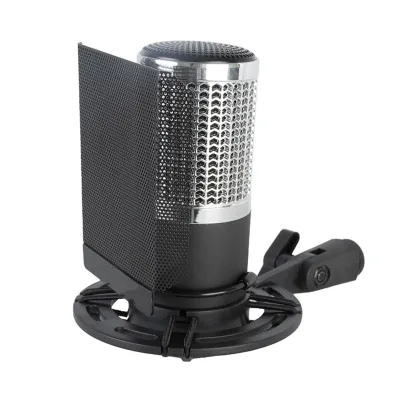
48V Large-Diaphragm Full-Metal Condenser Microphone Professional Wired Microphone
$22.00 - $24.00
MOQ: 2 pieces


Comprehensive Sourcing Guide
Strategic Sourcing Guide for Desktop High Fidelity Condenser Microphones
Understanding Core Transducer Principles and Directivity Patterns
When sourcing a Desktop High Fidelity Condenser Microphone, the primary technical differentiator lies in the transducer principle and the resulting directivity pattern. Unlike dynamic microphones which rely on electromagnetic induction, high-fidelity desktop units typically utilize a condenser mechanism. This design requires a charged capacitor where a thin diaphragm acts as one plate, offering superior sensitivity and a wider frequency response essential for capturing nuanced audio details in a studio or broadcast environment. The supplied product data confirms the prevalence of the condenser principle in this category, with specific observations noting a "Pressure Type" sound field force, which is characteristic of high-sensitivity capsule designs used for capturing subtle acoustic events.
Directivity is the second critical variable. Desktop microphones are rarely omnidirectional; they are engineered to isolate the speaker from ambient room noise. The observed market data presents a dichotomy in directivity patterns, listing both "Omni-direction" and "Uni-direction" options. For a high-fidelity desktop application, a unidirectional pattern (such as cardioid or super-cardioid) is generally preferred to reject background noise from the sides and rear. However, buyers must verify the specific model's pattern, as some units in the supply chain may offer switchable patterns or are optimized for specific room acoustics. The "Point Pattern" attribute in the data explicitly lists "Omni-Directional," indicating that while some units in the broader category are omnidirectional, the high-fidelity segment often requires a specific unidirectional configuration to meet professional standards.
Frequency Response and Sensitivity Specifications
The fidelity of a desktop microphone is mathematically defined by its frequency response and sensitivity. High-fidelity units are expected to cover the full range of human hearing, typically spanning 20Hz to 20kHz. The provided product facts reveal a range of frequency responses in the current market, from 50Hz-16kHz to the full 20Hz-20kHz spectrum. For a buyer seeking "high fidelity," the 20Hz-20kHz range is the baseline expectation, as it ensures the reproduction of deep bass and crisp high frequencies without coloration. Units listed with a 50Hz lower limit may be suitable for voice-only applications but would lack the full fidelity required for music recording or high-end voiceovers.
Sensitivity, measured in decibels (dB), indicates how effectively the microphone converts sound pressure into an electrical signal. The data shows a wide variance in sensitivity ratings, including -30±3dB, -45±3dB, and -45dB±3dB. A higher sensitivity (a less negative number, though often expressed as a magnitude) allows the microphone to capture quieter sounds without requiring excessive pre-amplification gain, which can introduce noise. Buyers should verify that the specific model's sensitivity aligns with their intended gain structure. For instance, a sensitivity of -30dB suggests a very high output, potentially requiring attenuation in loud environments, whereas -45dB is a standard sensitivity for professional condenser microphones. The data also notes a "16mm Condenser" mic unit size, which often correlates with a larger diaphragm and potentially better low-frequency response compared to smaller capsules.
Digital Interfaces and Signal Transmission Protocols
The evolution of desktop microphones has introduced digital interfaces that bypass traditional analog-to-digital conversion steps within the computer, often resulting in higher signal integrity. The observed product attributes highlight a mix of transmission types, including "Wireless," "Wired," and specific digital specifications like "16bits, 48kHz" and "24bits, 96kHz" sampling rates. A true high-fidelity desktop solution often favors wired connections to ensure zero latency and maximum stability, though wireless options exist for flexible setups.
When evaluating digital specifications, the bit depth and sampling rate are paramount. The data indicates the availability of 24-bit/96kHz capabilities, which is a significant step above the standard 16-bit/48kHz CD quality. For professional recording, the 24-bit depth provides a greater dynamic range, reducing quantization noise and allowing for more headroom during mixing. Buyers must confirm if the microphone outputs via USB directly or requires an external interface. The presence of a "3.5mm Plug" in the data suggests that many units in this category still rely on analog connections, requiring a separate audio interface for digital conversion. Conversely, models listing specific sampling rates imply built-in digital processing. The "Power Supply" attribute notes "USB" for some units, confirming that many modern desktop condensers are bus-powered, eliminating the need for external power adapters.
Compliance, Certification, and Manufacturing Standards
In the B2B procurement of electronic audio equipment, compliance and certification are non-negotiable for market access and liability protection. The supplied facts explicitly mention "ISO9001, RoHS Reach" certifications. ISO9001 indicates that the manufacturing facility adheres to international quality management standards, ensuring consistent production processes. RoHS (Restriction of Hazardous Substances) and Reach compliance are critical for environmental safety, restricting the use of lead, mercury, and other harmful materials in the microphone's construction.
Packaging and physical standards also play a role in logistics and product presentation. The data lists various packing types, including "Gift Box," "Color Box," and "Cartoon" (cardboard), alongside specific standard dimensions like "19.5x19x11.7CM" and "42x20x8.5CM." These dimensions are vital for calculating shipping costs and warehouse storage requirements. Buyers should verify that the packaging standard matches their retail or distribution needs, as "Gift Box" implies a premium presentation suitable for direct-to-consumer sales, while "Cartoon" packing is more typical for bulk wholesale. The origin of the products is listed as "Shenzhen" and "China," which are major hubs for electronics manufacturing, but buyers must ensure that the specific factory holds the claimed certifications rather than assuming they apply to the entire region.
Application Scenarios and Usage Context
The versatility of desktop condenser microphones is evident in the diverse applications listed in the product data, ranging from "Meeting, Amplify, Measurement, Voice, Music, Recording" to specific subsets like "Voice, Recording" and "Meeting, Music, Recording." This breadth indicates that while the core technology is consistent, the tuning and accessories may vary to suit specific use cases.
For meeting and voice applications, the priority is speech intelligibility and noise rejection. A unidirectional pattern with a frequency response tailored to the human voice (often emphasizing the mid-range) is ideal. For music recording and measurement, the full 20Hz-20kHz response and high sensitivity are critical to capture the nuances of instruments and ambient soundscapes. The "Mono" sound channel attribute in the data suggests that many of these desktop units are single-channel devices, which is standard for most desktop microphones. However, buyers seeking stereo recording capabilities must verify if the product supports dual capsules or stereo output, as the observed data points to mono configurations. The "Style" attribute lists "Handheld Microphone" and "Headset Microphone" alongside desktop applications, indicating that the term "desktop microphone" in this context may refer to the form factor of the stand or the intended desk usage, rather than a strictly fixed mount, requiring careful visual verification of the product listing.
Supplier Evaluation and Quality Control Metrics
Evaluating suppliers for high-fidelity audio equipment requires a rigorous approach to quality control and supply chain transparency. The observed "Output Impedance" ranges from 50-1000Ω to 1000-20000Ω, and "Impedance" values like "150ohm" and "≤2.2kΩ" are listed. These electrical characteristics must match the input impedance of the connected audio interface or mixer to prevent signal loss and frequency response anomalies. A mismatch in impedance can lead to a "muddy" sound or a significant drop in volume.
Customization is a key factor in the B2B landscape, with the data confirming that "Customization: Available." This allows buyers to request specific branding, packaging, or even minor technical modifications to meet their brand's requirements. However, buyers must be cautious when relying on customization claims; they should request samples to verify that the customization process does not compromise the acoustic integrity of the microphone. The "Brand" attribute lists "Fce," but buyers should not assume this is the only or primary brand available. Instead, they should focus on the factory's ability to maintain the technical specifications (such as the 24-bit/96kHz capability) across different branding agreements.
Cost Drivers and Long-Term Procurement Strategy
The cost of a desktop high-fidelity condenser microphone is driven by several factors, including the transducer quality, digital conversion chips, build materials, and certification compliance. The observed price range of 1-9999 USD reflects the vast disparity between entry-level consumer units and professional-grade studio equipment. The Minimum Order Quantity (MOQ) range of 1-1000 suggests flexibility for both small startups and large distributors.
For long-term procurement, buyers should prioritize suppliers who offer consistent technical specifications rather than those with the lowest unit price. The variance in frequency response and sensitivity in the market data highlights the risk of purchasing "high fidelity" units that do not meet professional standards. Buyers should establish a clear specification sheet based on the 20Hz-20kHz response, 24-bit depth, and unidirectional pattern requirements before engaging suppliers. Additionally, the lead time and production capacity, while not explicitly detailed in the facts, are critical for inventory management. Buyers should verify the supplier's ability to scale production if demand increases, ensuring that the "ISO9001" quality standards are maintained during volume production.
Summary of Technical Verification Checklist
To ensure the acquisition of a genuine high-fidelity desktop condenser microphone, buyers should utilize the following verification checklist based on the available market data:
| Specification | Target Requirement | Market Observation to Verify |
|---|---|---|
| Transducer Principle | Condenser | Confirm "Condenser Microphone" and "Pressure Type" |
| Frequency Response | 20Hz - 20kHz | Check for 20Hz-20kHz vs. 50Hz-16kHz limitations |
| Directivity | Unidirectional | Verify "Uni-direction" or Cardioid pattern |
| Digital Resolution | 24-bit / 96kHz | Confirm "24bits, 96kHz" capability over 16-bit |
| Impedance | Match Interface | Verify "150ohm" or "≤2.2kΩ" compatibility |
| Certification | ISO9001, RoHS | Confirm specific factory certifications |
| Power Supply | USB or Phantom | Check for "USB" or external power requirements |
| Packing | Retail Ready | Verify "Gift Box" or "Color Box" for branding |
By adhering to these technical and compliance criteria, buyers can navigate the complex landscape of desktop microphones, ensuring they procure equipment that delivers the high fidelity and reliability required for professional audio applications. The availability of customization and the diverse range of specifications in the market offer opportunities for tailored solutions, provided that the core acoustic and electrical standards are rigorously validated before finalizing any procurement agreement.
FAQs
What transducer principle do these microphones use?
These units primarily utilize the condenser microphone principle. The data confirms a pressure type sound field force, which is characteristic of high-sensitivity capsule designs used for capturing subtle acoustic events in studio environments.
Which frequency response range is available for high fidelity?
Available ranges span from 50Hz-16kHz to the full 20Hz-20kHz spectrum. For true high fidelity, the 20Hz-20kHz range is the baseline expectation to ensure reproduction of deep bass and crisp high frequencies without coloration.
Can I find models with 24-bit digital resolution?
Yes, some models support 24-bit depth at 96kHz sampling rates. This provides greater dynamic range and reduces quantization noise compared to standard 16-bit/48kHz units, making them suitable for professional recording applications.
What directivity patterns are offered in this category?
The market offers both omnidirectional and unidirectional patterns. While some units are omnidirectional, professional desktop applications often require unidirectional patterns to isolate the speaker from ambient room noise and reject background interference.
Are these microphones available with ISO9001 certification?
Yes, specific models carry ISO9001 and RoHS Reach certifications. This indicates the manufacturing facility adheres to international quality management standards and restricts hazardous substances in the microphone construction for environmental safety.
How does the signal transmission vary across models?
Transmission methods include wired, wireless, and USB power supply options. While many units use a 3.5mm plug for analog connections, others feature built-in digital processing with USB power to eliminate external adapters.