Source Diesel Engine Gear Pump for Oil Transfer, Lubrication, and Fuel Systems
Find 30 Diesel Engine Gear Pump options with varying flow rates and materials like cast iron or stainless steel. Buyers can compare models such as KCB and 2CY for crude oil, diesel, or lube oil applications.
Key considerations
Products List


$260.00 - $280.00
MOQ: 1 Pieces


$150.00 - $180.00
MOQ: 1 Piece/Pieces
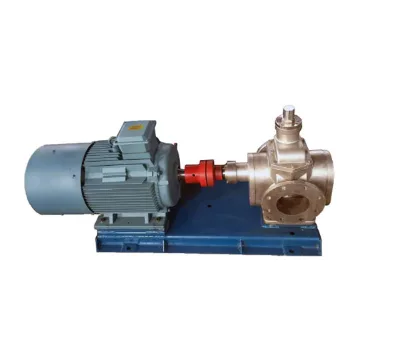


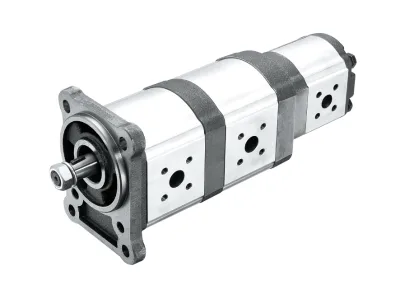


Comprehensive Sourcing Guide
Strategic Sourcing Guide for Diesel Engine Gear Pumps
Understanding Technical Specifications and Variants
When sourcing a Diesel Engine Gear Pump, buyers must first navigate the complex landscape of technical specifications, as the term "Diesel Engine Gear Pump" often encompasses distinct mechanical configurations rather than a single product type. The supplied product data reveals a significant divergence in design philosophies, ranging from external engaged involute gears to internal engaged cycloid designs. The "Tooth Curve" attribute is a critical differentiator; some units utilize an "Involute" profile, which is standard for general-purpose fluid transfer, while others employ a "Cycloid" curve, often preferred for specific high-torque or compact applications. Similarly, the "Mesh Form" varies between "External Engaged" and "Internal Engaged" configurations. External engagement typically offers robustness for high-pressure applications, whereas internal engagement may provide smoother flow characteristics suitable for sensitive media.
The "Tooth Flank" geometry further refines the selection criteria. Observations indicate the availability of "Skew Tooth" and "Herringbone Tooth" variants. Skew teeth are often designed to reduce noise and vibration during operation, a crucial factor in diesel engine environments where acoustic signatures matter. Herringbone teeth, conversely, are engineered to eliminate axial thrust forces, enhancing the longevity of the pump bearings under heavy load. The "Type" classification provided in the data points to a "Normal Line Gear Pump," suggesting a specific alignment of gear axes that impacts the pump's efficiency and mounting requirements. Furthermore, the "Power" source is listed as both "Electric" and "Hydraulic," indicating that while the pump is driven by a diesel engine, the pump itself may be part of a hydraulic system or an electrically actuated transfer unit. The "Medium" compatibility is extensive, covering "Crude Oil," "Diesel Oil," "Lube Oil," and "Gasoline," which necessitates careful material selection to prevent corrosion or degradation.
Compliance, Certification, and International Standards
Navigating the regulatory landscape is paramount for international procurement, particularly when dealing with industrial machinery that operates under high pressure and temperature. The supplied facts highlight a fragmented but robust certification environment. Buyers should expect to encounter products carrying "CE" and "ISO" marks, which are foundational for European and global market access. Specific documentation references "ISO9001 Quality Certificate" and "SGS" verification, indicating that manufacturers are adhering to quality management systems and third-party inspection protocols. However, the data also lists "ISOStandard Component:Standard Component" and "CN103800150" as a standard, suggesting that some units may be built to specific Chinese national standards or proprietary internal specifications that differ from general ISO norms.
The "prod_standard" field reveals a mix of "International," "ISO," "DIN," and specific patent numbers like "CN103800150." This variation implies that a single supplier may offer products compliant with different regulatory frameworks depending on the target market. For a buyer, this means that certification is not a binary "pass/fail" but a spectrum of compliance. The "International" standard designation suggests adherence to broad, non-specific global norms, while "DIN" points to German industrial standards, which are often associated with high precision. The presence of "CN103800150" as a standard indicates a specific technical specification, likely related to the pump's structural integrity or performance metrics, which buyers must verify against their local regulatory requirements. It is essential to confirm that the specific model ordered carries the exact certification required for the destination country, as the "CE" mark, for instance, is mandatory for the European Economic Area but not automatically valid elsewhere without local adaptation.
Cost Drivers and Pricing Dynamics
The pricing structure for diesel engine gear pumps is influenced by a wide array of factors, as evidenced by the observed price range of 0.2 to 50,000 USD. This massive variance indicates that the market includes everything from small, single-component units to large, integrated engine-pump assemblies. The "Material" composition is a primary cost driver; options listed include "Cast Iron" and "Stainless Steel." Cast iron is generally more economical and suitable for non-corrosive applications, while stainless steel commands a premium due to its superior resistance to corrosion, making it essential for handling "Crude Oil" or "Gasoline" where purity and longevity are critical.
The "Size" specification, ranging from 1" to 8", directly correlates with material usage and manufacturing complexity. Larger pumps require more raw material and more precise machining, driving up the unit cost. Additionally, the "Customization" attribute is listed as "Available," which introduces a variable cost component. Customizing the "Tooth Curve," "Mesh Form," or "Packing" to specific client requirements will invariably increase the price compared to off-the-shelf standard models. The "Power" source also plays a role; hydraulic systems may involve additional components that affect the total system cost. Buyers should be aware that the lowest price point (0.2 USD) likely corresponds to a small component or a specific sub-assembly, whereas the upper limit (50,000 USD) likely represents a complete, high-capacity diesel engine-driven pump unit with advanced features like "Water-Cooled" cylinders and "Supercharged" intake systems.
Typical Applications and Operational Environments
The versatility of these pumps is evident in the diverse range of "Medium" they are designed to handle. The ability to pump "Crude Oil," "Diesel Oil," "Lube Oil," and "Gasoline" suggests applications in the energy, transportation, and heavy machinery sectors. In the context of diesel engines, these pumps are frequently used for fuel transfer, lubrication systems, and hydraulic power units. The "Engine Driven" attribute, specifically noting "Diesel Engine," confirms their role in autonomous power systems where grid electricity is unavailable.
The operational environment can be harsh, necessitating specific design features. The data mentions "Cooling Cylinder: Water-Cooled" and "Safety Valve: Heating Jacket," indicating that these pumps are designed to operate in temperature extremes. The "Herringbone Tooth" and "Skew Tooth" designs are particularly relevant for high-speed applications, as they mitigate the vibration and noise associated with "High Speed" operation. The "Number of Strokes" being "Four-Stroke" and the "Ignition Mode" being "Compression-Ignition" further contextualize the pump's integration into a diesel engine cycle. The "Cylinder Arrangement Form: H" and "Piston Movement: Reciprocating" suggest that these pumps are part of larger, complex engine assemblies, likely used in marine, industrial, or heavy-duty automotive applications. The "Marine Wooden Case" packing option specifically points to the maritime industry, where corrosion resistance and robust packaging are essential for long-distance shipping.
Supplier Evaluation and Geographic Considerations
The supply chain for diesel engine gear pumps is geographically distributed, with origins noted in "China," specifically "Zhengjiang Wenzhou," "Laiyang, Shandong," and "Shanghai." These regions are known for their manufacturing clusters, but the variation in location suggests that buyers must evaluate suppliers based on their specific regional expertise. Wenzhou is often associated with general mechanical manufacturing, while Shanghai is a hub for high-tech and precision engineering. The "prod_origin" field also lists "Laiyang, Shandong," indicating a diverse manufacturing base that may offer different specializations.
When evaluating suppliers, buyers should look beyond the "Quality: Good" and "Performance: High" attributes, which are subjective claims. Instead, focus on the tangible evidence of capability, such as the specific "prod_model" numbers like "KCB/2CY," "LL380B," "KM385B," and "CN103800150." These model numbers serve as identifiers for specific engineering designs. A supplier offering a wide range of models, from "Single-cylinder" units to complex multi-cylinder assemblies, demonstrates a broader technical capability. The "Customization: Available" attribute is a strong indicator of a supplier's flexibility and willingness to adapt to specific buyer needs. However, buyers must verify that the customization process is managed by a facility with the appropriate "ISO9001" certification to ensure that the custom modifications do not compromise the overall quality or safety of the product.
Quality Control and Long-Term Procurement Strategy
Ensuring long-term reliability requires a rigorous approach to quality control that goes beyond initial inspection. The "prod_packing" methods, ranging from "Standard Export Plywood Case Packing" to "Plywood Per Oil Transfer Gear Pump" and "Marine Wooden Case," are critical for protecting the equipment during transit. The choice of packing often reflects the intended destination and the sensitivity of the equipment. For instance, "Marine Wooden Case" implies a higher level of protection for sea freight, which is common for heavy industrial equipment.
For long-term procurement, buyers should prioritize suppliers who can provide consistent "Performance: High" and "Quality: Good" results over time. This requires a partnership based on clear communication of technical requirements, such as the specific "Tooth Curve" and "Mesh Form" needed for the application. The "Safety Valve: Heating Jacket" feature suggests that the pump is designed to handle viscous fluids that may require temperature control, a factor that must be maintained throughout the pump's lifecycle. Buyers should also consider the "MOQ" range of 1 to 1000, which offers flexibility for both small-scale testing and large-scale deployment. However, the "Lead time" and "Test results" are not explicitly provided in the data, meaning buyers must explicitly request this information during the negotiation phase. Establishing a clear protocol for post-delivery testing and maintenance support is essential to ensure that the "Diesel Engine Gear Pump" continues to operate efficiently and safely throughout its service life.
Comparative Analysis of Key Product Attributes
To facilitate a clearer decision-making process, the following table summarizes the key attributes observed in the product data, highlighting the variations that buyers must consider during the sourcing process.
| Attribute Category | Observed Variants | Strategic Implication |
|---|---|---|
| Tooth Curve | Involute, Cycloid | Involute is standard for general use; Cycloid may offer specific torque advantages. |
| Mesh Form | External Engaged, Internal Engaged | External is robust for high pressure; Internal offers smoother flow. |
| Tooth Flank | Skew Tooth, Herringbone Tooth | Skew reduces noise; Herringbone eliminates axial thrust. |
| Material | Cast Iron, Stainless Steel | Cast Iron is cost-effective; Stainless Steel is for corrosive media. |
| Certification | CE, ISO, ISO9001, SGS, DIN | Verify specific certification matches destination market requirements. |
| Origin | China (Wenzhou, Shandong, Shanghai) | Regional expertise varies; verify specific factory capabilities. |
| Packing | Plywood Case, Marine Case, Carton | Select based on transport mode and environmental risks. |
| Model Series | KCB, YCB, 2CY, LL380B, CN103800150 | Model number dictates specific engineering design and capacity. |
This comparative view underscores the necessity of precise specification matching. A buyer seeking a pump for "Crude Oil" transfer in a marine environment would prioritize "Stainless Steel," "Marine Wooden Case," and "Herringbone Tooth" design, whereas a buyer for general "Lube Oil" transfer in a stationary industrial setting might opt for "Cast Iron," "Standard Export Plywood Case," and "Involute" teeth. The "Power" source (Electric vs. Hydraulic) and "Engine Driven" status must also align with the existing infrastructure of the buyer's facility. By carefully analyzing these attributes against the specific operational needs, buyers can mitigate the risk of procurement failure and ensure the selected Diesel Engine Gear Pump delivers the required performance and reliability.
FAQs
What certifications do diesel engine gear pumps typically hold?
Diesel engine gear pumps typically hold CE and ISO certifications. Some models also carry ISO9001 Quality Certificates and SGS verification to ensure compliance with international standards and quality management systems.
Which materials are used for Diesel Engine Gear Pump construction?
These pumps are constructed from Cast Iron or Stainless Steel. Stainless steel is preferred for handling corrosive media like crude oil or gasoline, while cast iron is suitable for general applications.
Can diesel engine gear pumps be customized for specific needs?
Yes, customization is available for these pumps. Buyers can request specific tooth curves, mesh forms, or packing types to match their operational requirements and environmental conditions.
What is the price range for diesel engine gear pumps?
The observed price range spans from 0.2 to 50,000 USD. This variance depends on factors like material, size, power source, and whether the unit is a small component or a complete engine-driven assembly.
Which standards apply to Diesel Engine Gear Pump manufacturing?
Manufacturing standards include International, ISO, DIN, and specific patent standards like CN103800150. Buyers must verify the specific standard required for their target market to ensure regulatory compliance.
What media can diesel engine gear pumps transfer?
These pumps can transfer crude oil, diesel oil, lube oil, and gasoline. The material selection, such as stainless steel, is critical to prevent degradation when handling these specific fluid types.
Where are diesel engine gear pumps manufactured?
Manufacturing origins include China, specifically Zhengjiang Wenzhou, Laiyang in Shandong, and Shanghai. These regions host diverse manufacturing clusters offering different specializations for industrial machinery.