Find Diesel Feed Spreader for Cow, Lawn, and Farm Use
Source 18 Diesel Feed Spreader units with capacities from 5m³ to 24m³. Buyers can compare models like SL-08 and SL-14, noting power ratings up to 210HP and adjustable spreading widths for efficient agricultural operations.
Key considerations
Products List


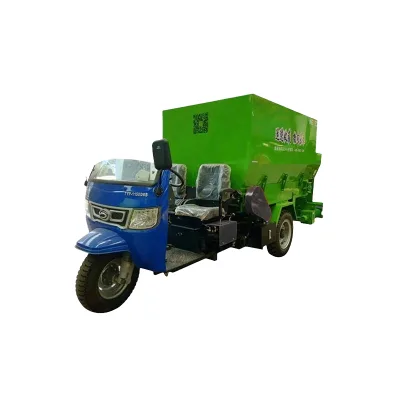
3cbm Cattle Feed Spreader Animal Feed Spreader Three-Wheeled Feed Spreader
$4000.00 - $5600.00
MOQ: 1 Pieces

Good Quality 3cbm Feed Spreader Three-Wheeled Spreader Cow Feed Spreader
$4000.00 - $5600.00
MOQ: 1 Pieces



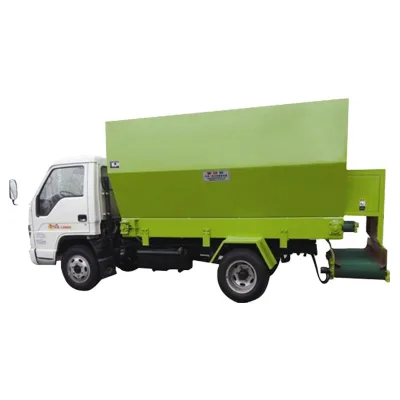
Dairy farm using truck mounted feed spreader for spreading cow cattle fodder
$21999.00 - $69999.00
MOQ: 1 Pieces



Comprehensive Sourcing Guide
Strategic Sourcing Guide for Diesel Feed Spreaders
Understanding the Core Technology and Power Systems
When sourcing a Diesel Feed Spreader, the primary distinction lies in the power source and the mechanical architecture designed to handle agricultural feed distribution. The market offers units driven by diesel engines, which provide the high torque necessary for heavy-duty operations in fields where electricity is unavailable. These machines are engineered to operate as self-propelled or towed units, depending on the specific model configuration. The diesel engine serves as the heart of the operation, directly driving the spreading mechanism through a mechanical linkage or hydraulic system.
In the current product landscape, diesel-powered feed spreaders exhibit a wide range of horsepower ratings, reflecting their intended capacity and operational intensity. Smaller units may operate with engines around 25 HP, suitable for lighter loads or smaller farms, while heavy-duty industrial models can reach up to 210 HP. This variance in power output directly correlates with the machine's ability to maintain consistent spreading speeds, which typically range from 5 km/h to 90 km/h depending on the load and terrain. The speed capability is a critical factor for buyers, as it dictates the throughput of the operation. A machine capable of speeds between 5 and 50 km/h offers a balanced approach for general farm use, ensuring that the feed is distributed evenly without excessive wear on the drivetrain.
The propulsion method is another essential technical consideration. Most diesel feed spreaders are designed with a "Diesel Engine Driven" configuration, meaning the engine powers the wheels or tracks as well as the spreading mechanism. This dual-function design ensures that the machine remains mobile and functional in remote locations. The weight of these units is substantial, ranging from approximately 2,000 kg for compact models to over 8,000 kg for large-scale industrial spreaders. This weight distribution is engineered to provide stability during operation, preventing tipping on uneven terrain while ensuring sufficient ground pressure for effective traction.
Technical Specifications and Capacity Analysis
The physical dimensions and storage capacity of a Diesel Feed Spreader are the most immediate indicators of its suitability for a specific farm or facility. Buyers must carefully evaluate the volume capacity, which is often the primary metric for procurement decisions. Available models in the market demonstrate capacities ranging from 5 cubic meters to 24 cubic meters. A 5 m³ unit is typically compact and maneuverable, ideal for smaller operations or facilities with limited space. In contrast, a 24 m³ spreader represents a high-capacity solution designed for large-scale livestock operations where efficiency and volume are paramount.
The dimensions of the spreader are intrinsically linked to its capacity. For instance, a model with a 14 m³ capacity may have overall dimensions around 6,500 mm in length, 2,360 mm in width, and 2,760 mm in height. Larger models, such as those with 24 m³ capacity, can extend to nearly 8 meters in length and over 3.3 meters in height. These dimensions are critical for logistics planning, including transport on public roads and storage within barns or sheds. Buyers must verify that their existing infrastructure can accommodate these specific standard sizes, which are often listed as precise millimeter measurements in technical specifications.
The spreading width is another adjustable specification that offers flexibility in operation. The width of the spread pattern can be modified to suit different crop types or feed distributions, allowing the operator to optimize the coverage area. This adjustability is a key feature for modern agricultural machinery, enabling a single machine to handle diverse tasks. The discharge method is also a vital technical aspect; some models utilize a "Lawn Strip" discharge method, which ensures a uniform distribution of feed across the target area. The blade type, often featuring curved teeth, is designed to efficiently throw the feed material, ensuring that it reaches the intended distance without clumping or uneven distribution.
Compliance, Certification, and Safety Standards
Navigating the regulatory landscape is a non-negotiable aspect of sourcing industrial agricultural machinery. Buyers must verify that any Diesel Feed Spreader they consider meets the necessary international and local safety and quality standards. The most common certifications observed in the market include CE marking and ISO9001. The CE certification indicates that the product complies with health, safety, and environmental protection standards for products sold within the European Economic Area. ISO9001 certification demonstrates that the manufacturer adheres to a quality management system, ensuring consistent product quality and operational efficiency.
In addition to general quality certifications, specific industry standards such as GMP (Good Manufacturing Practice) and QS (Quality Safety) are sometimes referenced, particularly for equipment used in food-related agricultural processes. These standards ensure that the machinery does not introduce contaminants to the feed and operates under hygienic conditions. It is crucial for buyers to request documentation proving these certifications, as they serve as a baseline for the manufacturer's commitment to quality and safety.
The electrical and mechanical safety of the machine is also governed by various standards. While some models may feature computerized control systems, others operate on non-computerized mechanical principles. Buyers should verify the specific control architecture of the machine they are purchasing. If a computerized system is present, it must comply with relevant electromagnetic compatibility (EMC) standards. Furthermore, the braking system, often an oil brake in these heavy-duty units, must meet specific performance standards to ensure safe operation, especially when the machine is traveling at higher speeds or carrying heavy loads.
Cost Drivers and Procurement Economics
The total cost of ownership for a Diesel Feed Spreader is influenced by several factors beyond the initial purchase price. The observed price range in the market is extensive, spanning from approximately $890 to nearly $70,000. This wide variance is driven by differences in capacity, horsepower, build quality, and the level of customization available. A basic 5 m³ unit with a 25 HP engine will naturally be priced significantly lower than a 24 m³ model equipped with a 210 HP engine and advanced features.
Customization is a major cost driver. Many manufacturers offer the option to customize the engine, dimensions, or specific functional components to meet unique operational requirements. While customization adds value by tailoring the machine to specific needs, it often increases the unit price and may extend the lead time. Buyers should carefully assess whether the added cost of customization provides a proportional benefit to their specific operations. For instance, a custom engine configuration might be necessary for extreme climates, but it may not be required for standard temperate conditions.
The Minimum Order Quantity (MOQ) is another economic factor to consider. In the current market, many suppliers offer an MOQ of just one unit, making it accessible for small to medium-sized farms to purchase a single machine without needing to form a consortium or buy in bulk. This flexibility allows buyers to test the performance of a specific model before committing to larger orders. However, buyers should be aware that while the MOQ is low, the unit price may be higher compared to bulk purchasing scenarios.
Typical Applications and Operational Versatility
Diesel feed spreaders are designed for a variety of agricultural applications, with a primary focus on livestock feeding. The most common application involves feeding cattle, where the machine distributes feed evenly across large pens or grazing areas. The ability to spread feed on the left or right side of the machine provides significant operational flexibility, allowing the operator to target specific areas without needing to reposition the entire vehicle. This feature is particularly useful in confined spaces or when feeding along fences.
The versatility of these machines extends beyond simple feed distribution. Some models are equipped with features that allow them to function as general-purpose feeding machines, capable of handling various types of feed materials, including hay, silage, and grain. The curved teeth blade design is particularly effective for breaking up clumps and ensuring a consistent flow of material. This adaptability makes the Diesel Feed Spreader a valuable asset for farms that manage multiple types of livestock or that need to switch between different feed types frequently.
The speed and power of the machine also influence its application. High-speed models capable of reaching 90 km/h are suitable for large, open fields where rapid coverage is essential. Conversely, slower models with speeds between 5 and 30 km/h are better suited for precise feeding in confined areas or for delicate feed materials that require careful handling. The choice of application should align with the specific needs of the farm, considering factors such as the size of the operation, the type of livestock, and the terrain.
Supplier Evaluation and Quality Assurance
Evaluating potential suppliers requires a rigorous approach to ensure that the purchased machinery meets the buyer's expectations for quality and reliability. Buyers should prioritize suppliers who can provide clear evidence of their certifications, such as CE and ISO9001, and who are transparent about their manufacturing processes. The origin of the product is also a significant factor; many diesel feed spreaders are manufactured in regions known for agricultural machinery production, such as Shandong Province in China. Buyers should verify the specific origin of the machine to ensure it aligns with their logistical and quality preferences.
Quality control is a critical component of the procurement process. Buyers should inquire about the manufacturer's quality control procedures, including testing protocols for the engine, hydraulic systems, and structural integrity. The weight and dimensions of the machine should be verified against the provided specifications to ensure that the delivered product matches the ordered model. Additionally, the packaging method, often a wooden box for heavy machinery, should be assessed to ensure that the product is protected during transit.
When evaluating suppliers, buyers should also consider the availability of after-sales support, including spare parts and technical assistance. A supplier with a strong track record of customer satisfaction and a robust support network can significantly reduce the downtime associated with equipment maintenance and repairs. It is advisable to request references or case studies from other buyers who have purchased similar models to gain insight into the supplier's reliability and the performance of their products in real-world conditions.
Long-Term Procurement and Maintenance Considerations
Sourcing a Diesel Feed Spreader is not just a one-time transaction but the beginning of a long-term relationship with the equipment and the supplier. Buyers should consider the long-term maintenance requirements of the machine, including the availability of spare parts and the ease of repair. The diesel engine, being the core component, will require regular maintenance, such as oil changes, filter replacements, and engine tuning. Buyers should ensure that the supplier provides a comprehensive maintenance manual and access to genuine spare parts.
The customization options available at the time of purchase can also impact long-term maintenance. If a machine is customized with non-standard components, it may be more difficult to source replacement parts in the future. Therefore, buyers should weigh the benefits of customization against the potential long-term costs of maintenance and repair. Additionally, the warranty terms provided by the supplier should be carefully reviewed to understand the coverage and duration of the protection.
Finally, buyers should consider the potential for future upgrades or expansions. As the farm or operation grows, the need for larger capacity or more advanced features may arise. Choosing a supplier that offers a range of models and upgrade paths can provide flexibility for future procurement needs. By focusing on long-term considerations, buyers can ensure that their investment in a Diesel Feed Spreader remains a valuable asset for years to come, supporting efficient and effective agricultural operations.
FAQs
What certifications do diesel feed spreaders typically have?
Diesel feed spreaders typically carry CE and ISO9001 certifications. Some models also include GMP and QS certifications to ensure quality and safety standards for agricultural machinery used in food-related processes.
How is the power source configured for these machines?
Most diesel feed spreaders are driven by diesel engines to provide high torque. While diesel is standard, some specific models may utilize electric power sources depending on the operational requirements and customization options available.
Which capacity sizes are available for diesel feed spreaders?
Available capacities range from 5 cubic meters to 24 cubic meters. Smaller units like the 5m³ model suit compact farms, while larger 24m³ spreaders are designed for high-volume industrial livestock operations requiring maximum efficiency.
Can the spreading width be adjusted on these units?
Yes, the spreading width is adjustable to suit different feed types and coverage needs. This flexibility allows operators to optimize the distribution pattern for various agricultural tasks without changing the core machine configuration.
What is the typical price range for diesel feed spreaders?
The observed price range spans from 890 USD to 69,999 USD. Costs vary significantly based on capacity, horsepower, and whether the unit includes custom features or advanced specifications like computerized control systems.
How does the MOQ affect purchasing decisions for buyers?
The minimum order quantity is typically one unit, allowing small farms to purchase individually. This low MOQ provides flexibility for testing performance without requiring bulk commitments, though unit prices may differ from bulk rates.
Where are these diesel feed spreaders manufactured?
Many units originate from Qingdao, Shandong Province, China. This region is a known hub for agricultural machinery production, offering various models with specific dimensions and power ratings tailored to different operational scales.