Source Handmade Natural Soft Lash Clusters for Festivals, Daily Wear, and Emulation
Explore 30 listings for Handmade Natural Soft Lash Clusters designed for festivals, daily wear, and emulation. Buyers can compare variations in length, thickness, and material such as PBT fiber or synthetic hair to find suitable options for volume or DIY applications.
Key considerations
Products List


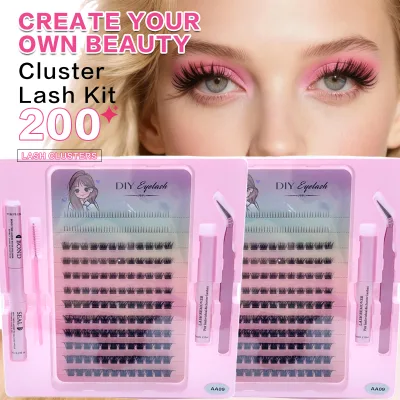


Wholesale Small Flower Volume Thick Female Single Cluster Super Natural False Eyelash
$0.73 - $0.82
MOQ: 1220 Pieces

Wholesale Natural Thick Single Cluster Large Capacity DIY Self Grafting False Eyelashes
$0.57 - $0.64
MOQ: 1600 Pieces


Comprehensive Sourcing Guide
Strategic Sourcing Guide for Handmade Natural Soft Lash Clusters
Understanding Product Specifications and Material Composition
When sourcing Handmade Natural Soft Lash Clusters, the primary objective is to align technical specifications with the desired aesthetic outcome. The core keyword implies a product that balances a natural appearance with a soft tactile feel, achieved through specific manufacturing techniques and material choices. Based on available market data, these products are predominantly constructed from synthetic fibers, specifically Korean PBT (Polybutylene Terephthalate) fiber or general synthetic hair. PBT is a preferred material in this sector due to its ability to hold a curl effectively while maintaining a lightweight profile, which is critical for the "soft" descriptor in the product name.
The manufacturing technique is a defining characteristic. The products are explicitly categorized as "Hand Made," indicating that the fan formation or cluster assembly is not fully automated. This manual process allows for greater variation in the fan shape, which contributes to the natural look. The thickness of the individual lash strands is a critical specification that dictates the final volume and weight. Observed market ranges for thickness include 0.05mm, 0.06mm, 0.07mm, and occasionally 0.10mm. Thinner strands like 0.05mm and 0.06mm are typically used for creating a more delicate, natural look, while 0.07mm and 0.10mm provide slightly more volume. Buyers must verify the specific thickness tolerance for their orders, as variations can affect the "softness" of the final application.
Length is another variable that requires precise definition. The observed length ranges for these clusters span from 6mm to 25mm, with specific subsets often found between 8mm and 15mm or 8mm and 16mm. The "natural" aspect of the keyword suggests that buyers should look for products with graduated lengths or specific length sets that mimic the natural lash line, rather than uniform long lengths. The line count, referring to the number of lashes per cluster, is also a key specification. Products are available in 6, 12, 16, 20, and even up to 24 lines per box standard. The "12 lines" configuration is frequently cited as a standard for pre-made fans, offering a balance between application speed and natural density.
Compliance, Certification, and Safety Verification
In the beauty and personal care sector, particularly for products applied near the eye, safety and compliance are paramount. While specific certification documents are not universally listed for every product listing, buyers must treat compliance as a non-negotiable verification step. The products are described as "Safe to Use" and "Durable," but these are product attributes rather than certified guarantees. A responsible procurement strategy requires requesting specific test reports or compliance documentation from the supplier before placing an order.
Buyers should verify that the synthetic fibers used, such as PBT, meet international safety standards for cosmetic materials. Although the supply context mentions origins in China, specifically Qingdao and Shandong, the lack of specific certification names in the general data means that the buyer must actively request proof of compliance. This includes verifying that the materials are free from harmful substances like formaldehyde, latex, or heavy metals. The "Top Quality" label found in some product descriptions is a marketing claim and should be substantiated by third-party testing results.
Furthermore, the packaging and handling of the product must adhere to hygiene standards. The products are often packed in boxes containing 12 rows, or in plastic trays within paper boxes. The presence of a "back card" in some packaging indicates a retail-ready format, which should also be inspected for material safety. Since the product is a "DIY cluster" or "Pre Made Fan," the adhesive compatibility is also a safety consideration. Buyers should ensure that the lash clusters are compatible with standard lash adhesives without causing adverse reactions, although specific chemical compatibility data is not provided in the general product facts.
Cost Drivers and Pricing Dynamics
The pricing structure for Handmade Natural Soft Lash Clusters is influenced by several variables, including material quality, labor intensity, and order volume. The observed price range in the market spans from $0.39 to $4.50 USD. This wide variance suggests that price is not solely a function of the product type but is heavily dependent on the specific customization, thickness, and packaging requirements. Lower prices in the $0.39 range likely correspond to basic synthetic hair products with standard specifications, while the higher end of the $4.50 range may reflect premium PBT fibers, intricate hand-made craftsmanship, or custom branding services.
Labor costs are a significant driver given the "Hand Made" and "100% Hand Made" attributes. The manual assembly of clusters requires skilled labor, which increases the unit cost compared to fully automated production lines. The complexity of the fan shape, the number of lines per cluster, and the precision required to achieve the "soft" and "natural" aesthetic directly impact the time and cost of production. Additionally, the "Customization" attribute allows for tailored solutions, such as specific lengths, curls, or packaging designs, which inherently adds to the cost.
Minimum Order Quantity (MOQ) also plays a crucial role in the effective cost per unit. The observed MOQ range is broad, from 1 piece to 1600 pieces. For buyers seeking to test the market, a low MOQ of 1 to 50 pieces allows for risk mitigation, though the unit price will be higher. Conversely, larger orders can leverage economies of scale to reduce the per-unit cost. The "Service" attributes, such as OEM and ODM capabilities, often come with additional costs for logo customization and packaging design. Buyers should factor in these service fees when calculating the total landed cost.
Typical Applications and Usage Scenarios
The versatility of Handmade Natural Soft Lash Clusters makes them suitable for a wide range of applications, from professional salon services to DIY home use. The product usage categories explicitly include "Ragdoll," "Television," "Emulation," "Festival," and "Daily" wear. This indicates that the product is designed for both high-impact visual scenarios, such as film, television, and festival costumes, as well as everyday beauty routines. The "Natural Long" style and "Soft" texture are particularly well-suited for daily wear, where comfort and a subtle enhancement are preferred over dramatic volume.
For professional applications, the "DIY cluster" and "Pre Made Fan" formats offer efficiency. These products allow lash technicians to apply multiple lashes at once, significantly reducing application time compared to traditional single-lash extension methods. The "12 rows/box" standard facilitates easy inventory management in a salon setting. The "Emulation" usage suggests these lashes are also used for theatrical or costume purposes, where specific looks need to be replicated quickly and reliably. The "Festival" application points to their use in events where durability and visual impact are essential, yet the "soft" attribute ensures they remain comfortable for extended wear.
The "Curl" options, including J, B, C, Cc, D, and Dd, allow for customization based on the client's natural lash line and desired aesthetic. A "J" or "B" curl is often preferred for a natural, everyday look, while "C" or "D" curls provide more lift and drama. The "Plastic Terrier" or "Cotton Terrier" base options also influence the application method and comfort, with cotton bases potentially offering a softer feel against the eyelid.
Supplier Evaluation and Sourcing Strategy
Evaluating suppliers for handmade lash clusters requires a focus on their manufacturing capabilities, customization options, and logistical reliability. The supply chain for these products is primarily located in China, with specific origins noted in Qingdao and Shandong. These regions are known for their textile and beauty product manufacturing infrastructure. When evaluating potential suppliers, buyers should verify their "Service" capabilities, specifically their ability to provide OEM (Original Equipment Manufacturer) and ODM (Original Design Manufacturer) services. This includes the ability to customize logos, packaging, and product specifications to meet brand requirements.
The "Customization" attribute is a key differentiator. Suppliers that offer flexible customization can help buyers differentiate their products in a competitive market. Buyers should assess the supplier's capacity to handle the "Hand Made" aspect consistently. Since manual labor is involved, quality control is more challenging than in automated processes. Inquire about the supplier's quality assurance protocols to ensure that the "Hand Made" claim translates to consistent product quality.
Logistics and shipping are also critical factors. The observed shipment methods include FedEx, UPS, DHL, DDP (Delivered Duty Paid), and TT (Telegraphic Transfer). Buyers should evaluate which shipping method best suits their timeline and budget. DDP services can simplify the import process by handling duties and taxes, while standard freight options may require more administrative effort. Payment terms, including PayPal, T/T, Western Union, and Moneygram, should be reviewed to ensure they align with the buyer's financial policies and risk tolerance.
Quality Control and Long-Term Procurement Considerations
Maintaining consistent quality in handmade lash clusters requires a robust quality control (QC) framework. Given the manual nature of production, buyers should implement a sampling strategy before committing to large orders. The "Single Gross Weight" of 0.090 Kg and "Single package size" of 19x19x2 cm provide baseline metrics for logistics planning, but the actual weight and dimensions of the product can vary based on the number of rows and lashes included. Buyers should verify these metrics for their specific order configuration.
Long-term procurement considerations involve building a sustainable relationship with suppliers who can maintain quality over time. The "Quality: Top Qulity" claim should be validated through regular inspections and feedback loops. Buyers should establish clear acceptance criteria for thickness, length, and curl consistency. The "Standard" of 12 rows/box or variations like 14, 16, 18, 20, and 24 rows should be strictly adhered to to ensure product uniformity.
Inventory management is another long-term consideration. The "Selling Units" are often listed as "Single Item," but bulk purchasing is common for business continuity. Buyers should plan for lead times, which are not explicitly stated in the general data but are implied by the customization and shipping options. Establishing a reliable supply chain with clear communication channels is essential for managing stock levels and responding to market demand fluctuations.
Comparison of Product Attributes for Sourcing Decisions
To facilitate informed decision-making, the following table summarizes key product attributes observed in the market, helping buyers compare options based on their specific needs.
| Attribute Category | Common Variations Observed | Sourcing Consideration |
|---|---|---|
| Material | Synthetic Hair, Korean PBT Fiber, PBT | PBT offers better curl retention; verify material safety. |
| Thickness | 0.05mm, 0.06mm, 0.07mm, 0.10mm | Thinner (0.05-0.06mm) for natural look; thicker (0.07-0.10mm) for volume. |
| Length Range | 6-25mm, 8-15mm, 8-16mm | Select based on desired natural vs. dramatic effect. |
| Lines per Cluster | 6, 12, 16, 20, 24 lines | 12 lines is a common standard for pre-made fans. |
| Curl Type | J, B, C, Cc, D, Dd | Match curl to client's natural lash line and desired lift. |
| Terrier Base | Plastic Terrier, Cotton Terrier | Cotton may offer softer feel; plastic may be more durable. |
| Packing Standard | 12 rows/box, 12/14/16/18/20/24 rows/box | Verify row count matches inventory and sales expectations. |
| Origin | China (Qingdao, Shandong) | Verify supplier location for logistics and lead time estimation. |
| Customization | Logo, Packaging, OEM/ODM | Essential for branding; confirm minimums and costs. |
By carefully analyzing these attributes and adhering to the verification steps outlined, buyers can effectively source Handmade Natural Soft Lash Clusters that meet their quality, aesthetic, and commercial requirements. The focus on manual craftsmanship, material integrity, and flexible customization ensures that the final product delivers the "natural" and "soft" experience promised by the core keyword.
FAQs
What material is used for Handmade Natural Soft Lash Clusters?
These clusters are primarily made from synthetic hair or Korean PBT fiber. The PBT material holds a curl effectively while remaining lightweight, ensuring a soft feel suitable for daily wear and emulation purposes.
Which thickness options are available for these lash extensions?
Available thicknesses include 0.05mm, 0.06mm, 0.07mm, and 0.10mm. Thinner strands like 0.05mm create a delicate look, while 0.07mm and 0.10mm provide slightly more volume for different aesthetic needs.
Can buyers customize the logo and packaging for these lashes?
Yes, customization is available for logos and packaging designs. Suppliers offer OEM and ODM services to accept customized branding, allowing buyers to tailor the product to their specific brand requirements.
What is the typical minimum order quantity for these clusters?
The minimum order quantity ranges from 1 to 1600 pieces depending on the supplier. Some vendors accept orders as low as 50 pieces, while others may require higher volumes for specific customizations.
How are these handmade lash clusters packaged for shipment?
Products are typically packed in boxes containing 12 rows, or in plastic trays within paper boxes. Some packaging includes a back card for retail readiness, with standard counts varying from 12 to 24 rows per box.
Which curl types are offered for these natural soft lashes?
The available curl options include J, B, C, Cc, D, and Dd. Buyers can select the specific curl that best matches the client's natural lash line and desired aesthetic outcome.