Source Diesel Fuel Dispenser Truck for stations, fleets, and mining
Compare 30 Diesel Fuel Dispenser Truck options from verified Chinese manufacturers. Buyers can evaluate models like M2 and E1 series, check certifications such as ATEX and ISO9001, and select self-priming or submersible pumps tailored to specific fuel transportation needs.
Key considerations
Products List


$1500.00
MOQ: 10 Pieces

$1080.00 - $1200.00
MOQ: 1 Pieces


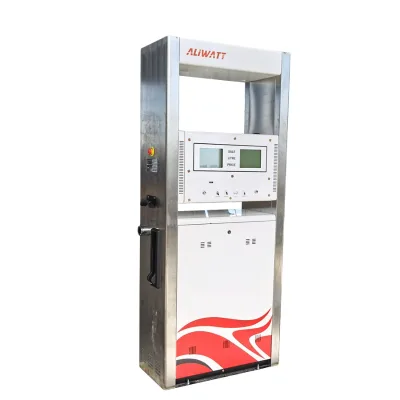


$1000.00 - $25000.00
MOQ: 1 Pieces


Comprehensive Sourcing Guide
Strategic Sourcing Guide for Diesel Fuel Dispenser Truck Systems
Procuring Diesel Fuel Dispenser Truck systems requires a rigorous approach that balances technical precision with regulatory compliance. The market for these specialized assets is defined by a diverse range of configurations, from self-priming units to submersible pumping mechanisms, all operating under strict environmental and safety standards. Buyers must navigate a complex landscape where product attributes vary significantly between models, such as the M2 Series, E1 Series, and various A, K, and L series configurations. This guide outlines the critical factors for sourcing these systems, ensuring that procurement decisions are grounded in verified specifications and industry best practices rather than unverified marketing claims.
Technical Architecture and Operational Specifications
The core functionality of a Diesel Fuel Dispenser Truck relies heavily on the specific pump technology and operational mode selected. The available product data indicates a clear distinction between "Self Priming" and "Submersible Pumping" modes, suggesting that buyers must align the pump type with the intended application environment. For instance, certain models operate in a "Normal" mode, while others are designed for "Self-help" operations, which may imply automated or standalone functionality without constant human intervention. The flow rate is consistently described as a "Constant Pump," which is essential for maintaining steady fuel delivery rates during refueling operations.
Electrical and environmental resilience are paramount for mobile dispensing units. The operating voltage is specified as 220V with a tolerance range of -15% to +10% at 50Hz ±1 Hz, a standard requirement for industrial equipment in many regions. However, the ambient temperature range for the machinery is noted as (-45~+55)°C, indicating a need for robust thermal management systems to function in extreme climates. Furthermore, the noise level of the whole machine is capped at ≤66dB, a critical specification for urban or residential areas where noise pollution is regulated. The vacuum degree at the pump inlet must be ≥54kpa, and the working oil pressure at the pump outlet should not exceed 0.3MP, ensuring the system operates within safe hydraulic limits.
Compliance, Certification, and Regulatory Standards
Navigating the certification landscape is perhaps the most critical step in the procurement process. The supplied data lists a wide array of certifications, including CE, ATEX, OIML, ISO9001, PEI, and Pcec. It is important to note that while some listings mention "Ce, Oilml, Atex, Pei, ISO9001 etc," others specify "Ce, Atex" or "ISO 9001;Atex, Pcec, ISO10012." This variance suggests that certification status is model-specific rather than universal across all inventory. Buyers must verify that the specific unit they are purchasing holds the necessary approvals for their target market.
For example, ATEX certification is vital for equipment used in explosive atmospheres, a common requirement for fuel handling. ISO9001 is frequently cited as a production standard, but the presence of "Oilml" or "OIML" indicates compliance with specific legal metrology standards for weighing and measuring fuel. The standard "15306002380mm" appears in the context of product standards, likely referring to dimensional constraints or packaging requirements, while "cast iron" is noted as a material standard for specific components. Buyers should not assume that a supplier's general ISO9001 status applies to every individual component without explicit verification of the model's specific certification list.
Cost Drivers and Pricing Variables
The observed price range for these systems spans from 1 USD to 43,000 USD, a vast disparity that reflects the diversity of the product line. This range likely encompasses everything from individual pump parts to complete, fully integrated dispenser truck systems. The minimum order quantity (MOQ) varies between 1 and 50 units, indicating flexibility for both small-scale replacements and large fleet deployments. Several factors drive these costs, including the customization level, the specific series model (e.g., M2 vs. HYLF), and the complexity of the packaging.
Customization is explicitly listed as "Available," with options for color "According to Customer Request" and design "as Required." These bespoke elements invariably increase the unit cost and may extend lead times. The packaging method also influences logistics costs; options include "Standard Corrugated Carton," "Carton Case or Wooden Case," "Wooden Box," "Wooden Carton," and "Pallet." For heavy-duty equipment, a "Wooden Case" or "Wooden Box" is often necessary to prevent damage during transit, which adds to the overall landed cost. Buyers should request detailed quotes that break down the cost of the core unit, the specific pump type, and the chosen packaging solution to understand the true value proposition.
Typical Applications and Industry Partnerships
The versatility of these diesel fuel dispenser systems is evidenced by their association with major industry players. The product data lists partners such as Sinopec, Petrochina, Cnooc, BP, Shell, and Total. This suggests that the technology is capable of meeting the rigorous demands of large-scale energy corporations and government-owned entities. The "Car type" specification and the "Nozzle" options (1, 2, 3, 4 or More) indicate that these systems are adaptable to various vehicle types and refueling station configurations.
The working environment is defined by a relative humidity of not more than 95%, which is a standard condition for many industrial applications but requires careful consideration for equipment deployed in tropical or coastal regions. The "Service" options of OEM and ODM highlight that these systems are often integrated into larger truck chassis or station infrastructure by third-party manufacturers. This implies that buyers may be purchasing a core component that requires integration into a specific vehicle platform, necessitating close coordination between the pump supplier and the vehicle manufacturer.
Supplier Evaluation and Origin Verification
Geographic origin plays a significant role in the sourcing strategy. The product data identifies "China" and specifically "Wenzhou" as the origin locations. Wenzhou is a known manufacturing hub for pumps and fluid handling equipment, suggesting a concentration of supply chain expertise in this region. However, buyers must verify the specific factory location and capabilities of the supplier, as the "prod_origin" field may refer to the broader manufacturing region rather than the specific facility.
When evaluating suppliers, the presence of certifications like CE and ATEX should be cross-referenced with the specific model number. For instance, the M2 Series CMD1687SK-G and the E1 Series CMD1687SK-G are distinct models, and their compliance records may differ. The "Standard Corrugated Carton" versus "Wooden Case" distinction also serves as a proxy for the supplier's attention to detail and logistics capability. A supplier offering "Standard Corrugated Carton" for a high-pressure pump system might be a red flag compared to one offering "Wooden Case" or "Pallet" protection. Buyers should request proof of origin and specific model certifications before finalizing any purchase agreement.
Quality Control and Long-Term Procurement Considerations
Quality assurance extends beyond the initial purchase to the long-term reliability of the equipment. The "Working Oil Pressure at Pump Outlet" limit of ≤0.3MP and the "Vacuum Degree at Pump Inlet" of ≥54kpa are critical performance metrics that must be maintained over the equipment's lifespan. Regular maintenance is essential to ensure these parameters remain within spec, particularly given the "Constant Pump" flow rate requirement. The "Noise of The Whole Machine" at ≤66dB is another metric that can degrade over time due to wear and tear, requiring periodic inspection.
The "Customization" and "Design" options allow for tailoring the equipment to specific operational needs, but this flexibility introduces complexity into the quality control process. Buyers should establish clear acceptance criteria based on the specific model's technical data sheet. For example, if a "HY" or "HYLF" series model is selected, the buyer must verify that the "Wooden Carton" or "Pallet" packaging meets the specific shipping requirements for that model. Additionally, the "Service" aspect of OEM and ODM implies that spare parts availability and technical support are crucial. Buyers should negotiate service level agreements (SLAs) that cover the supply of replacement parts, such as nozzles or pump components, to ensure operational continuity.
Comparative Analysis of Product Configurations
To facilitate decision-making, the following table summarizes key variations observed in the product data. This comparison highlights the diversity in models, certifications, and packaging, aiding buyers in selecting the configuration that best fits their operational requirements.
| Feature Category | Configuration A (M2/E1 Series) | Configuration B (A/K/L Series) | Configuration C (HY/HYLF Series) | Configuration D (WD-MGS Series) |
|---|---|---|---|---|
| Model Identifier | M2 Series CMD1687SK-G | A Series / K Series / L Series | HY / HYLF | wd-MGS |
| Pump Mode | Self Priming | Submersible Pumping | Variable (Context Dependent) | Variable (Context Dependent) |
| Primary Certifications | CE, Atex, ISO9001 | PEI, CE, ISO9001 | ISO 9001; Atex, Pcec | CE, Atex |
| Packaging Type | Standard Corrugated Carton | Carton Case or Wooden Case | Wooden Carton / Pallet | Carton / Wooden Case |
| Material Standard | Not Specified | Cast Iron | As Requirement | Cast Iron |
| Dimensional Standard | Not Specified | 15306002380mm | 1CBM | Not Specified |
| Nozzle Options | 1, 2, 3, 4 or More | 1, 2, 3, 4 or More | 1, 2, 3, 4 or More | 1, 2, 3, 4 or More |
This table illustrates that while the core function remains consistent, the specific implementation details vary significantly. The "A Series" and "K Series" models, for instance, share the "Submersible Pumping" mode but differ in their certification lists and packaging. The "HY" series models introduce specific dimensional standards like "1CBM," which may relate to volume capacity or packaging volume. Buyers must carefully match these attributes to their specific logistical and operational constraints.
Final Procurement Recommendations
In conclusion, sourcing Diesel Fuel Dispenser Truck systems requires a meticulous review of technical specifications, certification validity, and supplier capabilities. The wide range of models, from the M2 Series to the HYLF series, offers flexibility but demands precise verification of each unit's compliance with local regulations and operational requirements. Buyers should prioritize suppliers who can provide clear evidence of certifications like ATEX and ISO9001 for the specific model selected, rather than relying on general company claims. Additionally, understanding the cost drivers, such as customization and packaging, will help in budgeting accurately. By focusing on the verified attributes provided in the product data and adhering to the strict operational parameters outlined, buyers can secure reliable, high-performance fuel dispensing systems that meet the demands of the modern energy sector.
FAQs
What certifications are available for diesel fuel dispenser trucks?
Available certifications include CE, ATEX, OIML, ISO9001, and PEI. Buyers must verify that the specific model holds the necessary approvals for their target market, as certification status varies between models like the M2 Series and E1 Series.
Which pump modes are supported for diesel fuel dispenser trucks?
The system supports both Self Priming and Submersible Pumping modes. Buyers should align the pump type with the intended application environment, as operational modes vary significantly between different product configurations and series models.
Can diesel fuel dispenser trucks be customized for specific needs?
Yes, customization is available for color, design, and nozzle configurations. Options include colors according to customer requests and nozzle counts ranging from one to four or more, though bespoke elements may increase unit costs and lead times.
What is the ambient temperature range for diesel fuel dispenser trucks?
The machinery operates within an ambient temperature range of negative 45 to positive 55 degrees Celsius. This specification requires robust thermal management systems to ensure functionality in extreme climates and varying environmental conditions.
Where are Diesel Fuel Dispenser Truck manufacturers located?
Products originate from China, with specific manufacturing hubs identified in Wenzhou. Buyers should verify the specific factory location and capabilities, as the origin field may refer to the broader manufacturing region rather than the exact facility.
What is the noise level of the Diesel Fuel Dispenser Truck machine?
The noise level of the whole machine is capped at 66 decibels or less. This metric is critical for urban or residential areas where noise pollution is regulated and requires periodic inspection to ensure it does not degrade over time.