Source Differential parts for axles, gears, and vehicles
Compare 30 verified listings for Differential components including limited slip and shift variants. Buyers can evaluate steel and iron models from Jiangxi and Henan suppliers with ISO and CE certifications for rear axle applications.
Key considerations
Products List

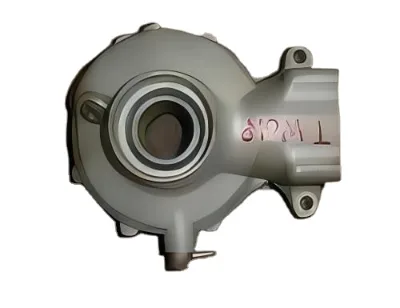


Differential and Friction Airshaft Key Type and Double Ball Type Ring
$150.00 - $5000.00
MOQ: 1 Pieces


Specialist Manufacturer Prices Differential Full Floating Heavy Duty Rear Axle Assembly
$100.00 - $115.00
MOQ: 10 Pieces


Spring Apply, Hydraulic Release, Multiple Disc Brakes From China Manufacturer
$400.00 - $800.00
MOQ: 10 Pieces


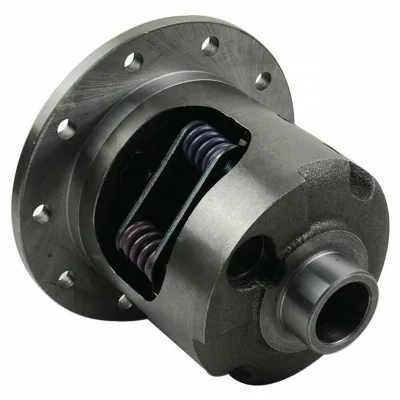


Stx05017 - Half Shaft (Differential) - Daily 35.10 / 49.10 / 49.12 / 50.13
$10.00 - $999.00
MOQ: 100 Pieces
Comprehensive Sourcing Guide
Strategic Sourcing Guide for Industrial Differentials
Understanding Product Variants and Technical Specifications
The term "Differential" in a B2B procurement context often encompasses a broad spectrum of mechanical assemblies, ranging from automotive shift differentials to specialized industrial torque distribution units. When sourcing these components, buyers must first distinguish between specific product models and their intended mechanical functions. The market data indicates a diverse range of specifications, including the "Torson Limited Slip Differential," which is designed for specific traction control applications, and the "Shift brushless Differential," which integrates with brushless hub motor systems for modern engineering vehicles.
Technical evaluation begins with the core model identification. Procurement teams should verify the exact prod_model designation against their engineering requirements. Observed models in the current supply landscape include "AZ9231320271," "19901432," "AZ9100440005," and "WD615.47," each potentially serving distinct operational niches. Furthermore, the classification of the product extends to its application domain. Specific listings highlight "Shift Gear Engineering Vehicle" applications, while others are designated for "Shift Rear Axle/High and Low Speed Rear Axle" systems. This distinction is critical, as a component optimized for a standard automotive rear axle may not possess the necessary torque capacity or gear ratios for high-load engineering vehicles.
Material composition is another primary technical variable. While many units are constructed from "Steel" or general "Metal," specific listings identify "Iron" as a material component. The choice of material directly influences weight, durability, and corrosion resistance. Additionally, the manufacturing process plays a vital role in performance. Advanced listings mention "Nano Machining" as a processing level, suggesting high-precision tolerances, while others are categorized under general "Metal Processing." Buyers must ensure that the specified processing level aligns with the required precision for their specific assembly. The standard classification also varies, with some units adhering to "torson" standards, others to "custom" specifications, and some to general "Standard" definitions.
Compliance and Certification Verification
In the global supply chain, verifying compliance is as important as the physical specifications of the Differential. The supply data reveals a mix of certifications that buyers must validate. Commonly observed certifications include "ISO," "GB," "CE," and "ISO9001." The presence of these marks suggests adherence to international quality management systems and safety standards, but buyers must confirm that the specific batch or unit carries the valid documentation. For instance, some product entries list "Certification:ISO,CE" directly under axle specifications, indicating a dual compliance requirement for both quality management and European safety directives.
It is essential to treat these certifications as observations of specific listings rather than universal guarantees for all products in the category. A supplier may offer ISO-certified production lines but sell specific non-certified batches. Therefore, the procurement process must include a request for current, valid certificates for the specific model being purchased. The "GB" standard reference points to Chinese national standards, which may be relevant for domestic sales but requires translation and interpretation for international compliance. Similarly, the "CE" mark is a mandatory conformity mark for products sold within the European Economic Area, and its presence on a listing implies the manufacturer claims compliance with relevant EU directives.
Buyers should also scrutinize the "Standard" field in product descriptions. Entries range from "Standard" to specific values like "10kg" or "1000kg," which may refer to load capacities or specific standard codes rather than a generic quality level. The "prod_standard" field often lists "Differential" or "custom," indicating whether the product follows a published industry standard or is tailored to a client's unique requirements. When a product is marked as "custom" or "By The Customer Needs," the compliance verification process shifts from checking a pre-existing certificate to validating the manufacturer's ability to meet the specific contractual requirements through a Quality Assurance Plan (QAP).
Cost Drivers and Pricing Dynamics
The pricing structure for industrial differentials is highly variable, influenced by a complex matrix of customization, material costs, and order volume. The observed price range in the market spans from $0.01 to $6,000 USD. This vast disparity is not indicative of a single product type but rather reflects the difference between small components, sub-assemblies, and complete, high-specification units. A unit priced at the lower end of the spectrum may be a standard, off-the-shelf component with minimal customization, while a unit at the higher end likely involves complex engineering, specialized materials, or custom machining.
Minimum Order Quantity (MOQ) is a significant driver of unit cost. The data shows an MOQ range from 1 to 20,000 units. Suppliers offering an MOQ of 1 are typically catering to prototyping, testing, or small-batch replacement needs, often at a premium per-unit price. Conversely, suppliers with an MOQ of 20,000 are likely operating on an economy-of-scale model, offering significantly lower per-unit costs but requiring substantial volume commitments. Buyers must calculate the total cost of ownership, which includes the upfront capital required to meet the MOQ, storage costs for excess inventory, and the potential for obsolescence if the design changes.
Customization is another major cost factor. The product attributes frequently list "Customization: Available" and "Customized" as key features. Custom orders often involve non-standard tooling, unique material sourcing, and specialized processing levels like "Nano Machining." These factors inherently increase the production cost and lead time. Additionally, the "Processing Trade" attribute, specifically "Processing with Material Supplied," indicates a cost structure where the buyer provides raw materials, potentially shifting the cost burden and risk of material quality to the purchaser. Conversely, suppliers providing all materials will include the raw material cost and margin in the final price.
Typical Applications and Operational Context
Differentials are critical components in systems requiring torque distribution and speed differentiation between wheels or axles. The supply data highlights specific applications that guide the selection process. The "Shift Gear Engineering Vehicle" application suggests use in heavy-duty machinery, construction equipment, or specialized industrial transport where high torque and durability are paramount. These units often feature "Shift Rear Axle/High and Low Speed Rear Axle" configurations, indicating their role in complex transmission systems that require multiple gear ratios for varying load conditions.
Another significant application area is the integration with electric or hybrid propulsion systems. The "Shift brushless Differential" and "Brushless Hub Motor" references point to modern mobility solutions where electric motors drive the wheels directly or through a Differential assembly. These applications require components that can handle high rotational speeds and precise control, often necessitating the "Nano Machining" processing level mentioned in the specifications. The "Feature: Shift Differential" and "Product Mix: Shift Line + Shift Differential" attributes further confirm that these components are part of larger, integrated transmission systems rather than standalone parts.
The "Deck: Single" attribute and "Type: Rear Axles" designation provide further context on the physical configuration. Single-deck rear axles are common in specific vehicle architectures where space is limited or where a simpler suspension geometry is preferred. Buyers must ensure that the Differential's physical dimensions and mounting points align with their vehicle or machinery design. The "Place of Origin: Jiangxi, China" and "prod_origin: China, Henan" locations indicate that the supply chain is heavily concentrated in specific manufacturing hubs in China, which may influence logistics planning and shipping costs.
Supplier Evaluation and Capability Assessment
Evaluating a supplier for Differential components requires a multi-faceted approach that goes beyond price and basic specifications. The "ODM/OEM: Support" attribute is a strong indicator of a supplier's flexibility. Suppliers offering ODM (Original Design Manufacturer) and OEM (Original Equipment Manufacturer) services are capable of adapting their production lines to meet specific client requirements, from custom branding to unique engineering specifications. This capability is essential for buyers looking to differentiate their products or integrate the Differential into a proprietary system.
The "Processing Type: Metal Processing" and "Processing Level: Nano Machining" details provide insight into the supplier's technical capabilities. A supplier capable of nano-machining possesses advanced equipment and skilled labor, suggesting a higher level of quality control and precision. However, buyers should verify that the specific facility assigned to their order has the necessary equipment and expertise. The "Condition: New" attribute is standard but should be confirmed to ensure that the product is not refurbished or reconditioned unless explicitly agreed upon.
Logistics and packaging are also critical evaluation criteria. The "prod_packing" field lists options such as "Wooden Box," "Ocean Freight," "Wooden Box/Paper Tube," and "Carton or Wooden Case Packing." These variations indicate that suppliers may offer different packaging standards based on the product's fragility and the shipping method. For international shipments, "Ocean Freight" and "by Sea, by Air, by Rail" transport options suggest the supplier has experience with global logistics. Buyers should assess the supplier's ability to handle the specific transport mode required for their supply chain and ensure that the packaging protects the Differential from damage during transit.
Quality Control and Long-Term Procurement Considerations
Quality control in the Differential market must address both the initial inspection and long-term performance reliability. The "Standard" field often lists values like "10kg" or "1000kg," which may refer to load testing standards or specific weight classifications. Buyers should request detailed test reports and quality assurance documentation that verify these standards. The presence of "CE" and "ISO" certifications is a positive signal, but it should be accompanied by specific test data for the batch being purchased.
Long-term procurement considerations include the availability of spare parts and the supplier's ability to support the product throughout its lifecycle. The "Customization: Available" and "Customized" attributes suggest that the supply chain may be tailored to specific needs, which can be a double-edged sword. While customization offers flexibility, it can also lead to supply chain vulnerabilities if the supplier cannot maintain the specific production process in the future. Buyers should establish clear agreements regarding the retention of design files, tooling, and production specifications to ensure continuity.
The "Selling Units: Single item" attribute indicates that some suppliers are willing to sell individual units, which is beneficial for testing and prototyping. However, for long-term production, buyers should negotiate volume-based contracts that secure supply stability and price consistency. The "Place of Origin" and "prod_origin" data highlight the geographic concentration of suppliers, which may impact lead times and shipping costs. Buyers should factor in the potential for supply chain disruptions in these regions and develop contingency plans, such as diversifying suppliers or maintaining safety stock.
Comparative Analysis of Product Attributes
To facilitate decision-making, buyers can compare key attributes across different product listings. The following table summarizes the observed variations in specifications, certifications, and logistics.
| Attribute Category | Observed Variations | Procurement Implication |
|---|---|---|
| Product Model | Torson Limited Slip, AZ9231320271, 19901432, WD615.47, Shift brushless Differential | Must match specific engineering requirements; no universal fit. |
| Material | Steel, Metal, Iron | Affects weight, strength, and corrosion resistance; verify for application. |
| Certification | ISO, GB, CE, ISO9001 | Verify validity for target market; GB is specific to China, CE to EU. |
| Customization | Available, Customized, By The Customer Needs | Increases cost and lead time; requires clear technical specifications. |
| Processing | Metal Processing, Nano Machining, Processing with Material Supplied | Nano machining implies high precision; material supply shifts cost/risk. |
| Packing | Wooden Box, Ocean Freight, Carton/Wooden Case | Impacts shipping cost and protection; match to transport mode. |
| Origin | China, Jiangxi, Henan | Concentrated supply hub; consider logistics and lead time implications. |
| Application | Shift Gear Engineering Vehicle, Shift Rear Axle, Brushless Hub Motor | Critical for functional compatibility; verify load and speed ratings. |
This comparative analysis underscores the importance of precise specification matching. A buyer seeking a high-precision component for a brushless motor system must prioritize the "Nano Machining" and "Shift brushless Differential" attributes, while a buyer for a standard engineering vehicle might focus on "Steel" material and "ISO" certification. By systematically evaluating these attributes against their specific needs, buyers can navigate the complex landscape of Differential sourcing with confidence and precision.
FAQs
What certifications are available for these Differential products?
Available certifications include ISO, GB, CE, and ISO9001. Buyers must verify that specific batches carry valid documentation, as certifications apply to specific listings rather than all products universally.
Which materials are used to construct these Differential units?
Common materials observed include Steel, Metal, and Iron. The choice of material directly influences weight, durability, and corrosion resistance, so buyers should match the material to their specific operational requirements.
Can buyers request custom specifications for these differentials?
Yes, customization is available and many listings are marked as customized. Custom orders often involve unique tooling and specialized processing levels like Nano Machining, which can increase production costs and lead times.
How does the minimum order quantity affect the unit price?
MOQ ranges from 1 to 20,000 units, significantly impacting unit cost. Lower MOQs suit prototyping but often carry a premium, while high-volume orders leverage economies of scale for lower per-unit pricing.
Where are these Differential products typically manufactured?
Products originate from Jiangxi and Henan in China. This concentration in specific manufacturing hubs influences logistics planning and shipping costs for international buyers sourcing these components.
What packaging options are provided for shipping these items?
Packaging options include Wooden Box, Carton, Paper Tube, and Wooden Case. Suppliers may adjust packaging based on product fragility and the selected transport method to ensure protection during transit.