Source PE Inner Fender Liner for Car Repair, Replacement, and OEM Standards
Compare 30 verified listings for PE Inner Fender Liner suitable for car repair, replacement, and OEM standards. Buyers can evaluate materials like ABS and steel, customization options, and shipping terms from Chinese manufacturers.
Key considerations
Products List




Comprehensive Sourcing Guide
Strategic Sourcing Guide for PE Inner Fender Liners
Understanding Material Composition and Physical Specifications
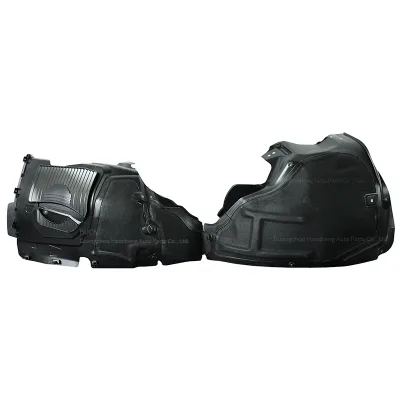
When sourcing polyethylene (PE) inner fender liners, often referred to as wheel arch liners or splash guards, buyers must first distinguish between the specific polymer grades and the structural requirements of the application. While the core keyword suggests a polyethylene focus, market observations indicate a diverse material landscape where suppliers may list "Plastic+OTHERS," "ABS," or even "Steel" depending on the specific vehicle model and performance requirements. The primary function of these components is to shield the engine bay and suspension from road debris, water, and salt, necessitating a material that balances impact resistance with flexibility.
In the current supply chain, polyethylene is favored for its chemical resistance and ability to absorb impact without cracking, which is critical for parts exposed to constant vibration and stone chips. However, some listings indicate the use of ABS (Acrylonitrile Butadiene Styrene) or steel for specific heavy-duty applications or older vehicle models. Buyers should verify the exact material grade, as "Plastic+OTHERS" is a vague descriptor that requires clarification. The physical dimensions are typically governed by OEM standards, with specifications often listed as "OEM Standard" or "Standard Size." This implies that the liner must match the original equipment manufacturer's mounting points and curvature exactly to ensure a proper fit without modification.
The finishing process is another critical specification. Products are frequently described as having "Black Spraying Plastics" or retaining the "Alloy Original Color." For inner fender liners, the black spraying is common for aesthetic uniformity under the hood, but the underlying material must be robust enough to withstand high temperatures generated by the engine and exhaust components. The size and shape are often customized, with "Customization: Available" being a standard offering for major suppliers. This allows buyers to source liners that fit specific aftermarket modifications or unique vehicle configurations that deviate from the standard factory fitment.
Compliance, Certification, and Quality Assurance Protocols
Navigating the compliance landscape for automotive interior and underbody components requires a rigorous approach to certification verification. While specific test data is not always publicly disclosed in initial product listings, high-confidence facts from the market indicate that suppliers often claim adherence to ISO standards. Buyers should treat this as a baseline requirement and request specific ISO certification documents (such as ISO 9001 for quality management) rather than accepting the claim at face value. The presence of an ISO certification suggests a structured approach to manufacturing consistency, which is vital for maintaining part integrity across large production runs.
Quality assurance in this sector is often highlighted through claims of "100% Test" prior to shipment. This implies that every unit undergoes a visual or functional inspection to detect defects such as cracks, warping, or incomplete molding. For inner fender liners, this testing is crucial because a single failure point can lead to debris entering the engine compartment, causing significant damage. Additionally, buyers should verify the "Condition" of the product, which is consistently listed as "New." This ensures that the supply chain does not involve refurbished or remanufactured parts, which may have compromised structural integrity.
Warranty terms serve as a proxy for supplier confidence in their product quality. Market data shows a range of warranty periods, with listings offering "6 Months," "12 Months," or "1 year" coverage. A longer warranty period often indicates a higher tolerance for potential defects and a more robust manufacturing process. However, buyers must understand that warranty terms are contractual and vary by supplier. It is essential to review the specific terms regarding what constitutes a defect versus normal wear and tear. Furthermore, the "Purpose" of the liner is explicitly stated as "for replace/repair," confirming that these are direct replacement parts intended to restore the vehicle to its original safety and functional standards.
Cost Drivers and Pricing Dynamics in the Supply Chain
The pricing structure for PE inner fender liners is influenced by a complex interplay of material costs, manufacturing complexity, and logistical factors. Observed price ranges in the market span from $0.20 to $50.00 USD, a wide variance that reflects differences in material quality, vehicle compatibility, and order volume. The lower end of the spectrum typically corresponds to generic, high-volume parts with minimal customization, while the higher end often includes parts for specific, high-demand models or those requiring specialized materials like steel or reinforced plastics.
Order volume is a primary driver of unit cost. The Minimum Order Quantity (MOQ) observed in the market ranges from 1 piece to 2 pieces, indicating a flexible supply chain that accommodates both individual repair needs and bulk procurement for fleets. Suppliers offering an MOQ of 1 piece are often targeting the aftermarket repair market, whereas those with an MOQ of 2 pieces may be optimizing for production efficiency. Buyers should note that while low MOQs offer flexibility, they may come with higher per-unit costs. Conversely, larger orders can negotiate better pricing but require careful inventory management to avoid obsolescence.
Logistics and shipping methods also significantly impact the final landed cost. Suppliers offer various shipping options including DHL, FedEx, TNT, Air, and Sea freight. The choice of shipping method depends on the urgency of the order and the total weight of the shipment. For heavy or bulky items like fender liners, sea freight is often the most cost-effective option, with major ports like Shanghai serving as key hubs. However, air freight is available for urgent replacements, though at a premium. The "Leading Time" for production and delivery typically ranges from 7 to 30 days, depending on the supplier's capacity and the complexity of the order. Buyers must factor this lead time into their procurement planning to avoid production delays or vehicle downtime.
Typical Applications and Vehicle Compatibility
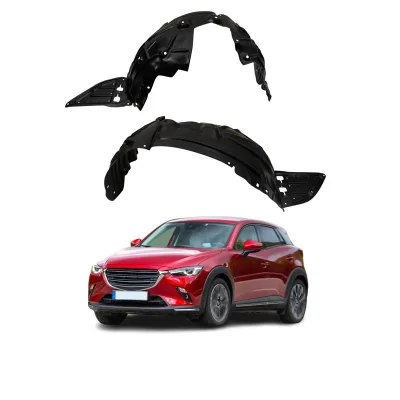
The application of PE inner fender liners is highly specific to vehicle make, model, and year. Market data indicates that these parts are designed for a wide range of passenger cars, with specific listings highlighting compatibility with models such as the "MODEL S MODEL" and the "CX-3 2017-2019." The "Fitting Position" is consistently identified as "Front Fender" or "Rear Fender," and some products are designated for specific sides, such as "front fender liner front left." This specificity underscores the importance of matching the part number or OE number to the vehicle's requirements.
The "Car Make" and "Model Number" fields are critical for ensuring compatibility. For instance, a liner designed for a Mazda CX-3 will not fit a Tesla Model S without modification. Buyers must cross-reference the "OE NO." (Original Equipment Number), which is often listed as "OEM STANDARD" or specific codes like "106369300D," to ensure a precise fit. The "Standard" for production is often described as "according to customer," suggesting that suppliers can adapt their manufacturing to meet specific vehicle requirements, but this requires clear communication of the target vehicle's specifications.
In addition to passenger cars, these liners are used in various automotive repair scenarios. The "Purpose" is explicitly stated as "for replace/repair," indicating that they are essential for restoring the vehicle's protective barriers after accidents or wear. The "Brand Name" associated with these parts, such as "BUCS" or "Saivis," may influence buyer preference, but the technical specifications and fitment data remain the primary decision factors. Buyers should prioritize parts that explicitly state their compatibility with their specific vehicle model to avoid the risk of purchasing incompatible components.
Supplier Evaluation and Operational Capabilities
Evaluating a supplier for PE inner fender liners requires a holistic assessment of their operational capabilities, location, and service offerings. The "Place of Origin" for most listed products is China, with specific regions like "Guangdong" and "Zhejiang" frequently mentioned. These regions are known for their robust manufacturing ecosystems and supply chain efficiency. However, buyers should verify the supplier's physical location and production capacity to ensure they can meet demand fluctuations.
Service levels are another critical evaluation metric. Listings often highlight "Service:: 24 Hours," indicating a commitment to rapid response and support. This is particularly important for aftermarket suppliers who need to address urgent repair needs. The "Payment" terms, typically "T/T" (Telegraphic Transfer), are standard in the industry, but buyers should negotiate terms that align with their cash flow and risk management strategies. Additionally, the "Packing" method, which can range from "Bag/Carton" to "Carton+Wooden Case," affects the safety of the product during transit. Proper packaging is essential to prevent damage to the liners, which can be susceptible to cracking if not handled correctly.
The "Selling Units" are often listed as "Single item," which simplifies the procurement process for individual buyers. However, for bulk orders, buyers should confirm if the supplier offers volume discounts or consolidated shipping options. The "Single volume" and "Single gross weight" of the product, while sometimes listed as 0 cm³ and 0.0 kg in placeholder data, are critical for logistics planning. Buyers should request accurate weight and volume data to calculate shipping costs and storage requirements accurately.
Quality Control and Long-Term Procurement Strategies
Implementing a robust quality control (QC) strategy is essential for long-term procurement success. The "Quality" attribute is frequently cited as "100% Test," but buyers should establish their own QC protocols to verify this claim. This may involve requesting third-party inspection reports or conducting random sampling upon receipt of goods. The "Condition" of the product must be strictly "New," and any signs of wear or damage should be rejected immediately.
Long-term procurement considerations include the stability of the supply chain and the availability of spare parts. Suppliers with a "Warranty" of 6 to 12 months provide a safety net against manufacturing defects, but buyers should also consider the supplier's track record for consistency. The "Leading Time" of 7 to 30 days suggests that suppliers can generally meet standard delivery schedules, but buyers should plan for potential delays, especially during peak seasons or supply chain disruptions.
Finally, buyers should maintain a clear record of all product specifications, including the "prod_model" (e.g., MC059, MC054, MCW003) and "prod_packing" details. This documentation is crucial for future reordering and ensures that the correct parts are sourced for specific vehicle models. By adhering to these guidelines and leveraging the available market data, buyers can effectively navigate the complex landscape of PE Inner Fender Liner procurement, ensuring they receive high-quality, compatible, and reliable components for their automotive needs.
FAQs
What materials are used for pe inner fender liners?
Products are commonly made from ABS, plastic with other additives, or steel. The specific material depends on the vehicle model and application requirements, with some listings specifying plastic plus other components for durability.
Can I get customization for these fender liners?
Yes, customization is available for these products to meet specific vehicle configurations. Buyers can request modifications to fit unique aftermarket setups or specific OEM standards as per customer requirements.
How long is the lead time for production?
The leading time typically ranges from 7 to 30 days depending on order volume and supplier capacity. This duration covers the manufacturing process before the goods are ready for shipment via air or sea freight.
Which certifications do the suppliers hold?
Suppliers often claim adherence to ISO standards for quality management and manufacturing consistency. Buyers should verify specific ISO documentation to ensure the supplier maintains structured quality assurance protocols for every unit.
What is the minimum order quantity for these parts?
The minimum order quantity ranges from 1 piece to 2 pieces per item. This flexibility allows buyers to source single units for repairs or small batches for fleet maintenance without excessive inventory requirements.
How are the products packed for shipping?
Packing options include bags, cartons, or cartons with wooden cases to ensure safety during transit. The specific packaging method is selected to prevent damage to the liners, which can be susceptible to cracking if handled roughly.