Source Diffuse Reflection Optical Sensor for Assembly, Packaging, and Sorting
Find 30 available units of Diffuse Reflection Optical Sensor designed for industrial automation. Buyers can compare models like FFR-410 and FFGR-620, noting features such as NPN/PNP outputs and detection distances up to 180mm from verified Chinese manufacturers.
Key considerations
Products List


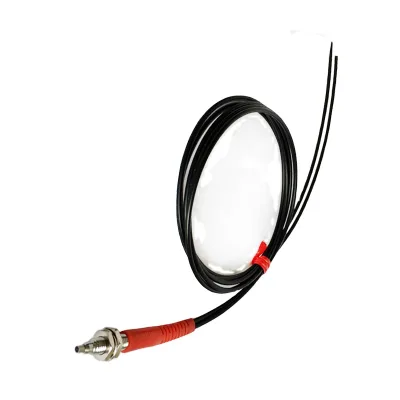


$30.00 - $60.00
MOQ: 10 Pieces
Comprehensive Sourcing Guide
Strategic Sourcing Guide for Diffuse Reflection Optical Sensors
Understanding the Core Technology and Operating Principles
Diffuse reflection optical sensors represent a critical class of industrial automation components designed to detect the presence or absence of objects without requiring a separate reflector or receiver unit. In this configuration, the sensor emits light from its built-in source, which strikes the target object and scatters diffusely. A portion of this scattered light returns to the sensor's receiver, triggering a signal change. The supplied product data indicates that these devices often utilize a "Structural Fiber Optic Sensor" or "Physical Properties Fiber Optic Sensor" as their underlying measuring principle, suggesting advanced optical path engineering for specific industrial environments.
A key technical distinction in this category is the "Diffuse Reflection" type, which relies on the surface properties of the target to function effectively. The observed product attributes highlight a "Sensing Distance" range of 0-55mm for specific fiber optic models, while other variants in the same product family list a "Detection Distance" of up to 180mm. This variance underscores the importance of matching the sensor's optical geometry to the application's physical constraints. Buyers must verify the specific "Sensing Type" for their use case, as the "Diffuse Reflection" mode is distinct from retro-reflective or through-beam technologies. The modulation formats observed in the market data include "Frequency State Modulation" and "Intensity Modulation," which are critical for distinguishing the target signal from ambient light interference or background noise.
The physical construction of these sensors varies significantly based on the intended environment. The product catalog notes materials ranging from "Metal" to "Stainless Steel," with specific mentions of "Convex Tube" dimensions such as $\Phi$ 2.5 \times 20mm. These physical dimensions dictate the mounting options and the minimum space required for installation. Furthermore, the "Fiber Core" is described as "Coaxial," and the "Bending Radius" is specified as R15, indicating that the fiber optic cables require careful handling to maintain signal integrity. The "Optic Fiber Head" often features an "M3 Thread," which is a standard for securing the sensor head to mounting brackets or machinery.
Technical Specifications and Performance Verification
When evaluating diffuse reflection optical sensors, buyers must scrutinize a comprehensive set of technical specifications to ensure compatibility with their production lines. The power supply requirements are a primary constraint, with the observed data specifying a "12-24VDC" operating range. This standard voltage range allows for integration with most industrial PLCs and control systems, but verification of the specific voltage tolerance is necessary to prevent damage during installation.
The output capabilities of these sensors are equally critical. The market data reveals a mix of "NPN" and "PNP" output types, alongside "Analog Type" and "Digital Type" signal outputs. This diversity means that a buyer cannot assume a universal output configuration; the sensor must be selected to match the input requirements of the receiving controller. For instance, a system designed for NPN logic will not function correctly with a PNP output sensor without additional interface hardware. The "Compatible Fiber Amplifier" is listed as "FF-403" for certain models, indicating that the sensor head and amplifier are often sold as a matched pair to ensure optimal signal processing.
Environmental resilience is another paramount specification. The "Wotking Temperature" (Operating Temperature) is observed to range from -20°C to 70°C, while the "Ambient Temperature" for some models extends from -25°C to 60°C. These ranges define the thermal limits within which the sensor can maintain accuracy. Additionally, the "IP Rating" is noted with material-specific qualifiers, such as "IPMaterial:Metal" and "IPMaterial:Stainless Steel," suggesting that the ingress protection level is tied to the housing material. Buyers should verify the exact IP code (e.g., IP67, IP69K) rather than relying solely on material descriptions, as the rating determines resistance to dust and water immersion.
The detection capabilities also vary by model. The "Min Detection Objects" are specified as $\phi$0.5 for general applications, while more specialized fiber optic variants can detect a "Dia0.03mm Gold Wire." This extreme sensitivity highlights the potential for these sensors to be used in high-precision manufacturing, such as electronics assembly or wire processing. The "Production Process" is described as "Integration," implying that these sensors are often designed to be seamlessly embedded into larger automated systems.
Compliance, Certification, and Regulatory Standards
Navigating the compliance landscape is essential for global procurement. The supplied product information confirms that many diffuse reflection optical sensors carry "ISO" certification, with specific references to "CE," "RoHS," and "ISO9000" certificates. These certifications are not merely marketing labels but indicate adherence to international safety, environmental, and quality management standards. The "CE" mark is particularly vital for selling or operating equipment within the European Economic Area, ensuring that the product meets health, safety, and environmental protection requirements.
"RoHS" compliance is a non-negotiable standard for electronic components, restricting the use of hazardous substances like lead, mercury, and cadmium. This is crucial for manufacturers aiming to maintain a sustainable supply chain and avoid regulatory penalties. The "ISO9000" certification suggests that the manufacturing process follows a documented quality management system, which can be a proxy for consistent product reliability. However, buyers should verify that the certification applies to the specific product model and batch, as certifications can sometimes be held at the corporate level rather than for individual SKUs.
In addition to certifications, the "prod_standard" values provide insight into the physical specifications of the units. Observed standards include weights such as "240g," "10g," "60g," and "20g," which likely correspond to different housing sizes and internal component densities. While these are not regulatory standards, they serve as quality indicators for build consistency. The "prod_model" identifiers, such as "FFR-410," "FFR-610-S," "FFR-610-M," "FFRG-620," "FFGR-620," and "FFRC-310," act as unique fingerprints for each configuration. Buyers must ensure that the model number aligns with the required technical specifications, as even minor suffix changes (e.g., -S vs. -M) can denote significant differences in sensing distance or output type.
Cost Drivers and Procurement Economics
The pricing and minimum order quantity (MOQ) structures for diffuse reflection optical sensors are influenced by several factors, including customization, material composition, and production complexity. The observed price range spans from $0.10 to $400.00 USD, a wide spectrum that reflects the difference between basic fiber optic heads and fully integrated sensor systems with advanced amplifiers. The lower end of the range likely corresponds to simple fiber optic cables or basic sensor heads, while the higher end encompasses complete sensor units with specialized features like analog output or high-precision detection capabilities.
MOQ values are equally variable, ranging from 1 unit to 5,000 units. This flexibility allows buyers to scale their procurement based on project needs. For prototyping or small-batch production, an MOQ of 1 is highly advantageous, enabling cost-effective testing and validation. Conversely, large-scale manufacturing operations may benefit from bulk purchasing at the higher end of the MOQ range to secure volume discounts. The "OEM/ODM" attribute is marked as "Yes" in the product data, indicating that suppliers are willing to customize branding, packaging, or technical specifications for bulk orders. This capability can significantly impact the total cost of ownership, as custom solutions often command a premium but reduce long-term integration costs.
The "prod_packing" methods, listed as "White Box" or "Plastic Bag," also influence logistics costs. Bulk packaging in plastic bags may reduce unit shipping costs but requires additional handling for retail or specific industrial packaging requirements. The "Lead Time" is specified as "7days After Payment Done" for certain models, which is a relatively short turnaround time for industrial components. However, buyers should verify if this lead time applies to all configurations or only standard stock items, as custom orders may require extended production schedules.
Typical Applications and Industry Use Cases
Diffuse reflection optical sensors are ubiquitous in modern manufacturing due to their versatility and ease of installation. The "Functional Type" is described simply as "Functional," implying broad applicability across various sectors. The ability to detect objects ranging from a $\phi$0.5 item to a 0.03mm gold wire makes these sensors suitable for both heavy industrial and delicate electronics applications.
In the automotive industry, these sensors are often used for part presence detection on assembly lines, where the "Diffuse Reflection" mode allows for the detection of metallic and non-metallic parts without the need for precise alignment. The "Stainless Steel" housing option is particularly valuable in this sector, as it resists corrosion from coolants and oils. In the electronics manufacturing sector, the high sensitivity to "Dia0.03mm Gold Wire" enables the detection of fine components during PCB assembly or wire bonding processes.
The "Integration" production process suggests that these sensors are designed for seamless incorporation into automated machinery. The "1m Cable, Free Cutting" specification is a notable feature for applications where cable length needs to be adjusted to fit specific machine layouts. This flexibility reduces installation time and labor costs. Furthermore, the "Structural Fiber Optic Sensor" principle is often employed in applications requiring extreme precision or where the sensor head must be placed in tight spaces, such as inside medical devices or micro-machining equipment.
Supplier Evaluation and Quality Assurance
Selecting the right supplier requires a rigorous evaluation of their technical capabilities and quality assurance processes. The presence of "ISO" and "ISO9000" certifications is a strong indicator of a supplier's commitment to quality, but buyers should also request evidence of these certifications for the specific product line. The "Warranty" period of "3 Years" is a significant differentiator, suggesting that the manufacturer stands behind the durability of their products. However, buyers must clarify the terms of this warranty, including what constitutes a valid claim and the process for replacement or repair.
The "Customization" and "Customized" attributes indicate that suppliers are flexible in meeting specific client needs. This is crucial for buyers with unique application requirements that standard off-the-shelf products cannot satisfy. When evaluating suppliers, buyers should assess their ability to provide technical support, including assistance with sensor alignment, wiring diagrams, and troubleshooting. The "Compatible Fiber Amplifier" specification suggests that the supplier should provide a complete ecosystem of components, ensuring that the sensor and amplifier work together optimally.
Quality control should be a central part of the procurement strategy. Buyers should verify the "Production Process" to ensure that the "Integration" steps are performed under controlled conditions. The "Lead Time" of 7 days after payment is a metric that should be monitored closely; consistent delays can disrupt production schedules. Additionally, the "prod_origin" is listed as "China," which is a major manufacturing hub for these components. While this location offers cost advantages, buyers should ensure that the supplier has robust logistics and quality control measures in place to prevent defects during transit.
Long-Term Procurement and Lifecycle Management
Sourcing diffuse reflection optical sensors is not just a one-time transaction but a long-term partnership that requires careful lifecycle management. The "3 Years" warranty provides a baseline for product reliability, but buyers should plan for the eventual replacement of sensors due to wear and tear or technological obsolescence. The "Modulation Formats" and "Sensing Distance" specifications should be reviewed periodically to ensure they remain adequate for evolving production requirements.
The "OEM/ODM" capability allows for brand alignment and potential cost savings over time. By working with a supplier who can customize products, buyers can optimize the sensor design for their specific applications, potentially extending the service life of the equipment. The "Free Cutting" cable feature also contributes to long-term value by allowing for easy repairs or modifications without replacing the entire sensor unit.
Finally, buyers should maintain a strategic inventory of critical spare parts. Given the wide range of "prod_model" identifiers and the specific nature of "Diffuse Reflection" sensors, stocking a variety of models can prevent production downtime. The "White Box" and "Plastic Bag" packaging options should be considered in the context of storage conditions to prevent damage to the sensitive optical components. By adhering to these long-term procurement strategies, buyers can ensure a stable and efficient supply of diffuse reflection optical sensors for their industrial operations.
FAQs
What is the operating temperature range for these sensors?
The operating temperature ranges from -20°C to 70°C for standard models. Some variants support ambient temperatures from -25°C to 60°C, ensuring reliability in diverse industrial environments.
Which output types are available for these optical sensors?
Available output types include NPN, PNP, Analog, and Digital signals. Buyers must select the specific type that matches their controller's input requirements to ensure proper system integration.
Can these sensors detect very small objects like gold wires?
Yes, specialized fiber optic models can detect objects as small as 0.03mm diameter gold wires. General models typically detect minimum objects of 0.5mm diameter depending on the specific configuration.
What certifications do these diffuse reflection sensors hold?
These sensors hold ISO, CE, RoHS, and ISO9000 certifications. These documents confirm adherence to international safety, environmental, and quality management standards for global procurement compliance.
How long is the lead time for these products?
The lead time is typically 7 days after payment is completed for standard models. Customized orders or specific configurations may require additional time beyond this standard processing period.
What materials are used for the sensor housing?
Housing materials include metal and stainless steel options. Stainless steel variants offer enhanced corrosion resistance, making them suitable for harsh industrial environments requiring durable protection.