Source Digital Fillet Weld Gauge for inspection, testing, and quality control
Compare 30 Digital Fillet Weld Gauge options from verified suppliers. These precision measuring devices support metric and inch readings with high accuracy for weld height and fillet thickness applications.
Key considerations
Products List


0-12.5mm Digital Fillet Weld Gauge with 0.01mm Resolution Weld Seam Measuring Gauge
$1.00 - $99.00
MOQ: 5 Pieces


Prefessional LCD Display 0-10mm/0-4'' Digital Welding Gauge Caliper Measuring Device
$40.00 - $50.00
MOQ: 10 Pieces
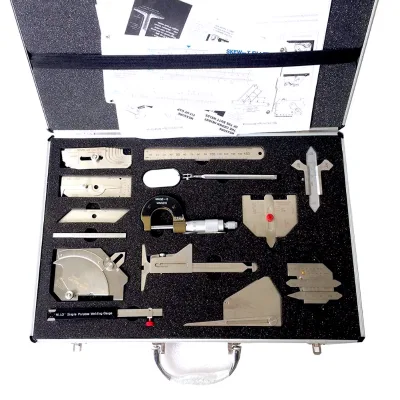

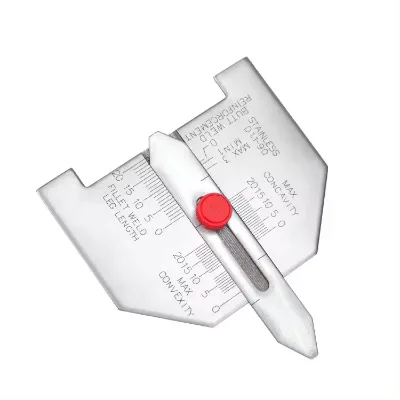


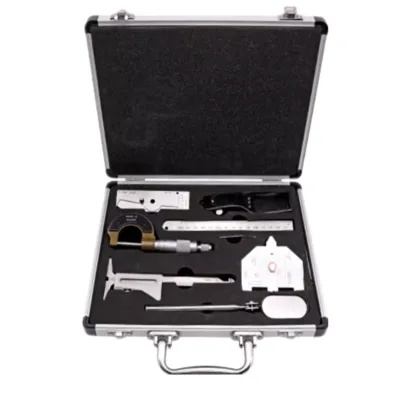
$50.00 - $190.00
MOQ: 1
Comprehensive Sourcing Guide
Strategic Sourcing Guide for Digital Fillet Weld Gauges
Understanding the Technical Landscape of Digital Weld Measurement
The procurement of digital fillet weld gauges requires a precise understanding of the device's core function: measuring weld dimensions such as weld height, fillet thickness, and leg length with high accuracy. In the current market, these instruments are often categorized under precision measuring devices designed specifically for inspection tasks. The primary application for these tools is in quality assurance environments where weld integrity is critical, such as in structural steel fabrication, pipeline construction, and heavy machinery assembly.
When evaluating the technical specifications of available units, buyers must distinguish between different measurement methods. The supplied data indicates that some devices utilize an automatic measurement approach, which can significantly streamline the inspection process compared to manual reading methods. A critical technical attribute to verify is the resolution of the device. High-precision gauges typically offer a resolution of 0.01mm, allowing for the detection of minute deviations in weld geometry. Furthermore, the reading accuracy is a paramount specification; observed data suggests a reading accuracy of +/- 0.01mm for certain high-end models, while others may offer a standard accuracy of 0.1mm. Buyers should not assume all units meet the highest precision tier and must verify the specific accuracy rating against their project tolerance requirements.
The physical design of the gauge also plays a significant role in its usability. The market offers gauges constructed from stainless steel, a material choice that ensures durability and resistance to corrosion in industrial environments. Some models feature a design that allows for switching between metric and inch measurements, providing versatility for international projects. The power supply is another technical consideration; battery-operated units are common, with specific configurations requiring 1.55V batteries, such as the Lr 1130 Sw type. Understanding these power requirements is essential for maintenance planning in remote or field-based inspection scenarios.
Compliance, Certification, and Standard Verification
In the realm of industrial metrology, compliance is not merely a formality but a fundamental requirement for ensuring the reliability of measurement data. When sourcing digital fillet weld gauges, buyers must rigorously verify the certification status of the equipment. The available market data highlights a range of certifications that reputable manufacturers may hold, including ISO, RoHS, CE, GB, ANSI, DIN, and JIS. These certifications indicate that the product meets specific international standards for safety, environmental compliance, and manufacturing quality.
It is crucial to note that while some products may list multiple certifications such as ISO, RoHS, CE, GB, and DIN, others might only carry a subset like ISO, RoHS, and GB. Buyers should not assume that a single listing implies universal compliance with all standards. Instead, the procurement strategy should involve requesting specific certification documentation for the exact model number being considered. For instance, a model with the designation "HG-014" might have different compliance attributes compared to a "Wg-3" unit.
Regarding standards, the industry often references specific dimensional or testing standards. While some background knowledge suggests standards like ISO 5817 for weld quality, the specific product data provided lists standards such as "SGS" and specific dimensional codes like "302010" which may refer to packaging or specific model dimensions rather than a universal testing standard. Buyers must clarify these references with the supplier. The presence of a "Through Check Method" as a test method in the product attributes suggests that the device itself undergoes rigorous internal verification. However, the final validation of the gauge's accuracy should ideally be traceable to national or international metrology standards.
Cost Drivers and Pricing Structure Analysis
The pricing structure for digital fillet weld gauges is influenced by several variable factors, creating a wide range of potential costs. The observed market data indicates a price range from $0.85 to $2000 USD. This vast disparity is not indicative of a single product line but rather reflects the diversity of the market, ranging from basic analog or simple digital tools to highly sophisticated, automated precision instruments.
Several key drivers influence where a specific unit falls within this price spectrum. First, the precision level is a primary cost driver. Units offering a resolution of 0.01mm and an accuracy of +/- 0.01mm will naturally command a higher price point compared to those with 0.1mm accuracy. Second, the material composition affects cost; stainless steel construction is generally more expensive than alternative materials due to its durability and corrosion resistance. Third, the complexity of the measurement method plays a role; automatic measurement devices typically cost more than manual reading gauges due to the integrated electronics and software required.
Packaging and customization are also significant cost factors. The data shows options ranging from standard plastic boxes to leather bags, with some leather bags featuring logo printing at no extra cost. Customization options, such as specific model numbers (e.g., HG-012, HG-031, MG-11) or tailored packaging requirements, can influence the final unit price. Buyers should be aware that "Stainless Steel" items are sometimes noted as being "on Promotion," which may offer temporary cost savings but requires careful verification of the product's actual specifications during the promotional period.
Typical Applications and Usage Scenarios
Digital fillet weld gauges are specialized tools designed for specific inspection scenarios. The primary application, as indicated by the product attributes, is for the inspection of weld height and fillet thickness. These measurements are critical in ensuring that welds meet the design specifications and structural requirements of the final product. The gauge is particularly useful in applications where the angle of preparation is between 0 and 60 degrees, allowing for versatile use across various joint configurations.
The shape of the measurement object is another factor in application suitability. While some gauges are designed for rectangular measurement objects, others are optimized for round objects. This distinction is vital for buyers working with different types of welds, such as those found in pipe fittings (round) versus plate structures (rectangular). The ability to measure the inside diameter is also a feature of certain models, expanding their utility beyond simple fillet welds to include bore and internal dimension checks.
Furthermore, the "Usage" attribute explicitly states these tools are "For Inspection," confirming their role in quality control processes rather than general construction or fabrication. This distinction is important for procurement departments to ensure the right tool is allocated to the correct department. The device's design as a "Precision Gauge" underscores its role in maintaining high standards of workmanship, making it indispensable for industries where weld failure could lead to catastrophic consequences, such as in aerospace, automotive, and pressure vessel manufacturing.
Supplier Evaluation and Procurement Parameters
When evaluating potential suppliers for digital fillet weld gauges, buyers must look beyond the product listing and assess the supplier's ability to meet specific procurement parameters. The data indicates that the origin of these products is primarily China, with specific mentions of "Cn" and "China" as the production location. This geographical context is important for understanding logistics, lead times, and potential trade barriers.
A critical parameter in supplier evaluation is the Minimum Order Quantity (MOQ). The observed MOQ range spans from 1 piece to 1000 pieces. This flexibility is advantageous for buyers who may need to start with a small sample order before committing to a larger volume. The data confirms that sample orders are accepted, which is a positive indicator of supplier willingness to engage in the pre-procurement phase. Buyers should verify if the sample order policy includes any specific conditions regarding shipping costs or sample fees.
Customization capabilities are another key evaluation criterion. The product attributes show that customization is available, with options for both "Customized" and "Non-Customized" variants. Some suppliers offer specific packaging solutions, such as leather bags with free logo printing or packaging up to the customer's requirement. This level of flexibility can be crucial for companies that need branded tools for their inspection teams or specific packaging for regulatory compliance.
The delivery terms also require attention. Some suppliers offer delivery in leather bags, which may imply a specific packaging standard for the final product. Buyers should clarify the "Well Package" attribute to ensure that the shipping method protects the delicate measuring instruments during transit. Additionally, the lead time, while not explicitly detailed in the numerical data, is a factor that must be negotiated based on the supplier's current production capacity and the complexity of the customization requested.
Quality Control and Long-Term Procurement Strategy
Ensuring the long-term reliability of digital fillet weld gauges requires a robust quality control strategy. The presence of specific test methods, such as the "Through Check Method," suggests that manufacturers have internal processes to verify the accuracy of their devices. However, buyers should not rely solely on these internal claims. Instead, a comprehensive quality control plan should include third-party verification of the gauge's accuracy against known standards before acceptance.
The resolution and reading accuracy of the device are the primary metrics for quality assessment. As noted, some models offer a resolution of 0.01mm, while others may have a reading accuracy of 0.1mm. Buyers must ensure that the selected gauge meets the specific tolerance requirements of their welding processes. Regular calibration is essential to maintain this accuracy over time. The power supply requirements, such as the need for 1.55V Lr 1130 Sw batteries, should be factored into the long-term operational costs and maintenance schedule.
For long-term procurement, buyers should consider the availability of spare parts and the supplier's support infrastructure. The variety of model numbers, including HG-014, HG-031, HG-012, MG-11, Wg-3, Wg-10, Wg-1, WG-11, Wg-2, and Wg-4, indicates a diverse product line. Selecting a supplier with a broad range of models can provide future-proofing against obsolescence. Additionally, the availability of certifications like ISO, RoHS, CE, and others should be maintained throughout the product lifecycle to ensure continued compliance with changing regulations.
In conclusion, sourcing digital fillet weld gauges requires a balanced approach that considers technical specifications, compliance, cost, and supplier reliability. By carefully evaluating the provided attributes and verifying them against project needs, buyers can secure high-quality instruments that enhance the precision and efficiency of their welding inspection processes. The wide range of options available, from basic models to high-precision automated devices, allows for tailored procurement strategies that align with specific operational requirements and budget constraints.
FAQs
What certifications do digital fillet weld gauges typically hold?
Digital fillet weld gauges often hold ISO, RoHS, CE, GB, ANSI, DIN, and JIS certifications. Some models may only list a subset like ISO, RoHS, and GB. Buyers should verify specific certification documentation for the exact model number being considered.
How is the accuracy of these gauges measured?
Accuracy varies by model, with some offering a reading accuracy of plus or minus 0.01 mm and others providing 0.1 mm. The resolution is typically 0.01 mm for high-precision units. Buyers must verify the specific accuracy rating against their project tolerance requirements.
Can these gauges switch between metric and inch units?
Yes, many models feature a switchable design allowing users to toggle between metric and inch measurements. This versatility supports international projects requiring different unit systems. The specific capability depends on the model, such as those with the Wg-1 designation.
What materials are used to construct these precision gauges?
The primary material used is stainless steel, which ensures durability and corrosion resistance in industrial environments. Some listings also mention steel as a general material category. Stainless steel construction is often highlighted as a premium feature for long-term reliability.
What is the minimum order quantity for these devices?
The minimum order quantity ranges from 1 piece to 1000 pieces depending on the supplier and model. Sample orders are generally accepted to allow buyers to test the product before committing to larger volumes. This flexibility supports both small and large procurement needs.
How are these gauges packaged for delivery?
Packaging options include plastic boxes, leather bags, or custom requirements up to the customer's specification. Some leather bags come with free logo printing. The delivery method may also be specified as a well package to ensure protection during transit.
What is the power supply requirement for these digital gauges?
Most units operate on a 1.55 V battery, specifically the Lr 1130 Sw type. This power supply configuration is common for battery-operated digital devices. Buyers should plan for maintenance and replacement of these specific battery types for field operations.
Which models are available for measuring weld height and thickness?
Available models include HG-014, HG-031, HG-012, MG-11, and various Wg series like Wg-3 and Wg-10. These devices are designed for applications involving weld height and fillet thickness measurements. The specific model should be selected based on the required measurement object and precision.