Source Digital Printing Sleep Eye Mask for Travel, Office, and Home Use
Compare 30 listings for Digital Printing Sleep Eye Mask options featuring silk and cotton materials with custom designs. Buyers can evaluate customization, MOQ, and lead times from suppliers in China for various applications.
Key considerations
Products List


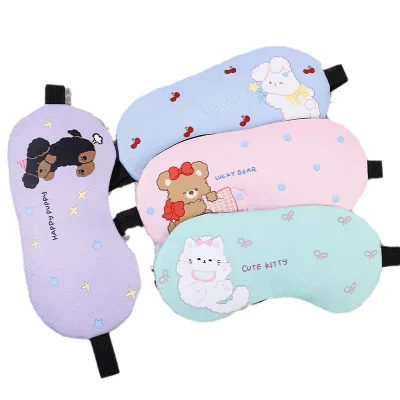


Comprehensive Sourcing Guide
Strategic Sourcing Guide for Digital Printing Sleep Eye Masks
The global demand for high-quality sleep accessories has surged, with digital printing sleep eye masks emerging as a premium segment within the personal wellness and sleep hygiene market. For B2B procurement professionals, sourcing these items requires a nuanced understanding of material science, manufacturing capabilities, and supply chain logistics. This guide synthesizes available product attributes and industry standards to provide a disciplined framework for evaluating suppliers and selecting products that meet specific commercial and functional requirements. The focus remains on evidence-based criteria derived from observed market data, ensuring that procurement decisions are grounded in verifiable facts rather than speculative marketing claims.
Material Composition and Functional Attributes
The foundation of a high-performance sleep eye mask lies in its material composition. In the current market, silk and cotton represent the two dominant material categories, each offering distinct tactile and functional benefits. Silk is frequently cited as a premium option, often described as "100% silk" in product specifications. This material is valued for its hypoallergenic properties and smooth texture, which minimizes friction against the skin, making it particularly suitable for individuals with sensitive skin or those prone to sleep-related wrinkles. The observed product data confirms that silk is a primary material for masks designed to promote sleep and address features like dark circles.
Conversely, cotton offers a breathable, cost-effective alternative. Specifications indicate the availability of "100% cotton" fabrics, which are often preferred for their durability and ease of care. Cotton masks are generally categorized as suitable for "all skin types," a critical consideration for mass-market distribution. When evaluating suppliers, buyers must verify the exact fabric composition. While "silk" and "cotton" are common labels, the distinction between 100% natural fibers and blends can significantly impact the product's price point and end-user experience. The attribute "Non-Disposable" is a standard expectation for these items, indicating a design for repeated use and long-term durability.
Technical Specifications and Customization Capabilities
Customization is a defining characteristic of the Digital Printing Sleep Eye Mask market. The observed data highlights a robust "Make-to-Order" supply type, allowing buyers to tailor products to specific brand identities. Key customization attributes include "Customized" colors, "Custom" designs, and the ability to incorporate specific "Logo/graphic design" elements. Suppliers often accept "customized logo" requests, enabling brands to create unique visual identities. The "Style" of these masks ranges from "Fashion" to "Printed," with "Four Season" applicability suggesting versatility in climate conditions.
Dimensional specifications vary significantly based on the intended fit and function. Observed standards include specific measurements such as "8.5*4.5inch" and "20 CM x 10 CM," while other entries note a standard of "one size" or "regular size." Some products specify precise packaging dimensions like "19X8X1 cm" or "20x10x7cm," which are crucial for logistics planning. The "Single package size" and "Size Type" are critical for inventory management. Buyers should verify that the "prod_standard" aligns with their target demographic's comfort needs, as a "one size" fit may not suit all head shapes. The "Feature" of "shading light" is a functional requirement for effective sleep masks, ensuring complete darkness to promote melatonin production.
Packaging Standards and Logistics Considerations
Packaging plays a dual role in protecting the product during transit and enhancing the unboxing experience for the end consumer. The observed market data reveals a variety of packaging methods, including "Polybag," "OPP Bag," and "PP Bag." Specific configurations range from "1 PC in 1 PP Bag" to "One Piece One OPP Bag for Free." For bulk orders, the standard practice involves an "Export Carton" to ensure structural integrity during shipping. The "prod_packing" attribute often specifies "One PC One PP Bag" for individual units, which is essential for maintaining hygiene and preventing damage.
Logistics and delivery timelines are equally critical for B2B procurement. The "Delivery Time" can vary from "3-7 Days" for express shipments to "15-20 Days" for standard production runs. The "Sample Time" is typically estimated at "Two Weeks," which is a vital metric for product development cycles. Shipping methods such as "Door to Door Express DHL, FedEx" are commonly offered, providing flexibility for urgent orders. Payment terms usually require a "Downpayment Before Production" with the "Balance Payment" settled before or upon delivery. Understanding these lead times and payment structures is essential for maintaining cash flow and meeting market launch deadlines.
Compliance, Certification, and Quality Verification
While the provided data includes references to certifications like "CE" and standards such as "ISO13485," these are noted as low-confidence background information and should not be assumed as universal guarantees for all listed products. In the context of sleep masks, which are often classified as general consumer goods rather than medical devices, the necessity for ISO13485 (a standard for medical device quality management) may vary. Buyers must conduct independent verification of any certification claims.
Quality control should focus on verifying the "Material" claims against physical samples. For silk products, the "100%silk" standard must be confirmed through fabric testing to ensure authenticity. Similarly, for cotton products, the "100% cotton" claim should be validated. The "Feature" of "shading light" requires practical testing to ensure the mask blocks out light effectively, a key performance indicator for sleep aids. Buyers should also inspect the "prod_packing" for durability and the "Label" quality, which can be "Normal Label for Free or as Demand." The absence of specific test results in the general data underscores the need for third-party laboratory testing to validate claims regarding skin safety and light blockage.
Cost Drivers and Minimum Order Quantities
The pricing structure for digital printing sleep eye masks is influenced by material costs, customization complexity, and order volume. The observed price range in the market spans from $0.2 to $7.00 USD, reflecting the wide disparity between basic cotton models and premium silk variants with intricate digital printing. The "MOQ" (Minimum Order Quantity) is a significant cost driver, with observed ranges from 10 to 10,000 units. Specific supplier requirements may set the MOQ at "50" or "50PCS Per Design," which can impact the feasibility of small-batch orders.
The "Supply Type" of "Make-to-Order" inherently affects pricing, as it involves dedicated production runs rather than off-the-shelf inventory. Customization elements such as "Customized" colors and "Design" work add to the unit cost. Buyers should anticipate that higher customization levels and premium materials like silk will push the price toward the upper end of the observed range. Additionally, the "available quantity" of 10,000 units for certain models suggests that large-scale orders may benefit from economies of scale, though this is subject to the specific supplier's capacity.
Supplier Evaluation and Long-Term Procurement Strategy
Selecting a reliable supplier requires a holistic evaluation of their capabilities, location, and operational stability. The "prod_origin" is predominantly "China," with specific hubs like "Hangzhou, China" and "Zhejiang, China" identified as key manufacturing centers. These regions are known for their textile industry expertise, which is advantageous for sourcing silk and cotton products. However, buyers should verify the specific factory location to ensure it aligns with their ethical sourcing policies and logistical preferences.
The "Supply Type" of "OEM/ODM" indicates that suppliers are equipped to handle both original equipment manufacturing and original design manufacturing. This flexibility is crucial for brands looking to differentiate their products. When evaluating suppliers, buyers should assess their "Sample Time" and "Production Time" consistency. A supplier claiming a "Two Weeks" sample time and "15-20 Days" production time must demonstrate a track record of meeting these deadlines. The "Terms of Payment" and "Shipping Method" should be clearly defined in the contract to mitigate financial and logistical risks.
Long-term procurement success depends on building a partnership based on transparency and reliability. Buyers should prioritize suppliers who offer clear communication regarding "customized logo" acceptance and "Design" flexibility. The ability to scale production from small batches to large volumes, as suggested by the "available quantity" of 10,000 units, is a strong indicator of a supplier's capacity. Regular quality audits and sample testing should be integrated into the procurement process to ensure that the "Material" and "Feature" claims remain consistent over time.
Comparative Analysis of Product Attributes
To facilitate decision-making, the following table summarizes the key attributes observed in the market for digital printing sleep eye masks. This comparison highlights the variations in materials, specifications, and logistics that buyers must consider.
| Attribute Category | Option A (Premium) | Option B (Standard) | Option C (Budget) |
|---|---|---|---|
| Material | 100% Silk | 100% Cotton | Cotton Blend |
| Style | Fashion, Printed | Fashion, Printed | Basic |
| Standard Size | 8.5*4.5 inch | 20x10x7 cm | One Size |
| Packing | 1 PC in 1 PP Bag | One PC One PP Bag | Polybag |
| Customization | Custom Logo, Design | Custom Logo | Limited |
| MOQ | 50 PCS Per Design | 50 | 10 |
| Origin | Hangzhou, China | Zhejiang, China | China |
| Lead Time | 15-20 Days | 15-20 Days | 3-7 Days |
| Price Range | $3.00 - $7.00 | $1.00 - $3.00 | $0.20 - $1.00 |
This table illustrates the trade-offs between cost, quality, and customization. Premium options offer superior materials and detailed customization but come with higher MOQs and longer lead times. Standard options provide a balance of quality and cost, while budget options are suitable for high-volume, low-margin strategies. Buyers must align their selection with their specific brand positioning and target market requirements.
Conclusion
Sourcing digital printing sleep eye masks requires a meticulous approach that balances material quality, customization needs, and logistical efficiency. By focusing on verified attributes such as "100% silk" or "100% cotton," and understanding the implications of "Make-to-Order" supply types, buyers can make informed decisions that align with their strategic goals. The variability in packaging, dimensions, and lead times necessitates a thorough evaluation of each supplier's capabilities. Ultimately, successful procurement in this sector depends on rigorous quality control, clear communication of specifications, and a strategic partnership with suppliers who can consistently deliver on their promises.
FAQs
What materials are used for digital printing sleep eye masks?
Digital printing sleep eye masks are primarily made from 100% silk or 100% cotton. Silk offers a smooth texture suitable for sensitive skin, while cotton provides a breathable and durable alternative for all skin types.
Can buyers customize the design and logo on these masks?
Yes, customization is available for colors, designs, and logos on these masks. Suppliers accept make-to-order requests allowing for specific graphic designs and custom branding to meet unique brand identity requirements.
What is the typical minimum order quantity for these products?
The minimum order quantity typically starts at 50 pieces per design. Some suppliers may require a higher volume up to 10,000 units depending on the specific customization level and production capacity available.
How long does production take for custom orders?
Production time generally ranges from 15 to 20 days after sample approval. Sample preparation usually takes two weeks, followed by the main production run before the final delivery to the buyer.
Which packaging options are standard for bulk orders?
Standard packaging includes individual units in PP bags or OPP bags. For bulk orders, these are typically packed into export cartons to ensure structural integrity during international shipping and handling.
Where are these masks typically manufactured?
These masks are predominantly manufactured in China, with specific hubs in Hangzhou and Zhejiang. These regions are known for their textile expertise and ability to produce both silk and cotton variants.
What payment terms are commonly required for these orders?
Common payment terms require a downpayment before production begins. The balance payment is usually settled before or upon delivery, ensuring both parties are protected during the manufacturing and shipping process.