Source Digital Pulse Repair Battery Charger for Cars, Motorcycles, and Boats
Find 26 Digital Pulse Repair Battery Charger options from verified suppliers. Compare specifications like output power, protection features, and compatibility for lead-acid batteries across various vehicle types including cars, motorcycles, boats, and trucks with different voltage and current ratings; compare the available evidence and request quotations based on your requirements.
Key considerations
Products List


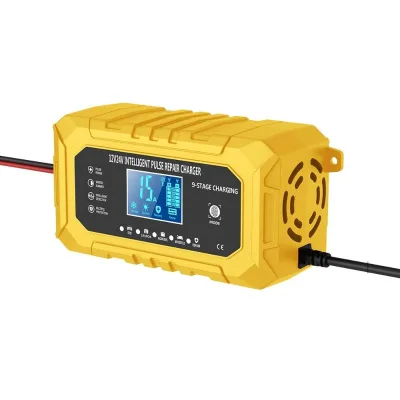


Portable Intelligent Pulse Repair Battery Charger 2.4A 12V Fast Battery Charger (48230004)
$10.00 - $30.00
MOQ: 100 Pieces


Comprehensive Sourcing Guide
Digital Pulse Repair Battery Charger Sourcing Guide
The Digital Pulse Repair Battery Charger market offers specialized solutions designed to restore lead-acid batteries through controlled electrical pulses rather than simple constant voltage charging. Buyers should prioritize units explicitly labeled with pulse repair functions, as these devices target sulfation buildup that standard chargers often miss. The observed product listings indicate a strong focus on 12-volt systems, with specific models supporting capacities ranging from 2Ah to 150Ah, making them suitable for diverse applications from small motorcycles to larger marine vessels.
When evaluating potential suppliers, procurement teams must distinguish between basic pulse chargers and advanced intelligent repair units that feature automated detection and recovery modes. The available data highlights specific model numbers like Tk-360 and Zyx-J30, which demonstrate varying output capabilities and physical dimensions. Buyers should verify that the selected unit matches their specific battery chemistry and capacity requirements, ensuring the charger can handle the full range of ampere-hour ratings without overheating or underperforming during the repair cycle.
Product Scope and Observed Listing Signals
Current market listings reveal a distinct segmentation between standard pulse chargers and intelligent repair units, with the latter offering enhanced features like over-current and over-voltage protection. The observed product attributes confirm that many units are designed for multiple vehicle types, including cars, motorcycles, boats, and trucks, while others are tailored specifically for power supply adapters. This versatility suggests that buyers should carefully review the "Use for" specifications to ensure compatibility with their intended fleet or equipment, as not all listed models support the same range of applications.
Physical specifications and packaging details also vary significantly across the observed inventory, with weights ranging from approximately 0.43kg to 0.98kg and dimensions differing based on internal component density. Some products are packaged as single items, while others utilize standard export cartons containing multiple pieces, which impacts logistics planning and storage requirements. Procurement teams must account for these physical differences when calculating shipping costs and warehouse space, ensuring that the chosen supplier's packaging standards align with the buyer's distribution strategy and handling capabilities.
Technical Specifications to Verify
Buyers must rigorously verify the output voltage and current ratings to ensure the charger can effectively service the target battery bank without causing damage. The observed data shows specific configurations such as 12V at 6A or 12V at 8A with 24V support, indicating that a single unit may not suffice for all battery sizes. It is critical to match the charger's maximum output current to the battery's capacity, as an undersized unit will fail to repair deeply sulfated batteries, while an oversized unit could potentially overheat smaller batteries if not properly regulated by intelligent control circuits.
Input voltage compatibility is another vital technical parameter, as the observed listings specify a range of 100-240V AC at 50-60Hz, which supports global usage but requires confirmation of plug types and regional frequency standards. Additionally, the material composition, typically ABS plastic, and the presence of specific protection mechanisms like short circuit, over-temperature, and over-load protection must be confirmed in the technical datasheet. These safety features are essential for preventing catastrophic failures during operation, and buyers should request detailed schematics to verify that the internal circuitry matches the claimed protection levels before finalizing any purchase order.
Compliance and Safety Documentation
Regulatory compliance is a non-negotiable aspect of sourcing digital pulse repair battery chargers, particularly given the electrical nature of the products and their intended use in vehicles and marine environments. The observed product attributes list certifications such as CE, RoHS, and PSE, which indicate adherence to specific regional safety and environmental standards. However, buyers should not assume these certifications apply to every unit in a supplier's catalog; instead, they must request valid, up-to-date test reports and certificates of conformity for the specific model numbers being procured to ensure legal market access in their target regions.
Beyond basic certifications, documentation regarding the charger's safety mechanisms and failure modes is essential for risk management. The listed protection features, including short circuit protection and over-charging safeguards, must be backed by independent laboratory testing results that validate their effectiveness under stress conditions. Procurement teams should also verify that the supplier provides clear user manuals and safety warnings in the local language, ensuring that end-users understand how to operate the device safely and what steps to take in the event of a malfunction or fault condition.
Cost Drivers and Commercial Terms
The pricing structure for digital pulse repair battery chargers is influenced by several key factors, including the complexity of the intelligent repair circuitry, the quality of internal components, and the level of customization offered. The observed price range spans from $2.50 to $7,415, reflecting a vast difference between basic entry-level units and high-capacity industrial-grade systems. Buyers should analyze the cost per unit relative to the output power and feature set, ensuring that the premium paid for advanced functions like pulse repair and intelligent detection translates into tangible performance benefits for their specific application.
Commercial terms such as Minimum Order Quantity (MOQ) and private mold availability significantly impact the total cost of ownership and supply chain flexibility. The observed MOQ ranges from 1 to 1,000 units, allowing for both small-scale testing and large-volume production runs. Additionally, the availability of private mold services suggests that buyers can customize the product's physical appearance and branding, which may incur additional tooling costs but offers long-term brand differentiation. Procurement teams must negotiate these terms carefully to balance upfront investment with the potential for volume discounts and exclusive product rights.
Supplier Qualification and Quality Control
Supplier qualification requires a thorough assessment of the manufacturer's production capabilities, specifically their ability to maintain consistent quality across different model numbers and production batches. The observed data indicates that suppliers are located in regions like Anhui, China, and offer OEM services, which implies a capacity for customization and scale. Buyers should verify the supplier's quality control processes, including incoming material inspection, in-process testing, and final product validation, to ensure that every unit meets the specified technical and safety standards before shipment.
Quality control protocols must also address the variability observed in product attributes, such as color options and weight differences, which can indicate changes in component sourcing or manufacturing processes. It is essential to establish clear acceptance criteria for these variations and to conduct regular factory audits to monitor adherence to these standards. Furthermore, buyers should require a comprehensive quality assurance plan that includes sample testing, batch sampling, and a clear protocol for handling non-conforming products, ensuring that the final delivered goods consistently meet the agreed-upon specifications and performance expectations.
Long-Term Procurement Checks
Sustaining a successful procurement relationship for digital pulse repair battery chargers requires ongoing monitoring of product performance and supplier reliability over time. Buyers should implement a system for tracking field performance data, including failure rates and customer feedback, to identify any emerging quality issues or design flaws that may not have been apparent during initial testing. This continuous feedback loop allows for proactive adjustments to specifications or supplier selection, ensuring that the product line remains competitive and reliable in the long term.
Additionally, long-term procurement strategies must account for the evolution of battery technology and charging standards, which may render current charger models obsolete or less effective. Buyers should maintain open communication with suppliers regarding upcoming product updates and technological advancements, ensuring that the supply chain can adapt to new requirements without significant disruption. By fostering a collaborative relationship based on shared goals for quality and innovation, procurement teams can secure a stable supply of high-performance digital pulse repair battery chargers that meet the evolving needs of their customers and markets.
FAQs
What certifications do these battery chargers hold?
These battery chargers hold CE, RoHS, and PSE certifications. This ensures compliance with international safety and environmental standards for electronic products. Buyers can verify these credentials when sourcing from suppliers in China to ensure product reliability and market access.
Which battery types are compatible with this charger?
The charger is designed for 12-Volt lead acid batteries ranging from 2Ah to 150Ah capacity. It supports standard, motorcycle, and car battery applications. This versatility makes it suitable for various vehicles including cars, motorcycles, boats, and trucks requiring 12V power systems.
Can I customize the product with my own brand?
Yes, customization is available including private mold options and OEM services. Buyers can request specific branding or design modifications to meet their market needs. This flexibility allows businesses to create unique product offerings while maintaining the core technical specifications of the charger.
What is the output power and current capacity?
The charger offers output power of 96W with 12V 6A current or 140W with 12V 8A and 24V 4A options. These specifications ensure efficient charging for various battery sizes. The intelligent pulse repair function helps maintain battery health during the charging process effectively.
How does the protection system work on this device?
The device features short circuit, over-voltage, over-temperature, over-load, and over-current protection. These safeguards prevent damage to both the charger and the connected battery. Intelligent repair functions further enhance safety by managing the charging cycle automatically based on battery status.
What are the physical dimensions and weight of the unit?
Dimensions vary by model, with sizes like 155x75x63mm or 450x350x355mm and weights around 0.43kg to 0.98kg. The compact design facilitates easy installation in vehicles or storage. Packaging is typically standard export cartons containing pieces for safe international shipping.
Where are these chargers manufactured and what is the origin?
These chargers originate from Anhui, China, with some listings specifying China as the general origin. Suppliers in this region offer competitive pricing and established manufacturing capabilities. Buyers can expect consistent quality standards aligned with international export requirements for electronic components.