Source Double Layer Handpainted Fruit Plate for Kitchen, Party, Daily Use
Compare 30 listings for the Double Layer Handpainted Fruit Plate across materials like ceramic, wood, and stainless steel. Buyers can evaluate specifications, certifications, and customization options for kitchen, party, and daily use applications.
Key considerations
Products List


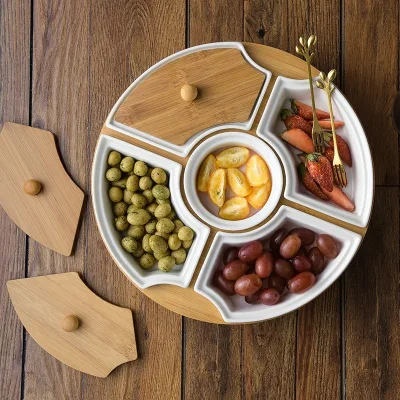


Nordic Creative Design Decoration Bowl Eco-Friendly Colorful Fruit Plate
$2.00 - $5.00
MOQ: 100 Pieces




Comprehensive Sourcing Guide
Strategic Sourcing Guide for Double Layer Handpainted Fruit Plates
The global market for premium serving ware has seen a surge in demand for items that blend aesthetic appeal with functional utility, particularly in the hospitality and high-end retail sectors. For buyers specifically researching the "Double Layer Handpainted Fruit Plate," the procurement process requires a nuanced understanding of material science, manufacturing craftsmanship, and regulatory compliance. Unlike standard single-tier platters, double-layer designs introduce complexity in structural integrity, heat retention, and decorative application. This guide synthesizes observed market data and technical specifications to provide a disciplined framework for sourcing these specialized items, ensuring that procurement decisions are grounded in verifiable facts rather than speculative marketing claims.
Technical Specifications and Material Composition
When evaluating double layer handpainted fruit plates, the primary technical differentiator lies in the material composition and dimensional stability. The market presents a diverse array of materials, ranging from natural organic sources to synthetic polymers and traditional ceramics. Observed data indicates that suppliers offer products constructed from Bamboo and Wood, Ceramic, Stainless Steel, Glass, and Plastic. Each material dictates specific handling requirements and performance characteristics.
For the "handpainted" attribute, ceramic and glass substrates are the most common candidates, as they provide a smooth, non-porous surface ideal for underglaze or overglaze color application. Specific observations note the use of "Underglaze Color" processes on ceramic items, which ensures the design is fused into the material rather than sitting on the surface, thereby enhancing durability. In contrast, wooden options often feature a "Solid Color" or "Retro Style" finish, while stainless steel and plastic variants typically prioritize function over intricate hand-painting, though "Colorful" and "Customizable" options exist for these materials.
Dimensional specifications are critical for logistics and display planning. Available data points to a wide range of sizes, including specific models with an aperture of 25 cm by a height of 20 cm, as well as standard 10-inch (25.4 cm) diameters. Other observed dimensions include a size of 37.7 cm x 16.7 cm x 4.9 cm. Buyers must verify if the "double layer" configuration refers to a physical tiered structure or a specific design motif, as this impacts the center of gravity and stacking efficiency. The "Lid Type" is often listed as "Without Lid" for these serving pieces, but this must be confirmed per order to ensure the intended presentation style is met.
Compliance and Certification Verification
In the B2B food service sector, regulatory compliance is not merely a formality but a prerequisite for market entry. Products intended for food contact must adhere to strict safety standards regarding heavy metals, leaching, and thermal stability. The observed market data highlights several key certifications that buyers should request and verify. These include CE/EU, LFGB, FDA, and CIQ.
The LFGB (German Food and Feed Code) and FDA (US Food and Drug Administration) standards are particularly relevant for ceramic and glass products, as they test for lead and cadmium leaching, which can occur in handpainted glazes. The CE marking indicates conformity with health, safety, and environmental protection standards for products sold within the European Economic Area. Additionally, CIQ (China Inspection and Quarantine) certification is often required for exports originating from China, the primary production hub noted in the supply data.
Buyers must exercise caution when interpreting certification claims. While some listings explicitly state "CE/EU, LFGB" or "CE/EU, FDA, CIQ," others may list "Consult the customer service" for standards. This ambiguity requires a proactive verification step where the buyer requests specific test reports (e.g., SGS or Intertek) for the specific batch or model number, such as BST154 or CP-36. Relying on a general "Certification" field without supporting documentation poses a significant compliance risk, especially for handpainted items where pigment safety is paramount.
Cost Drivers and Pricing Dynamics
The pricing of double layer handpainted fruit plates is influenced by a complex interplay of material costs, labor intensity, and customization levels. The observed price range in the market spans from $0.20 to $129.00 USD, a variance that reflects the spectrum from mass-produced plastic or basic ceramic items to artisanal, hand-finished luxury goods.
Labor is the most significant cost driver for "handpainted" items. Unlike machine-printed designs, hand-painting requires skilled artisans, which increases the unit cost and extends lead times. The "Customization" attribute is a major factor; while some suppliers offer "Non-Customized" standard patterns, others provide "Customizable" colors and designs, often at a premium. The "OEM" (Original Equipment Manufacturer) acceptance status further indicates that buyers can request private labeling, which adds to the cost structure.
Material selection also dictates the price floor. Ceramic and glass items generally command higher prices than plastic or stainless steel equivalents due to the firing process and fragility. The "Eco-Friendly" attribute, often associated with bamboo or wood, may also influence pricing if sustainable sourcing and processing are verified. Buyers should note that the Minimum Order Quantity (MOQ) ranges from 2 to 4,500 units. High MOQs are typically associated with lower unit costs, whereas low MOQs (e.g., 2 units) often carry a significantly higher per-unit price due to setup and handling fees.
Typical Applications and Usage Scenarios
Understanding the intended application is essential for selecting the correct product variant. The data indicates that these plates are suitable for a variety of occasions, including "Daily Use," "Party," "Outdoor," and "Home" settings. The "Function" is explicitly listed as "Keep Food," suggesting that the double-layer design may offer thermal insulation or structural separation for different food types.
In a commercial context, such as hotels, restaurants, or catering services, the "Retro Style" or "Modern" aesthetic can be leveraged to enhance brand identity. The "Simple Style" observed in some listings appeals to minimalist decor, while "Colorful" options suit festive or vibrant environments. The "Use for: Kitchen" designation implies versatility in both preparation and serving.
However, durability varies by material. Plastic and stainless steel options are robust for "Outdoor" or "Party" use where breakage is a concern. Conversely, ceramic and glass items, while offering superior aesthetic value for "Daily Use" or formal dining, require careful handling and are less suitable for high-traffic outdoor events unless specifically reinforced. The "Disposable" attribute is noted as "Non-Disposable" for most items, reinforcing their role as durable, reusable assets rather than single-use disposables.
Supplier Evaluation and Sourcing Strategy
Evaluating suppliers for specialized items like handpainted fruit plates requires a rigorous due diligence process. The primary production origin identified is China, a global manufacturing hub known for its extensive supply chain but also for variability in quality control. Buyers should not rely solely on the "prod_model" or generic descriptions. Instead, they must verify the supplier's ability to meet specific customization requests, as indicated by the "Customization: Available" and "Color: Customizable" attributes.
Key evaluation criteria include the supplier's response to "Consult the customer service" inquiries regarding standards and models. A transparent supplier will provide detailed product data sheets, including exact dimensions (e.g., Aperture 25 Cm X Height 20 Cm) and packaging details. Packaging is a critical logistical factor; observed data lists "Carton," "1PCS/OPP Bag," and "Color Box" as common methods. The choice of packaging affects the product's condition upon arrival and the efficiency of warehouse storage.
Buyers should also assess the supplier's flexibility regarding the "Standard" of the product. Some listings show specific model numbers like "12061" or "16325," while others suggest "Consult the customer service" for standards. This suggests a need for direct communication to align product specifications with the buyer's requirements. Furthermore, the "OEM: Accepted" status is a positive indicator of a supplier's willingness to collaborate on branding and design, which is crucial for private label strategies.
Quality Control and Long-Term Procurement Considerations
Quality control (QC) is paramount when dealing with handcrafted items. The "Underglaze Color" process is a positive indicator of durability, but visual inspection is still necessary to ensure consistency in the hand-painted designs. Buyers should implement a QC protocol that checks for chipping, glaze defects, and color uniformity. The "Feature: Eco-Friendly" claim, if applicable, should be backed by material certifications to avoid greenwashing.
For long-term procurement, consistency in supply is vital. The "prod_packing" and "prod_model" consistency ensures that replacement orders match the initial batch. Buyers should establish clear communication channels regarding the "prod_standard" to avoid discrepancies between the ordered item and the delivered product. The "Non-Customized" vs. "Customized" distinction also affects long-term planning; custom orders often have longer lead times and higher MOQs, which must be factored into inventory management.
Additionally, the "Function: Keep Food" attribute suggests that the double-layer design may have specific thermal properties. Buyers should test these properties in real-world scenarios to ensure they meet the operational needs of their specific use case. Finally, maintaining a relationship with a supplier who offers "Consult the customer service" for standards and models can provide a safety net for resolving issues related to product performance or regulatory changes.
Summary of Key Product Attributes
To facilitate quick reference during the sourcing process, the following table summarizes the key attributes observed in the market for double layer handpainted fruit plates. This data serves as a checklist for buyers to verify against supplier quotations.
| Attribute Category | Observed Values & Options | Verification Requirement |
|---|---|---|
| Material | Bamboo and Wood, Ceramic + Wood, Ceramic, Stainless Steel, Glass, Plastic | Confirm material safety for food contact (LFGB/FDA). |
| Style | Simple Style, Retro Style, Modern | Ensure style aligns with brand identity. |
| Pattern/Color | Solid Color, Colorful, Customizable, Unicolor, A style/B style | Verify color fastness and design accuracy. |
| Dimensions | Aperture 25 Cm X Height 20 Cm, 10 Inch, 37.716.74.9cm | Check against display or storage constraints. |
| Certification | CE/EU, LFGB, FDA, CIQ | Request specific test reports for the batch. |
| Packaging | Carton, 1PCS/OPP Bag, Color Box, Carton Box | Assess protection level and shipping efficiency. |
| Customization | Available, Non-Customized, OEM Accepted | Clarify MOQ and lead time for custom orders. |
| Usage | Daily Use, Party, Outdoor, Home, Kitchen | Match material durability to usage environment. |
By adhering to these evidence-based guidelines, buyers can navigate the complexities of sourcing double layer handpainted fruit plates with confidence, ensuring that the final procurement delivers both aesthetic value and operational reliability.
FAQs
What materials are used for double layer handpainted fruit plates?
These plates are constructed from Bamboo and Wood, Ceramic, Stainless Steel, Glass, or Plastic. Ceramic and glass options often feature Underglaze Color processes for durability, while wooden variants typically display Solid Color or Retro Style finishes.
Which certifications are required for food contact safety?
Products must adhere to standards like CE/EU, LFGB, FDA, and CIQ. Buyers should request specific test reports for batches to verify lead and cadmium leaching limits, especially for handpainted ceramic items originating from China.
How can I customize the color and design of these plates?
Customization is available for color and design, with options ranging from Solid Color to Colorful or Unicolor styles. Buyers can request OEM services and specific patterns, though some standard models like CP-36 may be non-customized.
What are the typical dimensions and packaging options?
Common sizes include Aperture 25 Cm X Height 20 Cm, 10 Inch, and 37.7*16.7*4.9cm. Packaging varies by supplier, utilizing Carton, 1PCS/OPP Bag, or Color Box methods to ensure safe transport and storage.
Can these plates be used for outdoor parties and daily use?
Yes, they are suitable for Daily Use, Party, Outdoor, and Home settings. Plastic and stainless steel variants offer robustness for outdoor events, while ceramic and glass items are ideal for formal indoor dining or kitchen use.
What is the price range and minimum order quantity?
Prices range from 0.2 to 129 USD depending on material and customization. Minimum Order Quantities vary from 2 to 4500 units, with higher MOQs typically yielding lower unit costs for mass-produced items.
Are these fruit plates disposable or reusable?
The listed products are Non-Disposable and designed for durable, repeated use. They function to keep food fresh and are intended as long-term assets for kitchens, hotels, and catering services rather than single-use disposables.