Source Double Sided Recipe Card with Tabs for Cooking, Events, and Gifts
Explore 30 listings for Double Sided Recipe Card with Tabs featuring custom printing and varied styles. Buyers can compare paper quality, sizes, and supplier capabilities to find the right option for culinary or promotional needs.
Key considerations
Products List




Comprehensive Sourcing Guide
Strategic Sourcing Guide for Double-Sided Recipe Cards with Tabs
The procurement of specialized paper products, specifically double-sided recipe cards with tabs, requires a nuanced understanding of manufacturing capabilities, material specifications, and supply chain logistics. In the current global market, buyers often seek customizable solutions that blend functional utility with aesthetic appeal. The core keyword "double-sided recipe card with tabs" points to a specific niche within the broader stationery and promotional product sector. This guide synthesizes available product attributes and industry standards to provide a disciplined framework for sourcing these items. The focus remains on evidence-based decision-making, ensuring that procurement strategies align with verified supplier capabilities and realistic production parameters.
Technical Specifications and Material Composition
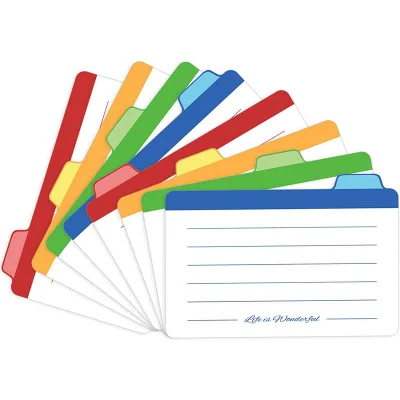
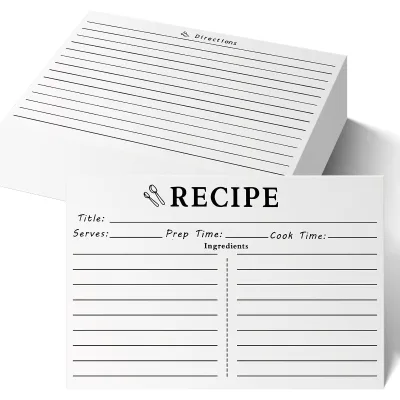
When evaluating potential suppliers for recipe cards, the technical specifications serve as the primary filter for quality and suitability. The product category is defined by specific dimensions and material properties that distinguish it from standard stationery. Based on observed market data, the standard size for these items is frequently cited as 4 by 6 inches, though customization options are widely available to meet unique branding or functional needs. The "tabs" mentioned in the core keyword imply a specific structural design, often requiring precise die-cutting or folding techniques that differ from flat cardstock production.
Material selection is critical for durability and print quality. The observed data indicates a strong preference for woodfree paper, with a specific weight of 250 gsm noted in several listings. This weight class provides a balance between rigidity and flexibility, ensuring the cards can withstand frequent handling in a kitchen environment without tearing. The material is categorized generally as "Paper Products," but the specific finish is often matte, which reduces glare and improves readability of handwritten recipes.
Printing capabilities are another vital technical consideration. The market data highlights "Customized 4C Paper Printing" and "Offset printing" as standard methods. The ability to execute four-color (CMYK) printing is essential for reproducing colorful recipe images and text accurately. Furthermore, the "Double-sided" aspect of the keyword necessitates a supplier with press capabilities that can handle two-sided registration without bleed-through or misalignment. Buyers must verify that the supplier's machinery supports high-precision offset printing to ensure the text and graphics on the reverse side align perfectly with the front.
Design Customization and Aesthetic Versatility
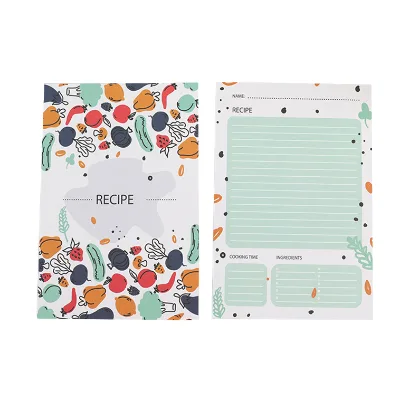
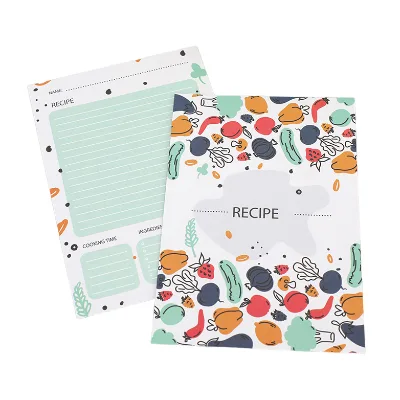
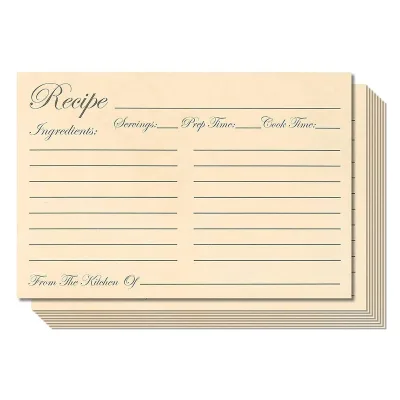
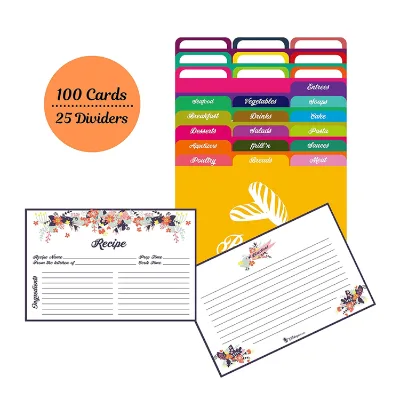
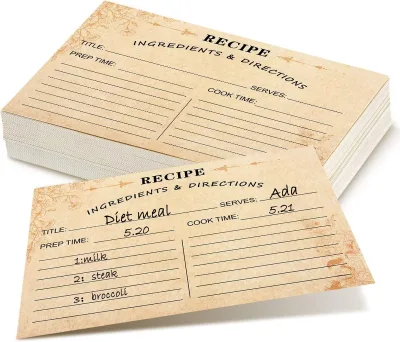
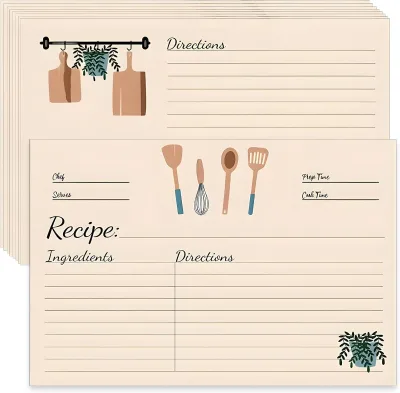
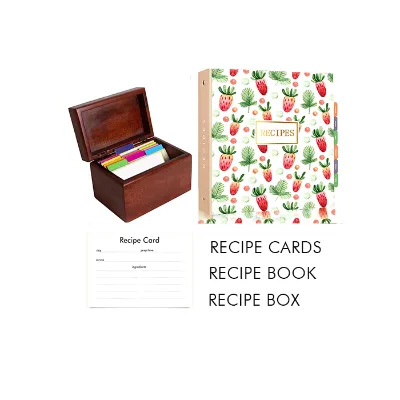
The aesthetic component of recipe cards is often as important as their functional utility. The observed product attributes reveal a diverse range of design styles, including "Love," "Nautical," "Letters," and "Flower" patterns. This variety suggests that suppliers are equipped to handle custom design requests, catering to different thematic needs such as wedding favors, corporate gifts, or personal kitchen organization. The "Customized Designs" attribute confirms that buyers are not limited to stock imagery but can engage in a co-creation process with the manufacturer.
Color options are equally flexible. While some listings mention "Stock Sample" colors, the predominant trend is toward "Customized" color schemes. This allows brands to match their corporate identity or specific event themes. The "Logo" attribute indicates that suppliers accept customized logos, enabling businesses to brand these cards effectively. However, the complexity of the design, particularly when involving tabs and double-sided printing, can impact the final cost and production time. Buyers should request digital proofs to ensure that the tab placement does not interfere with critical content or the binding of the card.
Compliance, Certification, and Safety Standards
In the realm of food-adjacent products like recipe cards, compliance and safety are paramount, even if the cards do not directly contact food. Buyers must verify that the paper products meet relevant safety standards for non-food contact applications. While specific certification names are not explicitly listed in the provided data, the "Special" feature and "Creative design" attributes suggest a focus on quality assurance.
Suppliers should be able to demonstrate compliance with international paper safety standards, such as those governing the absence of harmful chemicals or heavy metals in the inks and paper stock. The "250 gsm woodfree paper" mentioned in the data is a standard material, but its origin and processing methods must be transparent. Buyers should inquire about the source of the wood pulp and the bleaching processes used, as these factors influence the environmental footprint and safety profile of the product.
Additionally, the "Regional Feature: Europe" noted in some attributes suggests that certain suppliers may be targeting or compliant with European market regulations. This is a significant indicator for buyers looking to distribute products in the EU, as it implies adherence to stricter environmental and safety directives. However, buyers must not assume compliance based on regional tags alone; explicit documentation or certification from the supplier is required to confirm adherence to specific standards like REACH or FSC (Forest Stewardship Council) for sustainable sourcing.
Cost Drivers and Pricing Dynamics
Understanding the cost structure of recipe cards is essential for budgeting and negotiation. The observed price range in the market spans from $0.01 to $29.80 USD, a wide disparity that reflects differences in volume, customization, and material quality. The lower end of the spectrum likely corresponds to high-volume orders of standard stock items, while the higher end reflects small-batch, highly customized orders with complex designs and special finishes.
Several factors drive these costs. First, the "Supply Ability" varies significantly, with figures ranging from 100,000 to 10,000,000 sets per month. Suppliers with higher capacity may offer better economies of scale, reducing the unit cost for large orders. Second, the "MOQ" (Minimum Order Quantity) ranges from 1 to 10,000 units. A lower MOQ allows for smaller, more frequent orders but typically comes with a higher per-unit price. Conversely, larger orders often secure a lower price point but require a significant upfront investment.
The "Packing" details also influence cost. Options such as "50 Pcs/Set" or "Packed in a box or OPP bag" add to the material and labor expenses. Custom packaging solutions, while enhancing the product's presentation, will increase the overall cost. Buyers should carefully evaluate the trade-off between packaging aesthetics and budget constraints, ensuring that the added cost aligns with the intended use case, such as retail sale versus bulk distribution.
Supplier Evaluation and Verification
Selecting the right supplier requires a rigorous evaluation process based on verifiable data points. The "Place of Origin" is consistently listed as "Zhejiang, China," a region known for its robust paper manufacturing industry. However, the presence of multiple brand names, such as "Southprint" and "Myway," indicates a fragmented market with various manufacturers operating under different labels. Buyers should not rely on brand names alone but should verify the actual manufacturing facility.
Key verification steps include checking the "Port of dispatch," which is listed as "Ningbo/Shanghai." These are major shipping hubs, facilitating efficient logistics for international buyers. Buyers should confirm the specific port used by the supplier to avoid unexpected delays or additional freight costs. Furthermore, the "Single package size" of 20x20x20 cm and "Single gross weight" of 1.000 kg provide critical data for calculating shipping volumes and freight charges.
Suppliers should also demonstrate a clear "OEM" (Original Equipment Manufacturer) capability, as indicated by the "Accept" status in the data. This confirms their ability to produce goods under the buyer's brand. Buyers should request samples to assess the quality of the "Matte" finish and the precision of the "4 color" printing. Additionally, the "Design" and "Pattern" attributes should be reviewed to ensure the supplier can replicate the desired aesthetic without compromising the structural integrity of the tabs.
Quality Control and Long-Term Procurement
Maintaining consistent quality is a challenge in mass production, particularly for items with specific structural features like tabs. The "Feature: Special" and "Feature: Creative design, elegant" attributes suggest that quality control measures must be stringent. Buyers should implement a quality assurance protocol that includes random sampling and inspection of the first production run. Key inspection points should include the alignment of the double-sided print, the durability of the paper, and the precision of the tab cuts.
Long-term procurement considerations involve establishing a reliable supply chain that can adapt to changing demands. The "Supply Ability" figures, ranging from 100,000 to 400,000 sets per month, indicate that suppliers have varying capacities. Buyers should assess whether a supplier can scale production up or down based on seasonal fluctuations or marketing campaigns. The "Packaging Details" noting the use of "standard export carton" or custom requirements suggest flexibility in logistics, which is beneficial for long-term partnerships.
Finally, buyers should consider the environmental impact of their procurement. The "Material: Paper Products" and "250 gsm woodfree paper" specifications offer an opportunity to prioritize sustainable sourcing. Buyers should inquire about the supplier's commitment to sustainable forestry and eco-friendly printing inks. By integrating these considerations into the procurement strategy, buyers can ensure that their recipe card supply chain is not only efficient and cost-effective but also aligned with broader corporate sustainability goals.
Conclusion
Sourcing double-sided recipe cards with tabs involves a careful balance of technical requirements, aesthetic preferences, and logistical constraints. The market offers a wide range of options, from standard stock items to fully customized solutions. By focusing on verified specifications such as the 4x6 inch size, 250 gsm woodfree paper, and CMYK printing capabilities, buyers can make informed decisions. The wide price range and MOQ flexibility allow for tailored procurement strategies, but success depends on rigorous supplier evaluation and quality control. As the market continues to evolve, maintaining a disciplined approach to sourcing will ensure the delivery of high-quality products that meet the diverse needs of end-users.
FAQs
What is the standard size for these recipe cards?
The standard size is 4 by 6 inches, though customization is available. Suppliers offer ODM and OEM options to adjust dimensions based on specific buyer requirements for unique branding or functional needs.
Which printing method is used for these cards?
Offset printing is the standard method used for these products. This technique supports customized four-color paper printing to ensure accurate reproduction of images and text on both sides of the card.
Can I customize the design and logo on the cards?
Yes, suppliers accept customized designs and logos for these recipe cards. Buyers can request specific patterns like letters or flowers, and the material supports matte finishes for improved readability.
What is the minimum order quantity for these items?
The minimum order quantity ranges from 1 to 10,000 units depending on the supplier. Lower MOQs allow for smaller batches, while larger orders often secure better pricing and economies of scale.
How are these cards packaged for shipment?
Cards are typically packed in boxes or OPP bags, with 50 pieces per set as a common option. Standard export cartons are used for bulk shipping, though custom packaging can be arranged per customer requirements.
What is the supply capacity of these manufacturers?
Manufacturers report supply abilities ranging from 100,000 to 4,000,000 sets per month. This high capacity ensures that large orders can be fulfilled efficiently while maintaining consistent quality standards.