Source Modern Standing Shoe Rack with Cloth Organizer for Home, Shop, Office
Explore 30 listings for a Modern Standing Shoe Rack with Cloth Organizer designed for home, shop, and office use. Buyers can compare customization options, layer counts, and installation methods to find the ideal storage solution.
Key considerations
Products List


Modern Shoes Rack for Entryways Shoe Rack Cabinet Organizer Shoe Racks
$195.00 - $235.00
MOQ: 5 Pieces


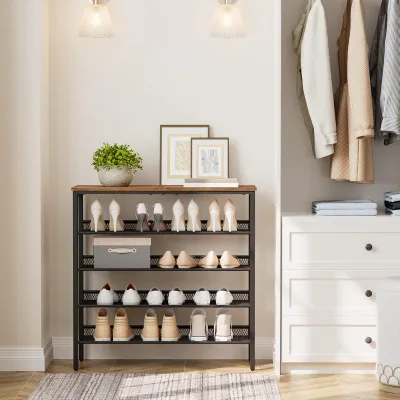
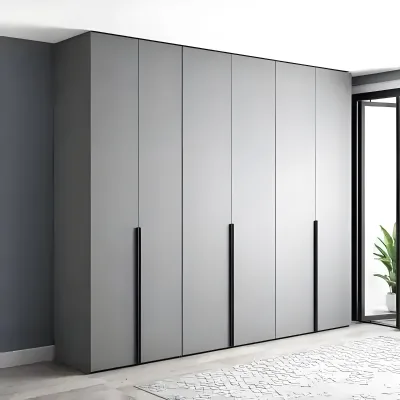
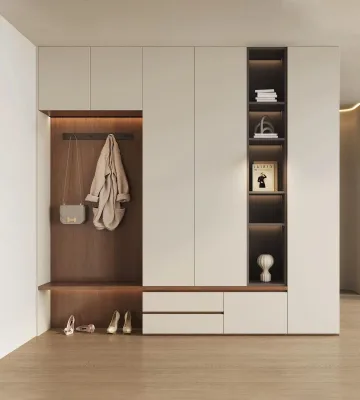

$5.00 - $20.00
MOQ: 50 Pieces

Shoe Storage Rack Organizer for Home and Entryway with Multi-Layer Design
$169.00 - $199.00
MOQ: 20 Pieces


24 Shelf Vertical Free Standing Shoe Rack Display Shelf Shoe Organizer Stand
$43.99 - $53.33
MOQ: 2 Pieces


Lightweight Shoe Organizer Wall Mounted Shoe Shelf Closet Storage Space Efficient
$2.21 - $2.26
MOQ: 1000 Pieces
Comprehensive Sourcing Guide
Strategic Sourcing Guide for Modern Standing Shoe Racks with Cloth Organizers
Understanding Product Definitions and Functional Requirements
When sourcing a modern standing shoe rack with a cloth organizer, buyers must first distinguish between the core functional categories presented in the market. The available product data indicates that these units are primarily classified under the type "Cabinets," with specific model designations ranging from generic terms like "Bookcase" and "Cabinet" to specific identifiers such as "RYH-W-0136" and "S21007." The primary function is explicitly listed as "Storage," though "Display" is also a noted capability, suggesting these units are designed to hold footwear while maintaining an aesthetic presentation suitable for entryways or retail environments.
The term "standing" in the product context aligns with the observed installation methods, which include both "Floor Mounted" and "Wall Mounted" configurations. This duality requires the buyer to verify the specific structural intent of the unit before procurement. A standing unit typically implies a floor-mounted footprint, yet the data confirms that wall-mounted options exist within the same product family. The inclusion of a "cloth organizer" feature is often associated with the "Shoe Cabinet" model type, where the design integrates fabric elements or specific shelving to accommodate soft goods alongside rigid footwear.
The production standards reveal that these units are often "Customized" or "OEM Customized," with specific model numbers like "SUN-FU" and "Customized or American style" indicating a high degree of flexibility in design. The material composition is predominantly "Wood," with door panels constructed from "Particle Board, MDF, OSB, or Plywood." This variety in material selection directly impacts the durability, weight, and finish of the final product. Buyers should note that the "Condition" is consistently listed as "New," and the "Style" varies between "Simple" and "Modern," reflecting current market trends toward minimalist aesthetics.
Technical Specifications and Dimensional Standards
Technical due diligence is critical when evaluating modern standing shoe racks, as the physical dimensions and structural tolerances vary significantly across suppliers. The provided data highlights specific dimensional standards, such as "600240475mm" and "600*1000mm," which serve as reference points for standard unit sizes. However, the "prod_standard" field also notes "customized," implying that many units are built to order rather than adhering to a rigid catalog of fixed dimensions.
Layer configuration is another vital technical specification. The observed data shows units ranging from "1 Layer" to "5 Layers," with "3 Layers" being a common configuration. This variation dictates the storage capacity and the vertical footprint of the rack. For a standing unit with a cloth organizer, the number of layers will determine whether the cloth component is integrated as a hanging section, a drawer, or a separate compartment within the cabinet structure. The "Thickness of Door Panel" is listed as a specific attribute, though the exact numerical value is not provided in the source data. Buyers must request this specific measurement to ensure the door panels meet the necessary structural integrity requirements for the intended load.
Tolerance levels are also a key technical factor. The data cites a tolerance of "+_ 0.10mm," which suggests a high-precision manufacturing process for certain components. This level of precision is particularly relevant for custom-fitted units or those requiring tight assembly tolerances. When evaluating a standing shoe rack, the buyer should verify if this tolerance applies to the overall frame, the door panels, or the internal shelving supports. The "Folded" attribute is listed as "Unfolded," which may indicate that some units are designed with collapsible features, although the primary classification remains a standing, fixed structure.
| Specification Category | Observed Data Points | Procurement Verification Requirement |
|---|---|---|
| Material Composition | Wood, Particle Board, MDF, OSB, Plywood | Confirm specific wood type and board density for durability. |
| Layer Configuration | 1, 3, 5 Layers | Verify layer count matches storage needs and cloth organizer space. |
| Installation Type | Floor Mounted, Wall Mounted | Confirm structural support requirements for the chosen method. |
| Dimensional Standards | 600240475mm, 600*1000mm, Customized | Request exact LxWxH dimensions for the specific model. |
| Tolerance | +_ 0.10mm | Verify if this applies to critical assembly points. |
| Door Panel Thickness | Listed as attribute (value unspecified) | Request specific thickness measurement in millimeters. |
Compliance, Certification, and Safety Standards
Navigating the compliance landscape for wooden cabinetry requires a clear understanding of the certifications and standards that apply to the product. The data explicitly lists "CE" as a certification, which is a crucial indicator for products intended for the European market. The CE marking signifies that the product meets EU safety, health, and environmental requirements. Buyers should verify that the CE certification covers the specific model being purchased, particularly regarding the use of adhesives, finishes, and structural stability.
While the data mentions "FSC" and "ISO 27001" in the low-confidence background section, these should not be treated as guaranteed attributes for every listed product. The FSC (Forest Stewardship Council) certification relates to sustainable sourcing of wood materials, which is increasingly important for modern buyers concerned with environmental impact. However, without explicit confirmation in the high-confidence facts, buyers must request proof of FSC certification from the supplier if sustainable sourcing is a priority. Similarly, ISO 27001 is a standard for information security management, which is less relevant to the physical manufacturing of a shoe rack unless the supplier is providing significant digital design services or data management as part of the OEM process.
The "prod_standard" field notes "customized," which implies that standard industry certifications may need to be adapted or verified on a case-by-case basis. For products originating from "China," as indicated by the "prod_origin" field, buyers should be aware that local manufacturing standards may differ from international norms. The "CE" certification serves as a bridge, but it is essential to ensure that the testing and documentation supporting this certification are current and valid for the specific batch of goods. Additionally, the "Service Scope" includes "Design, Processing, Assembly, OEM," suggesting that the supplier may be involved in the entire production lifecycle, which can influence the consistency of compliance checks.
Cost Drivers and Pricing Dynamics
The pricing structure for modern standing shoe racks with cloth organizers is influenced by several variable factors, as evidenced by the observed price range of $0.5 to $235 USD. This wide range indicates that the final cost is highly dependent on the specific configuration, material quality, and customization level. The lower end of the spectrum likely corresponds to basic, single-layer units with standard materials like particle board, while the higher end reflects multi-layer systems, premium wood types like solid wood or high-grade plywood, and extensive customization.
The "MOQ" (Minimum Order Quantity) is another significant cost driver. The data shows an MOQ range from "1-5 PCS" to "One 20FT Container." Purchasing at the lower end of the MOQ spectrum allows for smaller, more flexible orders but may result in a higher unit cost due to the lack of economies of scale. Conversely, ordering a full container maximizes volume efficiency but requires a substantial upfront capital commitment. The "Production Time" of "20-30 Days" for standard orders and "Within 7 Days" for samples also impacts the overall cost structure, as expedited production often incurs premium charges.
Material selection plays a pivotal role in cost determination. The availability of "Particle Board, MDF, OSB, and Plywood" offers buyers a range of price points. Particle board is generally the most cost-effective, while plywood and solid wood options command higher prices due to superior durability and aesthetic appeal. The "Customization" attribute further complicates pricing, as bespoke designs, unique dimensions, and specific color finishes (such as "Black") require additional tooling and labor, driving up the unit price. Buyers should also consider the "prod_packing" costs, which vary from "Carton Box" to "Pallet, Container" configurations, as specialized packaging for fragile or large items can add to the total landed cost.
Typical Applications and Usage Scenarios
The versatility of modern standing shoe racks with cloth organizers is reflected in the diverse usage scenarios identified in the product data. The "Usage" field lists both "Home" and "Shop," indicating that these units are suitable for residential entryways as well as commercial retail environments. In a home setting, the "Simple" or "Modern" style aligns well with contemporary interior design trends, providing a functional solution for organizing footwear and accessories while maintaining a clean aesthetic.
For commercial applications, such as shoe stores or boutique shops, the "Display" function becomes particularly relevant. The ability to showcase products while storing inventory makes these units ideal for retail spaces where visual merchandising is key. The "Shoe Cabinet" model type, with its potential for integrated cloth organizers, can serve as a hybrid storage and display unit, allowing retailers to keep the floor space tidy while presenting merchandise attractively. The "Wall Mounted" installation option is particularly useful in commercial settings where floor space is at a premium, allowing for vertical storage solutions that maximize the utility of the available area.
The "Service Scope" including "Design, Processing, Assembly, OEM" suggests that these units can be tailored to specific branding requirements for commercial clients. For instance, a retail chain might request custom branding on the door panels or specific dimensions to fit their unique store layout. The "Customized" nature of the product allows for the integration of specific features, such as the cloth organizer, to meet the unique needs of different users. Whether for a family home needing to store seasonal footwear or a shop requiring a sleek display solution, the adaptability of these units ensures they can meet a wide array of functional requirements.
Supplier Evaluation and Quality Control Protocols
Evaluating suppliers for modern standing shoe racks requires a rigorous approach to quality control and verification of capabilities. The "Service Scope" indicates that suppliers offer "Design, Processing, Assembly, OEM," which suggests a comprehensive manufacturing capability. However, buyers must verify the specific quality control measures in place for each stage of production. The "Condition" is listed as "New," but this is a general statement; buyers should request detailed quality assurance protocols to ensure that the finished product meets the expected standards for finish, structural integrity, and material consistency.
The "Tolerance" of "+_ 0.10mm" is a specific metric that can be used as a benchmark for quality control. Buyers should request sample inspections or third-party testing reports to verify that the supplier consistently meets this tolerance level. Additionally, the "Production Time" of "20-30 Days" should be monitored to ensure that the supplier can maintain quality while meeting delivery schedules. Rushing production to meet tight deadlines can sometimes compromise quality, so it is essential to establish clear communication channels regarding production timelines and quality checkpoints.
The "prod_packing" details, ranging from "Carton Box" to "Pallet, Container," are also critical for quality control. Proper packaging is essential to prevent damage during transit, especially for wooden units that may be susceptible to moisture or impact damage. Buyers should verify that the packaging materials are sufficient to protect the product and that the packing method aligns with the "Per Customer Request" option if specific packaging requirements exist. The "Sample Lead Time" of "Within 7 Days" provides an opportunity for buyers to inspect a physical sample before committing to a larger order, allowing for a thorough evaluation of the product's quality and adherence to specifications.
Long-Term Procurement and Maintenance Considerations
Sourcing modern standing shoe racks with cloth organizers involves considering long-term factors such as maintenance, durability, and supply chain stability. The "Material" composition, specifically the use of "Particle Board, MDF, OSB, and Plywood," dictates the maintenance requirements. These materials vary in their resistance to moisture, wear, and tear. For instance, MDF and particle board may be more susceptible to water damage compared to plywood or solid wood, requiring careful handling and placement in environments with high humidity. Buyers should inquire about the specific finish applied to the wood, as this can significantly impact the product's longevity and ease of cleaning.
The "Customized" nature of the product means that replacement parts or future expansions may require coordination with the original supplier. If a buyer needs to add an additional layer or replace a damaged door panel, the availability of compatible parts becomes a critical factor. The "OEM Customized" status suggests that the supplier may be the primary source for these components, making the relationship with the supplier vital for long-term support. Buyers should assess the supplier's capacity for ongoing support and their willingness to accommodate future customization requests.
Furthermore, the "Production Time" and "Lead Time" for samples and bulk orders should be factored into long-term procurement planning. A consistent production timeline ensures that the supply chain remains stable, reducing the risk of stockouts or delays. The "MOQ" flexibility, ranging from single units to full containers, allows buyers to adjust their ordering strategy based on demand fluctuations. By understanding these long-term dynamics, buyers can build a resilient supply chain that supports the continued use and maintenance of modern standing shoe racks with cloth organizers.
FAQs
How many layers do modern standing shoe racks typically have?
These units typically feature between one and five layers, with three layers being a common configuration. The specific layer count depends on the model selected, such as the 5-layer Bookcase or 1-layer Shoe Cabinet, to match your storage capacity needs.
What materials are used for the door panels of these cabinets?
Door panels are constructed from wood-based materials including Particle Board, MDF, OSB, or Plywood. Buyers should verify the specific board density and type to ensure the door thickness meets structural integrity requirements for the intended load.
Can these shoe cabinets be installed on walls or floors?
Yes, these units support both floor-mounted and wall-mounted installation methods. Buyers must verify the specific structural intent of the unit, as standing units typically imply a floor footprint while wall options exist for space-saving vertical storage.
Which certifications apply to these wooden storage cabinets?
The CE certification is explicitly listed for these products, indicating compliance with EU safety and environmental standards. While FSC is mentioned in background data, it is not a guaranteed attribute for every listed product without explicit supplier confirmation.
How long does production take for customized shoe cabinets?
Standard production time ranges from 20 to 30 days for regular orders. Sample lead times are typically within 7 days, while customized or OEM orders may require the full production window depending on the complexity of the design request.
What is the minimum order quantity for these shoe racks?
Minimum order quantities vary significantly, ranging from 1 to 5 pieces up to a full 20-foot container. The specific MOQ depends on the supplier and whether the order is for a standard model or a fully customized design.
Can these cabinets be customized for specific dimensions?
Yes, customization is available with standards often listed as customized or specific dimensions like 600*240*475mm. Buyers should request exact LxWxH dimensions as many units are built to order rather than adhering to a rigid catalog of fixed sizes.