Source Double-Temperature Commercial Refrigerator Working Table for restaurants, hotels, and catering kitchens
Explore 30 listings of the Double-Temperature Commercial Refrigerator Working Table designed for food prep and storage. Buyers can compare specifications, dimensions, and cooling performance across multiple suppliers to find the right unit for their commercial kitchen needs.
Key considerations
Products List
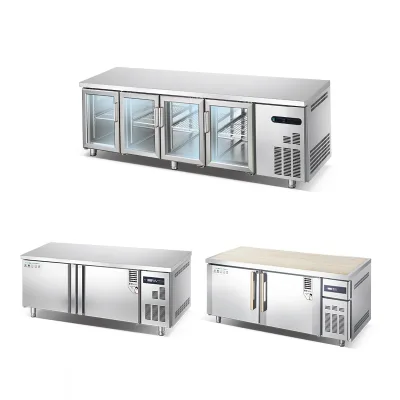
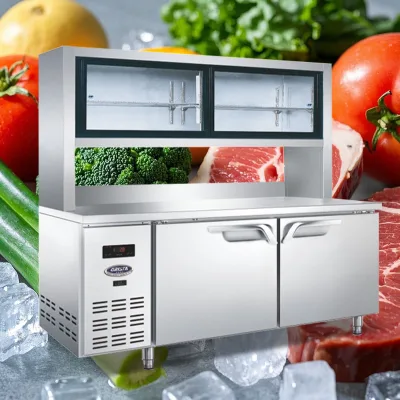
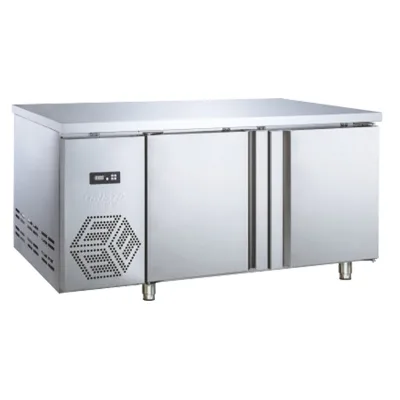
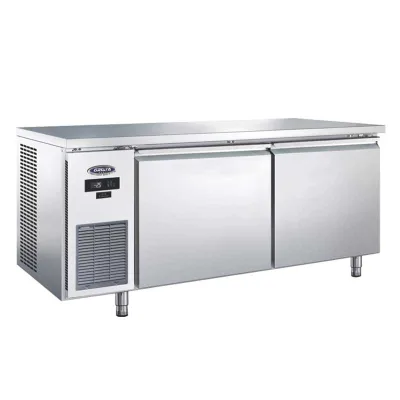


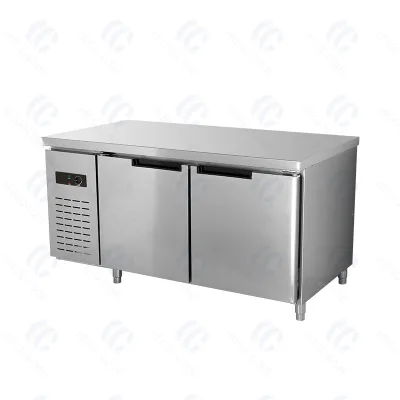


Undercounter Kitchen Work Table Fridge Workbench Open Door Refrigerator Freezer
$540.00 - $620.00
MOQ: 1 Pieces

Comprehensive Sourcing Guide
Strategic Sourcing Guide for Double Temperature Commercial Refrigeration Work Tables
Understanding the Dual-Temperature Work Table Architecture
The commercial kitchen landscape increasingly demands equipment that maximizes utility within limited floor space. A Double-Temperature Commercial Refrigerator Working Table serves as a critical hub for food preparation, allowing chefs to access both chilled and frozen ingredients simultaneously without leaving their station. These units are engineered with a single cabinet structure that houses two distinct cooling zones, typically separated by an internal partition or dual-evaporator system. The upper section often maintains a temperature range suitable for fresh produce, dairy, and beverages, while the lower section is designed to keep meats and frozen goods at a deeper freeze.
Based on observed market data, these units frequently operate within specific thermal parameters. Buyers should verify that the equipment supports a temperature range of approximately -10℃ to +10℃ for the upper compartment and 0℃ to +10℃ for the lower compartment, or similar dual-zone configurations. Some models in the current supply chain offer a broader range, such as -5℃ to 4℃ for one zone and -15℃ to -3℃ for another, indicating a versatile approach to food safety and storage. The cooling mechanism is predominantly air cooling or straight cooling, which ensures uniform temperature distribution across the shelves. It is essential to confirm that the specific model selected utilizes a "Straight cooling" or "Direct cooling" method, as this impacts the efficiency of temperature recovery after door openings.
Technical Specifications and Performance Metrics
When evaluating the technical specifications of a double temperature work table, several key metrics define the unit's suitability for a commercial environment. The physical dimensions are a primary constraint; standard configurations often measure around 1800mm in length, 760mm in width, and vary in height between 800mm and 1850mm depending on whether the unit includes a rear condenser or a fully enclosed design. Smaller footprint models may be found at 1500mm in length, offering flexibility for tighter kitchen layouts. The internal capacity is equally critical, with observed volumes ranging from 335 liters to over 800 liters (e.g., 400L + 350L split), ensuring sufficient storage for high-volume operations.
The power requirements and energy consumption are vital for operational cost analysis. Typical input power for these units ranges from 140 watts to 450 watts, depending on the cooling load and the number of shelves. The electrical supply is generally standardized at 220V/50Hz or 220-240V, which aligns with commercial infrastructure in many regions. The cooling system relies on a brand-name compressor, a component that dictates the longevity and reliability of the appliance. Buyers must ensure the compressor is compatible with the specified refrigerant, which is often R290a or R134a. R290a is a hydrocarbon refrigerant known for its environmental benefits, while R134a remains a common alternative in specific markets. The material construction is almost exclusively stainless steel, with grades 201 and 304 being the industry standard. Grade 304 offers superior corrosion resistance and durability, making it preferable for high-moisture environments, whereas 201 is a cost-effective alternative that still meets basic hygiene standards.
Compliance, Certification, and Safety Standards
Navigating the compliance landscape for commercial refrigeration equipment requires rigorous verification of safety and environmental standards. While specific certification marks were not universally listed in the observed product data, buyers must insist on documentation proving that the electrical components meet local safety regulations. The voltage specifications of 220V/50Hz must match the local grid to prevent equipment failure or fire hazards. Furthermore, the use of refrigerants like R290a and R134a is subject to strict environmental regulations regarding flammability and global warming potential.
In the context of commercial kitchen equipment, the construction materials must comply with food safety hygiene standards. Stainless steel 304 is widely recognized for its non-reactive properties, ensuring that no metallic contaminants leach into food products. Buyers should verify that the supplier can provide material certificates confirming the steel grade, as the distinction between 201 and 304 stainless steel is significant for long-term performance in wet kitchen environments. Additionally, the cooling system design must adhere to local building codes regarding ventilation and heat dissipation, particularly for units with rear-mounted condensers. The "Multi-climate" attribute observed in some listings suggests the equipment is designed to operate in varying ambient temperatures, but this claim must be validated against the specific climate conditions of the installation site to ensure consistent performance.
Cost Drivers and Pricing Dynamics
The pricing of double temperature commercial refrigerator working tables is influenced by a complex interplay of factors, including material quality, cooling technology, and brand reputation. The observed price range in the market spans from approximately $165 to $2,789.52, reflecting the vast difference between entry-level models and high-end commercial units. The primary cost driver is the stainless steel grade; units constructed with 304 stainless steel command a premium over those using 201 steel due to the higher raw material cost and enhanced durability. The type of compressor is another significant variable; brand-name compressors, which offer better reliability and energy efficiency, increase the unit's price compared to generic or unbranded alternatives.
The cooling system architecture also impacts cost. Units with advanced straight cooling systems or those designed for multi-climate operation may carry a higher price tag due to the complexity of the engineering involved. Additionally, the capacity and internal configuration, such as the number of shelves and the specific volume split between the upper and lower zones, contribute to the final price. Buyers should be aware that the Minimum Order Quantity (MOQ) typically ranges from 1 to 20 pieces, allowing for flexibility in procurement. However, purchasing in larger quantities may offer economies of scale, though the unit price is not guaranteed to drop linearly. The "Single-Temperature" or "Double-Temperature" designation is a critical differentiator; double-temperature units inherently cost more due to the additional evaporators, insulation, and control systems required to maintain two distinct thermal zones.
Typical Applications and Operational Scenarios
The versatility of double temperature commercial refrigerator working tables makes them indispensable in a wide array of food service environments. In restaurants, these units serve as the primary workstation for chefs, providing immediate access to both fresh ingredients and frozen items. The upper shelf is ideal for storing vegetables, sauces, and beverages, while the lower compartment is perfect for meat, poultry, and frozen dough. This dual functionality streamlines the cooking process, reducing the time staff spend moving between different refrigeration units.
Beyond full-service restaurants, these work tables are essential in commercial kitchens, catering services, and hotel back-of-house operations. In catering environments, where space is often at a premium, the ability to prepare food on-site with integrated refrigeration is a significant advantage. The "Commercial Freezer" and "Resturant Commercial Kitchen Equipment" classifications highlight their intended use in high-volume settings. The "Work Bench Refrigerator With Shelf" configuration ensures that the workspace remains organized and efficient. Furthermore, the "Strainht cooling" (Straight cooling) method observed in some models is particularly beneficial for applications requiring rapid temperature recovery, such as in busy lunch rushes or during peak dinner service. The capacity of 400+350L or similar splits allows these units to handle the inventory needs of medium to large establishments without requiring additional floor space.
Supplier Evaluation and Quality Control Protocols
Selecting a reliable supplier for commercial refrigeration equipment requires a thorough evaluation of their manufacturing capabilities and quality assurance processes. The supply chain for these units is concentrated in specific regions of China, with Shandong and Guangdong being prominent hubs. Buyers should verify the place of origin to understand the logistical implications and the manufacturing standards associated with that region. When evaluating a supplier, it is crucial to assess their ability to provide consistent product attributes, such as the specific stainless steel grade and the brand of the compressor.
Quality control should focus on the integrity of the cooling system and the durability of the construction. Buyers must request test results or performance data that confirm the unit can maintain the specified temperature ranges under continuous operation. The "Single gross weight" of 1.000 kg observed in some listings seems unusually low for a unit of this size and capacity, suggesting that buyers should verify the actual weight specifications to ensure the unit is built with sufficient materials for commercial durability. Additionally, the "Selling Units" being listed as "Single item" indicates that these are typically sold as individual units rather than in bulk packs, which simplifies the procurement process but requires careful inspection of each unit upon delivery. Suppliers should also demonstrate their ability to handle the "Model number" variations, such as PL-280, TG0.75L2Y2, and TZ300L2B, ensuring that the specific configuration matches the buyer's requirements.
Long-Term Procurement and Maintenance Considerations
Investing in a Double-Temperature Commercial Refrigerator Working Table is a long-term decision that requires careful consideration of maintenance and lifecycle costs. The "Brand Compressor" is a critical component that will likely require replacement or servicing after several years of operation. Buyers should inquire about the availability of spare parts and the technical support provided by the supplier. The cooling system, whether it uses R290a or R134a, will require periodic checks for leaks and recharging, which should be factored into the total cost of ownership.
The material construction also plays a role in long-term durability. Stainless steel 304 is more resistant to corrosion and staining than 201, which can be a deciding factor in humid kitchen environments. Buyers should plan for regular cleaning and maintenance schedules to ensure the unit remains hygienic and efficient. The "Multi-climate" capability suggests that the unit is designed to withstand varying ambient temperatures, but this feature should be validated against the specific climate of the installation site to prevent overheating or inefficient operation. Finally, the "Application" as a "Commercial Freezer" implies that the unit is built for heavy use, and buyers should ensure that the warranty and service agreements cover the rigorous demands of a commercial kitchen. By focusing on these long-term factors, buyers can secure a reliable piece of equipment that supports their operational needs for years to come.
FAQs
What temperature ranges do double temperature work tables maintain?
These units typically maintain -10℃ to +10℃ for the upper zone and 0℃ to +10℃ for the lower zone. Some models offer broader ranges like -5℃ to 4℃ and -15℃ to -3℃ to accommodate diverse food storage needs.
Which stainless steel grades are used for commercial work tables?
Manufacturers primarily use Stainless Steel 201 or 304 for construction. Grade 304 offers superior corrosion resistance for high-moisture environments, while 201 provides a cost-effective alternative that still meets basic hygiene standards.
How much power do these commercial refrigeration work tables consume?
Input power typically ranges from 140 watts to 450 watts depending on the cooling load. Units operate on standard 220V/50Hz or 220-240V electrical supplies suitable for commercial kitchen infrastructure.
What refrigerants are commonly used in these commercial units?
Common refrigerants include R290a and R134a. R290a is a hydrocarbon known for environmental benefits, while R134a remains a standard alternative in specific markets requiring compliance with local regulations.
Can these work tables be found with specific minimum order quantities?
Yes, the minimum order quantity typically ranges from 1 to 20 pieces. This flexibility allows buyers to procure single units or small batches without requiring large initial inventory commitments.
What are the standard dimensions for these commercial work tables?
Standard configurations often measure 1800mm in length and 760mm in width. Heights vary between 800mm and 1850mm, with smaller footprint models available at 1500mm length for tighter kitchen layouts.