Source Dry Cultivating Walking Tractor Weeder for farms, homes, and gardens
Find 30 Dry Cultivating Walking Tractor Weeder units from Chinese manufacturers. Buyers can compare models with 7HP to 18HP engines, diesel or gasoline power sources, and various certifications like CE and ECE for agriculture and forestry applications.
Key considerations
Products List


Walking Tractor Cultivator Diesel Engine Weeder Diesel Power Tiller for Farm
$550.00 - $750.00
MOQ: 1 Pieces

High Performance Agricultural Machinery Tiller Cultivator Walking Tractor 18HP
$550.00 - $750.00
MOQ: 1 Pieces


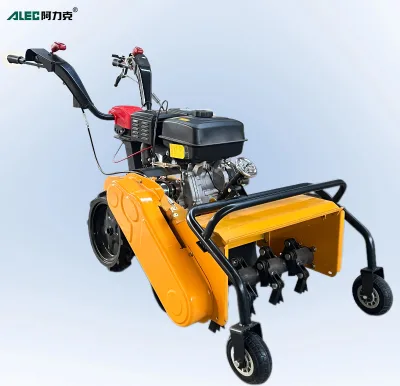


Mini Power Weeder Motocultivator Tilling Machine Rotary Tiller Cultivator
$275.00 - $280.00
MOQ: 30 Pieces


Comprehensive Sourcing Guide
Strategic Sourcing Guide for Dry Cultivating Walking Tractor Weeders
Understanding the Core Product Category and Technical Specifications
When sourcing a Dry Cultivating Walking Tractor Weeder, buyers must first distinguish between the broad category of agricultural machinery and the specific operational requirements of dry land farming. The product landscape for these machines is diverse, ranging from general-purpose walking tractors to specialized micro-farming machines designed for precision tillage. The core definition of a walking tractor in this context often aligns with the "Type: Walking Tractor" classification, which serves as the primary chassis for various attachments. However, the market also features "Type: Micro-Farming Machine" and "Type: Rotary Tiller" designations, which indicate specific functional configurations optimized for soil preparation and weeding in dry conditions.
Technical specifications are the foundation of any successful procurement decision. The power source is a critical differentiator, with the market offering both "Diesel" and "Gasoline" variants. Buyers should verify the engine displacement and rated power to ensure compatibility with their specific soil conditions. For instance, observed models include engines with "12HP," "15HP," and "18HP" ratings, alongside smaller units rated at "7HP" and "8HP." The displacement figures, such as "499" cubic centimeters or "212cc," provide insight into the engine's torque potential, which is essential for dry cultivating tasks where soil resistance can be high.
The drive system and traction mechanism are equally vital. Most units in this category utilize a "Gear Drive" system, which offers durability and consistent power transmission. The traction type varies between "Hanging" and "Traction" configurations, influencing how the machine interacts with the ground. For dry cultivating, a "Traction" type often provides better grip and stability. The arbor configuration, whether "Vertical Shaft" or "Horizontal Axis," determines the orientation of the tillage tools. A "Vertical Shaft" setup is often associated with specific weeding attachments, while a "Horizontal Axis" is typical for rotary tillers. Additionally, the gear shifting capability, observed as "6" speeds in some models, allows operators to adapt to varying soil densities and crop row widths.
Compliance, Certification, and Regulatory Standards
Navigating the regulatory landscape is a non-negotiable aspect of sourcing agricultural machinery for international markets. The presence of specific certifications serves as a proxy for manufacturing quality and adherence to safety standards. In the current supply base, "CE" certification is a frequently observed attribute, often appearing alongside "EU" and "ECE" designations. These marks indicate that the product meets the European Union's safety, health, and environmental protection requirements. Buyers must verify that the specific unit they are purchasing carries the valid "CE" mark, as this is often a prerequisite for customs clearance in many regions.
Beyond certification, product standards regarding dimensions and packaging are critical for logistics planning. The supply data indicates specific standard dimensions, such as "22008001100" and "1025781cm," which likely represent the footprint of the machine or its packaging. Understanding these measurements is essential for calculating shipping container utilization and warehouse storage requirements. The origin of these machines is predominantly "China," a fact that influences supply chain dynamics, including lead times and potential trade tariffs.
Buyers should also scrutinize the "Farming Policy" classification. Products listed under "Dry Cultivating Machinery" are specifically engineered for the arid or semi-arid conditions where water conservation is paramount. This classification ensures that the machine's design, including its weight distribution and tillage depth, is optimized for dry soil structures rather than wet or muddy conditions. The "Application Field" data further supports this, listing "Forestry," "Fisheries," "Livestock," "Aquaculture," and "Agriculture," suggesting a versatile utility that extends beyond simple field tilling. However, the primary focus for a dry cultivating weeder remains the "Agriculture" sector, specifically for "Farms" and "Home Use" applications.
Cost Drivers and Pricing Dynamics
The pricing structure for walking tractor weeders is influenced by a complex interplay of factors, including engine power, material quality, and customization options. The observed price range in the market spans from "150" to "874" USD. This significant variance suggests that the lower end of the spectrum likely corresponds to basic models with lower horsepower, such as the "7HP" or "8HP" gasoline engines, while the higher end reflects robust diesel units with higher horsepower ratings like "12HP" or "18HP."
Beyond the base unit cost, several other elements drive the final procurement expense. Customization is a major cost variable. The availability of "OEM Your Own Logo and Colors" allows buyers to brand the machinery, but this service often incurs additional fees. The complexity of the customization, such as the specific color requirements (e.g., "Orange" is noted as a common color), can impact the production timeline and unit price. Furthermore, the packing method influences shipping costs. Options include "Wooden Case Packing/Plastic Film," "Paper Box / Plywood Box," or "Wooden Box Per Set." Wooden cases offer superior protection for international shipping but add significant weight and volume, thereby increasing freight charges.
The Minimum Order Quantity (MOQ) is another critical cost driver. The observed MOQ range is "1-30" units. This flexibility allows small-scale buyers to test the market with a single unit, while larger agricultural enterprises can negotiate better per-unit pricing by ordering closer to the upper limit of the range. Buyers should also consider the "Service Life," which is estimated at "3-6 Years." A longer service life generally correlates with higher initial investment but lower long-term cost of ownership. When evaluating the total cost of ownership, buyers must factor in the "Operation" type, which is described as "Movable Operation" and "Soil Preparation Machinery," indicating that the machine is designed for portability and ease of use in various field layouts.
Typical Applications and Operational Versatility
The utility of a Dry Cultivating Walking Tractor Weeder extends across multiple agricultural sectors, making it a versatile asset for diverse farming operations. The primary application is in "Agriculture," where the machine is used for soil preparation, weeding, and cultivating dry crops. The "Farming Policy" designation of "Dry Cultivating Machinery" confirms its suitability for regions where irrigation is limited or where soil moisture is low. In these environments, the machine's ability to break up hard, dry crusts without clogging is a critical performance attribute.
Beyond traditional crop farming, the "Application Field" data reveals that these machines are also utilized in "Forestry," "Fisheries," "Livestock," and "Aquaculture." In forestry, the walking tractor can be used for clearing underbrush and preparing planting beds. In aquaculture and fisheries, it may serve in maintaining pond banks or preparing feed areas. For livestock operations, the machine can assist in managing pastures and preparing manure composting areas. This multi-sector applicability makes the walking tractor a valuable investment for diversified farms.
The operational mode is another key consideration. The "Operation" is defined as "Movable Operation," which implies that the machine is not permanently fixed to a location but can be transported between different fields or work sites. This mobility is essential for large farms or for operations that require frequent relocation of equipment. The "Clutch Type" is noted as "Tighten Wheel," a mechanism that allows for precise control of power delivery to the wheels, which is particularly useful when maneuvering in tight spaces or when starting the machine on uneven terrain. The "Start" method is typically "Manual Start," which is a reliable, low-maintenance option that does not rely on complex electrical systems, ensuring the machine can be started even in remote locations without access to charging infrastructure.
Supplier Evaluation and Quality Control Protocols
Evaluating suppliers for walking tractor weeders requires a rigorous approach to ensure that the products meet the buyer's quality and performance expectations. Since the origin is consistently "China," buyers should be aware of the manufacturing ecosystem in this region and verify that the supplier has a proven track record of exporting to their specific target market. The presence of "CE," "EU," and "ECE" certifications is a positive indicator, but buyers must request valid documentation to confirm that these certifications are current and applicable to the specific model being purchased.
Quality control should begin with a detailed review of the product specifications. Buyers must verify the "Engine" details, ensuring that the "12HP," "15HP," or "18HP" ratings match the actual performance capabilities of the unit. The "Displacement" figures, such as "499" or "212cc," should be cross-referenced with the engine manufacturer's specifications to confirm authenticity. The "Drive Wheel" configuration, specifically "2WD," should be inspected to ensure it matches the buyer's terrain requirements. Additionally, the "Gear Shifting" mechanism, with its "6" speeds, should be tested for smoothness and reliability during a pre-shipment inspection.
The "Condition" of the product is listed as "New," which is a standard expectation, but buyers should confirm that the machines are not refurbished units passed off as new. The "Service Life" of "3-6 Years" is a projected metric, and buyers should inquire about the warranty terms and the availability of spare parts to ensure that the machine can maintain its performance over its intended lifespan. The "Type" of the machine, whether it is a "Walking Tractor," "Micro-Farming Machine," or "Rotary Tiller," must align with the buyer's specific operational needs.
Long-Term Procurement and Maintenance Considerations
Sourcing a walking tractor weeder is not just a one-time transaction but the beginning of a long-term operational relationship. Buyers should consider the "Customization" options available, such as "OEM Your Own Logo and Colors," as a strategic tool for brand building. However, they must also evaluate the long-term implications of customization on maintenance and parts availability. Customized parts may have longer lead times if the original manufacturer's supply chain is disrupted.
The "prod_packing" method, whether "Wooden Case Packing/Plastic Film" or "Paper Box / Plywood Box," has significant implications for the machine's longevity during transit. Proper packaging is essential to prevent damage to the engine, gears, and tillage tools. Buyers should ensure that the packaging is robust enough to withstand the rigors of international shipping and handling. The "Standard" dimensions provided, such as "22008001100" or "1025781cm," should be used to plan for storage and maintenance facilities.
Maintenance is a critical factor in the total cost of ownership. The "Gear Drive" system and "Tighten Wheel" clutch type require regular lubrication and adjustment. Buyers should verify the availability of service manuals and technical support from the supplier. The "Operation" type, which includes "Soil Preparation Machinery" and "Movable Operation," suggests that the machine will undergo significant wear and tear. Ensuring that the supplier provides a comprehensive after-sales service plan is essential for minimizing downtime and maximizing productivity.
In conclusion, sourcing a Dry Cultivating Walking Tractor Weeder requires a careful balance of technical verification, regulatory compliance, cost analysis, and supplier evaluation. By focusing on the specific attributes such as engine power, drive type, and certification status, buyers can make informed decisions that align with their operational needs and long-term strategic goals. The flexibility in MOQ and customization options provides opportunities for both small-scale and large-scale buyers to find a solution that fits their unique requirements.
FAQs
What engine options are available for dry cultivating walking tractor weeders?
Available engine options include 7HP, 8HP, 12HP, 15HP, and 18HP models. These units can be powered by either diesel or gasoline sources, with displacement figures such as 499cc or 212cc depending on the specific configuration selected for the task.
Which certifications do these machines typically hold for international markets?
Many units carry CE, EU, and ECE certifications to meet European safety standards. Buyers should verify that the specific model includes valid documentation for these marks to ensure compliance with customs clearance requirements in target regions.
How is the service life estimated for these walking tractor weeders?
The estimated service life for these machines ranges from 3 to 6 years. This duration depends on maintenance practices and operating conditions, with new units typically featuring robust gear drive systems and durable tillage attachments.
Can buyers request custom branding and colors for these agricultural machines?
Yes, customization is available for OEM logos and specific colors like orange. This option allows buyers to brand the machinery, though it may influence production timelines and unit pricing depending on the complexity of the request.
What packaging methods are used for shipping these walking tractors?
Packaging options include wooden cases with plastic film, paper boxes, or plywood boxes. The choice affects shipping costs and protection levels, with wooden cases offering superior durability for international transport while adding significant weight.
Which application fields support the use of dry cultivating walking tractor weeders?
These machines are designed for agriculture, forestry, fisheries, livestock, and aquaculture sectors. They are particularly suited for farms and home use where dry cultivating machinery is required for soil preparation and weeding in arid conditions.
What is the typical price range for purchasing a Dry Cultivating Walking Tractor Weeder?
The observed price range spans from 150 to 874 USD. Lower prices generally correspond to basic models with lower horsepower, while higher prices reflect robust diesel units with greater power ratings and advanced features.