Source Dry Cartridge Oil Fuel Filter for Hydraulic, Dispenser, and Industrial Use
Find and compare 30 Dry Cartridge Oil Fuel Filter options designed for hydraulic oil circulation, fuel dispensers, and general industrial applications. These filters utilize paper or chemical fiber media to remove particulates and impurities from liquids and gases.
Key considerations
Products List


Chinese Fuel Tank Filter Elements, HEPA Filters, Hydraulic Oil Purifiers
$1.20 - $2.50
MOQ: 100 Pieces


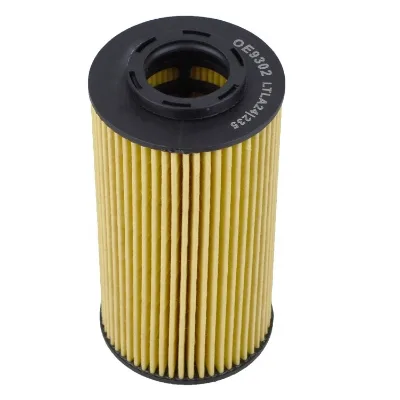


Supply Good Quality Alternative Fuel Oil Filter Cartridge for Industry Oil Purification
$24.30 - $29.60
MOQ: 5 Pieces

Replace The Diesel Filter Cartridge Fs36260 Fuel Oil Water Separation Filter
$4.00 - $12.00
MOQ: 1 Pieces


$5.00 - $50.00
MOQ: 50 Pieces

Comprehensive Sourcing Guide
Dry Cartridge Oil Fuel Filter Sourcing Guide
Procuring dry cartridge oil and fuel filters requires a disciplined approach to technical verification and supplier qualification, as these components serve as critical barriers against particulate contamination in hydraulic, lubrication, and fuel delivery systems. The term "dry" in this context typically refers to the filtration medium’s state or the specific mechanical principle of adsorption used to separate impurities, rather than the physical dryness of the installed unit. Buyers must navigate a market where product attributes such as filtration grade, material composition, and structural design vary significantly across listings. This guide provides evidence-based procurement strategies to help sourcing professionals evaluate offerings, verify technical claims, and mitigate supply chain risks associated with industrial filtration components.
The core challenge in sourcing these filters lies in reconciling the diverse specifications observed in market listings with the precise operational requirements of the target machinery. Filters are often categorized by their application, such as liquid separation, oil-water separation, or solid-liquid separation, and by their mechanical principle, such as adsorption. Because a single product listing may conflate attributes from different filter types, buyers must rigorously isolate the relevant technical parameters. This guide emphasizes the importance of cross-referencing observed listing signals with trusted category knowledge to ensure that the selected filter meets the specific pressure, temperature, and precision demands of the intended hydraulic or fuel system.
Product Scope and Observed Listing Signals
Market listings for dry cartridge oil and fuel filters exhibit a wide range of classifications, including oil filters, fuel filters, and suction filters, which can create confusion during the initial sourcing phase. Observed data indicates that products are frequently described with multiple classifications, such as "Oil Filter,Fuel Filter," suggesting versatility or overlapping use cases in industrial settings. Buyers should interpret these broad classifications as starting points for inquiry rather than definitive specifications. It is essential to verify whether the specific cartridge is designed for high-pressure fuel injection systems, low-pressure hydraulic circulation, or general oil impurity removal, as the internal structure and media compatibility differ significantly between these applications.
The observed product attributes reveal a strong emphasis on material composition and structural design, with common mentions of paper cores, chemical fiber, and cellulose media. The structure is predominantly identified as a "Cartridge Filter," often utilizing a folding microporous design to maximize surface area within a compact footprint. Listings also highlight customization availability and neutral packaging options, indicating that many suppliers operate as OEM manufacturers capable of adapting to specific brand or dimensional requirements. Buyers should leverage these signals to identify suppliers who offer flexible manufacturing capabilities, particularly when sourcing for specialized machinery such as Dresser Wanye, Gilbarco, or Tokheim dispensers, where fit and function are non-negotiable.
Technical Specifications to Verify
Filtration precision and grade are the most critical technical parameters to verify, as they directly impact the protection of downstream equipment. Observed listings mention filtration grades ranging from "Hepa Filter" to "Medium Filter," with specific precision claims such as "10micron" or "10." Buyers must clarify whether these values refer to absolute or nominal rating, as this distinction determines the filter’s ability to retain particles of a specific size. Additionally, the working pressure and operation temperature limits must be confirmed against the system’s peak operating conditions. For instance, some listings cite a working pressure of 145 and an operation temperature of 248, but units and safety margins must be explicitly defined to prevent premature failure or catastrophic seal breakdown.
The physical dimensions and connector types must be matched precisely to the existing filter housing or adapter plate. Observed specifications include standard dimensions such as 99*91mm and model codes like 83X255, H8010, and 531B0100H02, which serve as key identifiers for replacement parts. The filter connector type, often described as a "Flat Connector," must be verified for compatibility with the system’s gasket or sealing interface. Furthermore, the media type, whether cellulose, paper, or chemical fiber, should be selected based on the chemical compatibility with the fluid being filtered. Buyers should request detailed dimensional drawings and material safety data sheets to ensure that the filter’s structural integrity and chemical resistance align with the specific hydraulic oil or fuel type in use.
Compliance and Safety Documentation
While specific certification statuses are not universally disclosed in general listings, buyers must ensure that suppliers can provide relevant compliance documentation upon request. In industrial filtration, this often includes material safety data sheets (MSDS) for the filter media and housing materials, particularly when the filter is used in food and beverage or pharmaceutical applications where contamination risks are high. The observed application categories, which include medicine, food and beverage, industry, metallurgy, and textile, suggest that some filters may need to meet stricter hygiene or material purity standards. Buyers should explicitly ask suppliers to confirm whether their products comply with relevant industry-specific regulations for the intended application sector.
Environmental and quality management standards, such as ISO 14001, may be referenced in supplier backgrounds, but buyers should verify the current validity and scope of any claimed certifications. Rather than relying on generic claims, procurement teams should request copies of quality certificates and test reports that demonstrate the filter’s performance under standardized conditions. This is particularly important for filters used in critical hydraulic oil circulation systems, where failure can lead to significant operational downtime. Buyers should also inquire about the supplier’s quality control processes, including how they handle batch-to-batch consistency in filtration rate and structural integrity, to ensure long-term reliability.
Cost Drivers and Commercial Terms
The cost of dry cartridge oil and fuel filters is influenced by several factors, including the complexity of the filtration media, the precision of the manufacturing process, and the level of customization required. Observed price ranges in the market vary significantly, reflecting differences in material quality, brand reputation, and order volume. Buyers should analyze the total cost of ownership rather than focusing solely on the unit price, as higher-quality filters with better filtration rates and longer service lives can reduce maintenance costs and downtime. The observed minimum order quantities (MOQ) ranging from 1 to 1000 units suggest that suppliers offer flexible purchasing options, allowing buyers to scale orders based on their inventory needs and cash flow constraints.
Commercial terms, including packaging and shipping logistics, also play a crucial role in the overall procurement cost. Observed packaging options include neutral outer and inner packaging, paper cartons, and customizable solutions, which can impact handling and storage efficiency. Buyers should negotiate clear terms regarding packaging standards to prevent damage during transit, especially for fragile cartridge filters. Additionally, lead times and payment terms should be aligned with the buyer’s production schedule. While specific lead times are not provided in the general data, buyers should establish clear expectations with suppliers regarding production capacity and delivery reliability to avoid supply chain disruptions.
Supplier Qualification and Quality Control
Supplier qualification is a critical step in ensuring the reliability of dry cartridge oil and fuel filter procurement. Buyers should prioritize suppliers who demonstrate a clear understanding of the technical specifications and can provide detailed product data sheets. The observed origin of many products is China, a major manufacturing hub for industrial filtration components. Buyers should conduct due diligence on these suppliers, verifying their manufacturing capabilities, quality control systems, and track record in supplying similar products. It is advisable to request samples for testing before committing to large orders, allowing buyers to assess the filter’s fit, filtration performance, and material quality firsthand.
Quality control measures should be integrated into the procurement process to minimize the risk of receiving defective products. Buyers should establish clear acceptance criteria based on the technical specifications, including dimensional accuracy, filtration precision, and structural integrity. Regular audits or third-party inspections may be necessary for high-volume purchases or critical applications. Additionally, buyers should maintain open communication with suppliers regarding any quality issues or performance concerns. A robust supplier relationship, built on transparency and mutual accountability, can help resolve issues quickly and ensure a consistent supply of high-quality filters.
Long-Term Procurement Checks
Long-term procurement success depends on continuous monitoring of supplier performance and product quality. Buyers should establish key performance indicators (KPIs) to track metrics such as on-time delivery, defect rates, and customer satisfaction. Regular reviews of these metrics can help identify potential issues early and allow for corrective actions to be taken. Additionally, buyers should stay informed about advancements in filtration technology and materials, as these developments may offer opportunities to improve system efficiency and reduce costs. Engaging with suppliers on innovation and continuous improvement can lead to better product solutions and stronger partnerships.
Finally, buyers should maintain a comprehensive database of filter specifications and supplier information to streamline future procurement activities. This database should include detailed technical data, compliance documentation, and performance history for each filter type. By centralizing this information, buyers can make more informed decisions when sourcing replacements or upgrading systems. Regular updates to this database, based on new product introductions or supplier changes, will ensure that the procurement team has access to the most current and accurate information. This disciplined approach to data management supports long-term supply chain resilience and operational efficiency.
FAQs
What is the filtration grade for this dry cartridge oil filter?
The filtration grade is listed as Hepa Filter and Medium Filter depending on the specific model. These filters utilize paper or chemical fiber materials to ensure effective particulate removal for liquid applications in various industrial systems.
Can I request custom packaging for these oil and fuel filters?
Yes, customization is available for the product packaging. Options include neutral outer and inner packaging or paper cartons, allowing buyers to tailor the presentation to their specific distribution or branding requirements without compromising product integrity.
Which models are available for hydraulic oil circulation systems?
Available models include H8010, 27, 18, 83X255, and 4120000304. These units are designed for hydraulic oil circulation systems and feature working pressures up to 145 with operation temperatures reaching 248 degrees for robust performance.
How is the dry cartridge filter constructed internally?
The structure is a cartridge filter with a paper core or cellulose media. This design supports adsorption mechanical principles to separate oil impurities and solid-liquid mixtures effectively within the specified filtration precision of 10 microns.
What is the origin and standard size for these filters?
The products originate from China and adhere to specific standard dimensions like 20cm by 20cm by 20cm or 99 by 91mm. These specifications ensure compatibility with various dispensers and industrial machinery requiring precise filtration components.
Can these filters be used for medicine and food applications?
Yes, the filters are applicable for medicine, food and beverage, industry, metallurgy, and textile sectors. They function to remove particulates and impurities, ensuring the purity required for sensitive processing environments across multiple high-standard industries.