Source DSC Thermal Analysis Machine for Material Testing
Find and compare 30 DSC Thermal Analysis Machine models from Chinese manufacturers. Evaluate specifications like high accuracy, temperature ranges, and OEM customization options to identify the right equipment for your laboratory or industrial needs; compare the available evidence and request quotations based on your requirements.
Key considerations
Products List


DSC Differential Scanning Calorimeter Calorimetry Price Thermal Analysis Machine
$4000.00 - $5000.00
MOQ: 1 Pieces


STA Simultaneous Thermal Analysis Machine with TGA DSC Function Synchronous Thermal Analyzer
$1000.00 - $3000.00
MOQ: 1 pieces

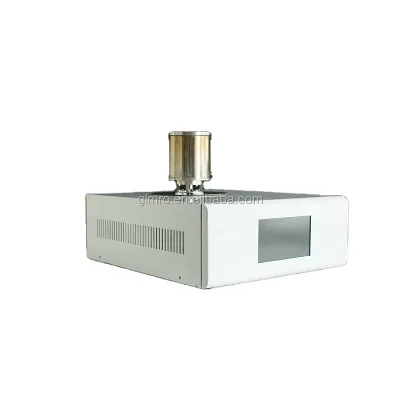


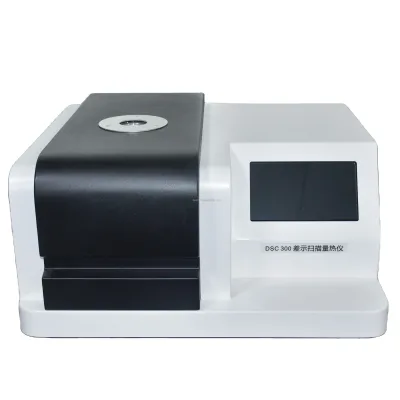
High Polymer Material Different Scanning Calorimeter DSC Thermal Analysis Machine
$3694.28 - $5951.90
MOQ: 1 Minimum
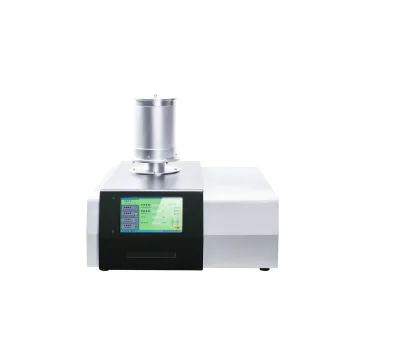
DSC-100A Dsc Calorimeter Dsc Differential Scanning Calorimeter Dsc Tga Thermal Analysis
$3776.38 - $5951.90
MOQ: 1 Minimum

DSC Differential Scanning Calorimeter Calorimetry Thermal Analysis Machine Analyzer
$6500.00 - $7000.00
MOQ: 1 Pieces

DSC Differential Scanning Calorimeter Calorimetry Thermal Analysis Machine Analyzer
$6500.00 - $7000.00
MOQ: 1 Pieces


Lab DSC Differential Scanning Calorimetry Thermal Calorimeter Analyzer Machine Price
$6500.00 - $7000.00
MOQ: 1 Pieces


Comprehensive Sourcing Guide
DSC Thermal Analysis Machine Sourcing Guide
Differential scanning calorimetry (DSC) instruments are precision laboratory tools used to characterize thermal transitions in polymers, pharmaceuticals, foods, and other materials. When sourcing a DSC Thermal Analysis Machine, buyers must balance measurement performance against total cost of ownership, supplier capability, and long-term serviceability. This guide organizes the procurement decision into the checks that matter most: verifying technical specifications against your testing methods, confirming documentation and safety compliance, understanding what drives price variation, and qualifying suppliers who can support the instrument throughout its lifecycle.
Because DSC results directly influence formulation decisions, quality release criteria, and research conclusions, an under-specified or poorly supported instrument creates downstream costs far beyond its purchase price. Treat the sourcing process as a technical evaluation combined with a supplier audit. The listings observed in this category vary widely in specification depth and commercial structure, so a disciplined comparison framework — rather than price alone — should guide your shortlist and final selection.
Product Scope and Observed Listing Signals
The observed listings cluster around benchtop DSC units and related thermal analysis configurations, with models such as GA-DSC101, GA-DSC102, GA-DSC400, GA-DSC400L, LR-DSC300C, LR-SDC-300, LR-300C, GA-STA-1913, and LS-S501 appearing under the GONOAVA brand. Listed prices range from roughly $1,000 to $8,900, with a minimum order quantity of one unit, which lowers the barrier for pilot purchases and single-laboratory acquisitions. Customization is explicitly available across the listings, including OEM, ODM, OBM, and software reengineering support.
Buyers should note the packaging and logistics signals: plywood case packing is standard across these listings, and units ship from Hunan or Guangdong, China, with a single-item selling unit structure. Display formats such as 24-bit color on a 7-inch screen and digital displays appear in the specifications, alongside power requirements of AC220V at 220V class. The breadth of model naming — spanning compact DSC units to larger 400-series configurations — suggests the category covers multiple sensitivity and temperature ranges, so model-level comparison is essential before assuming any single listing fits your application.
Technical Specifications to Verify
The observed listings expose specification data that should anchor your technical comparison. Key parameters include DSC resolution of 0.01 µW, a DSC range of 0 to ±600 mW, heating rates of 0.1 to 80 °C/min, and temperature ranges reaching 550 °C on some models and −40 to 600 °C on others. Temperature repeatability is listed at ±0.01 °C, temperature resolution at 0.001 °C, and sensitivity figures of 0.1 µg with accuracy of 1 µg appear on related units. Gas flow spans 0–300 mL/min at 0.2 MPa gas pressure, and constant temperature time supports program settings up to 24 hours.
Verify each of these against your actual test methods rather than accepting headline numbers. Resolution, repeatability, and baseline stability determine whether the instrument can detect the weak transitions relevant to your samples. Confirm the heating rate range covers both slow equilibrium scans and rapid screening protocols your lab requires. Ask how each stated figure was measured — under what purge gas, sample mass, and pan type — because DSC performance figures are method-dependent. Also verify the temperature calibration procedure, cooling capability, and whether the quoted range requires accessories not included in the base price.
Compliance and Safety Documentation
The supplied listings reference an ISO 11357 context for DSC testing, which is the recognized international standard family for differential scanning calorimetry of plastics. Confirm with any shortlisted supplier that the instrument supports the calibration, baseline evaluation, and reporting requirements of the specific ISO 11357 parts your laboratory tests against, and request documentation showing how temperature and enthalpy calibrations are performed and certified. Do not assume certification status without written evidence.
Beyond test-method standards, request safety and electrical documentation appropriate for a 220V laboratory instrument: electrical safety test records, operating manuals in your required language, and materials information for any parts contacting samples. Because these instruments involve heated furnaces and pressurized purge gas (listed at 0.2 MPa), review the manual's gas connection, ventilation, and over-temperature protection provisions before installation planning. Buyers in regulated industries should also ask whether the supplier can provide installation qualification (IQ), operational qualification (OQ), and performance qualification (PQ) documentation packages, since retrofitting validation documentation after purchase is difficult.
Cost Drivers and Commercial Terms
The observed price span from $1,000 to $8,900 within a single category signals substantial variation in specification level, and buyers should understand what drives it. Sensor type and sensitivity class, achievable temperature range and cooling method, furnace construction, automation features, and software capability are the primary cost levers. A low-cost listing may meet screening needs but lack the resolution or repeatability for release testing, so map price tiers to your required accuracy class — the listings themselves denote "High Accuracy" as a distinguishing attribute.
On commercial terms, the category shows buyer-friendly basics: single-unit MOQ and available customization, with plywood case export packing. Clarify what the quoted price includes — software licenses, calibration kits, sample pans, purge gas accessories, and spare sensors are common exclusion points in thermal analysis procurement. Confirm Incoterms, warranty scope and duration, and whether installation and training are bundled or priced separately. Since customized support (OEM/ODM/OBM and software reengineering) is offered, agree in writing on the scope, cost, and intellectual property treatment of any customization before ordering.
Supplier Qualification and Quality Control
The observed listings originate from Hunan and Guangdong, China, under the GONOAVA brand, with consistent customization commitments — but listing claims are not evidence of capability. Qualify suppliers by requesting factory information, quality management documentation, and references from laboratories with similar instruments. Ask specifically about the production and calibration process for the DSC sensor and furnace, since these components determine long-term measurement stability and are the most common failure points in low-cost thermal analysis hardware.
Define an incoming quality control (IQC) protocol before purchase. Specify acceptance tests you will run on delivery — for example, verifying temperature repeatability and sensitivity against the supplier's own stated figures using standard reference materials — and make payment milestones conditional on documented test results. For customized orders, require pre-shipment functional test reports and video or live acceptance testing. Check the supplier's stated support channels for software reengineering and OEM requests, and confirm who holds responsibility for calibration consumables and sensor replacement over the instrument's service life, since these items materially affect continuity of your testing program.
Long-Term Procurement Checks
A DSC instrument typically remains in service for many years, so plan procurement around lifecycle support rather than initial delivery. Before committing, confirm the supplier's spare parts availability for sensors, furnaces, and control electronics, and whether firmware and analysis software receive updates or reengineering support beyond the initial sale. The listings' explicit offer of software reengineering suggests modification is possible, but verify response times, costs, and whether older instrument generations remain supported. Establish where calibration services and operator training will come from after the warranty period.
Also design your internal checks to keep the instrument trustworthy over time. Schedule periodic calibration verification using certified reference materials, maintain an equipment log linking calibration certificates to your quality system, and plan for environment control in the laboratory, since the stated temperature resolution of 0.001 °C and repeatability of ±0.01 °C are achievable only under stable ambient conditions. Finally, document configuration, software versions, and customization agreements at acceptance so that any future service, upgrade, or audit can reconstruct exactly how your instrument was validated and configured.
FAQs
What accuracy can I expect from a DSC Thermal Analysis Machine?
The listed machines are rated as high accuracy class, with temperature repeatability of plus or minus 0.01 degrees Celsius and temperature resolution down to 0.001 degrees Celsius. Actual accuracy depends on the specific model, such as the GA-DSC101 or LR-DSC300C, and on your test conditions. Ask each supplier for the verified calibration data and specification sheet matching your application before ordering.
What temperature range does a DSC Thermal Analysis Machine cover?
Several listed models cover a temperature range from minus 40 to 600 degrees Celsius, with heating rates adjustable from 0.1 to 80 degrees Celsius per minute. Constant temperature time can be programmed for up to 24 hours. Confirm the exact operating range of the specific model you select, because specifications can differ between entries in this product category.
Which models are available for DSC Thermal Analysis Machine purchase?
Listed models include GA-DSC101, GA-DSC102, GA-DSC400, GA-DSC400L, GA-STA-1913, LR-DSC300C, LR-SDC-300, LR-300C, and LS-S501. These cover different DSC and simultaneous thermal analysis configurations with features such as 0.01 microwatt DSC resolution and plus or minus 600 milliwatt DSC range. Review each model page to match resolution, temperature range, and display options to your testing needs.
Can I order a DSC Thermal Analysis Machine with custom specifications?
Yes, customization is listed as available, and the brand supports OEM, ODM, OBM, and software reengineering services. This means you can request tailored hardware configurations, branding, and software adjustments to fit your laboratory workflow. Contact the supplier with your technical requirements, target temperature range, and software integration needs to confirm feasibility, scope, and any cost impact before placing the order.
What are the power and gas supply requirements for a DSC machine?
The listed equipment operates on 220V AC power with electronic power supply, and some entries specify AC220V as the power source. Gas flow is controllable from 0 to 300 milliliters per minute at a gas pressure of 0.2MPa. Verify your facility's electrical capacity and purge gas setup before installation, and request the installation checklist from the supplier for your chosen model.
How is a DSC Thermal Analysis Machine packed and shipped?
Listed products are packed in plywood cases, with weights up to 100 kilograms depending on the model. Plywood packaging protects the instrument during international transport and is generally suitable for sea and air freight. Confirm the exact packed dimensions, gross weight, and shipping terms with the supplier, since case size and handling requirements vary across the different models listed.
What data display and sensitivity does a DSC machine offer?
Listed models feature a 24-bit color, 7-inch digital display for on-screen operation and monitoring. DSC resolution is specified at 0.01 microwatts, with a DSC range of 0 to plus or minus 600 milliwatts, and some units list sensitivity of 0.1 micrograms with accuracy of 1 microgram. Compare these figures across models to select the sensitivity level your testing protocols require.